FINA Case 2
Rosetta Stone: Pricing the 2009 IPO
Michael Morrison, Thomas Huang, Rachel Sims, Matthew Lustig,
EXECUTIVE SUMMARY
We recommend that you invest in Rosetta Stone, given the near-certainty that its stock price will continue
rising after the IPO. Using the conservative valuation, the stock will open around $14, which is lower than the
executives’ estimate. However, since investor response was highly enthusiastic, we doubt that will be the final
IPO price. We suspect the IPO price will rise above the $15-$17 range, and we recommend that you buy if the
price is anywhere below $20. We also estimate that the stock price of Rosetta Stone will grow to $32, even
potentially reaching $49.79 in the first year.
ADVANTAGES AND DISADVANTAGES OF THE IPO
First, the increase in capital from the IPO will fuel growth for Rosetta Stone. Rosetta Stone remained
profitable through 2008, the lowest year of the recession, demonstrating its potential for growth. In addition, 95%
of Rosetta Stone’s sales comes from the U.S., which reveals clear potential to expand internationally. The
language-learning market is $5 billion in the U.S., $2 billion of which is self-study learning, like Rosetta Stone’s
signature product. Moreover, Rosetta Stone will use its proven ability to adapt (e.g. Rosetta Studio and Rosetta
World offerings), to continue to gain market share. Rosetta Stone has already obtained seven times the awareness
of any other language-learning company, and the IPO will further increase public awareness of the brand1.
Rosetta Stone’s marketing will determine the extent of these advantages, since it has the choice to market
either as a tech or educational company. While investors may seek to invest in tech firms, which would thus drive
the stock price up, the company’s long-term financial health depends on the product being marketed as an
educational tool. Ultimately consumers seek Rosetta stone as an educational tool, not a technology device.
1 https://blog.wealthfront.com/ipo-101-series-why-do-companies-go-public/
1

Marketing as a technology company would create confusion and create a negative impact on revenues in the long
term.
Another disadvantage of the IPO stems from the increase in free educational opportunities, such as
MOOCs on sites like Coursera and open courseware like Kahn Academy. These sources do not yet offer a high-
caliber foreign language learning experience like Rosetta Stone’s, but Rosetta Stone’s IPO will publicize its
optimism about the foreign language learning market and spur competitors to gain market share over Rosetta
Stone.
ALTERNATIVES TO THE IPO
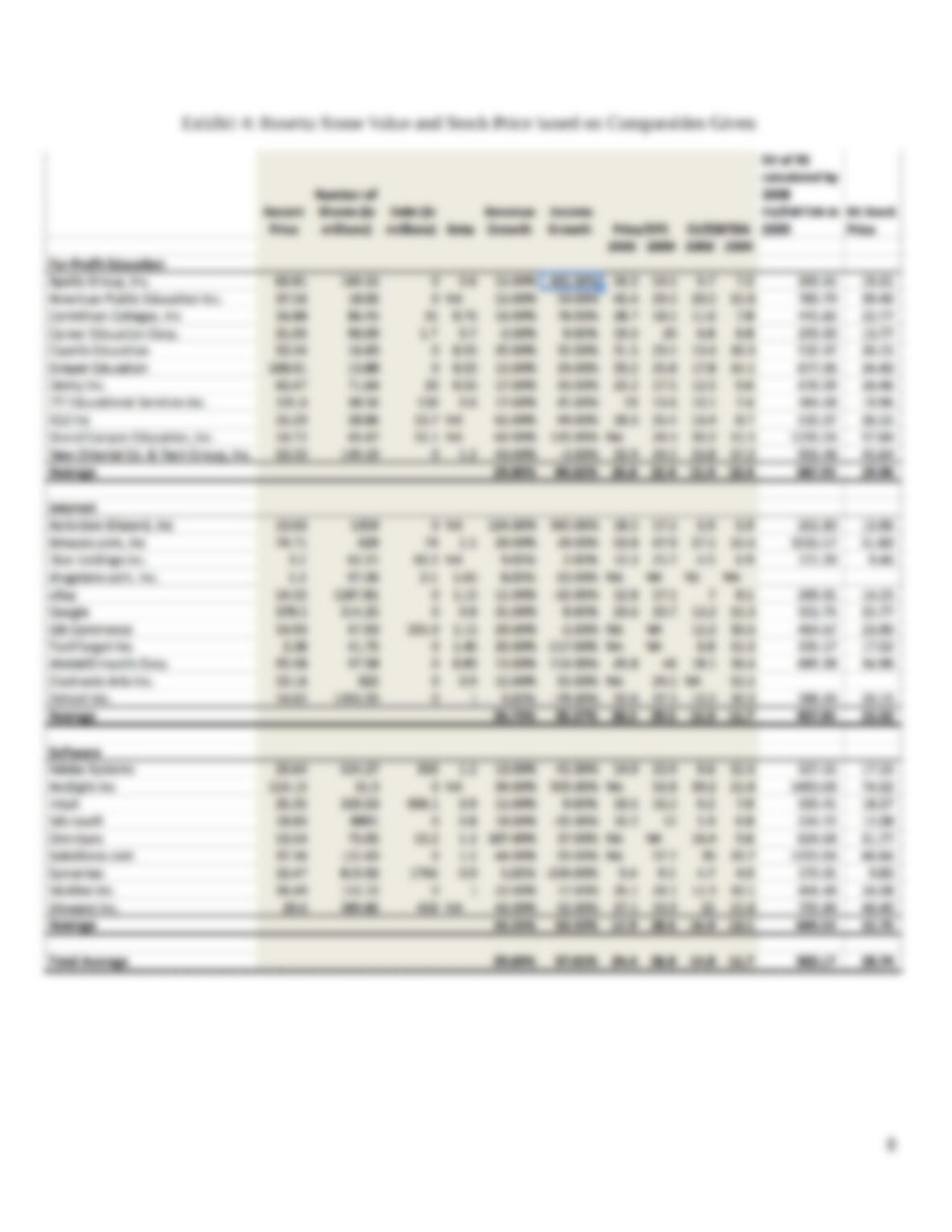
The first alternative to consider is selling to a tech firm. The average price per share of Internet and
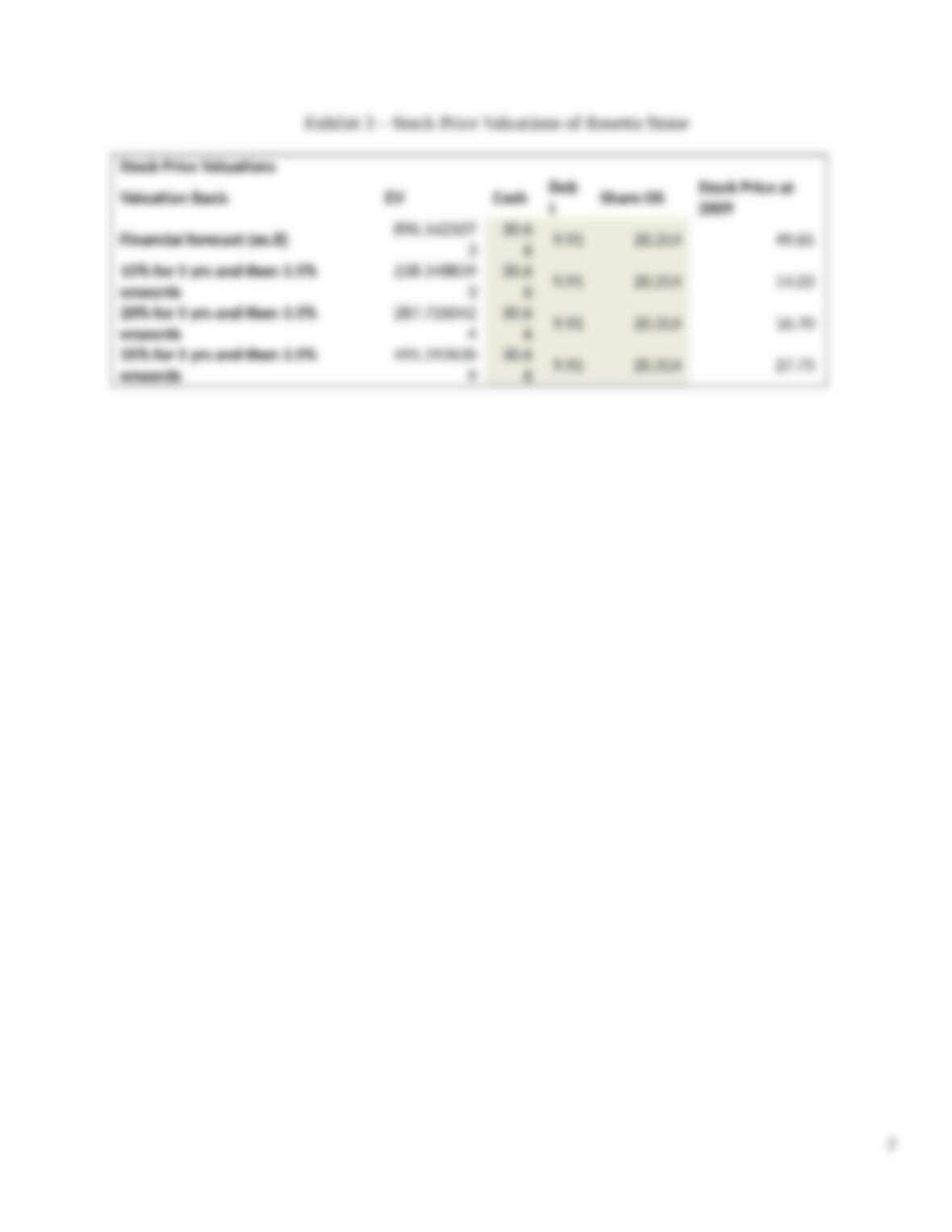
software companies is $28.14. Using Rosetta’s full 20.3 million shares, this would put the stock valuation at
$571,242,000 (Ex.3). Secondly, Rosetta Stone could consider selling to a for-profit education company where the
average value per share equals $29.96. Again, using the 20.3 million shares, the stock valuation would be