Executive Summary
Romania is located in southeast europe, bordered by Hungary, Moldova, Ukraine, Serbia
and Bulgaria. It is also located beside the Black Sea, providing a reliable transportation method
and easier access to markets for both importing and exporting. Romania is one of the fastest
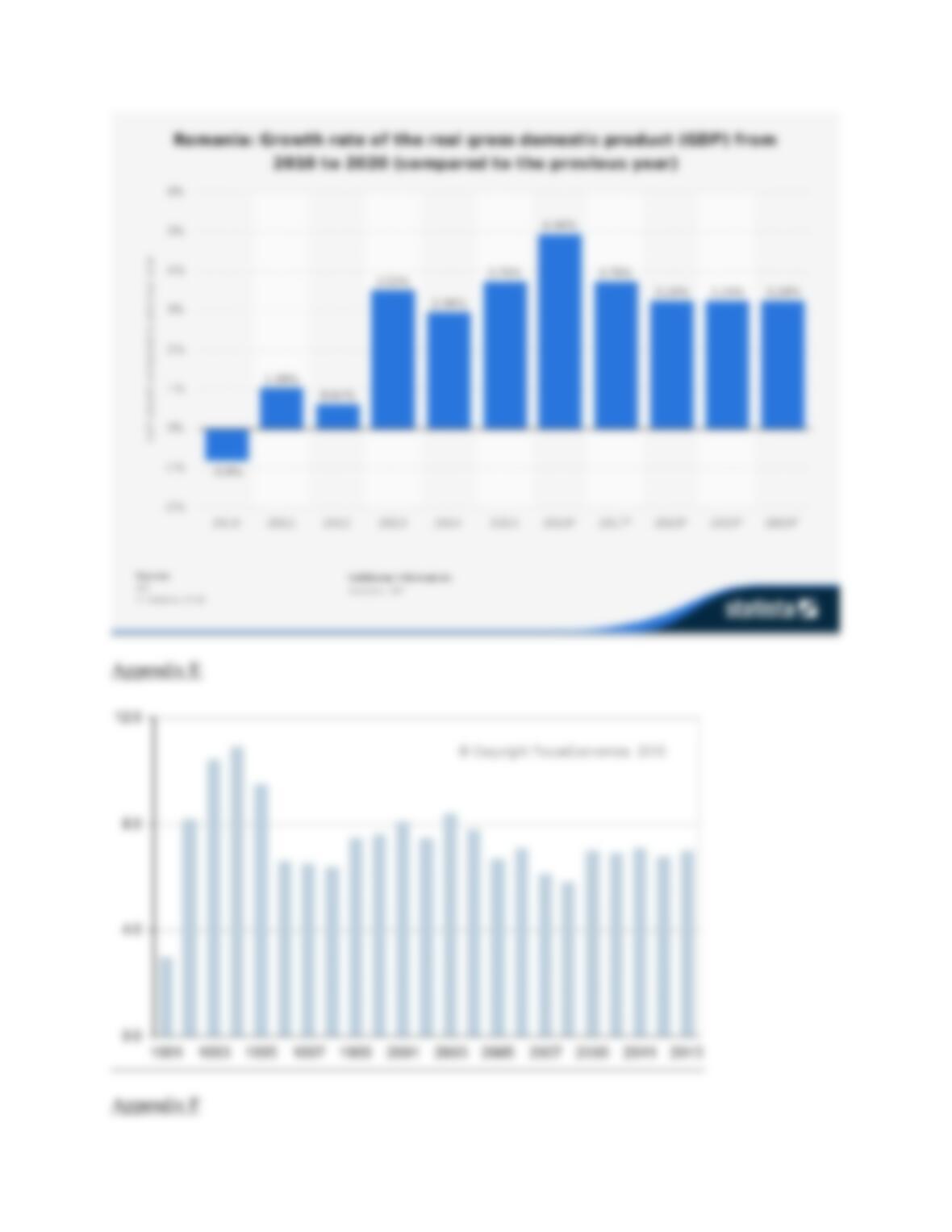
growing EU economies, with a real GDP growth rate of 5% in 2016. The level of corruption in
the government continues to decrease annually while the political stability, literacy rates, and
foreign direct investment all continue to exponentially rise. Romania’s biggest industries are
industrial equipment and machinery. Currently there are many large multinationals with
operations in Romania, including Coca-Cola, Ford, and Proctor and Gamble. A multinational
could benefit from Romania’s skilled and well-educated workforce, which includes more than
50,00 technology specialists. The main risk of expanding operations into Romania is it’s poor
infrasture and communication system. Romania is currently combatting this issue, with EU funds
of over 4.5 billion EUR being allocated to motorway construction and rail rehabilitation.
After the analysis conducted in this report, it is recommended to expand operations into
Chile given that the benefits outweigh the risks of operating in the country.
Macro Environment
Description
Romania has a poor and underdeveloped transportation and telecommunications infrastructure.
Although it is extensive, with over 100,000 km of roads, 11,000 of rail and 3.84 million
telephone lines, most of it is in poor repair due to decades of underinvestment (Nations
Encyclopedia). This is something that recent governments have been eager to change, but are
struggling to acquire the necessary funding. Romania’s telecommunications system is extremely
outdated, with poor service. There has been some progress in recent years, as the government has

raised $7 to 8 billion US through a 15-year telecoms program supported by the World Bank and
the European Bank for Reconstruction and Development (Nations Encyclopedia). Right now,
there are several road projects under way and boosting the economy in Romania, including the
Comarnic – Brasov highway, with EU funds of over 4.5 billion EUR being allocated to
motorway construction and rail rehabilitation (Emerging Europe, 2014).
The major industries in Romania are electronic equipment, which accounts for 17.1% of
total exports; motor vehicle industry, which represents 14.5% of export volume; industrial
machinery, which is responsible for 10.8% of Romania’s exports, and the oil sector, which
accounts for 4.7% of total exports (Workman, 2016). As an EU member, Romania benefits from
six of the preferential commercial agreements of the EU (Export.gov, 2016).
Romania did not attract significant foreign direct investment until after the 1990s, due to
delays in post-Communist economic reforms. The cumulative net stock of FDI from January
1990 to December 2015 totaled USD56.98 billion, about 32.1 percent of Romania’s GDP.
Romanian direct investments abroad from January to December 2015 totaled USD735.9 million
which shoes how fast it is rapidly increasing (Export.gov, 2016). The biggest multinationals
with operations in Romania are Ford, Coca-Cola, Proctor and Gamble, McDonald’s, IBM,
Microsoft, and General Electric (Alianta, 2015).
After the conclusion of the Cold War, Romania began to develop closer relationships
with Western Europe and the United States, leading them to join NATO (North Atlantic Treaty
Organization) in 2004. NATO’s essential purpose is to safeguard the freedom and security of its
members through political and military means (NATO, 2016). Following the 1996 transfer of
power from communism, Romania became an Associated State of the EU in 1995, and a full
member on January 1, 2007 (Central Intelligence Agency, 2016). The European Union is a
unique economic and political union between 28 European countries that was created in the
aftermath of the Second World War with the main goal of fostering economic cooperation
between large, independent nations) (European Union, 2016).
Regarding Human Development, Romania ranks 52nd out of _____ in the world with
comparable data as of 2015 (United Nations Development Programme 2016). When
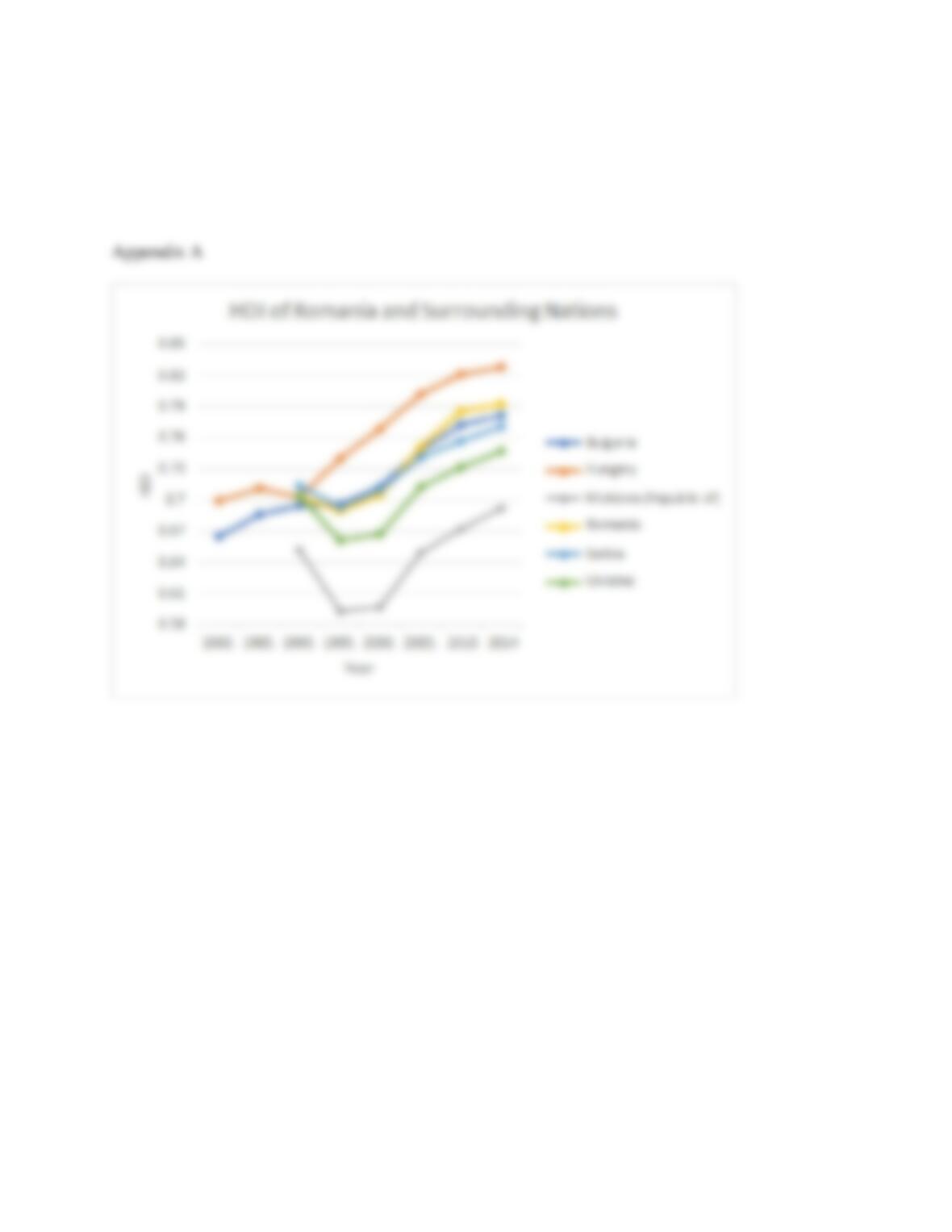
comparing Romania’s Human Development Index (0.793) against it’s neighbouring countries,
Romania ranks second as of 2014 and shows a steady and increasing trend of HDI over the last
20 years (See Appendix A).
Political Aspects
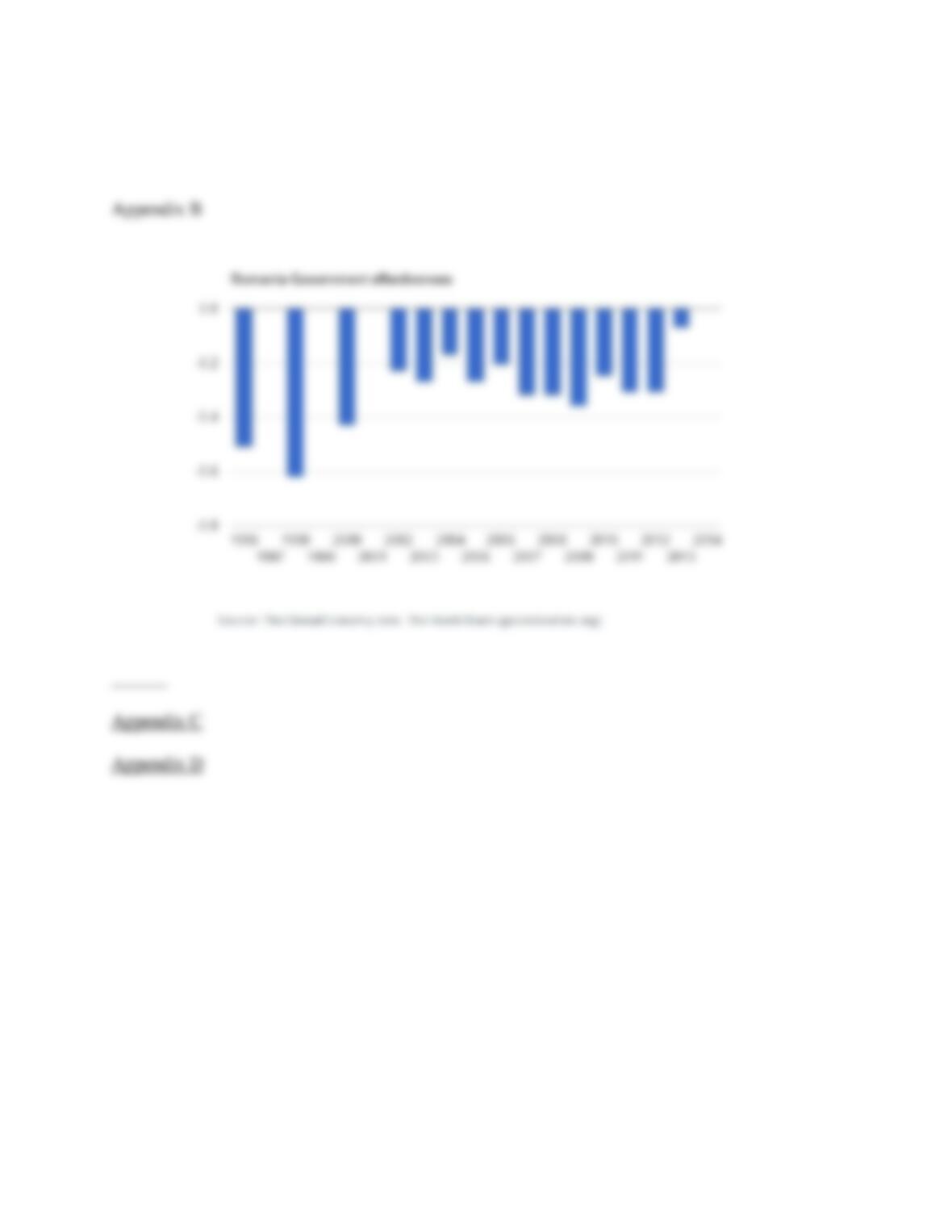
Romania’s political situation and stability has been improving steadily over the last 20
years after the previous communist government was swept from power in 1996 (See Appendix