Case 2: Rite Aid Corporation- Long-Term Debt
April 14, 2015
Ai. The secured debt of $3,728,783, is secured to the lender by assets of the company.
If Rite Aid fails to pay this debt back to the lender, the lender has the right to take the
asset that was given as security or the debt. Secured debt holds a lower interest rate
because of the security of a pledged asset. Unsecured debt carries no collateral to pledge
against the loan. Due to the lack of security, the lender typically requires a higher interest
rate on the loan.
Rite Aid has separated the secured and unsecured debt on the Notes to
Consolidated Financial Statements to help readers understand in more detail how the debt
is being held. The reader needs to know if the company could loss assets if they do not
pay their loan back. According to GAAP, you are not required to disclose unsecured debt
but must show debt that deals with pledged assets.
Aii. The guaranteed debt is guaranteed by a third party such as, an insurance company
or the government. According to Note 11, Rite Aid’s wholly owned subsidiaries
guaranteed at least a potion of the unsecured debt.
Aiii. Senior debt is prioritized over other unsecured or junior debt owed by the
company. Senior debt has a greater priority over in the issuer’s capital structure then
unsecured or junior debt does. Fixed-rate loans have the same rate throughout its life.
Fixed-rate loans do not adjust with changes in interest rates. Convertible bonds could
mean several things. For example, the bond could provide that the bondholder may
convert the debt to equity in the company. In addition, the bond terms can also be
modified to allow the bondholder to convert a variable rate bond to a fixed rate bond or
vice versa.
Case 2: Rite Aid Corporation- Long-Term Debt
April 14, 2015
Aiv. The interest rates vary depending on a number of things including whether a debt
is secured or not, guaranteed or not, current market rate for comparable companies, the
credit rating of Rite Aid at time of issuance, and other economic conditions. If all other
factors equal, the unsecured debt should have a higher interest rate then secured debt.
Unguaranteed debt should have a higher interest rate than guaranteed debt if all factors
equal.
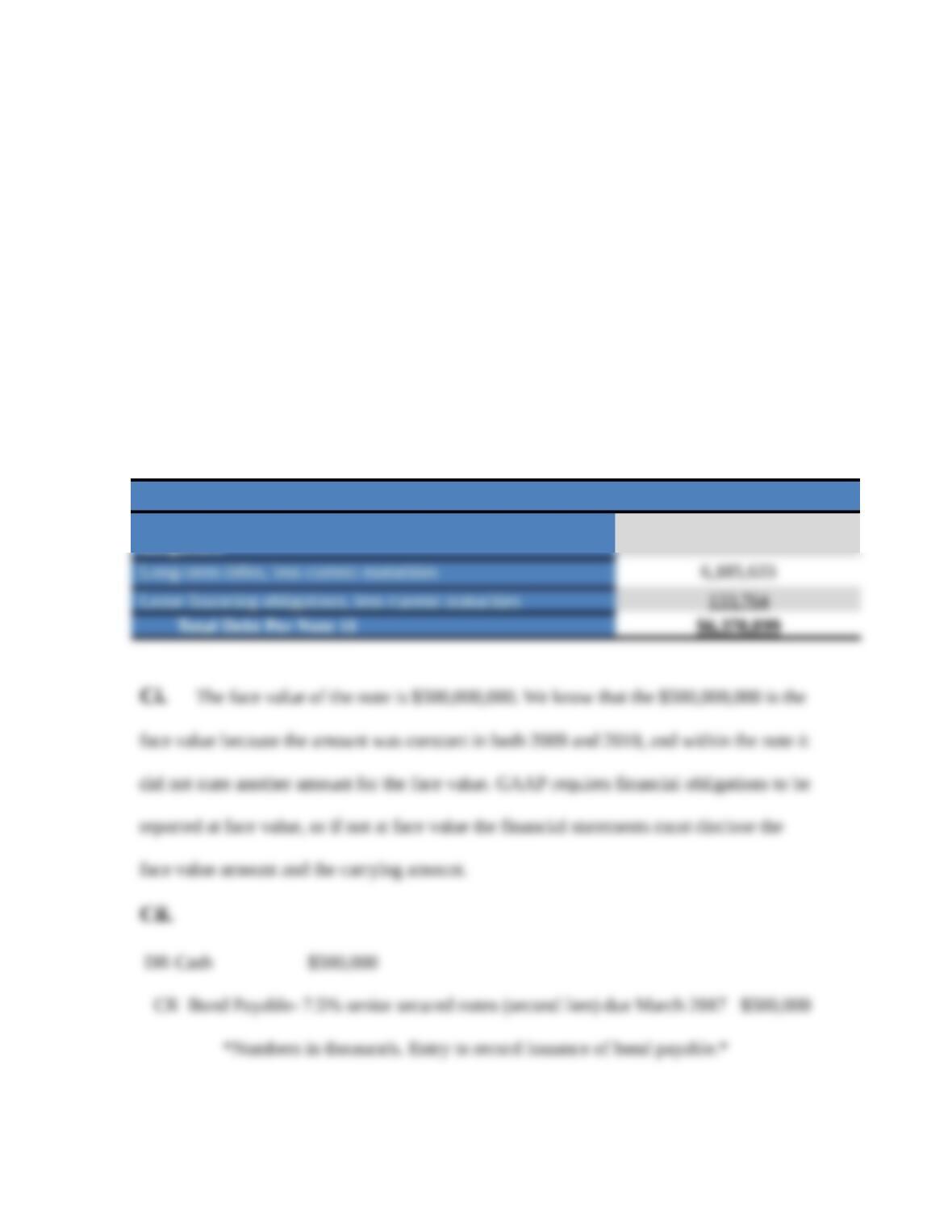
B. The total debt for Rite Aid on February 27, 2010 is $6,370,899,000. Rite Aid has
$51,502,000 that is due within the current fiscal year.
Balance Sheet Title Amounts (in thousands)
Current Maturities of long-term debt and lease financing
$51,502