BADM 7020 Class Project
Risk Appetite: A Comparison of Price-Earnings Ratios of the Same Companies Listed
on Different Stock Exchanges
Jie Peng
MBA Student
E. J. Ourso College of Business
Louisiana State University
Baton Rouge, LA
October, 2013
1. Introduction
Risk appetite is defined as the level of risk that an investor is prepared to accept before
actions is deemed necessary to take it. Many investors and portfolio managers have their
own investment strategies, which can reflect their risk appetites. However, the term of risk
appetite is rather vague and fuzzy and it is difficult to quantify it. In addition, there are
many factors influencing an investor’s risk appetite, such as economic conditions and
personal character.
I have read many articles in academic journals and magazines claiming that Chinese
investors are irrational and willing to take high levels of risk. Therefore, the main purpose
of this report is to find out whether investors in China have the same risk appetite as
investors outside of China or not. To measure this, I find the price-earnings ratio (P/E) is a
very good indicator. It is defined as market price per share divided by annual earnings per
share. P/E reflects how many times of the earning an investor is willing to pay to purchase
a stock. Because most of the companies expect growth and more income in the future, P/E
ratios are usually greater than 1 and can very large in some cases. High P/E ratios indicate
investors’ willingness to take high risk.
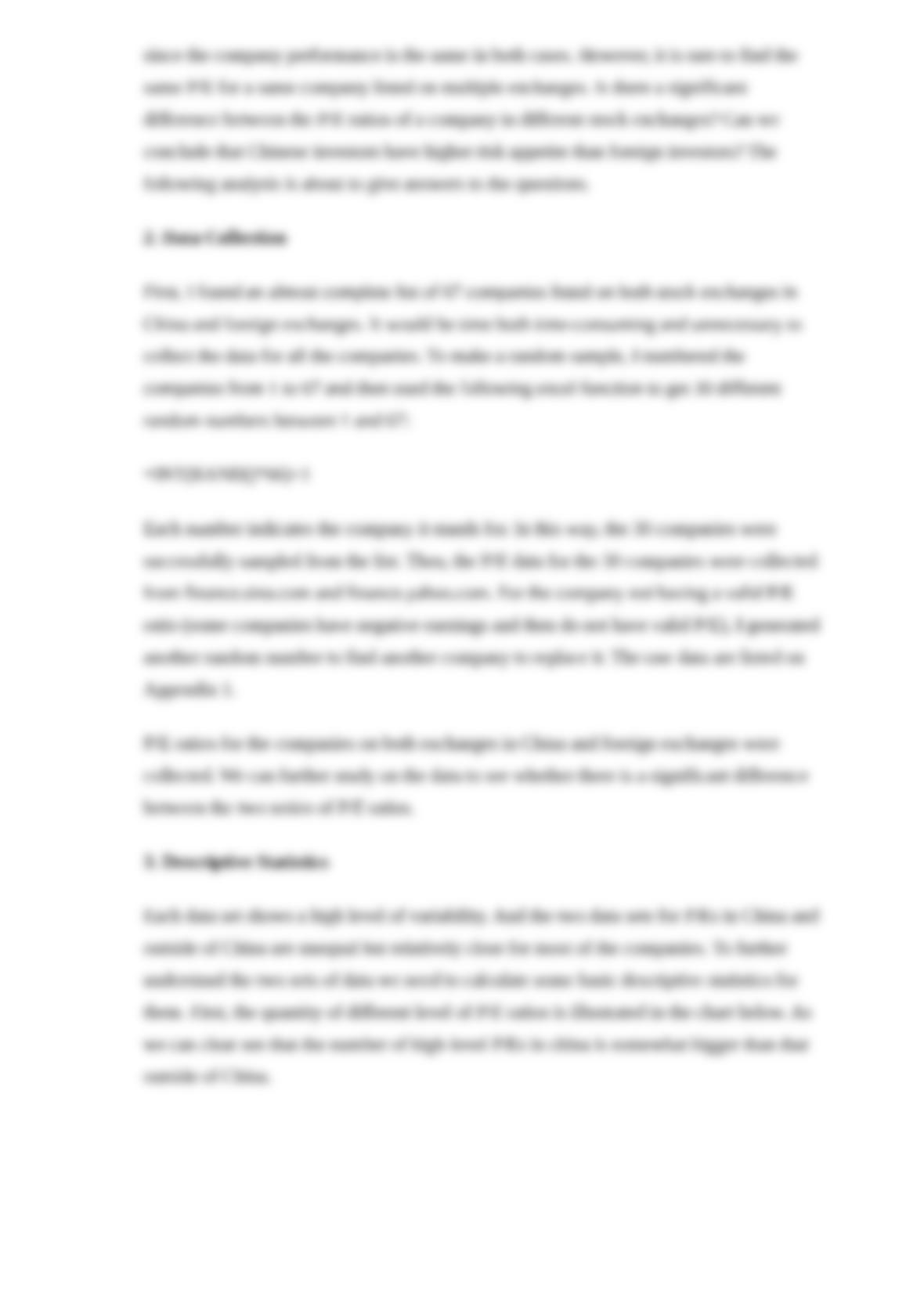
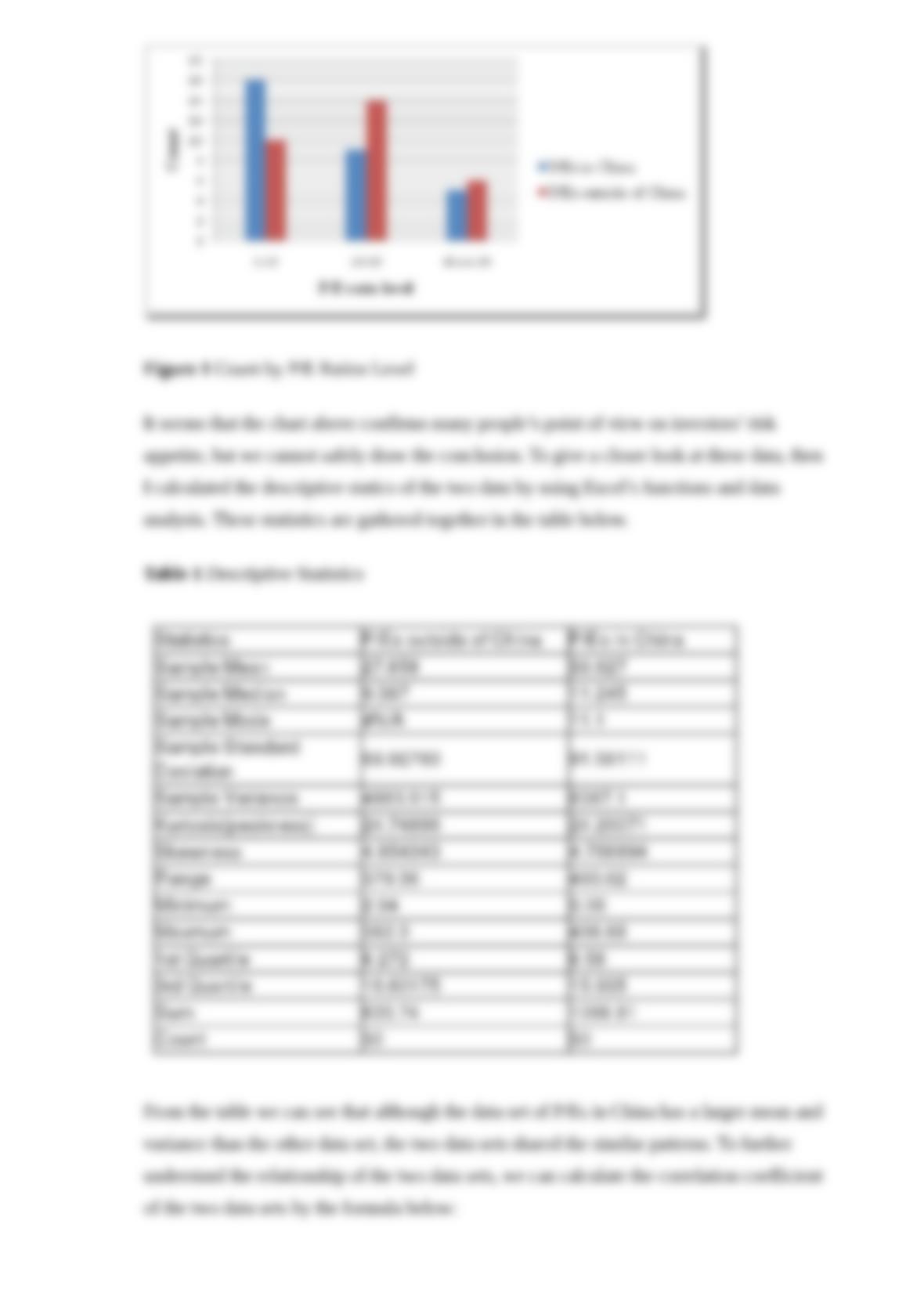
Furthermore, it is reported that more than 70 companies in China had IPOs in both stock