RP
Research Proposal Example Work
For use in class only with tutor supervision
Do not copy this work
All work in this pack has already been uploaded to Turnitin

Final Proposal Examples
Example 1
……………………………………………………………………………………
The effectiveness of self-efficacy for autistic first-year university
students
1. INTRODUCTION
Tertiary institutions are opening up to students with disabilities, such as Autism
Spectrum Disorders (Ames, McMorris, Alli, & Bebko, 2016; Gardiner & Iarocci, 2014).
In the US, over 200,000 autistic college students are expected over the next decade
(Borrell, 2018). However, only 38.8% of autistic students have graduated successfully
(Newman et al., 2011). This reflects serious maladjustment, evident in the prevalent
reports of anxiety as autistic students, especially first-years, struggle to transition to
college (Volkmar, Jackson, & Hart, 2017).
Anxiety is a nervous response triggered by stressful situations, such as the
academic and social challenges that autistic college first-years are confronted with
(Bolourian, Zeedyk, & Blacher, 2018; Ward & Webster, 2018). While academic and
social support services are available, psychological support is severely lacking
(APPGA, 2017). In particular, self-efficacy which is the belief that one has the
capabilities to overcome adversity, strongly predicts school adjustment (Hsieh,
Sullivan, & Guerra, 2007; Ramos‐Sánchez & Nichols, 2007). This highlights the
importance of effective psychological support to facilitate autistic students’ college
adjustment.

Past research were qualitative in-depth investigations of the college
experiences of autistic students, which are unique due to their disability (Anderson &
Butt, 2017; Cox et al., 2017). As such, the relationship between college challenges
and anxiety remains unclear. Secondly, studies have assessed self-efficacy among
carers and teachers in reducing their stress of tending to autistic children (Hastings &
Brown, 2002; Ruble, Usher, & McGrew, 2011). This results in a lack of understanding
of the self-perceptions of autistic individuals. Thirdly, most literature was conducted
within the US instead of the UK, where the autistic college population have burgeoned
by 200% over the last 5 years (Chown, Baker-Rogers, Hughes, Cossburn, & Byrne,
2018). In light of these deficiencies, my research will adopt a mixed-methods approach,
utilising quantitative methods to analyse the impact of college challenges on anxiety
and qualitative methods to examine how self-efficacy can ameliorate such anxiety. It
will also focus on measuring self-efficacy among UK autistic college students.
This study aims to evaluate the effectiveness of self-efficacy in relieving UK
autistic college freshmen from the impact of college challenges on anxiety.
The research questions of this study are:
How does self-efficacy moderate the relationship between college challenges and
anxiety among autistic college freshmen?
– What challenges do autistic students report facing in college and how do they
cope?
– Which of these challenges significantly impact anxiety?
This study will set out to:
1) Identify college challenges faced by autistic freshmen and their impact on
anxiety.
2) Define self-efficacy as a construct among autistic freshmen.
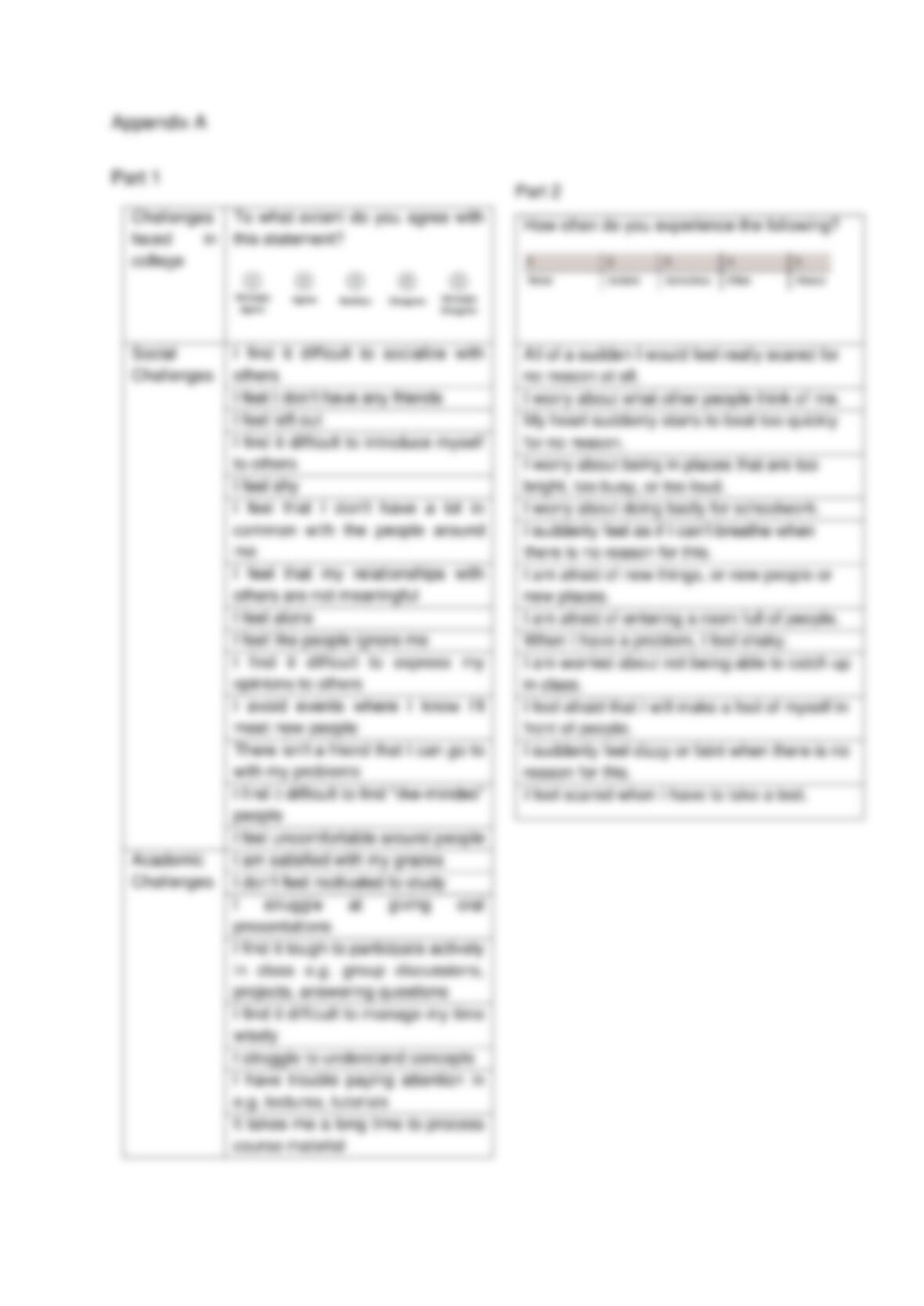
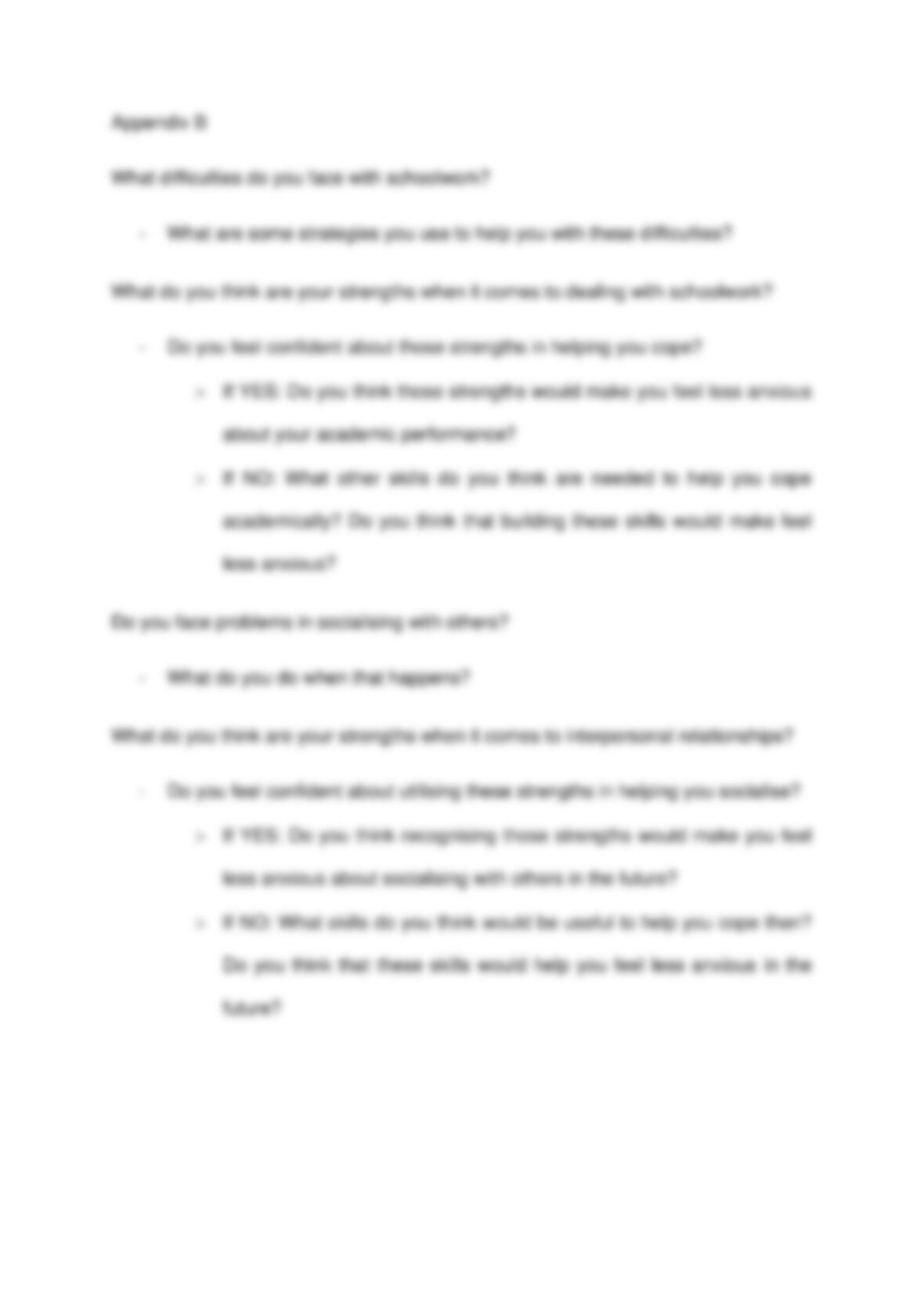
3) Administer self-report questionnaires to assess the impact of college
challenges on anxiety and semi-structured interviews to examine how autistic
freshmen cope with these challenges and if self-efficacy could help in their
adjustment.
Understanding self-efficacy helps parents and teachers guide autistic
individuals to leverage on their strengths and improve upon weaknesses. Establishing
the significance of self-efficacy enables mental health practitioners to develop
interventions that boost self-efficacy. Academics can benefit from understanding how
autistic individuals perceive their abilities and conduct further research into effective
supports. These efforts can in turn empower autistic individuals about their abilities
and help them cope more effectively with future challenges.
The rest of this proposal will contain a literature review and methodology.
2. LITERATURE REVIEW
2.1 Introduction
This proposal extends literature on tertiary education among special needs
students. Autistic individuals tend to be overwhelmed by periods of flux such as
moving to college, involving an overhaul in the school environment, curriculum and
peers (White, Ollendick, & Bray, 2011). However, given the pre-existing focus on
academic and social support, this highlights the need for psychological support, such
as self-efficacy which facilitates school adjustment (Chemers, Hu, & Garcia, 2001).
This study will examine factors underlying college maladjustment among autistic
students and the effectiveness of self-efficacy in alleviating this problem. This review
includes: the challenges autistic students face in college, types of anxiety experienced,
existing college support, and self-efficacy as a psychological support. Doing so will
illuminate the reasons for college maladjustment among autistic students, areas of
support that are lacking and posit self-efficacy as an intervention.
2.2 Autistic students: Problems faced in college
2.2.1 Academic problems
The transition from high school to college brings about a myriad of challenges.
Academic problems are a significant problem among autistic students. Van Hees,
Moyson and Roeyers (2015) and Gobbo & Shmulsky (2014) found that autistic
students reported difficulties in understanding abstract concepts and evaluating
information due to deficiencies in executive functioning and central coherence which
are responsible for top-down processing and mental flexibility. This shows that autistic
students struggle academically from the incompatibility between the academic

demands of college and their cognitive limitations. Nevertheless, there are
methodological flaws that could bias both of their findings; with the latter gathering the
perspectives of faculty members about autistic students’ college experience, and the
former utilising a volunteer sample. Additionally, there appears to be evidence of
academic excellence contradicting prior findings about academic struggles. In
particular, Happe and Vital (2009) found that their autistic sample excelled in subjects
demanding acute memory and observation. Furthermore, Gelbar, Shefcyk, and
Reichow (2015) found a high GPA average of 3.27 among their autistic college sample.
This contradiction could be due to confounding variables, namely, the recruitment of
participants with savant skills in Happe and Vital (2009) and participants who received
ample academic support in Gelbar et al. (2015). In conclusion, although literature has
uncovered the academic challenges faced by autistic college students, this study
hopes to elucidate by identifying the coping strategies used to tackle these challenges.
2.2.2. Social problems
Autistic individuals struggle socially due to their social deficits. This is seen in
various ways. Firstly, they become social outcasts as they struggle to fit in. Problems
such as difficulty with making friends, initiating and sustaining relationships, and non-
verbal communication are commonly reported (Gurbuz, Hanley, & Riby, 2018; Vincent
et al., 2017). However, social isolation may not be overtly so as autistic students report
taking concerted effort to socialise, thus appearing socially integrated yet emotionally
excluded; examples include forcing eye-contact and assuming a false persona (Hull
et al., 2017). These sources show that autistic students are prone to feeling lonely,
because they lack social skills for meaningful engagement. Nevertheless, the use of

volunteer sampling in Hull et al. (2017), whereby participants responded to an
advertisement stating the purpose of the study, might have biased results by
compromising the principle of participant-blinding. In conclusion, given that these
sources disagree about how loneliness presents itself among autistic college students,
this study hopes to clarify by extending questioning to ask how they cope with these
social challenges.
2.3 Autistic students: Types of anxiety experienced
Anxiety is a prevalent mental health issue that is pertinent to autistic students
who are stressed about adapting to college. Findings from Trembath, Germano,
Johanson and Dissanayake (2012) reveal that anxiety is triggered by academic and
social sources. The former refers to the academic rigour of college which exposes
students to an unfamiliar academic system that includes tutorials, lectures and class
participation, as well as sensory disturbances such as crowds, bright lights and noises.
The latter refers to the social demands of college which requires autistic students to
interact with new groups of people. These suggest that the anxiety reported by autistic
individuals might be related to the academic and social challenges faced in college.
Of these two sources of anxiety, social seems to be the predominant source among
autistic individuals, evident in the high social anxiety test scores for over 50% of their
participants (Bellini, 2004; Kuusikko, 2008). However, the recruitment of autistic
children and adolescents by these two latter studies prevents generalisability to
autistic college students, who might be more socially developed due to cognitive
maturation and having accumulated social encounters over the years. In conclusion,
while studies have highlighted the various sources of anxiety among autistic college
students, this study hopes to identify the more problematic source of anxiety among
autistic college students and how support can be better tailored to mitigate each
source of anxiety.
2.4 Autistic students: Types of college support available
In response to these academic and social challenges, colleges have provided
various support outlets. However, there is an unequal range of services available, with
schools providing more academic than social support (Gelbar, Smith, & Reichow,
2014). Autistic students reported receiving flexible academic arrangements, such as
deadline extensions and help from lecturers, but were dissatisfied with the fewer social
support services available (Cai & Richdale, 2016; Gelbar et al, 2015). Even more
concerning is the dearth in psychological services, with 87% of autistic students
receiving scant psychological support despite expressing a need for it due to burn-out
from college demands (APPGA, 2017; Van Hees et al., 2015). This is due to a lack of
awareness among mental health services of the mental health needs of these
individuals (Lake, Perry, & Lunsky, 2014). Nevertheless, the mismatch between
demand and supply reflects the perceived importance of psychological support in
tackling mental health struggles. In conclusion, given the preponderant delivery of
academic and social supports by colleges, this study will focus on the usefulness of
psychological support, in particular, self-efficacy, in ameliorating anxiety induced from
academic and social challenges.

2.5 Self-efficacy- Definition and Application
Self-efficacy is defined as one’s belief in their own skills in overcoming
obstacles to achieve success (Bandura, 1997). There are two main domains of self–
efficacy, namely academic self-efficacy which includes one’s perceived capability to
effectively manage their studies, engage critically, perform well academically, and
social self-efficacy, which is one’s perceived ability to interact with their peers and
express their opinions (Bandura, Barbaranelli, Caprara, & Pastorelli, 1996). Self-
efficacy is regarded as important in academic settings, as this is a strong predictor of
college adjustment, in helping students stay resilient and deal strategically with the
problem at hand (Ramos-Sánchez & Nichols, 2007; Zajacova, Lynch, & Espenshade,
2005). However, these findings fail to consider other populations such as those with
special needs. According to Job and Klassen (2012), students with learning disabilities
tend to possess poor insight into their abilities, causing them to develop ineffective
coping strategies. This casts doubt on the effectiveness of self-efficacy for autistic
populations, who suffer from cognitive and social impairments. As such, research
needs to be conducted to illuminate the effectiveness of self-efficacy in other
populations, which this study will perform by measuring self-efficacy specifically in
autistic college students.
2.5.1 Self-efficacy among autistic college students
Self-efficacy among autistic college students has been addressed in only two
studies. Of the two, one seems to suggest inferiority among autistic students. Shattuck
et al. (2014) found low self-efficacy among 60% of autistic college students, who
struggled with managing the challenges they face in college. This shows that autistic

college students hold low opinions of their own skills, which negatively affects their
college adjustment. However, there are several problems with the methods employed.
Firstly, only autistic college students from STEM majors were recruited, therefore
limiting generalisability to the autistic college population. Secondly, the items included
in the self-efficacy questionnaire seem more suited as general lifestyle questions such
as “You can handle most things that come your way”. Better measures should instead
target personal appraisal of students’ academic and social skills. Furthermore, the
study fails to distinguish the types of self-efficacy; which Gelbar et al. (2015) found
high academic self-efficacy in 81% and moderate social self-efficacy in 41% of their
autistic college sample, reflecting failure by Shattuck et al (2014) to consider how self–
efficacy among autistic students might differ according to the types of challenges. In
conclusion, self-efficacy of autistic students varies according to perceived strengths
and weaknesses, which this study will address by assessing the effectiveness of
academic and social self-efficacy in mediating college-related anxiety.
2.6 Conclusion
Autistic college students struggle in transitioning to college, citing academic and
social challenges which culminates in anxiety (VanBergeijk, Klin, & Volkmar, 2008).
Yet, mental health services have remained a scarcity (Camm-Crosbie, Bradley, Shaw,
Baron-Cohen, & Cassidy, 2018). Self-efficacy is proposed as a psychological support
due to its effectiveness in facilitating college adjustment (DeWitz, Woolsey, & Walsh,
2009).
Though current literature has identified academic and social challenges, how
autistic students cope has been left out, hence preventing a complete picture of the
problem. Additionally, the provision of psychological support lacks specificity to
mitigate the academic and social sources of anxiety. Though this might be addressed
through the application of academic and social self-efficacy, the debate contesting the
universal relevance of self-efficacy casts doubt on its applicability to autistic
populations.
Therefore, this study will gain insight into the following areas: strategies used
to cope with academic and social challenges, how these challenges impact anxiety,
and how academic and social self-efficacy alleviates anxiety. The following
methodology section will outline the methods taken by this current study to achieve
these goals.
3. METHODOLOGY
3.1 Introduction
As mentioned in the introduction, my study aims to evaluate self-efficacy in
alleviating college-induced anxiety among autistic first-year college students in the UK.
To do so, it will examine the impact of college challenges on anxiety and self-efficacy
beliefs of these students.
3.2 Research Design
3.2.1 Research Philosophy
Pragmatism argues that the existence of multiple realities yields epistemologies