Study on measuring the difference in perception of employee
engagement among employees and their direct Managers
Abstract
Employee engagement has been of the core areas of focus for organizations, especially in the
post-pandemic world. While creating new policies to engage employees, it is vital to measure
every aspect of it. One of the critical factors that affect the design of the engagement practices is
to gauge how managers feel the employees are engaged and how employees feel they themselves
are engaged. Rather than finding the universal definition of employee engagement, organizations
have started building strategies for employee engagement. This study focuses on measuring the
gap in the perception of engagement among managers and employees.
Proposed Design/Methodology Approach: The research has been done both quantitatively as
well as qualitatively. Surveys were used for quantitative data, while in-depth interviews were
conducted to collect the qualitative data. The data was collected sequentially by gathering
qualitative data first, followed by quantitative data. Primary data was collected by interviewing
the managers and employees of 8 companies with a structured questionnaire method. Sample
Size being 140 for quantitative data, sampling Method used is Stratified Sampling Method.
Originality/Value: Researches have been conducted in the pre-COVID era, but the COVID 19
has made employee engagement a hygiene factor rather than a motivator. With robust data on the
difference of perception, companies can use this research to design their policies that aim to
bridge this gap and reduce the additional cost that comes with an overhead of misplaced policies
that don’t focus on bridging this gap. The study expects to bring out the changing definitions and
perceptions of employee engagement in the digitized world and move towards the future of
work. Earlier studies have been done with the “Work from the office” model, but the default
practices have been changing rapidly, and more data is required as we enter into the work from
home/hybrid model.

The study captures subjects’ sentiments and priorities in the VUCA(Volatile, uncertain, complex,
and ambiguous) world. And as the definition and perception of employee engagement keeps
varying. It is essential to understand the priorities, especially at this pivotal moment.
Key Words: Employee Engagement, Employee Perception, Manager Perception, Policies
Introduction:
Human resource is the most precious resource that needs to be used in today’s constantly
changing business context, and organizations realize this either proactively or reactively. This
entails attracting and retaining the top performers and keeping them engaged and committed to
the organization’s objectives.
What separates high productive organizations from the rest is the quality of their employees and
how much they are committed to their work. At the same time, the trust and support an
organization provides to an employee and the efforts they take to keep them focused are
distinguishing factors that create a highly productive workplace. Employee engagement occurs
only in companies that respect their employees as their most valuable asset and provide for their
fundamental requirements and other psychological needs. Workplaces that satisfy each of these
employee engagement criteria develop significantly quicker and last far longer than those that do
not.
According to Igloo’s 2019 State of the Digital Workspace Report, 70 % of distributed team
members feel “left out” of the workplace. And with the shift to remote work and work from
home in all industries, employee engagement and ending this sense of isolation should be the top
priority for all organizations.
Employee engagement has seen a long journey since it first appeared in an academic journal in
1990. Before that, employee satisfaction used to be a focus area, and there was no focus on

performance. As we moved forward in time, the concept of commitment arose and then studies
started focusing on mapping performance and commitment with the employee output of the
company. Through the studies and trends, employers worldwide started seeking loyalty to the job
and created systems around it.
‘From People to Profits, the HR Link to the Service-Profit Chain,’ a paper published by the
Institute of Employment Studies (IES) in 1990, demonstrated the positive correlation between
sales performance, customer retention, and employee’s attitudes and behavior. HR has now
grown from being just a supportive function to now treating employees like customers. The new
terminology of CxHR focuses on employee experience to gain a more competitive advantage of
the brand value and repositioning in the competitive market.
As most companies move towards the Work from Home model, there have been many changes
in the way employees and teams operate. According to Gallup’s report, there has been a
reduction in water cooler conversations, brainstorming sessions, and casual conversations that
are used to keep employees engaged. With this distance, companies have a significant challenge
to engage them. Companies are changing their strategies to adapt to the new fully functional
work from home model. And having the right tools and data about the difference in mindset
shifts both of employees and leadership is an important area to highlight.
Literature Review:
With increasing globalization, the competition in the market is constantly growing, and so is the
talent competition. The war for talent has never been so rigorous as it is now since the tables
have turned and employees are winning in this global chase for talent. For employers, it becomes
necessary to have an engaged workforce for the growth and smooth functioning of the
organization. As Baumruk (2004) says in his research, all institutions and companies strive to be
superior to others and brings forward the concept of competitive advantage and how employers
all over the world as aligning employee engagement as way to reach that position of advantage.
Margaretha and Saragih (2008); Cameron (2005) states that the significant and symbiotic relationship of
employee engagement between individual, group, and organizational performance in the areas of

retention (Schaufeli and Bakker (2004); Insync Surveys), satisfaction (Vance (2006); Wagner & Harter
(2006); Salanova et al. (2005); Frank et al., (2004), turnover (Harter et al. (2002); Harmon et al., (2003));
Morrison et al. (2007); Buchanan (2004)), company reputation (Kemp et al. (2013); Rothbard (2001)),
overall stakeholder value (Swetha and Kumar), productivity (Simha and Vishnu Vardhan (2015))
While most organizations are unanimous on the importance of engagement in an organization,
the perception of engagement is something that can still be debated in various facets. This is
starkly visible with a plethora of definitions.
Kahn (1990) used the term employee engagement to define it from the perspective of harnessing
of organization members’ selves to their work roles. Wellins and Concelman (2005) indicated
that engagement is a mixture of commitment, loyalty, productivity, and ownership. Schaufeli et
al. (2002) defined engagement as a pleasant, gratifying, work-related state of mind marked by
energy, devotion, and absorption and a more lasting and pervasive affective-cognitive form not
centered on any one item event individual, or action. Harter et al. (2002) defined employee
engagement as the individual’s involvement and satisfaction with and enthusiasm for work.
Towers Perrin; Hewitt; Mercer explains employee engagement as a contribution of “employees’
willingness, ability, and motivation to organization’s success.” Hay specifies employee
engagement as “Employees’ exertion of “discretionary effort, and it’s not just meeting the
standards of the assigned job.” May et al. (2004) defined employee engagement in a way that the
concept of engagement includes cognition and the applied flexibility of emotions and behaviors.
Baumruk (2004) explains employee engagement to be an intellectual and emotional commitment
of employees in the job. Truss et al., (2006) brings forward the concept of “passion for work.”
Mackey and Sisodia (2014) brought the construct of higher purpose and service to others. Saks
got into various focus antecedents of employee engagement.
Not just the definition but other factors like the inter-relation between engagement and
personality has been discussed. Tomas Chamorro-Premuzic, Lewis Garrad, and Didier Elzinga,
in their research article “Is employee engagement just a reflection of personality,” sheds light on
a different perspective of employee engagement. They specify in their paper that if organizations

want an engaged workforce, the best way to ensure that is to hire people with “engageable”
personalities.
With so many definitions among the scholars, there hasn’t been a single approach towards
handling employee engagement and neither a single perception of engagement in the minds of
organizations and employees equally.
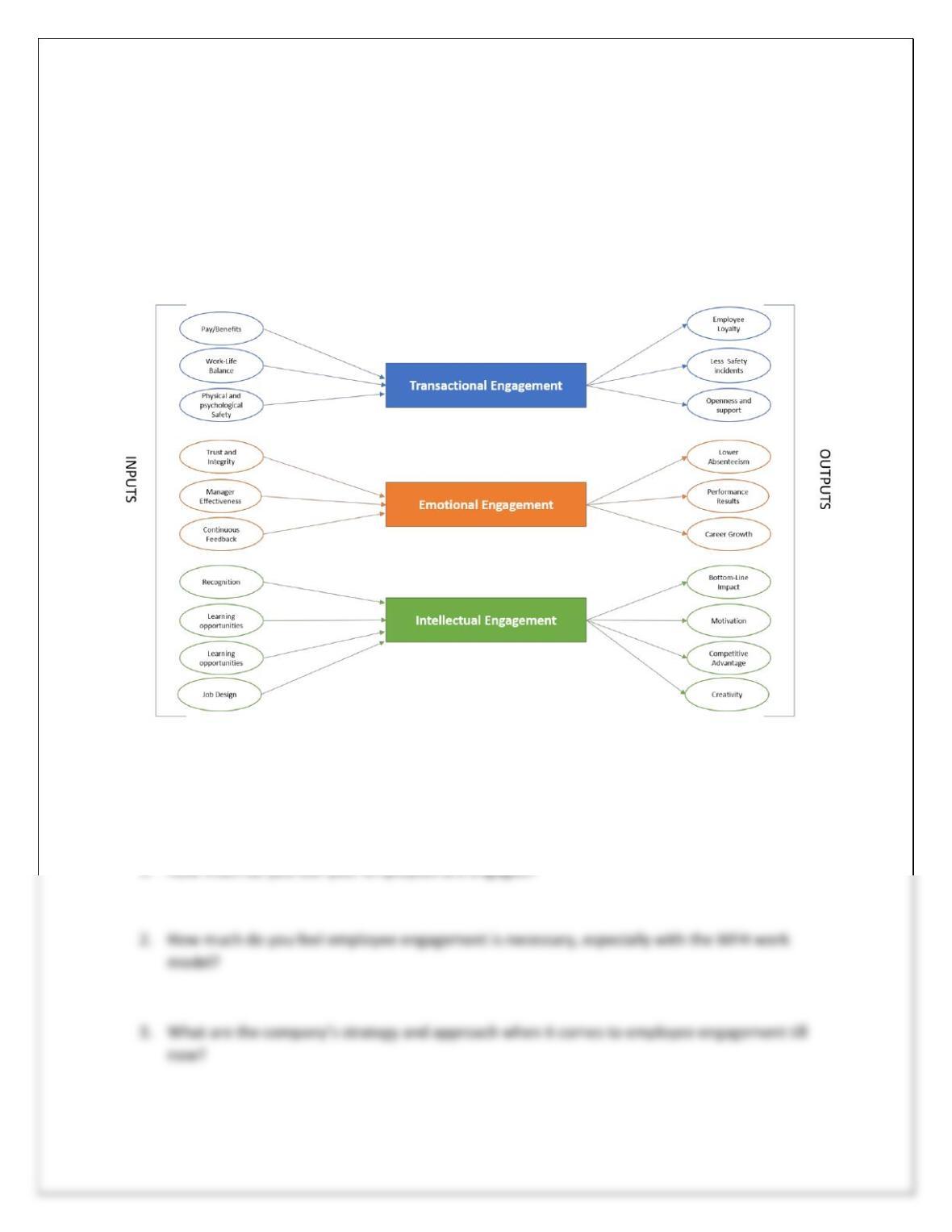
Research done by the CIPD institute inspires the model used in this study. The Chartered
Institute of Personnel and Development is a professional association for people who work in
human resource management. It is very crucial and imperative to understand the various level of
engagement. The transactional, emotional, and intellectual engagement separates the idea of
engagement into multiple facets. Numerous reports and studies and the data collected clearly
separates the employees who perform their job only because they have to and out of habit from
those who have an emotional attachment to work and those who enjoy their work. As Mihaly
Csikszentmihalyi says in the book Flow: The Psychology of Optimal Experience, “Most
enjoyable activities are not natural; they demand an effort that initially one is reluctant to make. But
once the interaction starts to provide feedback to the person’s skills, it usually begins to be
intrinsically rewarding.”. Hence, these three areas of engagement separate the approach,
outcomes, and need for engagement in individuals. And provided that individuals can be
involved in many areas of their job and that this can change over time, it becomes clear that
engagement is a multi-faceted idea that requires an actual depth of understanding to be
adequately influenced:
• Employees’ desire to make a living and meet the employer’s and their coworkers’
minimum expectations shape transactional engagement.
• Employees’ desire to accomplish more for (and receive more from) their employers
drives emotional engagement. Emotional engagement is not a customary psychological
contract but a higher form of engagement.
• When individuals are intellectually engaged in their work, it implies they are excited by it
and are thus far more likely to care whether or not they are performing it to the best of

their capacity. They will also be more motivated to improve themselves in order to
continue contributing to the best of their abilities since they love being good at what they
do.
The correlations in the model are a type of point-in–time described by these relationships.
Intellectually engaged employees outperform transactionally involved individuals, and emotional
involvement is linked to more extraordinary performance with work-related activities that
generate pleasant sentiments.
Research Gap:
Earlier research took into accounts the single perspective of either the employees or of the
organizations. The current study bridges the gap of finding out how the difference and similarity
perception of engagement from both the stakeholders result in a comprehensive approach to employee
engagement.
Earlier studies demonstrate the importance of engagement, but a comparative study between the
perception of employees and managers needs to be analyzed a bit more.
Engagement is complex and difficult to segregate. From inception to today, people and organizations
have not been on the same page to define it and.
Hence it is not enough to talk of engagement in its basic form, but we should also enquire:
(a) What type of engagement is required?
(b) Where is the locus of engagement?
c) How do all stakeholders perceive engagement?
Methodology:
The 3-tier engagement model of Transactional, Emotional and Intellectual Engagement is used to
map the inputs/drivers of employee engagement and the results/outputs that these subsequently
provide.
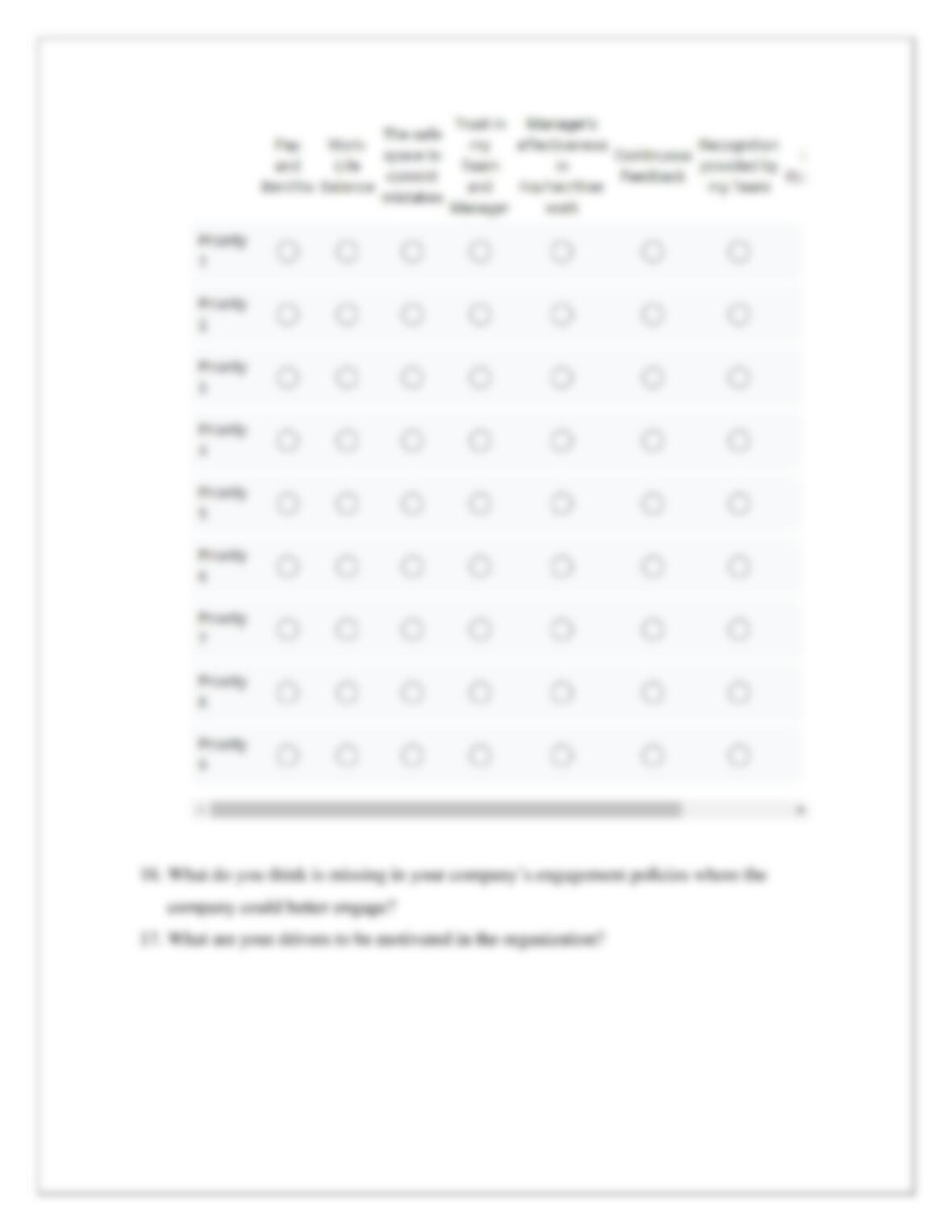
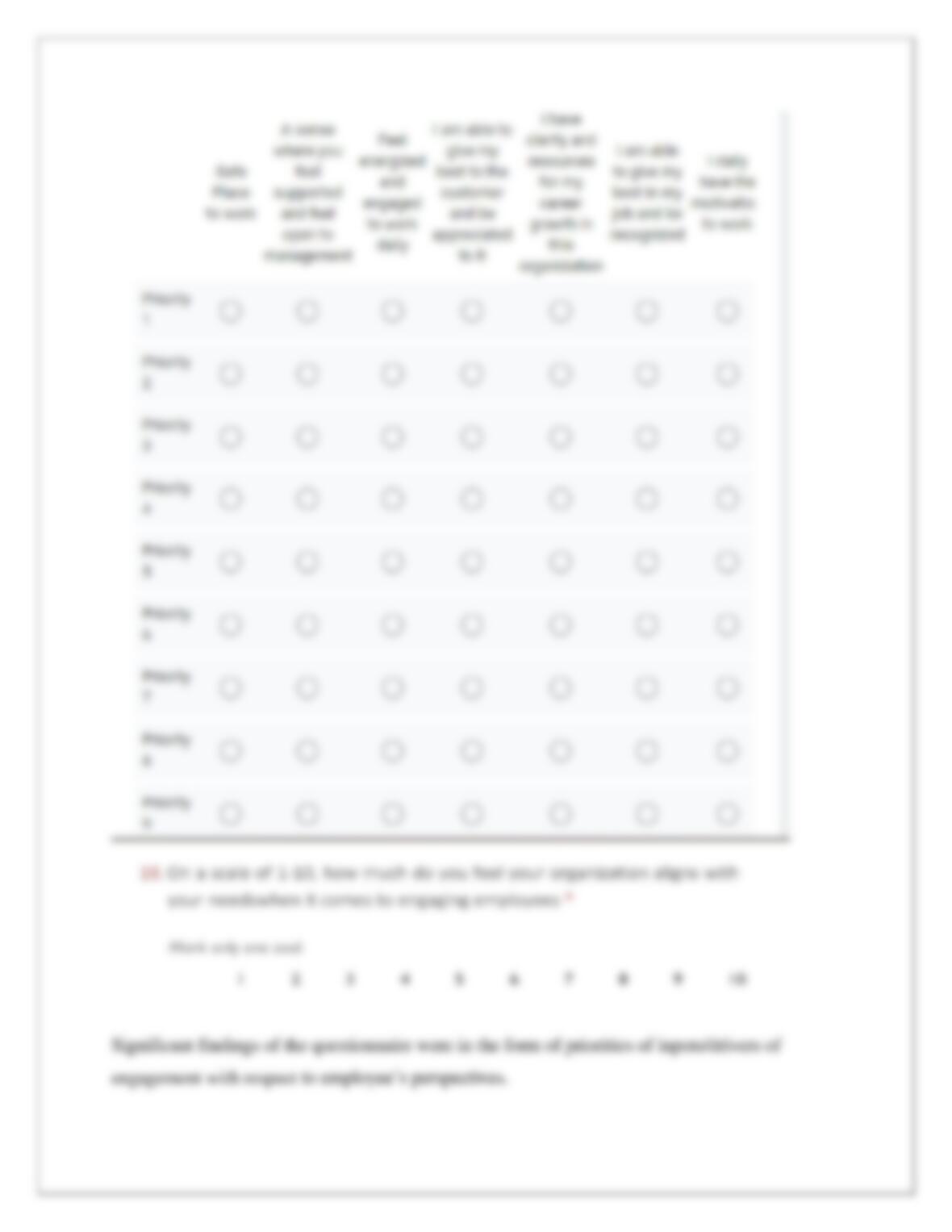
The inputs were formulated where qualitative data was collected in the form of an interview
from managers and then mapped to the data points to be contained in the form of a questionnaire
from the employees, which were qualitatively analyzed.
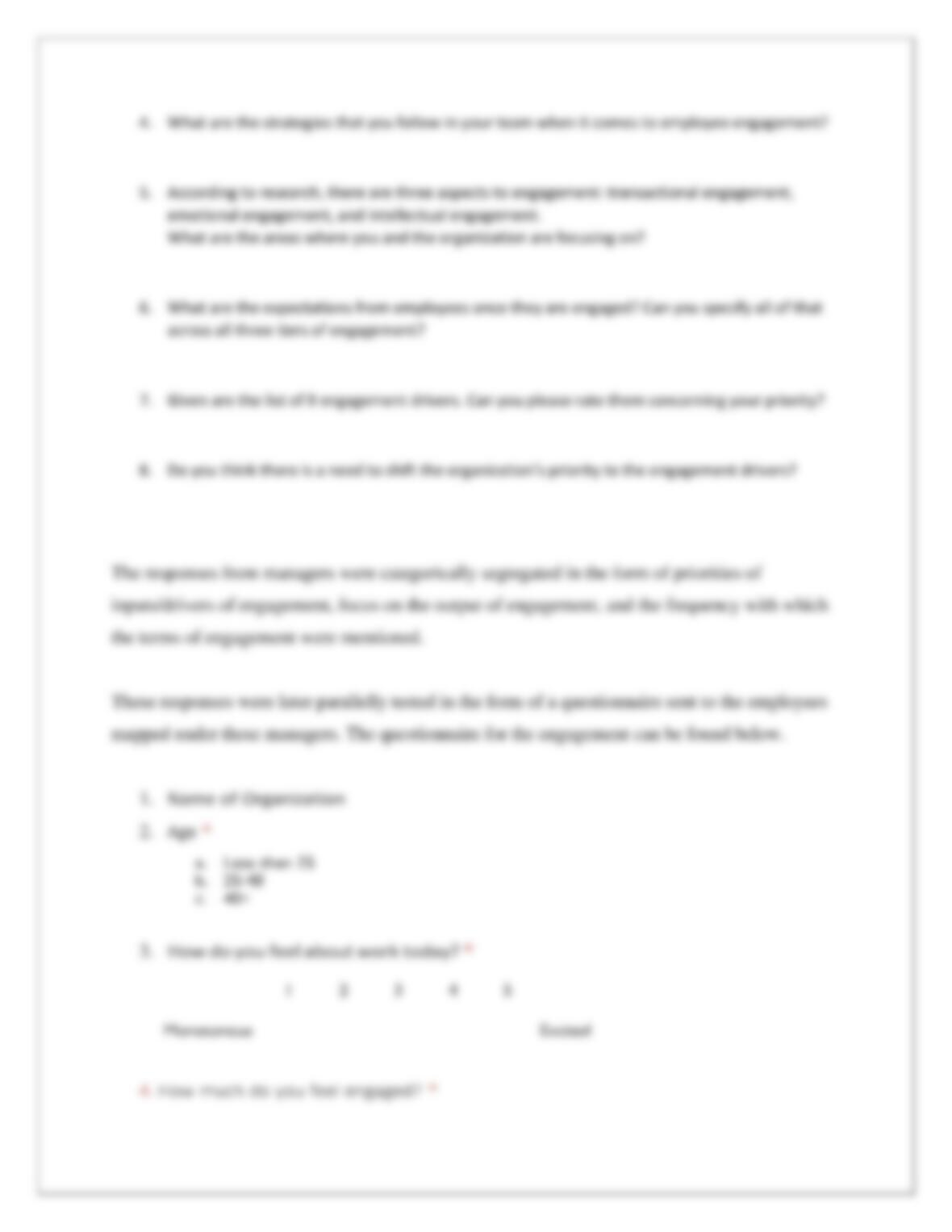
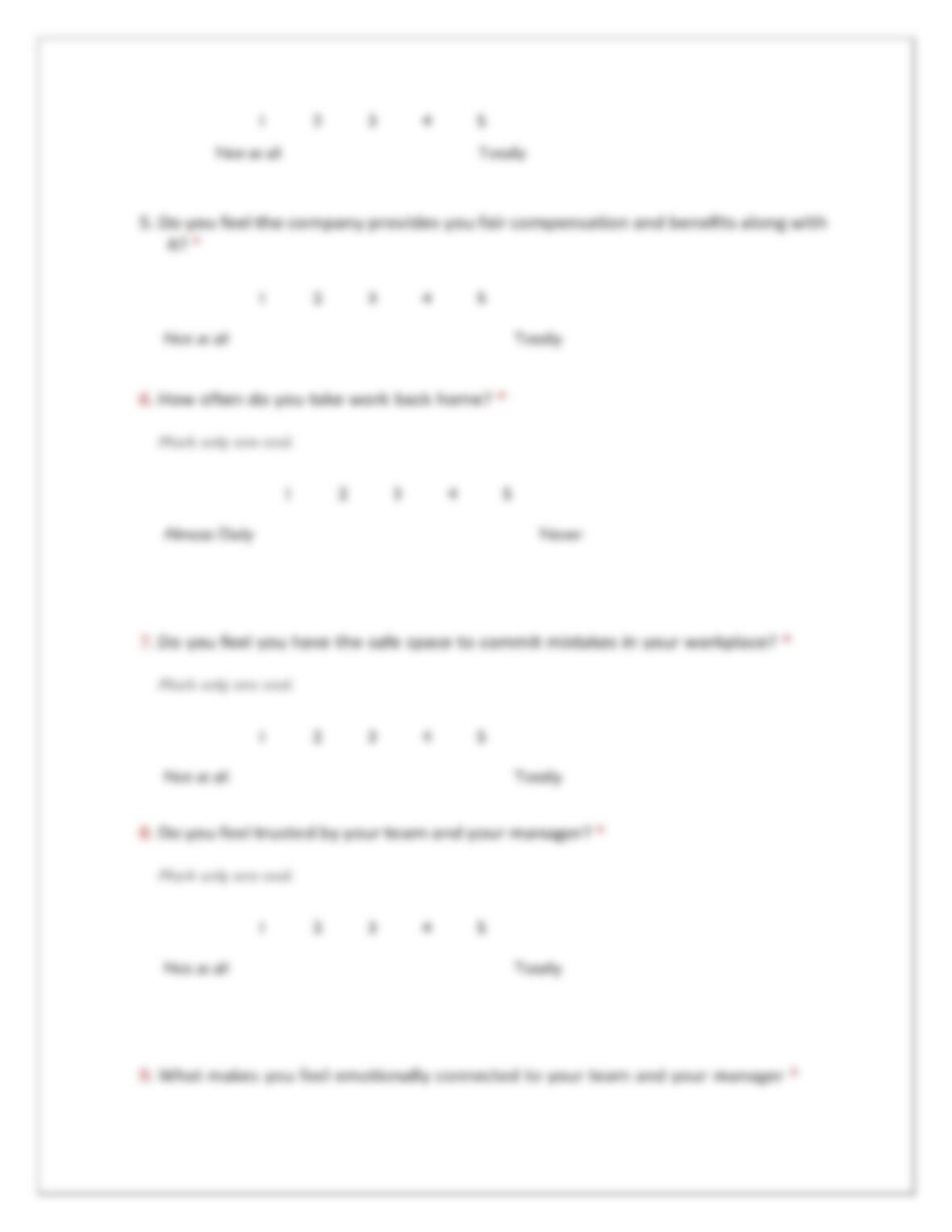
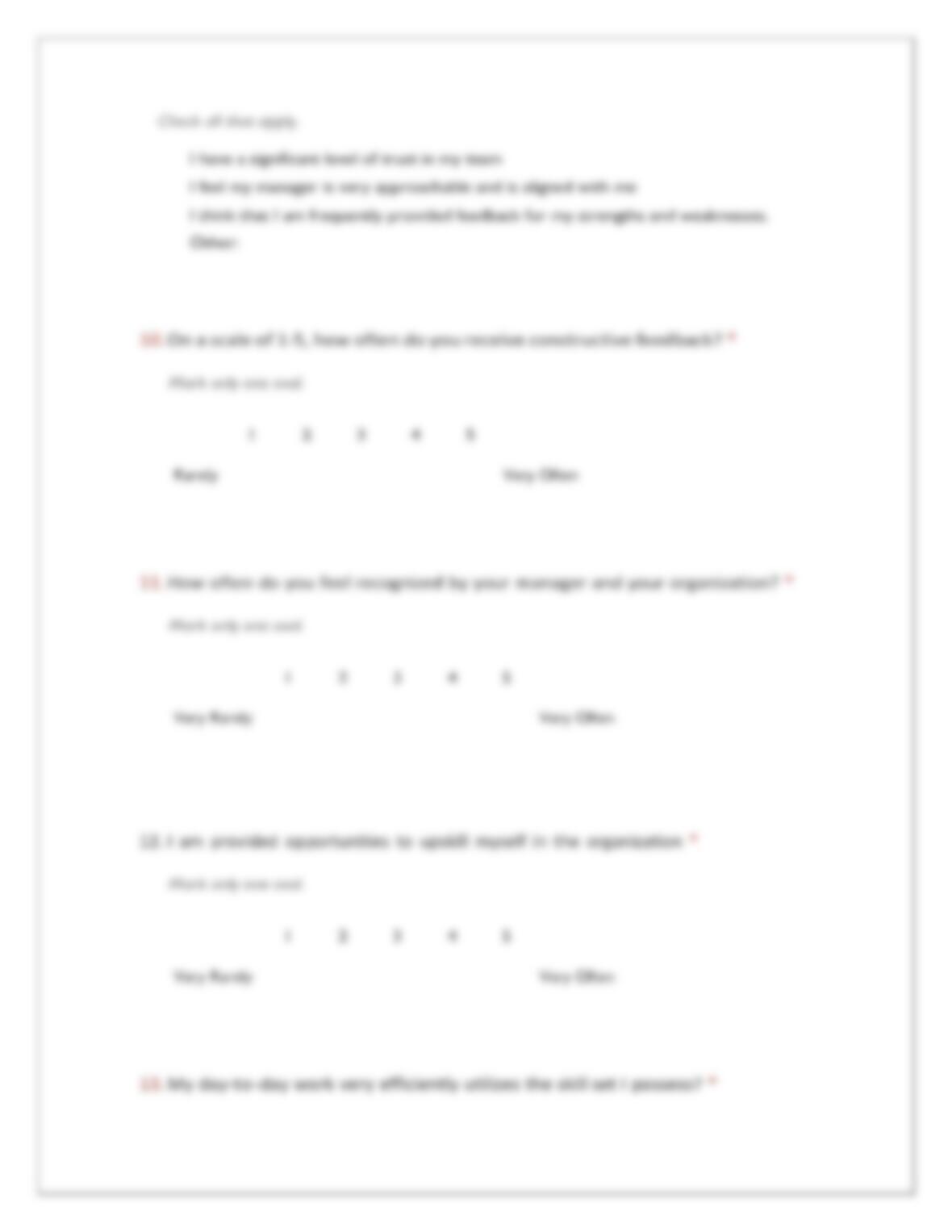
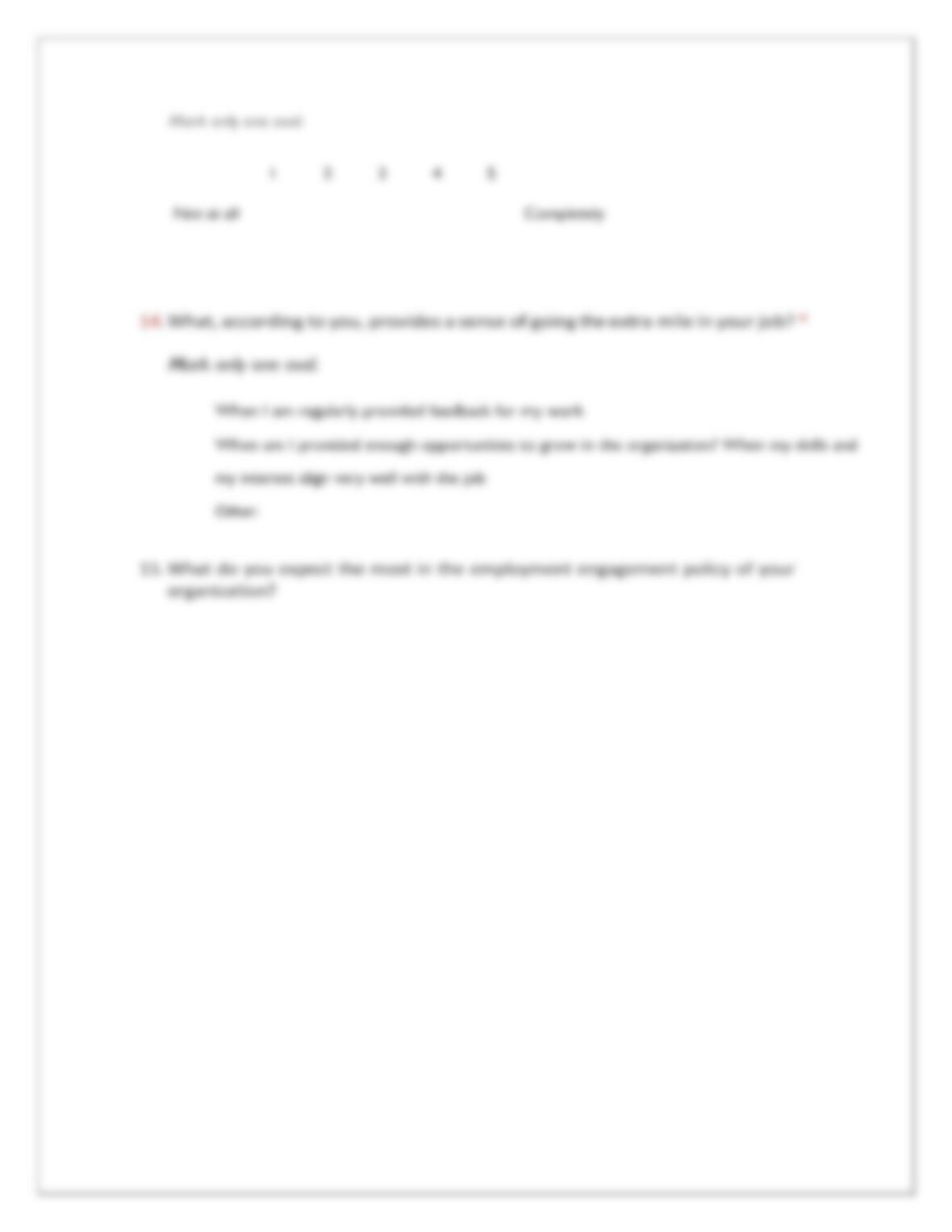
The interview questions asked to managers are presented below: