Running head: MINORITY GROUP FIRST-GENERATION STUDENTS 1
Minority Group First-Generation Students and Student Retention
Rates: Possible Challenges for These Students
Phillip Christian
Central Washington University
MINORITY GROUP FIRST GENERATION STUDENTS
2
Abstract
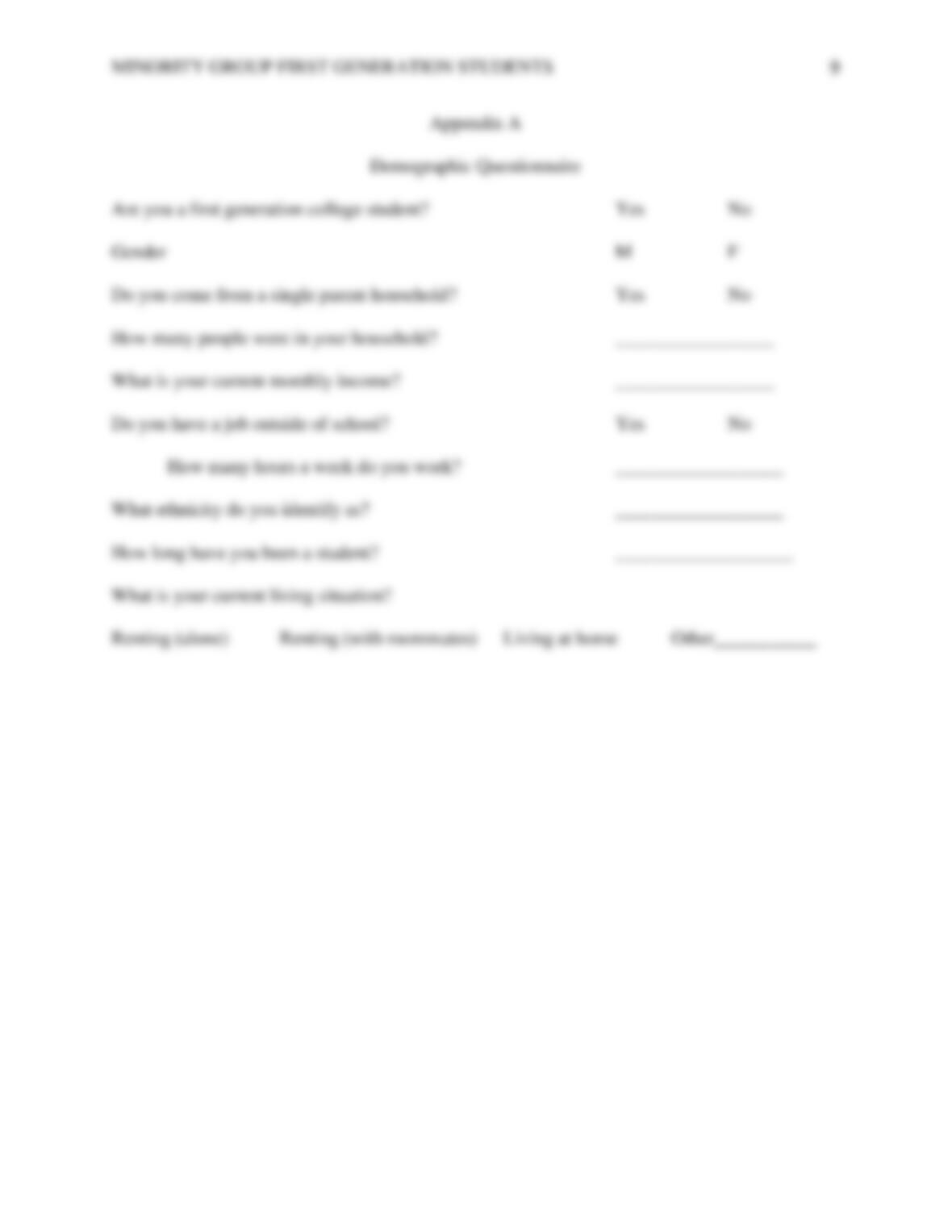
This proposed study will focus on underrepresented minorities amongst first-generation college
students. It will include students from institutions of both high and low acceptance rates, trying
to target as many groups as possible ranging from high to low income family situations. The
method of research will be primarily questionnaire, making this a qualitative study, while
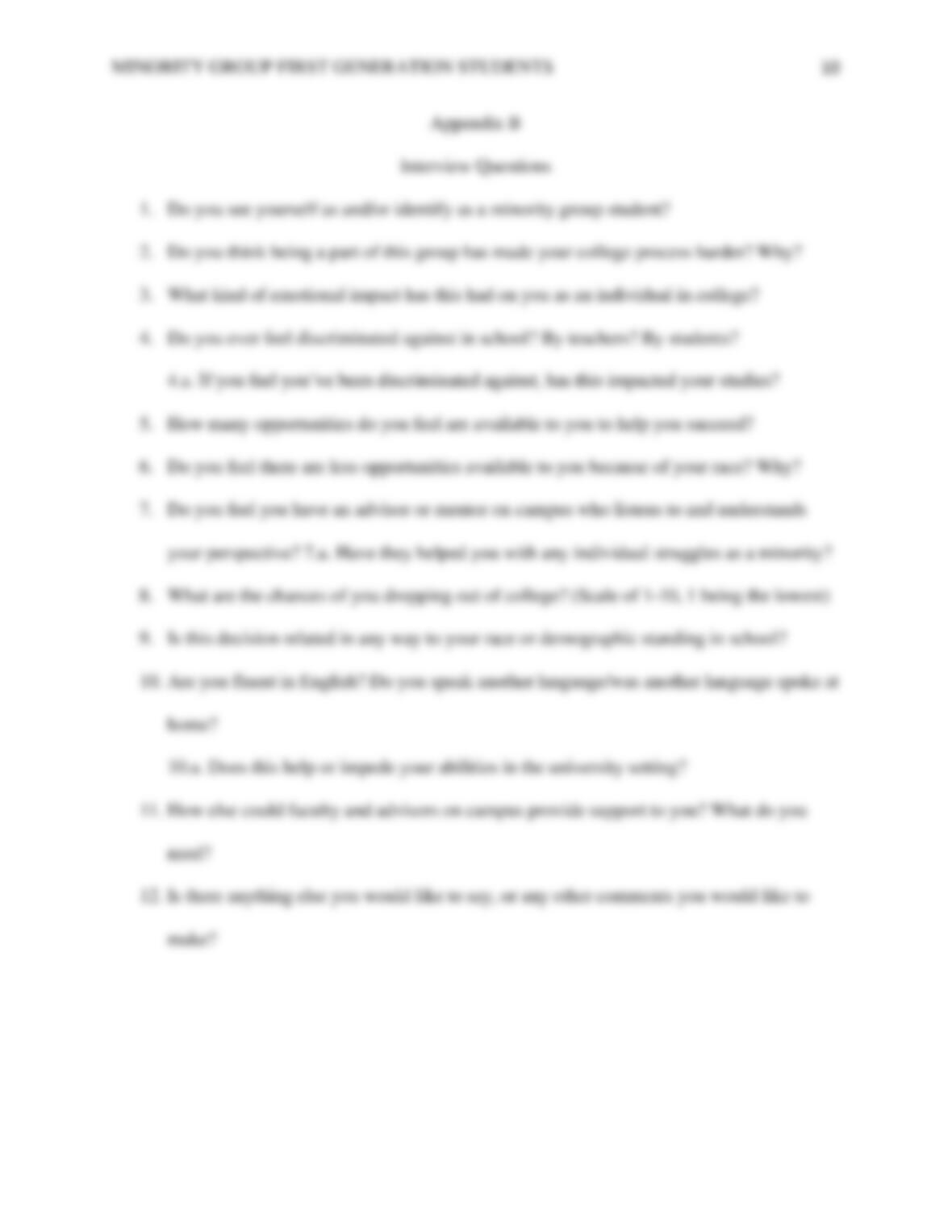
including a more in-depth interview process with qualified students in an attempt to gain deeper
insight into their personal struggles and adversities associated with being part of a minority
student population. The study participant minimum is 100 students from no less than three
institutions. Target age range is 18 to 25 and as close to fifty percent male and fifty percent
female as is possible, keeping in mind that as it is a target population, available and willing
subjects can differ. The desired outcome of this study is to verify that student dropout is a larger
problem in minority groups and provide some interview insight into where and why these
problems arise.
MINORITY GROUP FIRST GENERATION STUDENTS
3
Minority Group First-Generation Students and Student Retention
Rates: Possible Challenges for These Students
The main focus of the proposed study is to re-verify that college dropout is higher
amongst minority groups, and then aims to delve into why this seems to be a problem. Is it a lack
or resources, family situation, income and financial problems, an emotionally related component,
or some other factor? The identified first-generation minority students will be contacted and
requested to attend the interview process to explain and record first hand their individual
experiences and struggles. This identification of challenging factors can help further research
into improvement in the designated areas, and discover if similar struggles are being faced at
other universities by similar demographic students.
Literature Review