MINISTRY OF EDUCATION &
TRAINING
HOA SEN UNIVERSITY
FACULTY OF ECONOMIC & BUSINESS
Report
Topic
COCA COLA VIETNAM MARKETING
ANALYSIS 2019-2021
Subject : Introduction to Marketing
Lecture : Mai Thị Thu Trang
Class : MK203DE01 – 0700
Semester : 2031
Members
Vũ Trường An 22014490
Đỗ Nguyễn Ngọc Diệp 22007187
Phạm Thị Hoài Nhi 22001747
Huỳnh Thị Ngọc Trân 22002410
Ho Chi Minh City, 24th December, 2021
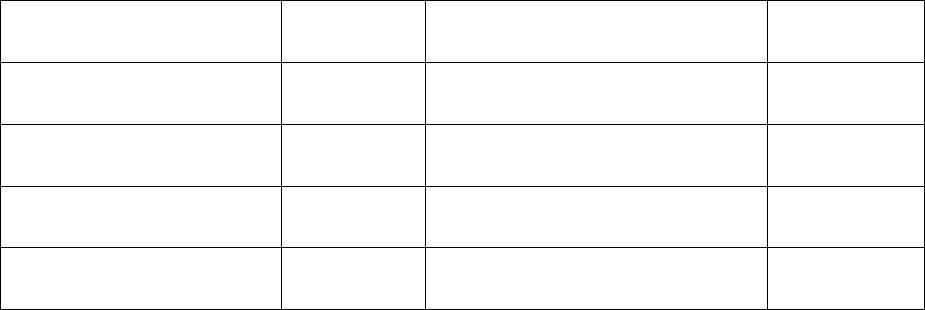
Group activities process
Name
Student ID
Task
Assessment
Vũ Trường An
22014490
STP+ complete report
100%
Đỗ Nguyễn Ngọc Diệp
22007187
Macro environment+4P+Swot
100%
Phạm Thị Hoài Nhi
22001747
Micro enviroment
100%
Huỳnh Thị Ngọc Trân
22002410
Presentation slides
100%
Abstract
On the beverage market today, there are many types of beverages produced by many
different beverage companies. However, it must be said that the Coca Cola brand is
considered the most successful product in the Vietnamese market with its nationwide
coverage. To achieve great success not only in the Vietnamese market but also in the
world market, it is clear that Coca Cola must have special marketing strategies. To
learn more about the widespread development of Coca Cola company, I would like to
analyze the marketing strategies Coca Cola has implemented in Vietnam.
The report is the result of 4 weeks, we have collected information and analyzed the
factors that have affected the marketing strategy of Coca Cola company in Vietnam
market.
Thank you
First of all, we would like to express our grateful to Ms. Mai Thi Thu Trang – who
taught the subject Introduction to Marketing and helped us complete the report. After
this course we have acquired knowledge on how to create value for customers,
strategies to build customer value and bring profits to the business. However, this
report still has many shortcomings, we hope to receive your suggestions to improve
this report.
We sincerely thank you!
Table of content
1. COMPANY INTRODUCTION …………………………. Error! Bookmark not defined.
2. MARKETING ENVIRONMENT ANALYSIS ………………………………………………… 1
2.1. Micro environment …………………………………………………………………………………. 1
2.1.1. The company ……………………………………………………………………………………. 1
2.1.2. The firm’s suppliers …………………………………………………………………………… 5
2.1.3. Suppliers‟ Information : …………………………………………………………………….. 5
2.1.4. Competitors ……………………………………………………………………………………… 8
2.1.5. Marketing intermediaries …………………………………………………………………. 11
2.1.6. Customers ………………………………………………………………………………………. 11
2.1.7. Publics. ………………………………………………………………………………………….. 12
2.2. Macro environment ……………………………………………………………………………….. 19
2.2.1. Demographic ………………………………………………………………………………….. 19
2.2.2. Economic ……………………………………………………………………………………….. 20
2.2.3. Natural …………………………………………………………………………………………… 21
2.2.4. Technological …………………………………………………………………………………. 23
2.2.5. Political …………………………………………………………………………………………. 25
2.2.6. Cutural …………………………………………………………………………………………… 26
3. STP ANALYSIS…………………………………………………………………………………………. 31
4. 4P‟S ANALYSIS ………………………………………………………………………………………… 33
4.1. Product …………………………..……………………………………………………………………. 33
4.1.1. Three levels of product…………………………………………………………………….. 33
4.1.2. Individual Product Decisions ……………………………………………………………. 34
4.1.3. Branding ……………………………………………………….……………………………….. 41
4.2. Price ……………………………………………………………………………………………………. 42
4.2.1. Pricing strategy of Coca–Cola …………………………………………………………… 42
4.2.2. Product Mix Pricing Stategy ……………………………………………………………. 42
4.2.3. Price Adjustment Strategies ……………………………………………………………… 43
4.2.4. Discount And Allowance Pricing ……………………………………………………… 43
4.2.5. Segmented Pricing ………………………………………………………………………….. 43
4.3. Place ……………………………………………………………………………………………………. 44
4.3.1. Channel members ……………………………………………………………………………. 44
4.3.2. Channel structure ……………………………………………………………………………. 46
4.4. Promotion …………………………………………………………………………………………….. 49
4.4.1. Promotion tool ………………………………………………………………………………… 49
4.5. Promotion Mix strategies ……………………………………………………………………….. 55
4.5.1. Push strategy ………………………………………………………………………………….. 55
4.5.2. Pull stratrgy ……………………………………………………….…………………………… 56
5. SWOT ANALYSIS …………………………………………………………………………………….. 57
5.1. Strength ……………………………………………………………………………………………….. 57
5.2. Weakeness……………………………………………………………………………………………. 58
5.3. Opportunities…………………………..……………………………………………………………. 61
5.4. Threats …………………………………………………………………………………………………. 62
CONCLUSION ……………………………………………………………………………………………… 63
REFERENCE ………………………………………………………………………………………………… 63
1
1.
2. MARKETING ENVIRONMENT ANALYSIS
2.1. Micro environment
2.1.1. The company
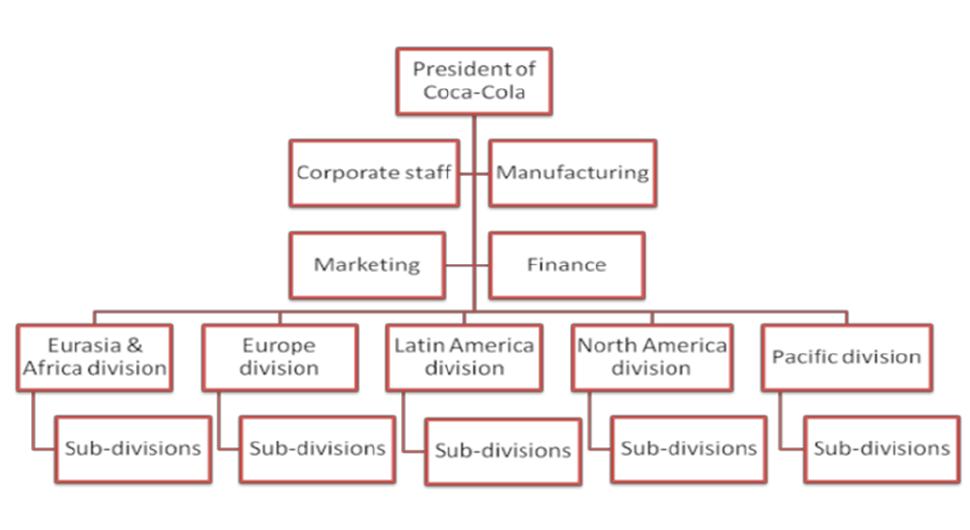
Figure 2: Organizational Structure
(Source : juliegilhuly.wordpress.com)
The Coca-Cola Company is divided into two parts, each with its own range of
activities: The Coca–Cola Company (TCC) and The Coca-Cola Bottle (TCB), in
which:
– TCC (The Coca-Cola Company): is in charge of manufacturing and supplying Coca-
Cola juice to the factories in charge of brand marketing and management.
– TCB (The Coca Cola Bottle): is in charge of manufacturing, storage, distribution,
and servicing for Coca Cola products.
That is, TCB is in charge of the third P (Place), whereas TCC is in charge of the
remaining three Ps (Price, Product, and Promotion), and this model is used globally,
including in Vietnam.
2
Coca-Cola has three TCC representative offices and three bottling operations in
Vietnam, with 1600 employees in Ho Chi Minh City, Hanoi, and Da Nang, 91% of
Coca-Cola Vietnam’s suppliers are domestic suppliers. All these points operate under
a unified system under the head office in Thu Duc, Ho Chi Minh City. The system is
made up of the following departments:
The Finance and Accounting Department has the following main functions:
– Analysis of the company’s financial situation
– Identify and forecast business opportunities
– Develop a cost saving plan
– Ensure financial activities in accordance with the law
The Operations Department has the following main functions:
– Production planning: this department will plan from the input of raw materials from
the beginning to the completion of the product.
– Procurement of materials: this department directly works with suppliers of materials,
equipment, and packaging to ensure correct, sufficient and timely supply.
– Engineering: planning, designing, installing, operating and maintaining all machines
and production lines
– Logistics and coordination: Receiving and processing orders to deliver to the
delivery points on time, quality, quantity and location
– Quality management: to ensure that the products are manufactured in accordance
with international standard formulas
– Production: responsible for production, giving initiatives to improve production
efficiency
Marketing department:
3
This department at branches is usually located in the sales department but still
operates with a separate function:
– Provide marketing strategies suitable for each market such as advertising, promotion,
market research, product promotion. Marketing activities are divided into 2 parts:
Brand management and Marketing activities management.
Sales Department:
Executes the company’s marketing and sales strategies and ensures sales, pricing,
distribution, product demonstrations, feedback gathering, communication , processing
consumption information and recovering bottles.
Coca Cola Vietnam’s sales system is divided into three regions: North – Central –
South with separate management levels: domain manager is Marketing department:
this department at branches is usually located in the sales department but still operates
with a separate function:
Provide marketing strategies suitable for each market such as advertising, promotion,
market research, product promotion. Marketing activities are divided into 2 parts:
Brand management and Marketing activities management.
Sales Department: executes the company’s marketing and sales strategies and ensures
sales, pricing, distribution, product demonstrations, feedback gathering,
communication , processing consumption information and recovering bottles.
Coca Cola Vietnam’s sales system is divided into three regions: North – Central –
South with separate management levels: RSM (Regional Sales Manager), BUM
(Business Unit Manager), DSM (District Sales Manager) and ASM (Area Sales
Manager), SM (Sales Manager)
The sales system of the company is separated into two types: Direct sales and Indirect
sales.
– Direct selling system: Products are delivered in the channel from the manufacturer to
the final buyer. This buyer might be a consumer or a reseller for other client groups
4
such restaurants, supermarkets, restaurants, and hotels. Benefits include a big amount
and frequent consumption.
– Indirect sales system: Products are delivered from the manufacturer to the end
customer via trade middlemen, distributors, agents, and so on. This system caters to a
modest number of customers. Advantages include cost reductions and the use of
distribution intermediaries’ available resources.
Moreover, in the sales system, there is a training and skills development department
for training employees purpose
The Human Resources Department is responsible for the following primary
functions:
– In charge of human resource planning, human resource policy, remuneration,
benefits, promotion, and dismissal.
– Employee training, recruitment, and labor relations – Resource development – Create
a good working environment for staff
Furthermore, Coca-Cola Vietnam offers training programs on a monthly basis to
develop skills, professional credentials, and contests to promote current capacity and
train new resources.
Information Technology Department
This section oversees the company’s information network and connects data with other
Coca-Cola locations.
Overview : Each Coca-Cola TCC office in Vietnam has fundamental departments that
operate very efficiently and have a close relationship between leaders and
departments. Each department is responsible for specific, distinct, and specialized
activities. However, with this functional organizational structure, the relationship
between departments is limited and responsibilities are distributed. Furthermore,
administrators must receive a large number of directives from leaders and must
coordinate departments. This is Coca Cola Vietnam’s weakness.
2.1.2. The firm’s suppliers
As mentioned in the upper part, 91% of Coca-Cola Vietnam’s suppliers are domestic
suppliers, which improves the brand‟s image with customers. Coca Cola‟s main
suppliers are KCP Corporation, SOVI Bien Hoa Packaging JSC, Stepan Company,
Dynaplast Packaging Viet Nam.
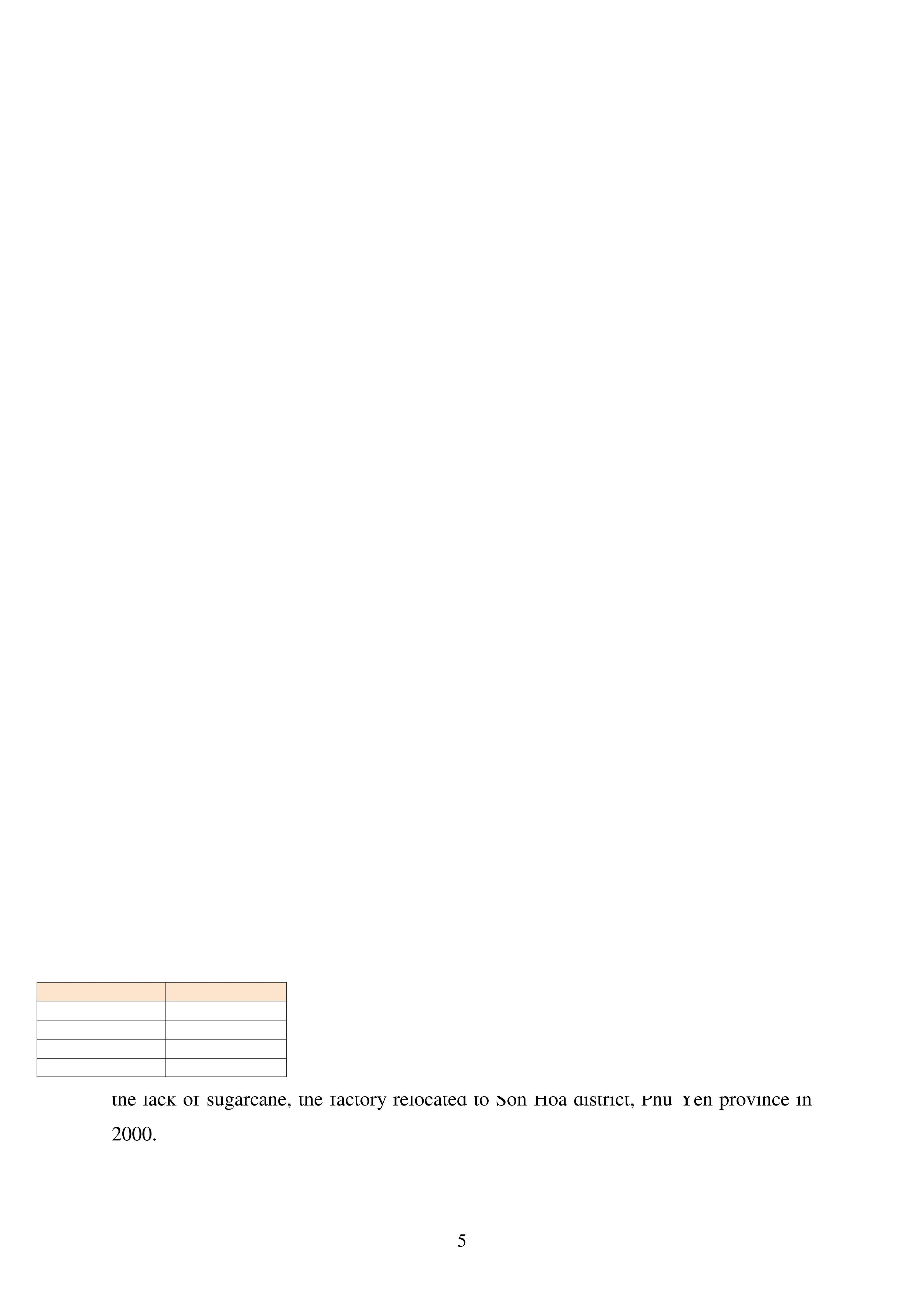
Suppliers
Supply Materials
KCP Corporation
Refined sugar
SOVI Bien Hoa Packaging JSC
High-quality paper box carton
Stepan Company
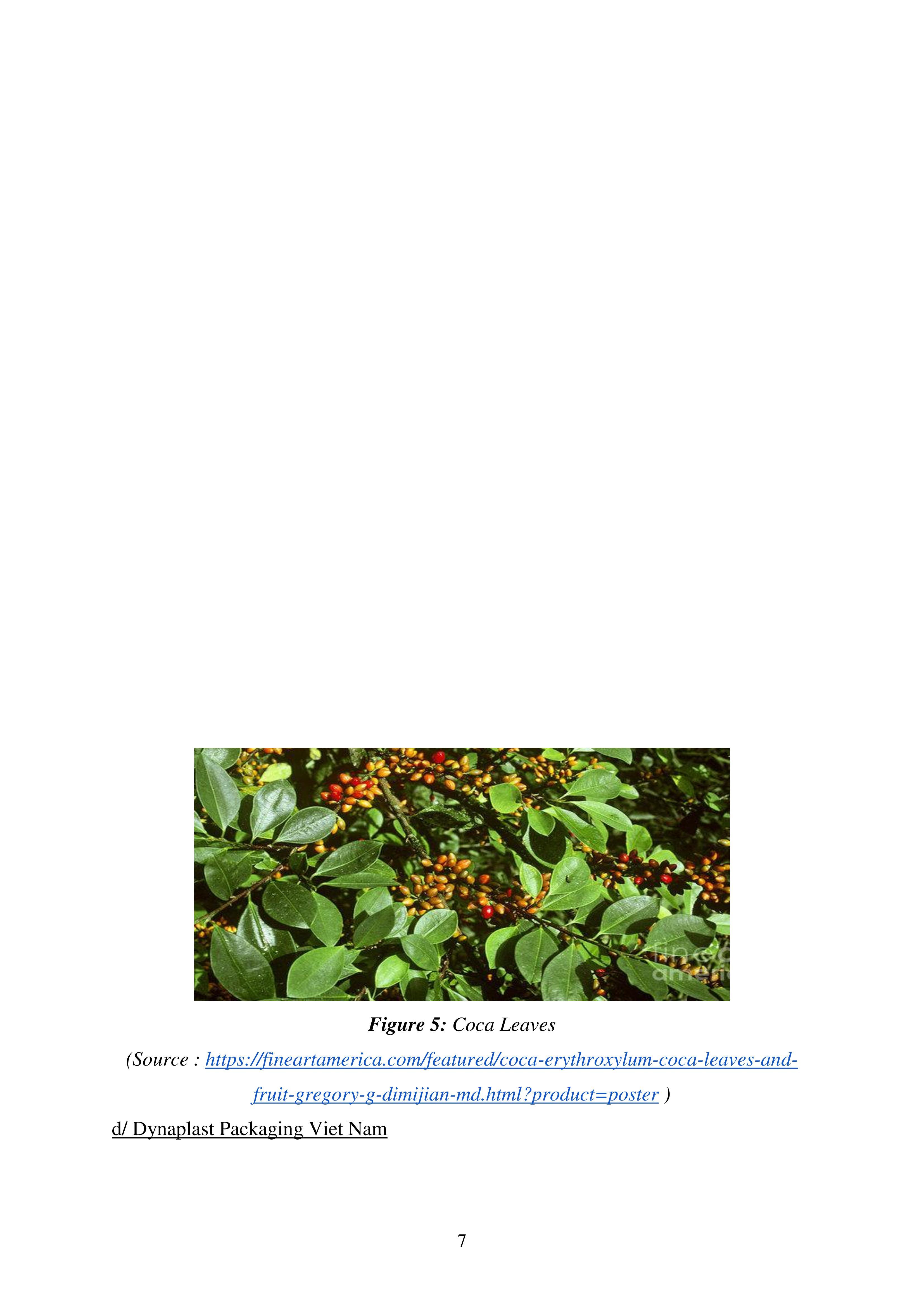
Coca Cola Leaves
Dynaplast Packaging Viet Nam
High-quality bottles
Figure 3: Suppliers of Coca-Cola