Cafeteria Customer Service Survey Report
Preliminary Findings of a Student Survey
of LAUSD Cafeteria Meals
December 2005
Sponsored by the
Healthy School Food Coalition

Background and Introduction
The Healthy School Food Coalition (HSFC), established in 2001, is a grassroots
organization of committed parents, teachers, students, cafeteria workers and
community members seeking to mobilize the school community to improve access to
affordable and healthy foods for children and youth on school campuses. In the span
of three years, the Healthy School Food Coalition has grown from a handful of
members to a broad, ethnically diverse organization of several dozen active members
representing 23 schools in the Los Angeles Unified School District. These schools are
located in predominantly low- to moderate-income neighborhoods and rely on
federally funded free and reduced-price student meal programs. The HSFC played an
integral part in the successful passage of the Healthy Beverage (2002) and Obesity
Prevention Motions (2003), and continues to be a vehicle for community members to
effectively engage and work closely with their school board representatives and other
district officials.
Since its inception, the primary issue of importance for members of the HSFC has
been the nutritional value, quality and appeal of the meals served in the cafeterias.
Through the HSFC, students and parents have shared with board members and food
service representatives recurring problems with the food at their schools: problems
such as undercooked meat, moldy bread, expired milk, human hair in the meals, and
even instances where cafeterias have run out of food. Currently there is no system in
place for community members, especially students, to report or record incidents of this
nature at their school sites. Students are often told that they should report their
concerns to the school principal or cafeteria manager. The truth is, most students feel
intimidated and are afraid of speaking to any school site official about their school food
concerns; even if they did feel comfortable, many feel discouraged in doing so
because they believe nothing will be done to resolve the problem. That is why in early
2005 the HSFC decided it was time to begin tracking and recording food related
problems at schools in order to capture the full extent of the situation. We also felt this
project was a way to begin validating the incidents students experience on a daily
basis and to develop positive solutions to improve cafeteria service. The Cafeteria
Improvement Motion is an important step in this direction.
In August 2005, the HSFC formally launched its Cafeteria Customer Service Survey
Project. The survey tool used was designed by 12 students from Belmont High
School. The purpose of the survey was for students to document specific incidents or
problems that occurred with the meal served during lunch. Students completed the
surveys based on anonymity, providing only their grade level and the name of their
school. Over a period of four months, 189 surveys were completed at 21 schools.
This report will provide you with our preliminary findings.
We continue to have completed surveys sent to us everyday. We plan to continue this
project in 2006 and expand to 20 additional schools. A full report will be issued in the
spring of 2006.

Surveys Were Completed at the Following Schools:
Belmont High School
Central High School
Fairfax High School
Jefferson High School
John Marshall High School
Manual Arts High School
South Central High
Berendo Middle School
Virgil Middle School
Carver Middle School
Griffith Middle School
LA Academy Middle School
Horace Mann Middle School
Commonwealth Elementary School
Hoover Street Elementary School
Grant Elementary School
Western Avenue Elementary School
Magnolia Elementary School
Norwood Elementary School
Union Avenue Elementary School
49th Street Elementary School
189 students from grade levels 3 to 12 completed surveys.
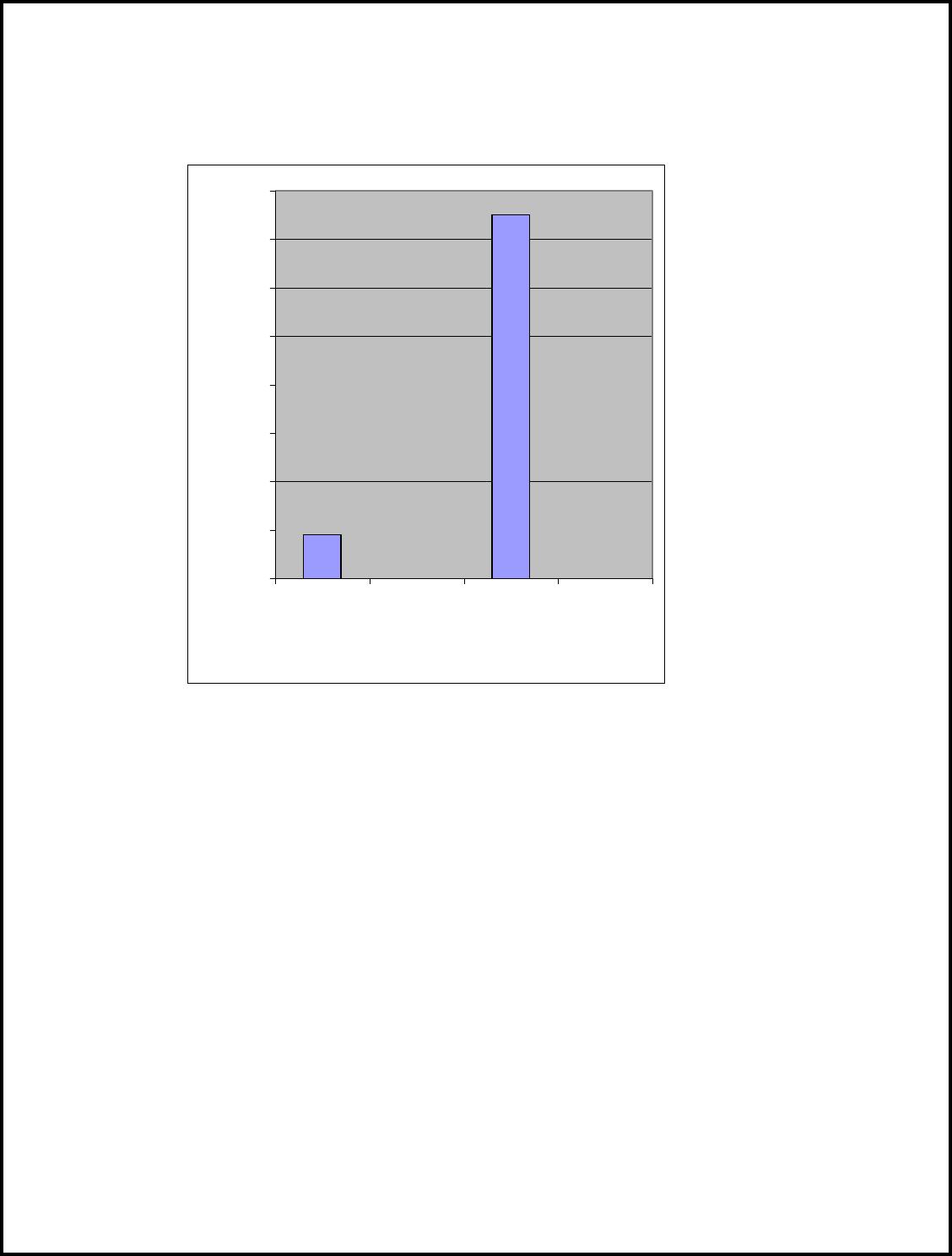
How long is your lunch period?
Of the 168 students who answered this question, 90% reported that
their lunch periods are 30 minutes or more and 10% reported that
their lunch periods are 20-29 minutes.
0
20
40
60
80
100
120
140
160
20 – 29
mins
= 30 mins
Length (minutes)
Students surveyed
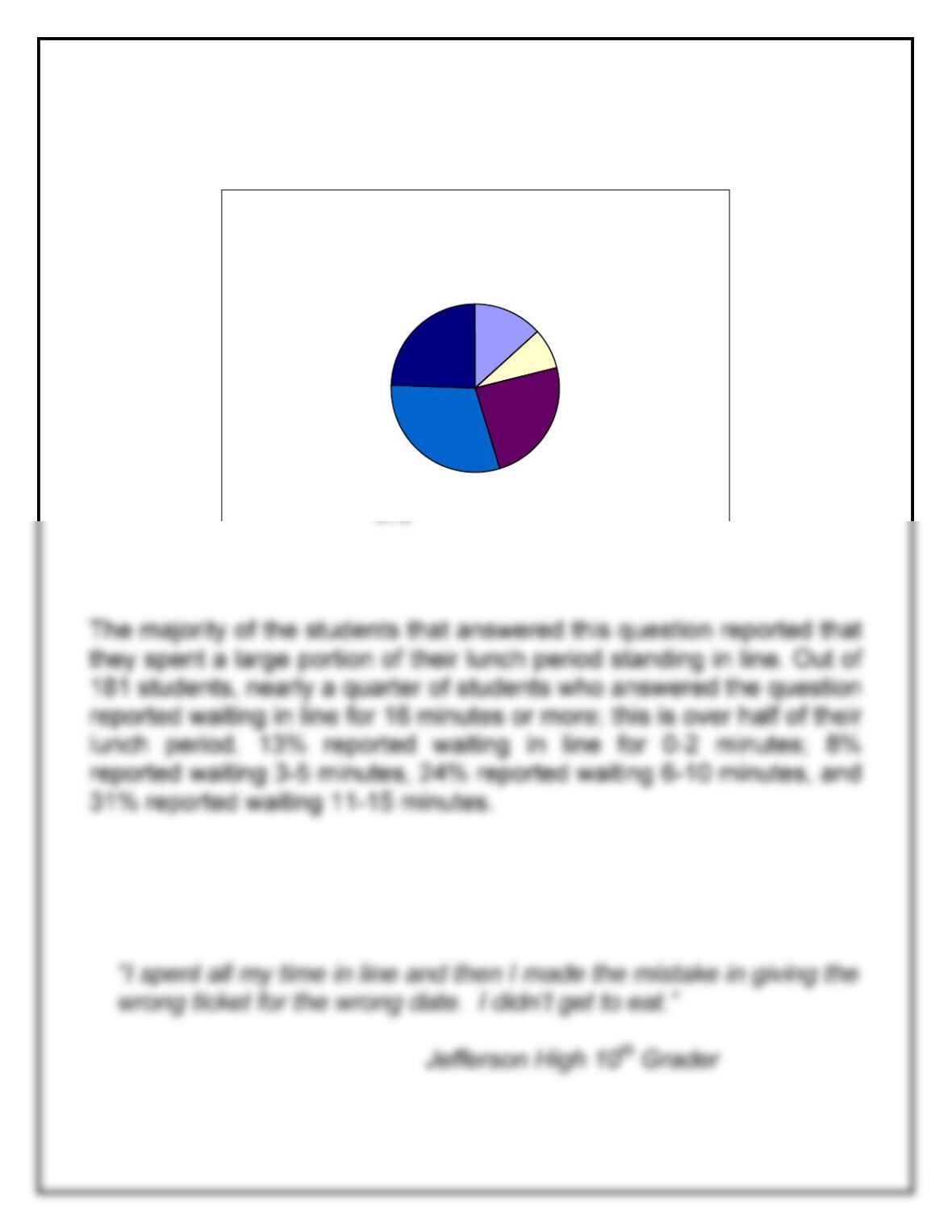
How long did you wait in line?
3 – 5 mins
8%
6 – 10 mins
24%
11 – 15
mins
= 16 mins
24%
0 – 2 mins
13%