RELIGION and
MORALITY
Religion as ground for morality
In this presentation, we will explore the link between religion and morality. Some
scholars thnk that they are mutually reinforcing. That is, they go hand-in-hand.
Others think that morality goes beyond religion and is not dependent on it to be
meaningful. In other words, they are mutually exclusive.
RELIGION AS GROUND
FOR MORALITY
The person is fundamentally
open to the
Absolute/Transcendent
We can say that that the basic position of those who regard religion as ground for
morality is the claim that the Human person is fundamentally open to the absolute or
transcendent. Without this belief in the fundamental openness to the absolute,
morality could have not been instituted or be made possible.

Religion is the human
response to the sacred, that
which is separated in
everyday life. The sacred
has particular value (in
myths and rituals) because it
reminds humanity of its
origins and its contact with
a power that is beyond this
world.
Religion is the human response to the sacred that which is separated in everyday life
the sacred has particular value needs and rituals because it reminds humanity of its
origins and its contact with a power that is beyond this world . Every religion in the
world has an ethical or a moral code by which all adherents or believers follow . This
could be in a form of ten commandments, a set of ethical laws, and similar, which
over time have been phrased, rephrased, negotiated, discussed, and and even
changed as the community of believers have tried to interpret what they believed to
be God’s message to the people .
KEY CONCEPTS
RELIGION
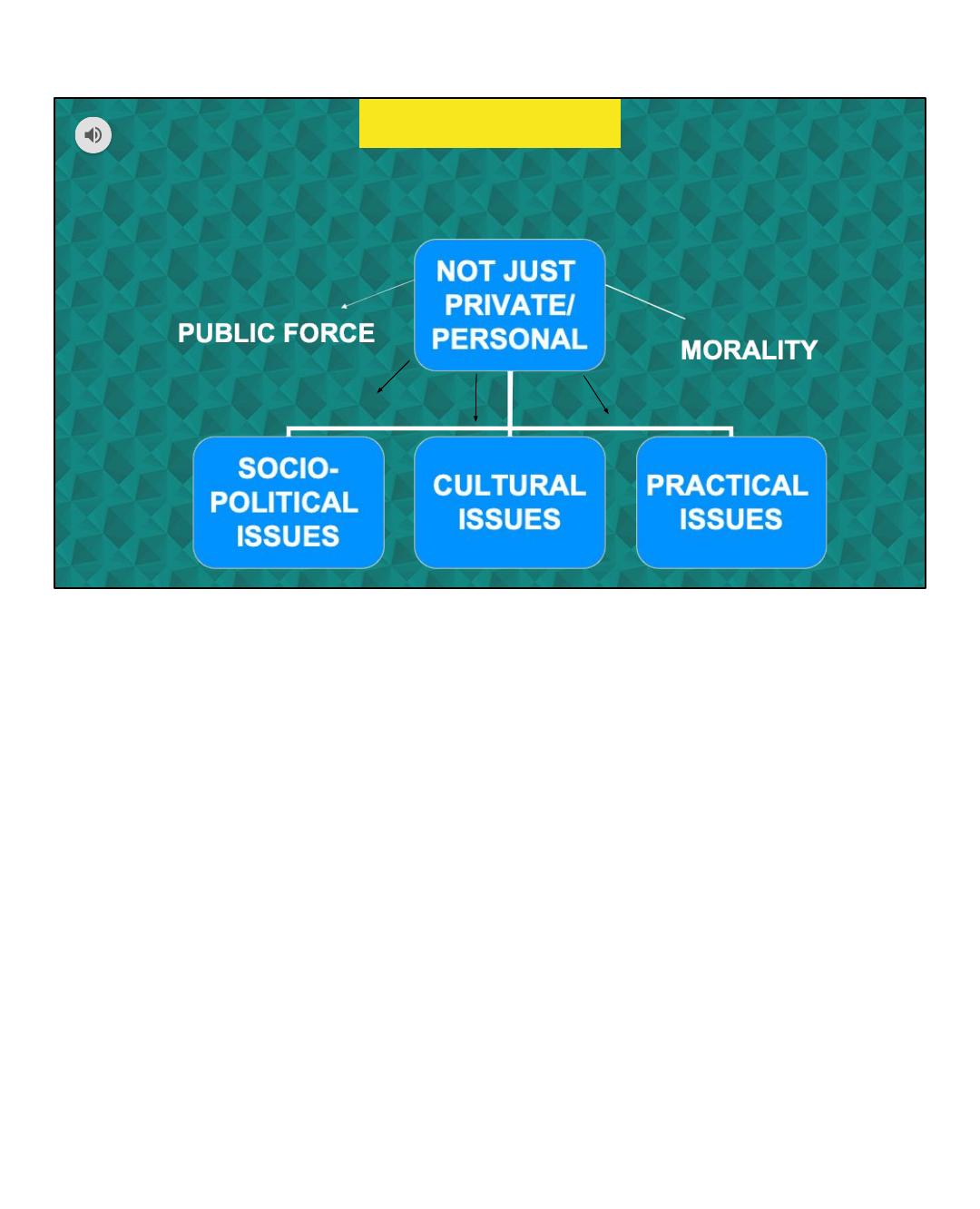
Secularism is an ideology which aimed to sideline religion as purely private affair. In
no uncertain terms democratic societies have drawn the line between the state and
religion so religion and religious affairs are considered to be private in so far as they
do not attempt to cross over towards the domain of the public such as politics . we
can trace the development of secularism from the 17th century specifically from the
ideas of rene descartes who gave us this sharp contrast between theology and
science. since then , science has come to be understood as a secularizing agent.
Even in the midst of secularism , religion has never gone away . i think that more than
ever , many people have come to embrace religion. Religious identity becomes the
wellspring of convictions regarding contentious political and social issues. For better
or worse, some people use their religious beliefs as the justification for particular
actions. Religion continues to be a strong public force, whether it is used to
underscore the defense of human rights on one hand, and the subjugation of people
who are outside of their “faith” on the other hand.

QUESTIONS FOR
DISCUSSION
Do you think religion is
relevant to ethics?

INTRODUCTION to
BUDDHIST ETHICS
In this slide, we are going to explore Buddhist ethics. Why Buddhism? Why not
Christianity? In Asia, Buddhism is a major religion, but not as widely studied as
Christianity especially in the Philippines. Buddhism also offers us new ways of seeing
religion and its connection to ethics because Buddhism is claimed by some scholars
as “atheistic religion.” What this means is that insofar as Buddhism does not believe
in a God who created the universe, it differs significantly from monotheistic religions
such as Christianity, Judaism and Islam. The claim, Buddhism is an atheistic religion
also connotes that its ethical precepts may be considered more or less similar to
secular ones.
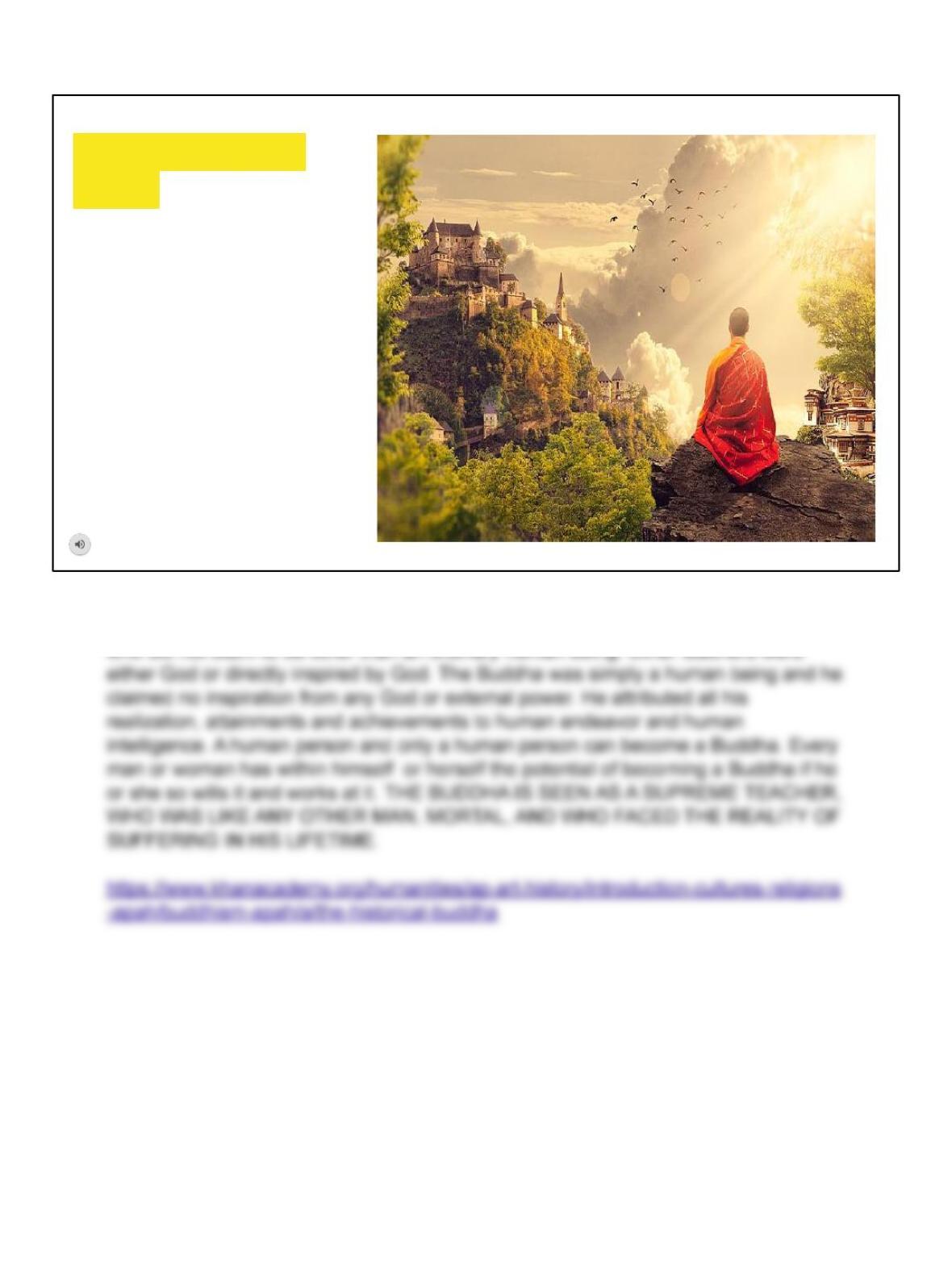
The Humanity of the
Buddha
THE BUDDHA IS SEEN
AS A SUPREME
TEACHER, WHO WAS
LIKE ANY OTHER MAN,
MORTAL, AND WHO
FACED THE REALITY
OF SUFFERING IN HIS
LIFETIME.
Among the founders of the world’s major religions, the Buddha was the only teacher