HUMAN PHYSIOLOGY
Review Exam II Spring 2018
Nervous System
1. Define membrane potential.
• All body cells display a membrane potential, which is a separation of positive and
negative charges across the membrane. The positive charge is on the outside and
the negative on the inside.
2. Explain how the equilibrium potential of Na+ and K+ are established by their concentration
and electrical gradient. Why is resting potential not just a simple addition of the two?
• Negative sign means the charge INSIDE the cell
• Normal cell has high concentration of K+ (-90 mV) on inside and high
concentration of Na+ (+60 mV) on outside
• In a non-living cell, you could theoretically add the two to make -30 mV.
However, in a living cell, potassium is 50-75 times more permeable than sodium;
so K+ flows out faster than Na+ flows in and this is why we cannot just add them.
So instead of being -30 mV, it is actually -70 mV
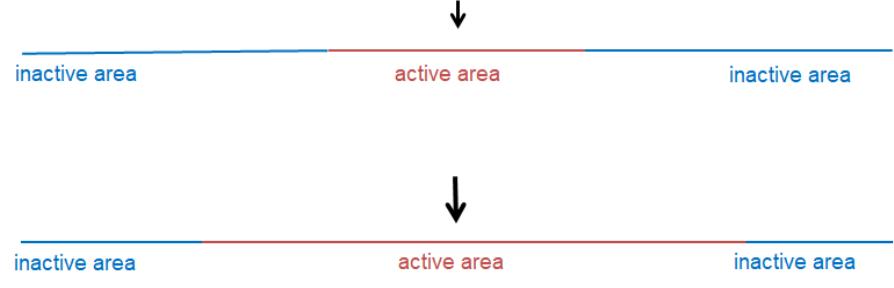
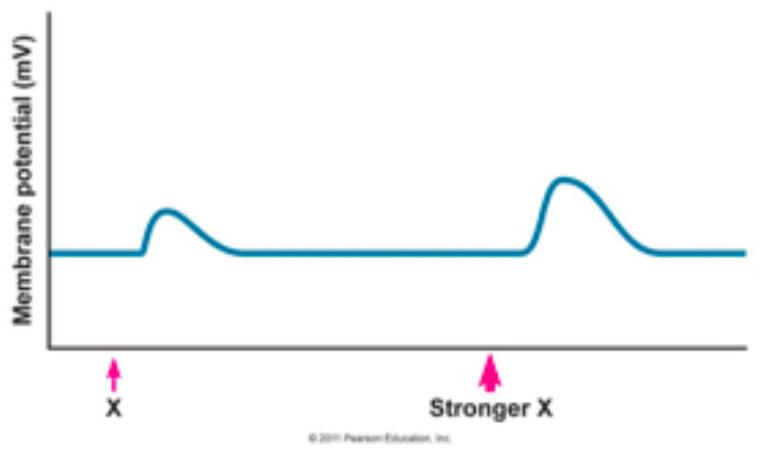
3. Diagram a graded potential. What does it mean that this is decremental?
• Decremental means short distance. When a stimulus hits the nerve membrane, the
farther away you get from the stimulus, the weaker it gets. A graded potential will
only stimulate an action potential if the stimulus is strong enough to reach the
axon hillock.
• Diagram:
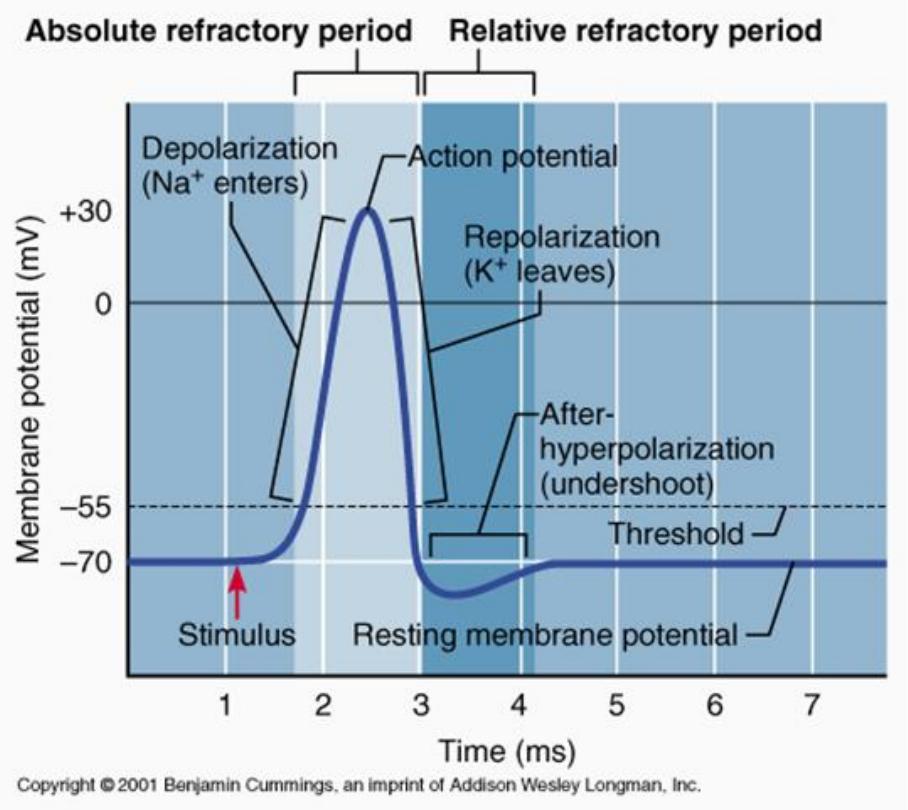
4. Diagram and label an action potential using the following terms; resting membrane
potential, threshold potential, depolarization, repolarization and hyperpolarization.
• Resting membrane potential: -70 mV
• Threshold potential: -55 mV
• Depolarization: going up to +30 mV
• Repolarization: going back down to -70 mV
• Hyperpolarization: -85 mV
• Diagram:
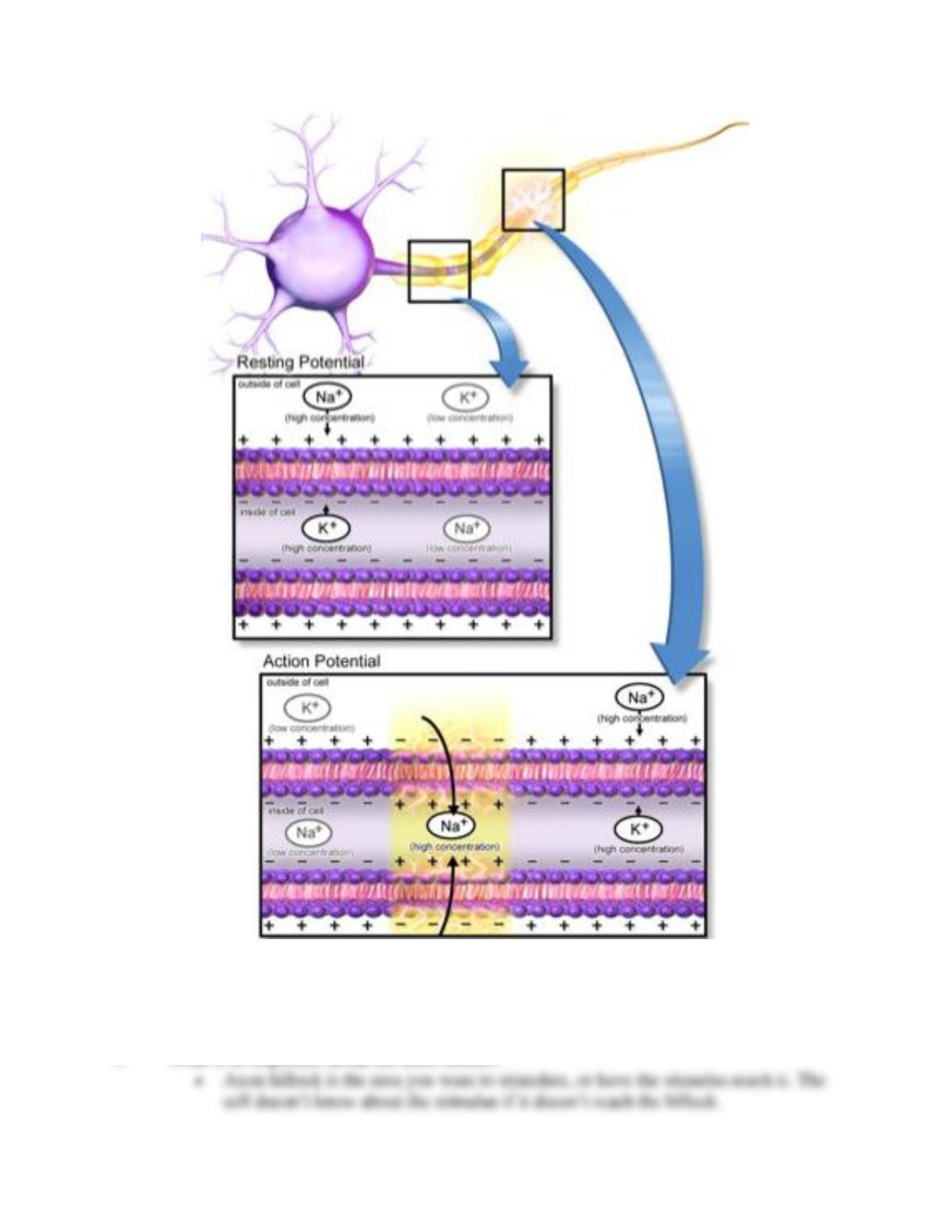
5. Explain what is occurring in each step of the diagram drawn in 4. Include the movement
of Na+ and K+ and the action of their channels.
• When threshold is reached at -55 mV, all the sodium channels open and the
sodium rushes in (depolarization) to +30 mV. At +30 mV, all the sodium channels
close and the sodium is trapped inside the cell. Also at +30 mV the potassium
channels open (repolarization) and brings the potential back to negative.
Potassium quickly pours out of the cell down its concentration gradient since it is
very positive inside due to sodium ions inside. Potassium leaves so fast that the
potential hyperpolarizes (go past -70 mV, all the way to -85 mV). Then, the cell
needs to reset (getting back to membrane potential). All this occurs in
milliseconds; can’t time it. The nerve is unusable for a fraction of a millisecond
during the reset phase, and then the whole process starts over again
6. A nerve impulse is a propagation of action potentials. What does this mean?
• There are many groupings of action potentials along the length of the axon. The
impulse gets passed along the nerve. The stimulus does not weaken