Regional policy
THE EUROPEAN
UNION
EXPLAINED
Regional policy is a strategic
investment policy targeting all EU
regions and cities in order to boost
their economic growth and improve
people’s quality of life. It is also an
expression of solidarity, focusing
support on the less developed regions.
Making Europe’s
regions and
cities more
competitive,
fostering growth
and creating jobs

CONTENTS
Why does the EU need
a regional policy?
Europe’s main investment policy
for growth and jobs………………..3
How does regional policy work?
A range of funds for growing regions
and cities ……………………….6
Maximising the impact of
EU investment
Targeted investment for growth
and jobs until 2020 …………….. 10
Outlook
EU regional policy 2014–20:
a new era of strategic spending …… 15
Find out more ……………….16
The European Union explained:
Regional policy
European Commission
Directorate-General for Communication
Citizens information
1049 Brussels
BELGIUM
Manuscript updated in November 2014
Cover and page 2 picture:
© iStockphoto.com/Voon Nam Fook
16 pp. — 21 × 29.7 cm
ISBN 978-92-79-41288-2
doi:10.2775/74781
Luxembourg: Publications Office
of the European Union, 2014
© European Union, 2014
Reproduction is authorised. For any use or reproduction
of individual photos, permission must be sought directly
from the copyright holders.
This publication is a part of a series that explains
what the EU does in different policy areas,
why the EU is involved and what the results are.
You can find the publications online:
http://europa.eu/pol/index_en.htm
http://europa.eu/!bY34KD
THE EUROPEAN UNION
EXPLAINED
How the EU works
Europe in 12 lessons
Europe 2020: Europe’s growth strategy
The founding fathers of the EU
Agriculture
Banking and finance
Borders and security
Budget
Climate action
Competition
Consumers
Culture and audiovisual
Customs
Digital agenda
Economic and monetary union and the euro
Education, training, youth and sport
Employment and social affairs
Energy
Enlargement
Enterprise
Environment
Fight against fraud
Food safety
Foreign affairs and security policy
Humanitarian aid and civil protection
Internal market
International cooperation and development
Justice, fundamental rights and equality
Maritime affairs and fisheries
Migration and asylum
Public health
Regional policy
Research and innovation
Taxation
Trade
Transport
3
REGIONAL POLICY
Investing in the EU’s less developed
regions
EU regional policy accounts for the single largest chunk
of the EU budget for 2014–20 (€351.8 billion out of a
total €1 082 billion) and is therefore the Union’s main
investment arm.
These resources are used to finance strategic transport
and communication infrastructures, to favour a
transition to a more environmentally friendly economy,
to support small and medium-sized enterprises (SMEs)
in becoming more innovative and more competitive, to
create new and lasting job opportunities, to reinforce
and modernise education systems and to build a more
inclusive society.
In so doing, regional policy serves as a catalyst for
further public and private funding, not only because it
obliges EU countries to co-finance projects from their
respective national budgets but also because it creates
investor confidence. Taking into account this national
contribution, and the leverage effect of financial
instruments, the overall impact of EU investment for
2014–20 is likely to be more than €500 billion.
Regional policy is also an expression of solidarity
between EU countries as it dedicates the bulk of its
funding to the EU’s less developed regions. It helps
these regions to fulfil their economic potential, in the
light of regional disparities both across the EU and
within member countries. By way of example, figures
from 2011 (the latest available) show that the gross
domestic product (GDP) of EU regions ranged from
29 % of the then EU-27 average in Severozapaden
(Bulgaria) and Nord-Est (Romania) to 321 % of the
average in Inner London (United Kingdom). This
highlights the need for a strategic and targeted
investment policy which tailors EU investment to
individual regions.
Thousands of projects across the EU
EU regional policy funding has financed tens of
thousands of projects over the years, benefiting all
EU countries individually and the EU as a whole in
terms of economic growth and jobs. Between 1989 and
2013, over €800 billion was allocated from the EU
budget to co-fund projects targeting regional growth.
Why does the EU need a regional policy?
Europe’s main investment policy for growth and jobs
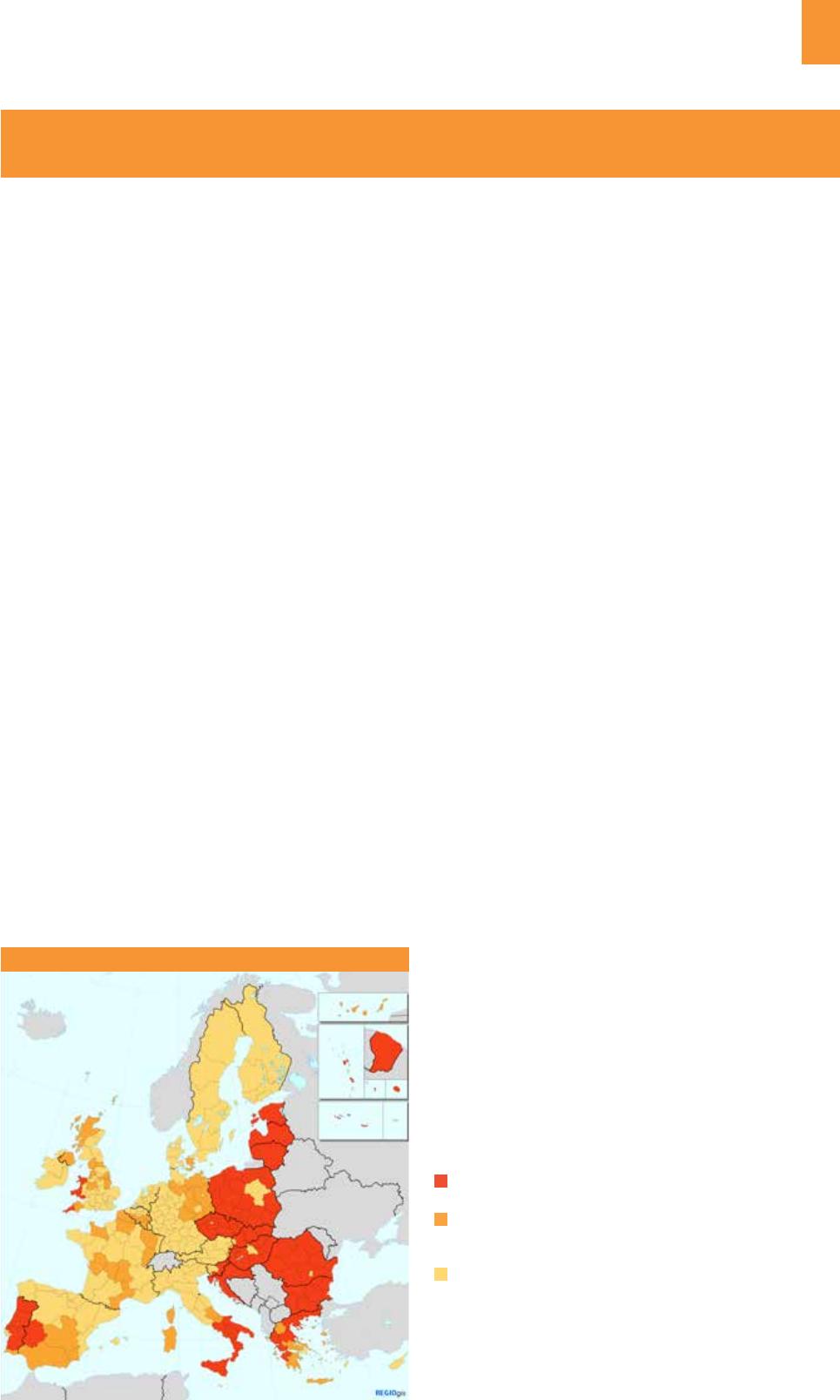
The EU’s 274 regions as covered by regional policy, 2014–20,
and categories of eligibility for Structural Funds (the European
Regional Development Fund (ERDF) and the European Social
Fund (ESF)).
Canary Islands
Guadeloupe,
Martinique
Azores
Madeira
French
Guiana
Mayotte Réunion
ALL EU REGIONS BENEFIT
Category
Less developed regions
(GDP/head < 75 % of EU-27 average): €182.2 billion
Transition regions
(GDP/head between > = 75 % and < 90 % of EU-27 average):
€35.4 billion
More developed regions (GDP/head > = 90 % of EU-27 average):
€54.3 billion
Other sources of funding under regional policy during the same
period include the Cohesion Fund (€65.3 billion), European territorial
cooperation (€10.2 billion), the ‘Youth employment initiative’
(€3.2 billion) and specific allocations for the outermost and sparsely
populated regions (€1.6 billion).

4THE EUROPEAN UNION EXPLAINED
• funded 61 000 research projects;
• provided almost 5 million more EU citizens with
broadband coverage;
• financed the construction of 1 208 km of roads and
1 495 km of rail to help establish an efficient
trans-European transport network (TEN-T);
• enhanced the quality of life for citizens in urban areas
through a modernised water supply, benefiting
3.2 million citizens, and sustainable transport.
These resources have helped to improve the quality of
life of EU citizens, to create jobs and to promote
research, development and innovation. For example,
between 2007 and 2012 alone, EU regional policy:
• created an estimated 594 000 jobs (262 000 in
SMEs);
• invested directly in 198 000 SMEs;
• supported 77 800 start-ups;
Origins and evolution of regional policy
1957 — First mention in the Treaty of Rome.
1958 — Creation of the European Social Fund
(ESF).
1975 — Creation of the European Regional
Development Fund (ERDF).
1986 — Legal basis for regional policy established
in the Single European Act.
1988 — To adapt to the arrival of Greece (1981)
and Spain and Portugal (1986), the Structural
Funds are integrated into an overarching cohesion
policy. Budget: ECU 64 billion (NB: ECUs later
became the euro).
1993 — The Maastricht Treaty introduces the
Cohesion Fund, the Committee of the Regions
and the principle of subsidiarity (whereby
decision-making must always be made at the least
centralised/most local level able to address the
matter appropriately).
1994–99 — Doubling of the resources for regional
funds, now equal to a third of the EU budget.
1995 — Special objective added to support the
sparsely populated regions of Finland and Sweden.
Overall budget:
ECU 168 billion.
2000–04 — Pre-accession instruments make
funding and know-how available to countries
engaged in the process of joining the EU.
2004 — Ten new countries join the EU (increasing
its population by 20 %, but its GDP by only 5 %).
Budget: €213 billion for the 15 existing members;
€22 billion for the new member countries (2004–
06).
2007–13 — Budget: €347 billion (of which 25 % is
earmarked for research and innovation and 30 %
for environmental infrastructure and measures to
combat climate change).
2014–20 — Budget: €351.8 billion, with a
particular focus on four key investment priorities:
research and innovation, the digital agenda, support
for SMEs and the low-carbon economy. Around
€100 billion will be dedicated to these sectors, of
which €26.7 billion will support the shift to a
low-carbon economy (energy efficiency and
renewable energies).
5
REGIONAL POLICY
During the same period, the value of selected projects
in urban areas amounted to at least €100 billion.
Almost 20 % of that amount was allocated to
integrated projects for urban and rural regeneration and
to education, health, childcare, housing and other social
infrastructure. In particular, funding for integrated
projects for urban regeneration accounted for
€6.8 billion, while investment in social infrastructure
amounted to €11.4 billion.
In other words, regional policy has a strong impact in
many fields and on many different levels. It therefore
greatly complements other policies such as those
dealing with education, employment, energy, the
environment, the single market and research and
innovation.
Estimates show that regional policy investment has
also contributed to increasing income in the poorest
regions: their GDP per capita grew from 60.5 % of the
EU-27 average in 2007 to 62.7 % in 2010.
Furthermore, GDP in the 13 EU countries that entered
the Union in or after 2004 (1) is expected to increase by
around 2.4 % per year between 2007 and 2025.
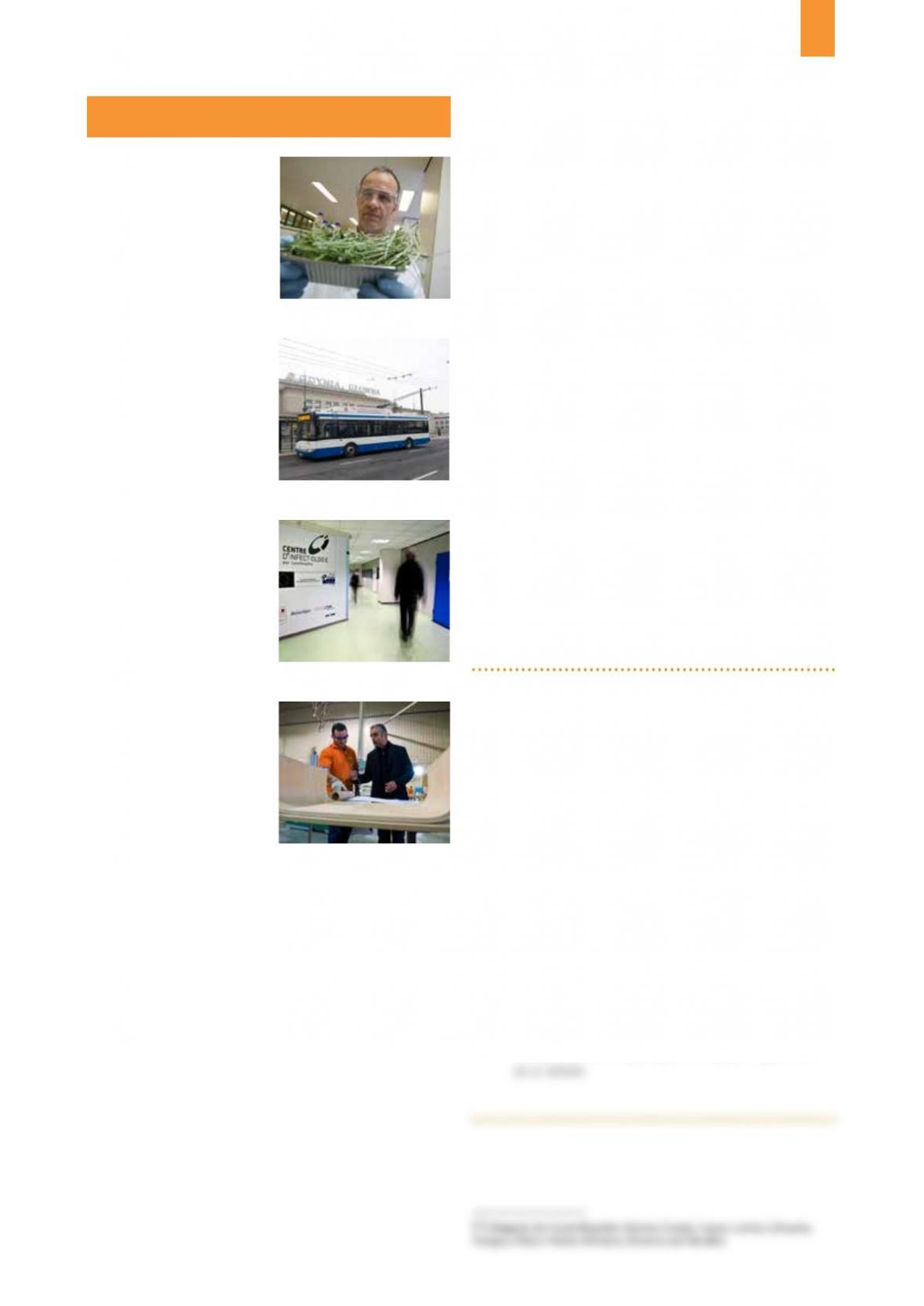
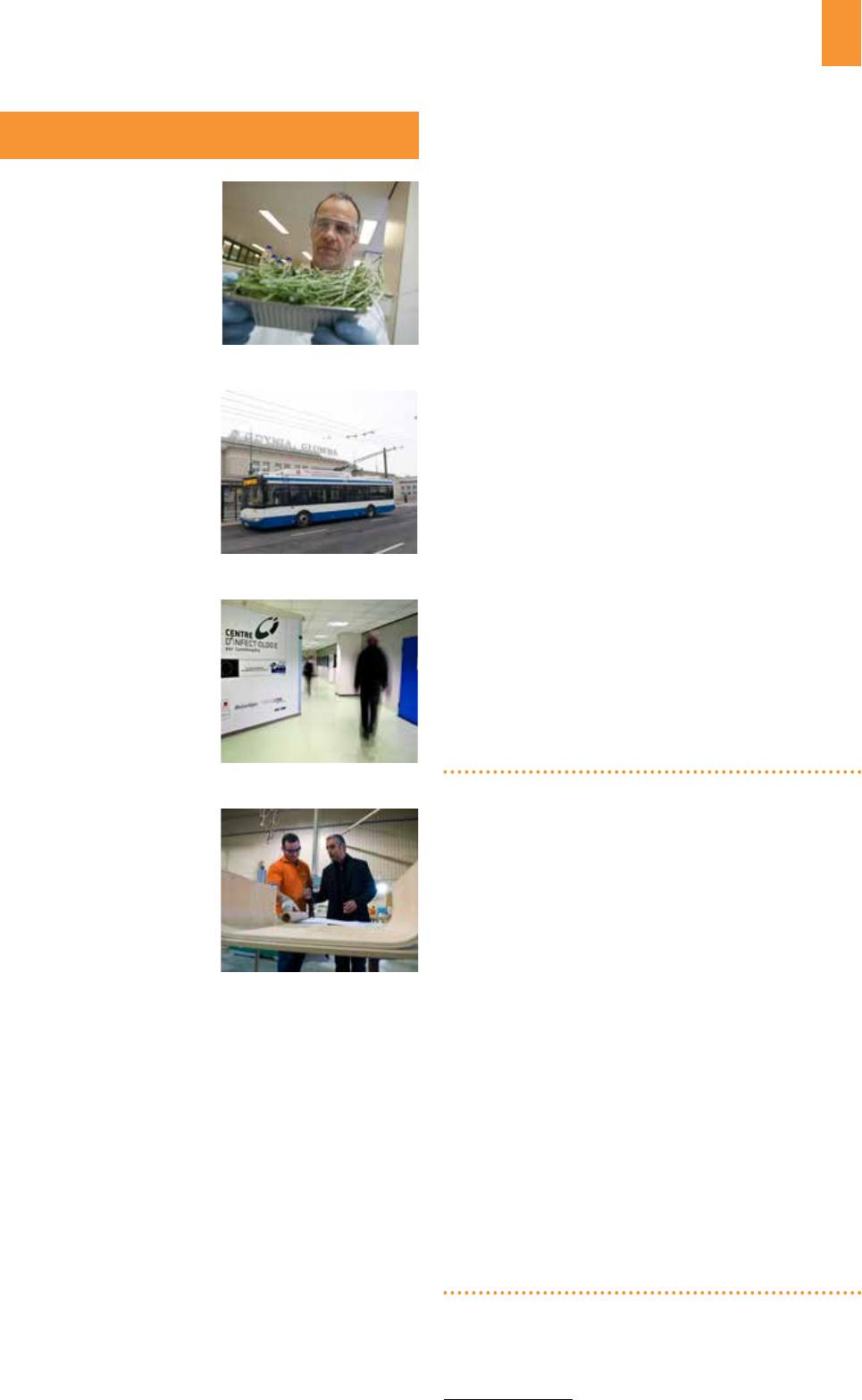
EXAMPLES OF THE DIVERSITY OF PROJECTS SUPPORTED BY EU
REGIONAL POLICY FUNDS
© European Union © European Union© European Union © European Union
BEACON, United Kingdom
— Developing eco-friendly
products for a low carbon
economy
Infection research and
monitoring centre
in Lyon, France.
Gdynia trolley bus
network, Poland —
Improving quality of life
through sustainable public
transport
Art on Chairs, Portugal —
Boosting the region’s
competitiveness through
innovation in SMEs
Economic, social and territorial cohesion
Regional policy is also referred to in broader terms
as cohesion policy as its overall goal is to
strengthen what is known as ‘economic, social and
territorial cohesion’ in regions qualifying for support.
In practice that means:
— economic and social cohesion: boosting
competitiveness and green economic growth in
regional economies and providing people with
better services, more job opportunities and a
better quality of life;
— territorial cohesion: connecting regions so that
they capitalise on their respective strengths and
work together in new, innovative configurations
to tackle common challenges (such as climate
change), thus benefiting and reinforcing the EU