Copyright © 2013 Pearson Education, Inc. • Microeconomics • Pindyck/Rubinfeld, 8e. 1 of 40
3.1 Consumer Preferences
3.2 Budget Constraints
3.3 Consumer Choice
3.4 Revealed Preference
3.5 Marginal Utility and
Consumer Choice
3.6 Cost-of-Living Indexes
C H A P T E R 3
Prepared by:
Fernando Quijano, Illustrator
Consumer Behavior
CHAPTER OUTLINE

2 of 40
Copyright © 2013 Pearson Education, Inc. • Microeconomics • Pindyck/Rubinfeld, 8e.
Consumer Behavior
●theory of consumer behavior Description of how consumers
allocate incomes among different goods and services to maximize their well-
being.
Consumer behavior is best understood in three distinct steps:
1. Consumer Preferences
2. Budget Constraints
3. Consumer Choices
WHAT DO CONSUMERS DO?
Recent models of consumer behavior incorporate more realistic assumptions
about rationality and decision making.
A basic “workhorse” of economics, our model makes simplifying assumptions to
explain much of what we actually observe regarding consumer choice and the
characteristics of consumer demand.
3 of 40
Copyright © 2013 Pearson Education, Inc. • Microeconomics • Pindyck/Rubinfeld, 8e.
Consumer Preferences3.1
Market Baskets
●market basket (or bundle)List with specific quantities of one or more
goods.
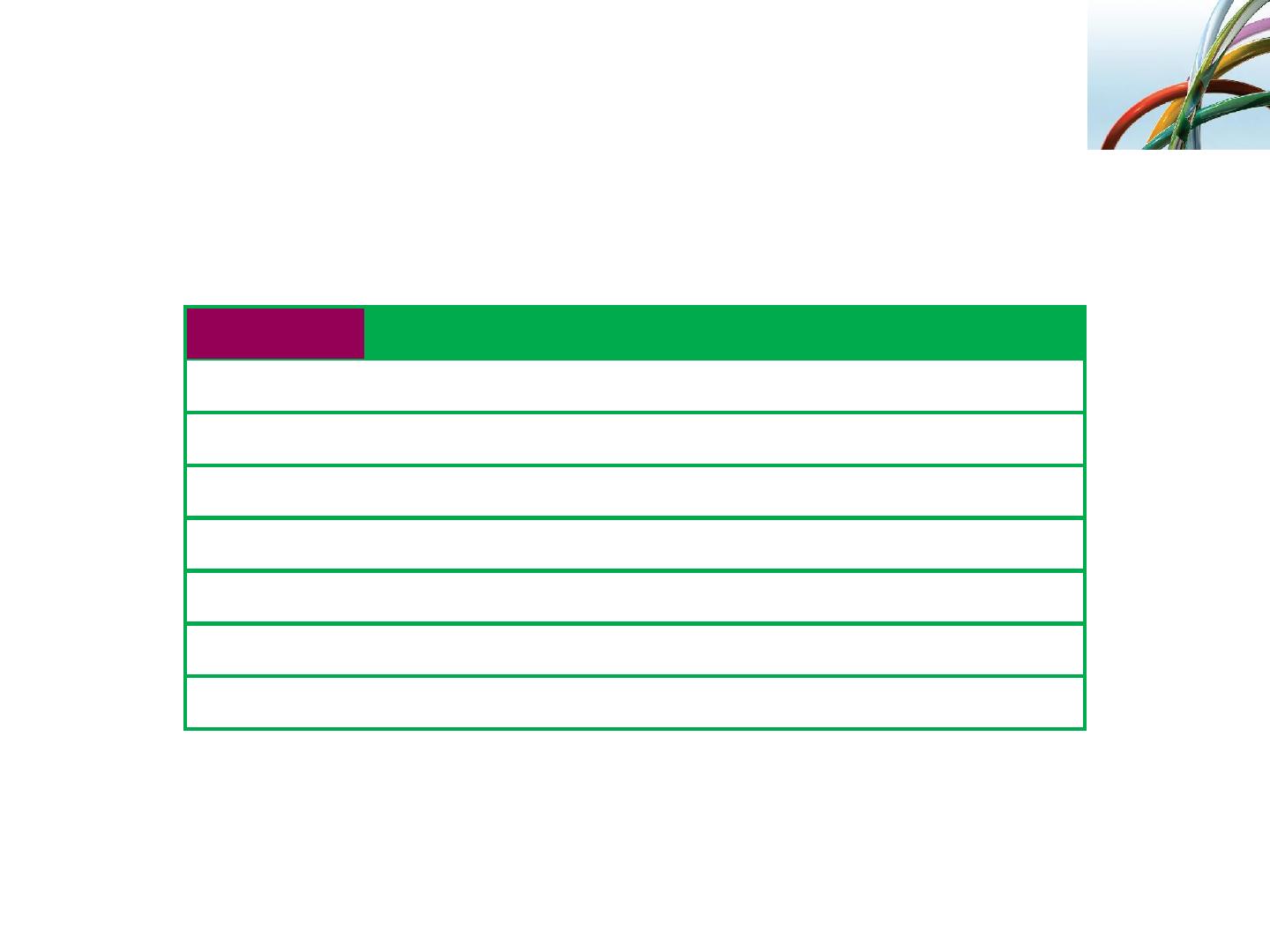
TABLE 3.1 ALTERNATIVE MARKET BASKETS
A20 30
B10 50
D40 20
E30 40
G10 20
H10 40
MARKET BASKET UNITS OF FOOD UNITS OF CLOTHING
To explain the theory of consumer behavior, we will ask whether consumers
prefer one market basket to another.
4 of 40
Copyright © 2013 Pearson Education, Inc. • Microeconomics • Pindyck/Rubinfeld, 8e.
Some Basic Assumptions about Preferences
1. Completeness: Preferences are assumed to be complete. In
other words, consumers can compare and rank all possible
baskets. Thus, for any two market baskets A and B, a consumer
will prefer A to B, will prefer B to A, or will be indifferent between
the two. By indifferent we mean that a person will be equally
satisfied with either basket.
Note that these preferences ignore costs. A consumer might
prefer steak to hamburger but buy hamburger because it is
cheaper.
5 of 40
Copyright © 2013 Pearson Education, Inc. • Microeconomics • Pindyck/Rubinfeld, 8e.
2. Transitivity:
•Preferences are transitive.
•Transitivity means that if a consumer prefers basket A to basket B and
basket B to basket C, then the consumer also prefers A to C.
•Transitivity is normally regarded as necessary for consumer consistency.
3. More is better than less:
•Goods are assumed to be desirable—i.e., to be good.
•Consequently, consumers always prefer more of any good to less.
•In addition, consumers are never satisfied or satiated; more is always
better, even if just a little better.
Conclusion
•These 3 assumptions form the basis of consumer theory
6 of 40
Copyright © 2013 Pearson Education, Inc. • Microeconomics • Pindyck/Rubinfeld, 8e.
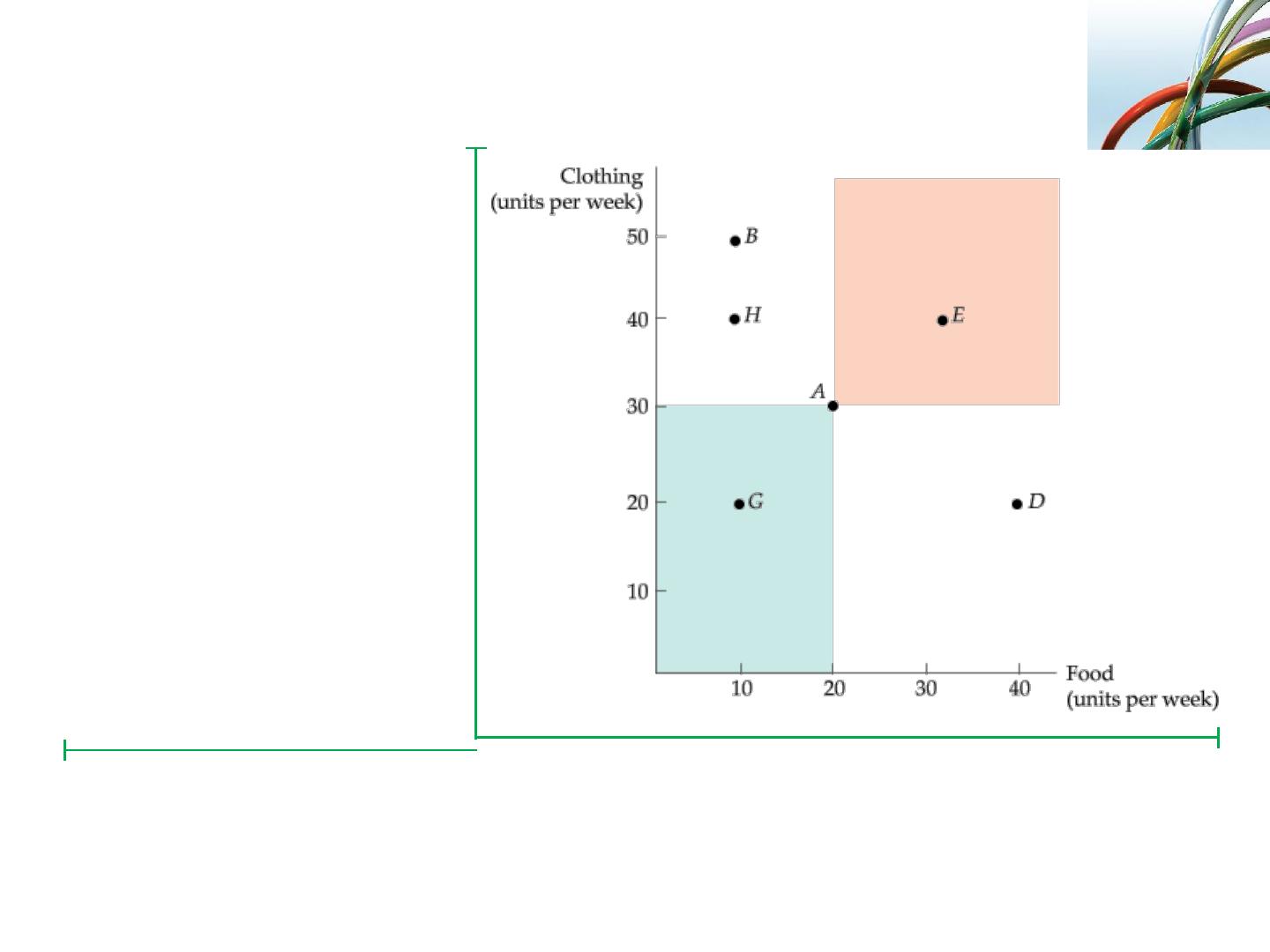
DESCRIBING INDIVIDUAL
PREFERENCES
•Because more of each
good is preferred to less,
we can compare market
baskets in the shaded
areas.
•Basket Ais clearly
preferred to basket G,
while Eis clearly preferred
to A.
•However, Acannot be
compared with B, D, or H
without additional
information.
FIGURE 3.1
Indifference Curves:
To show a consumer’s preferences graphically
●indifference curve Curve representing all combinations of market baskets
that provide a consumer with the same level of satisfaction.
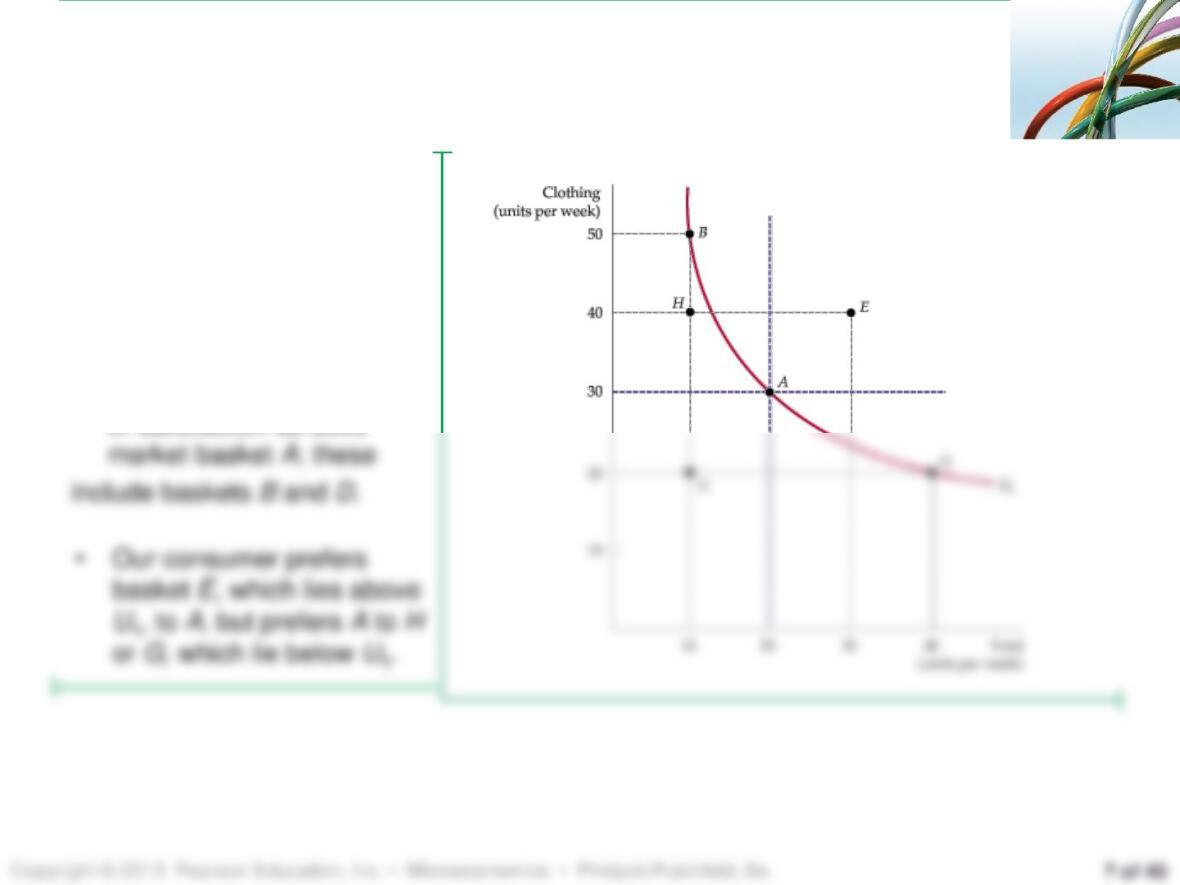
•The indifference curve (U1)
that passes through
market basket A, shows all
baskets that give the
consumer the same level
AN INDIFFERENCE CURVE
FIGURE 3.2