Chapter 4
Structure and Function of
Cells
4-1
Dr. Divya Pradhan

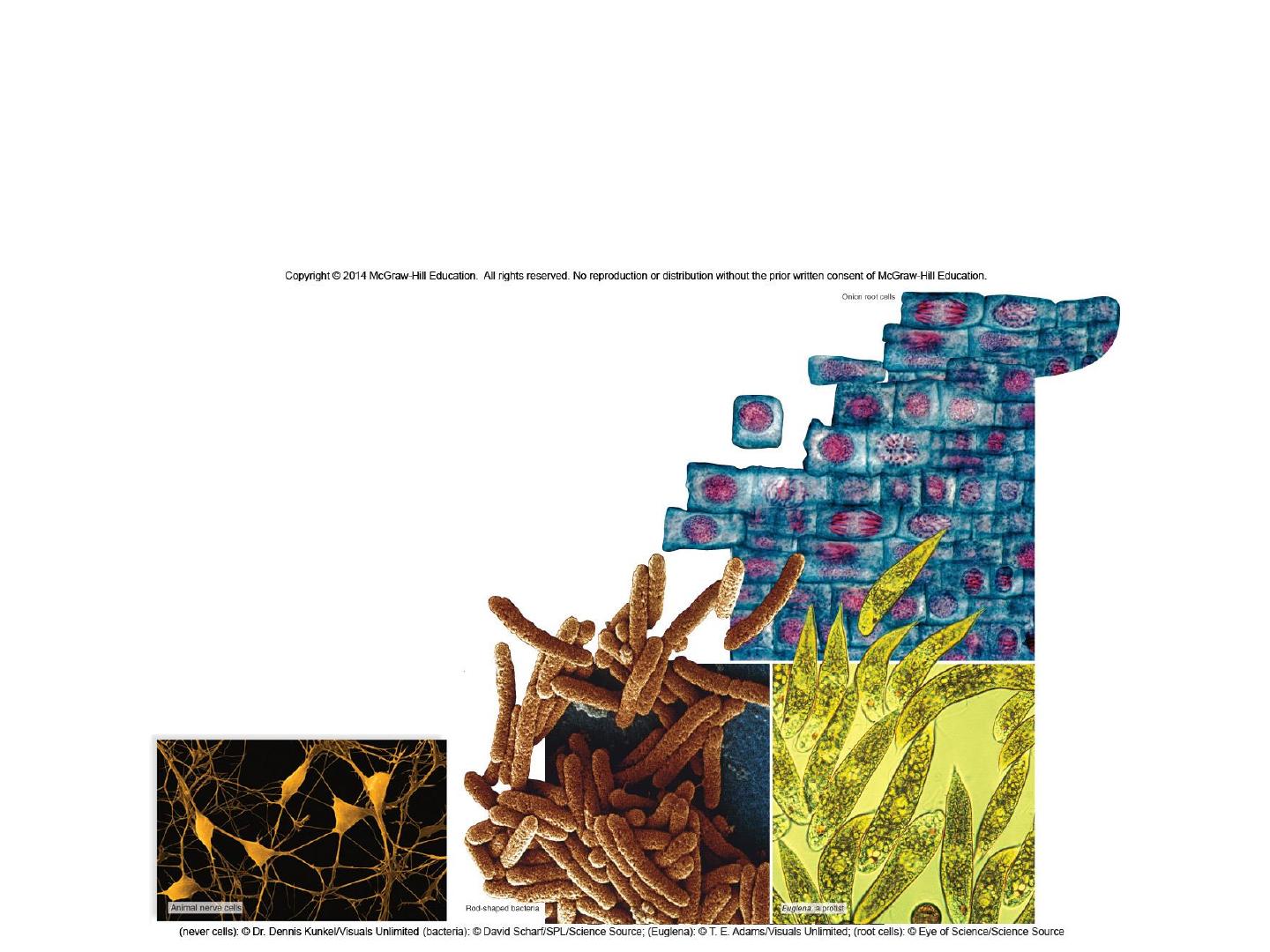
4.1 All organisms are composed
of cells
The cell theory states
1. A cell is the basic unit of life.
2. Organisms are made up of cells.
3. New cells arise only from preexisting cells.
4-2

3
Cell Theory
Anton von Leeuwenhoek –1600’s
1st simple magnifying instrument
Robert Hooke –1600’s
first used the term cell in describing the structure of
living things
Schleiden and Schwann –1800’s
“All living things are composed of cells”
Pasteur and Virchow –1800’s
No Spontaneous Generation of Life

4
Cellular Components
Cells are made up of:
70% H20
29% (4 macromolecules)
1% minerals

4.1 All organisms are composed
of cells
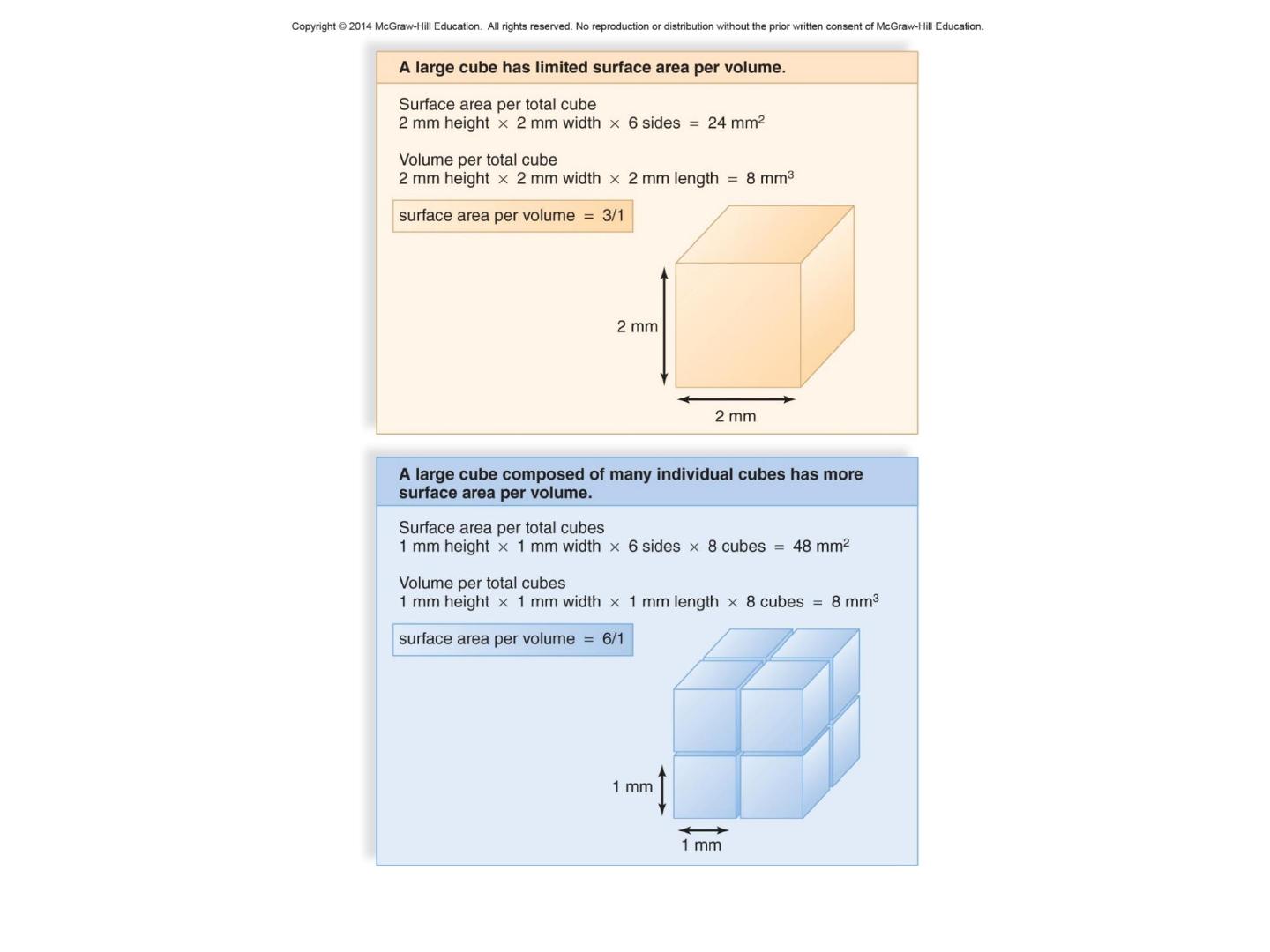
Surface-area-to-volume ratio requires cells to
stay small.
A cell needs a surface area large enough to allow
sufficient nutrients to enter and wastes to exit.
Actively metabolizing cells need to be small.
A chicken egg is large but is not actively metabolizing.
Cells that specialize in absorption have modifications
to increase the surface-area-to-volume ratio.
4-5
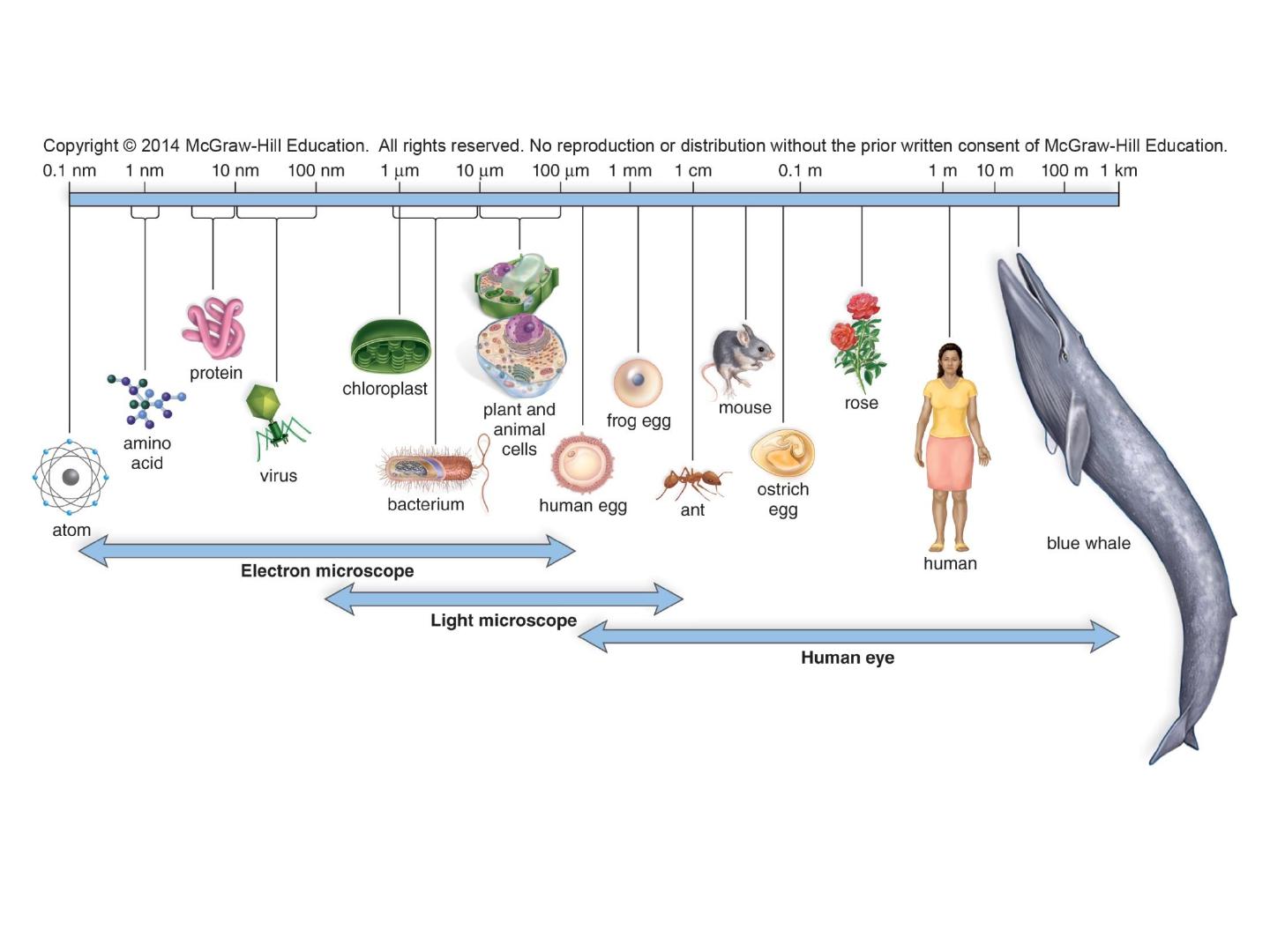
Figure 4.1C: Organisms and their component sizes. 4-6
4-7
Figure 4.1D: Surface-area-to-volume relationship

4-8
HOW SCIENCE PROGRESSES
4A Microscopes allow us to see cells
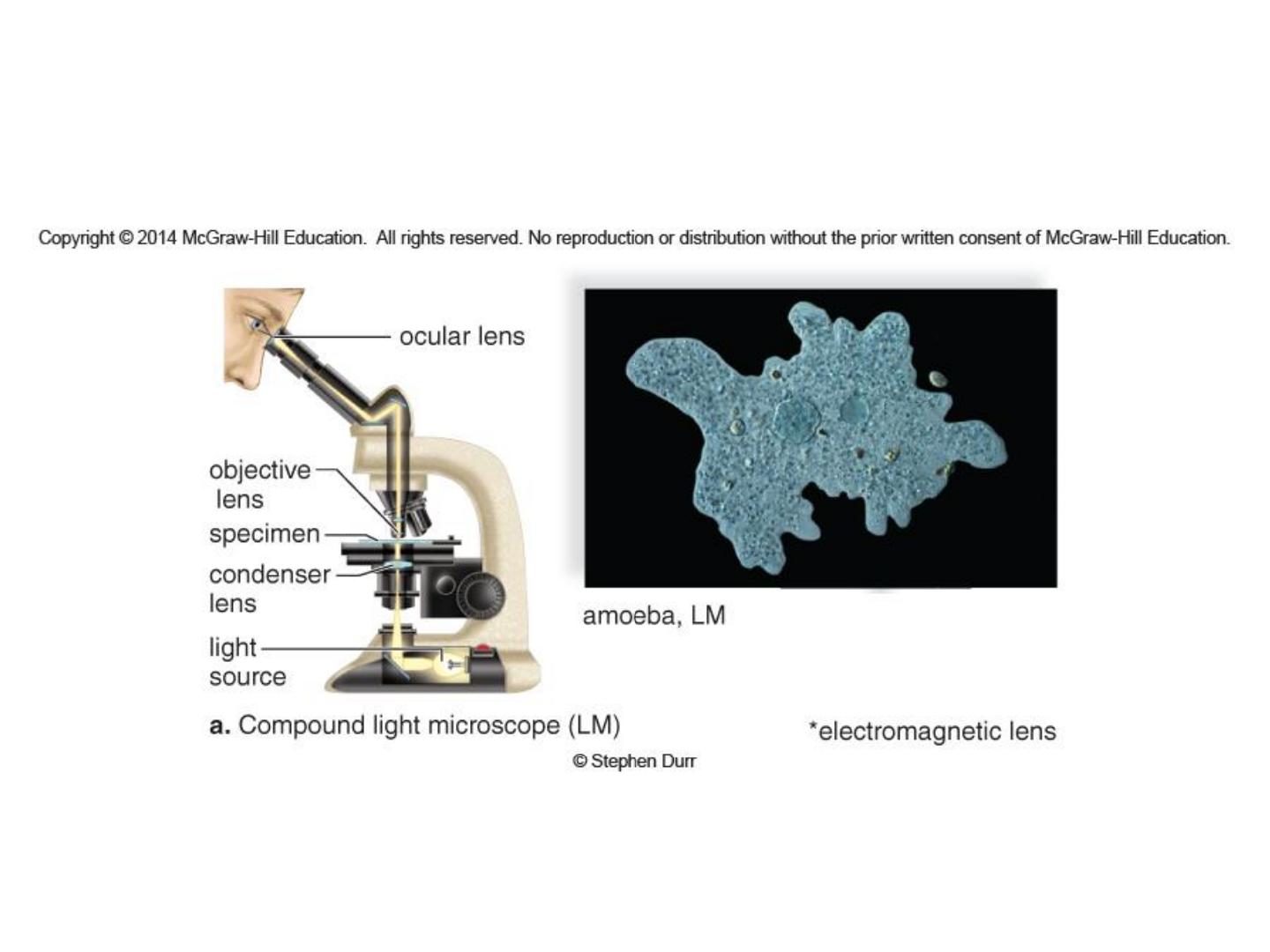
Compound light microscope
Multiple lenses increase magnifying power.
A condenser lens focuses light through specimen.
An objective lens magnifies the specimen’s image.
An ocular lens magnifies the image into the eye.
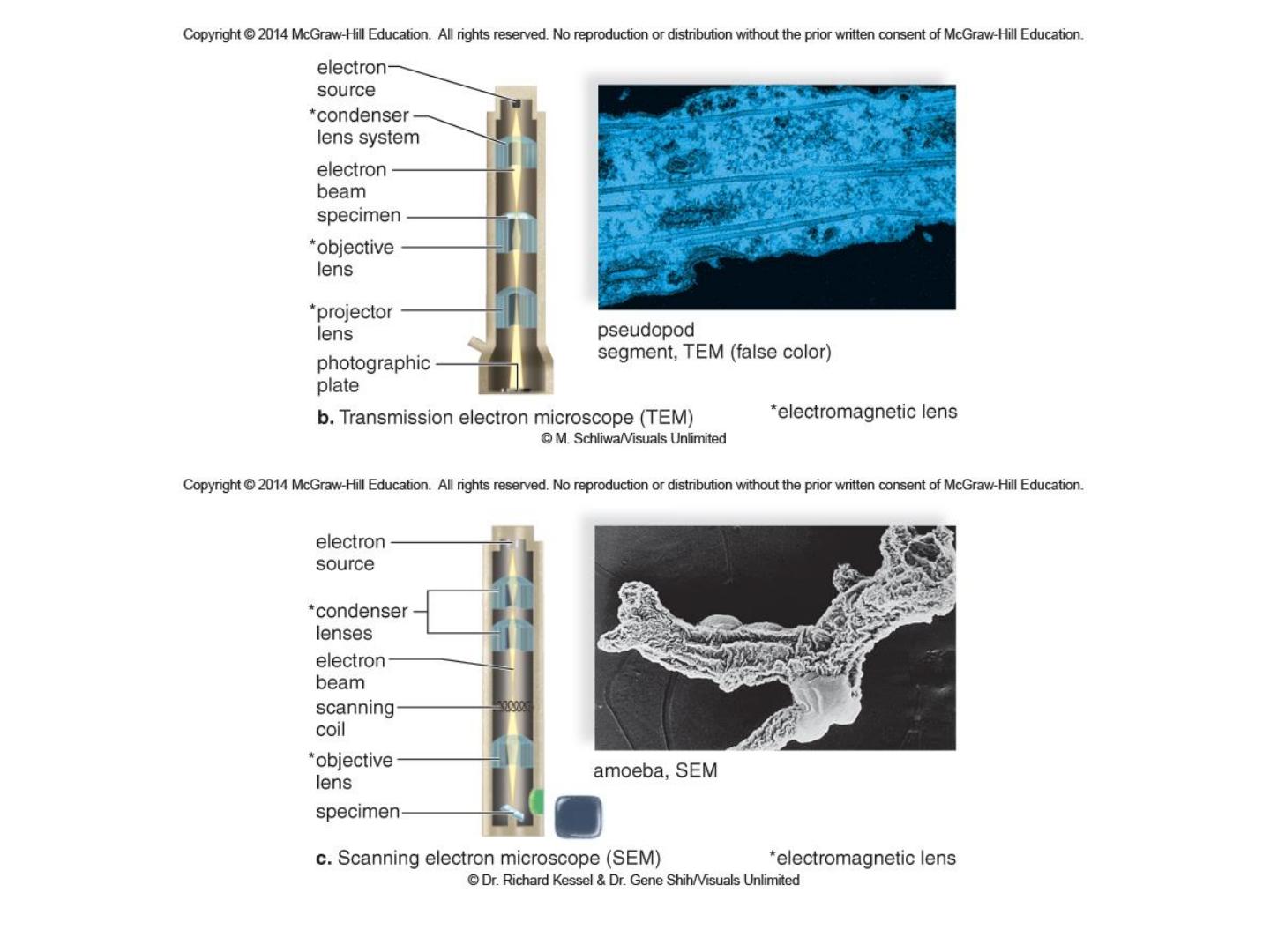
Electron microscope
More magnifying power than light microscope
A transmission electron microscope passes electrons
through the specimen.
A scanning electron microscope collects and focuses
electrons scattered by the specimen’s surface.
4-9
Figure 4A: Compound light microscope
4-10
Figure 4A (Cont.): Transmission electron microscope

4.3 Prokaryotic cells evolved first
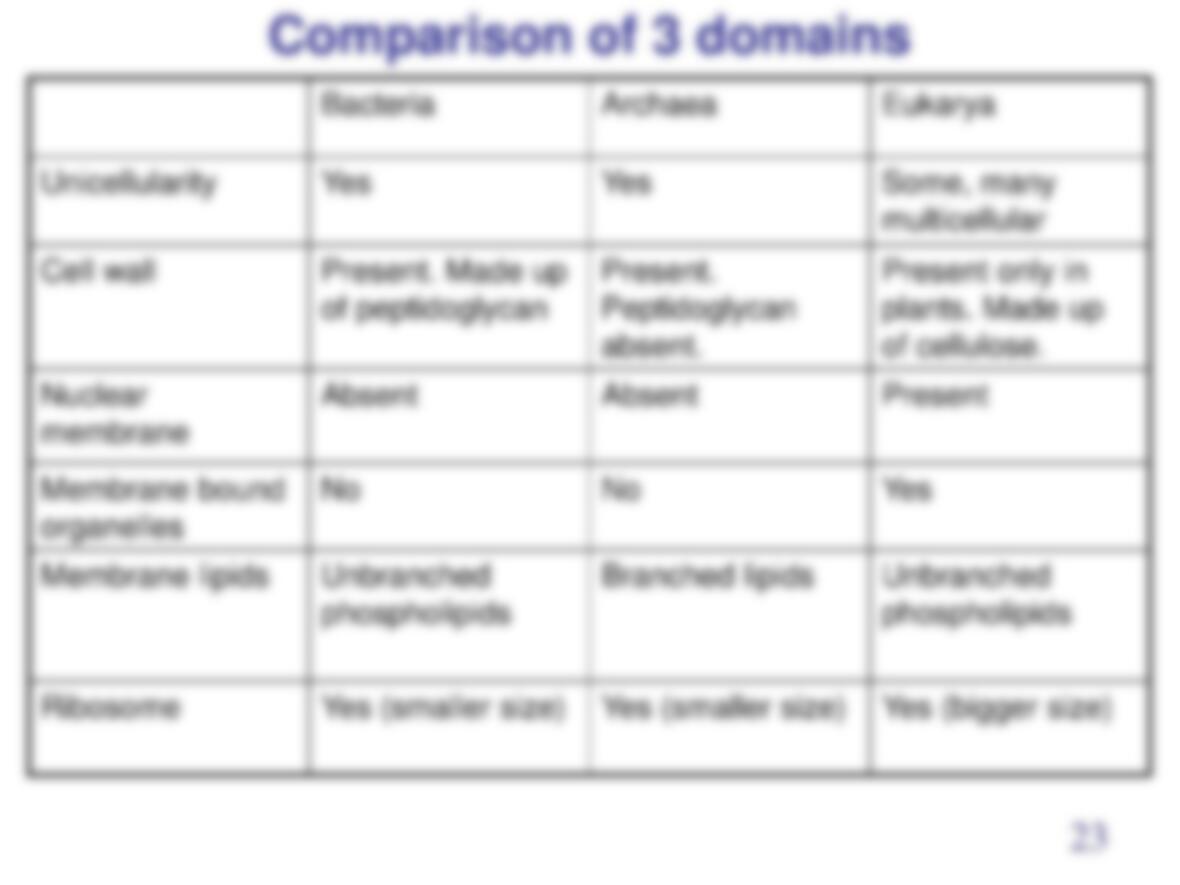
2 fundamentally different types of cells
Eukaryotic cells
Have a nucleus
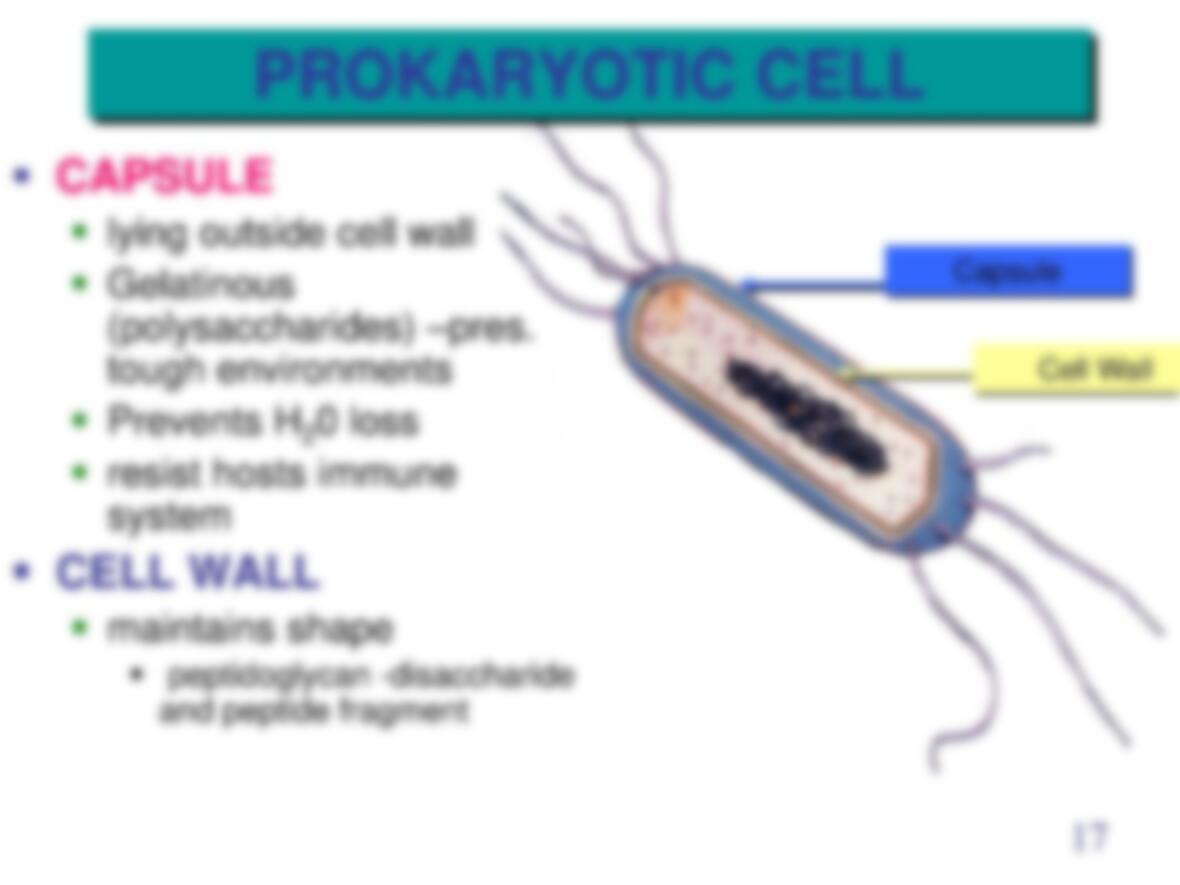
Prokaryotic cells
Lack a membrane-bound nucleus
Are smaller than eukaryotic cells
Two domains:
Bacteria
Archaea
4-11
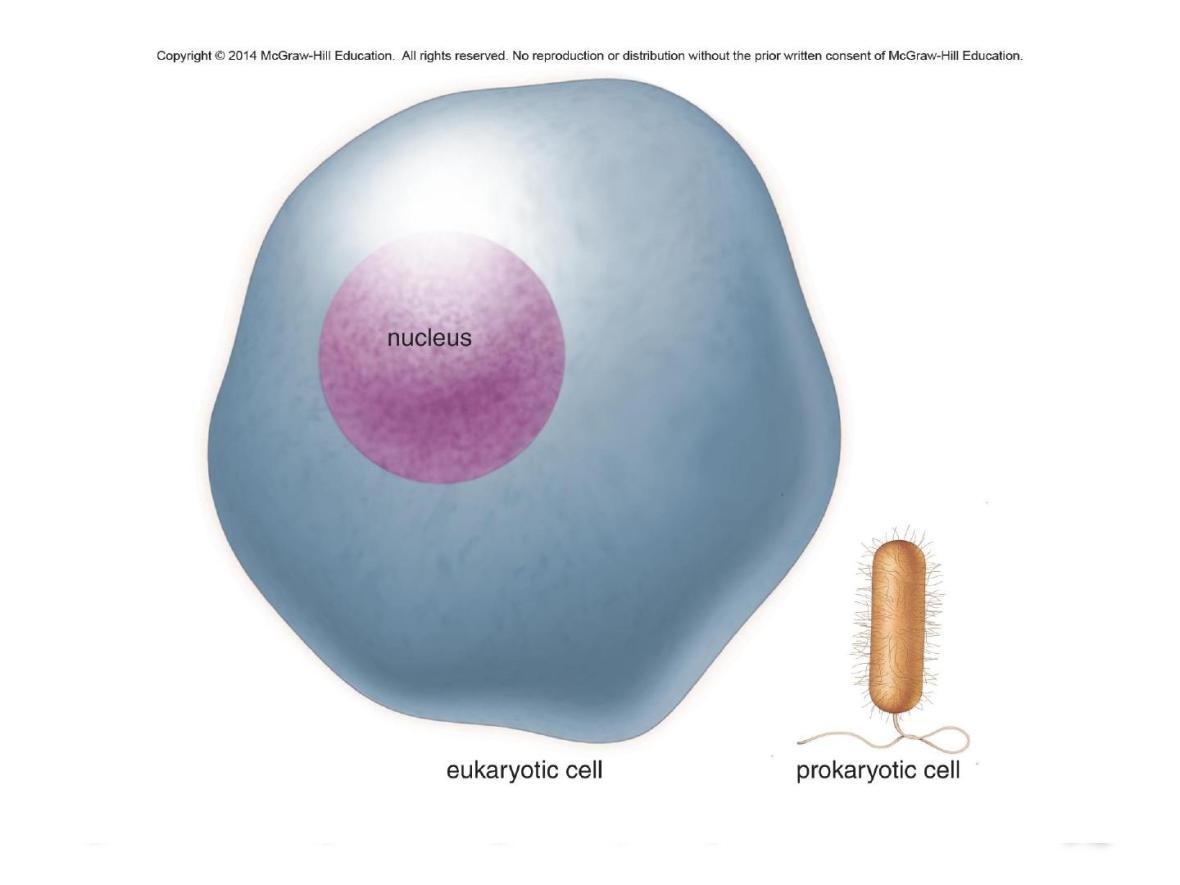
Figure 4.2A: Eukaryotic cell larger than prokaryotic cell