Student Name: ______Justan Johnson __________________
Project 3 – Chapter 3
Activity 1
Term
Definition
Re-worded Definition
Informal reading
inventory (IRI)
Is an assessment
device in which a
student reads series
of selections that
gradually increase in
difficulty. The
teacher records oral
reading errors and
assess
comprehension in
order to determine
levels of materials
that a student can
read.
To determine grade level
To give the teacher subjective information on
the reading strategies and behaviors each child
is using
To identify reading frustrations
To give subjective information to supplement
objective standardized testing
To determine each student’s individual
standing on four different reading levels
Independent level
Is the level at which
student can read
without any
assistance.
Comprehension is 90
percent or higher,
and the word
recognition is 99
percent of higher.
The student can read unassisted.
Instructional level
Is the level at which
a student needs a
teacher’s help.
The student needs help from someone whether
it be a teacher, parent of someone who can
read.
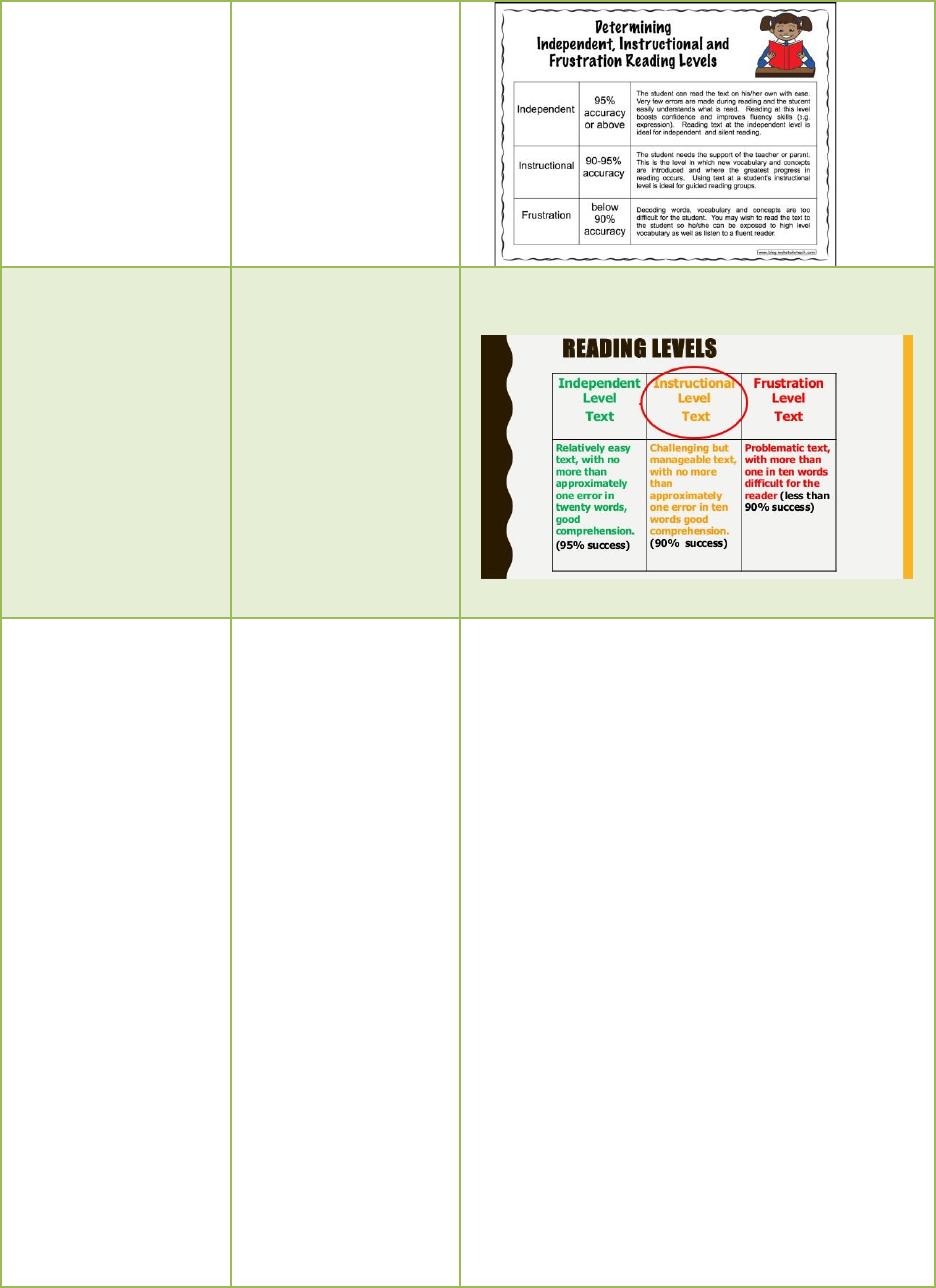
Comprehension is
75-89 percent, and
word recognition is
95-98 percent.
Frustration level
Is the level at which
reading materials is
so difficult that the
student can’t read it
even with help.
Frustration is
reached when either
word recognition is
90 percent or lower,
or comprehension is
50 percent or lower.
The student cannot read without the help of
someone else.
Cloze
Is a procedure in
which the reader
demonstrates
comprehension by
supplying missing
words. Cloze is short
for “closure,” which
is the tendency to fill
in missing or
incomplete
information. In
modified cloze,
which is also known
as a maze, each
blank is
accompanied by
answer choices so
that students do not
have to supply the
word; they simply
identity the best of
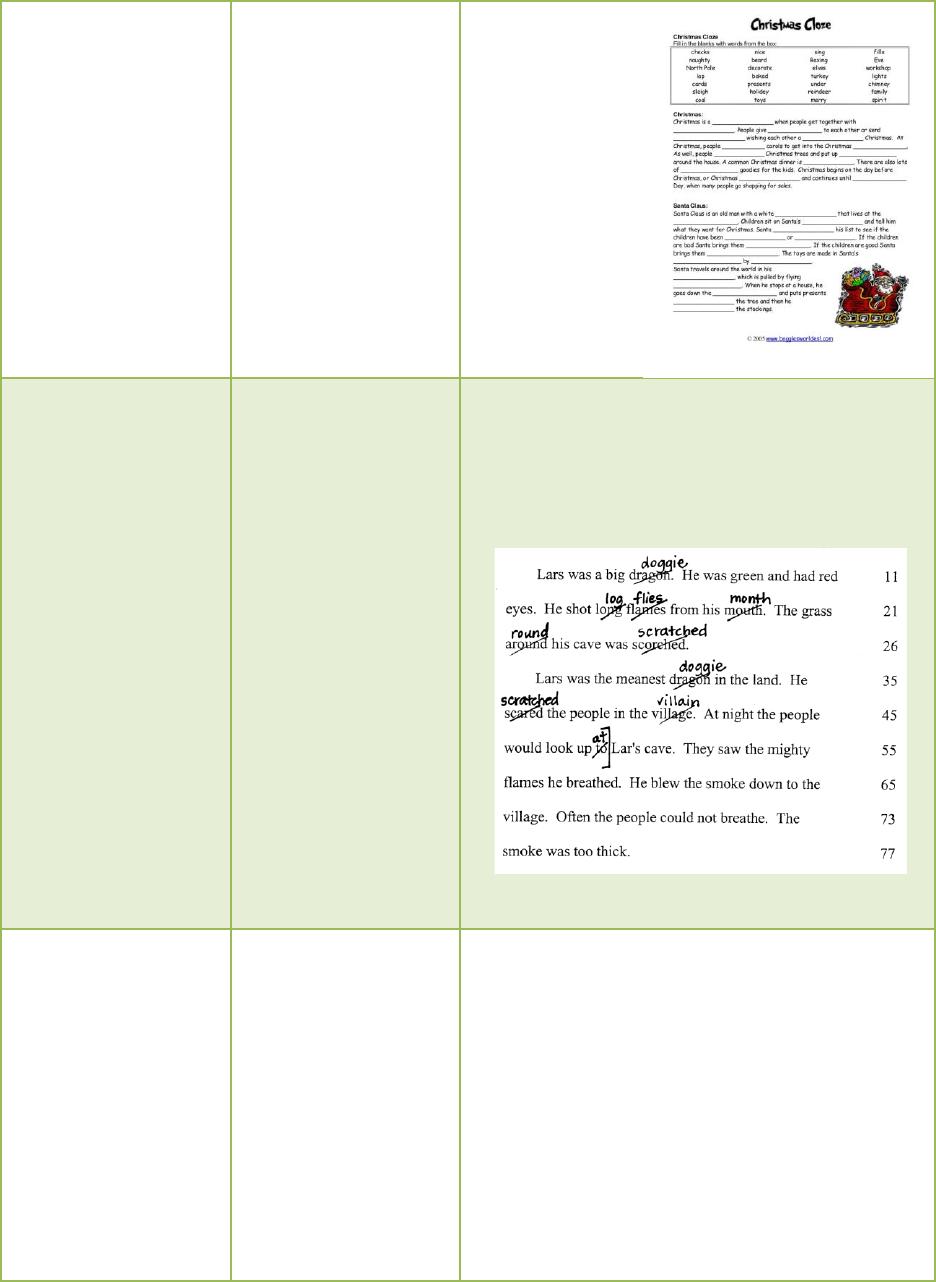
Cloze strategy contains a procedure which
uses the technique of deleting words from a
passage according to a word count formula.
After the passage is presented to the class,
students insert words in the blanks of familiar
language patterns. The teacher uses the Cloze
procedure to model a variety of problem-
solving reading strategies. In this teacher
guided strategy, the teacher directs the
students through a text, helping them to focus
on one of the following:
Phonics/Visual Clues
Sigh and/or speaking vocabulary
Prediction skills
Cross-check clues
three or four
possibly.
Miscue
Means an oral
reading response that
differs from the
expected (correct)
response. The term
miscue is used
because, miscue
theory holds that
errors are not random
but are the attempts
of the reader to make
sense of the text.
When there is a difference between what is on
the page and what students say during oral
reading. We do not use the word ‘error’
because reading miscues often represent
mature reading behavior.
Think Aloud
Used to show the
thought processes
students use as they
read or write. During
a think-aloud, the
student explains his
or her thought
processes while
reading text. These
explanations might
come after each
It helps students learn to monitor their thinking
as they read and improves their
comprehension. It teaches students to re-read a
sentence, read ahead to clarify, and/or look for
context clues to make sense of what they read.
It slows down the reading process and allows
students to monitor their understanding of a
text.
sentence, at the end
of each paragraph, or
at the end of the
whole selection.
Running Record
Means an assessment
device in which a
student’s oral
reading errors are
noted and classified
in order to determine
whether the material
Running records are used to collect
information on young readers who are still
reading aloud and working on basic skills. A
running record captures both how well a
student reads (the number of words they read
correctly) and their reading behaviors (what
they say and do as they read).