Koç University
ECON 202
Spring 2022
Problems – May 23-27, 2022
Analytical Problem #5 (Chapter 11)
Some labor economists argue that it is useful to think of the labor market as being divided
into two sectors:
a primary sector, where “good” (high-paying, long-term) jobs are located, and
a secondary sector, which has “bad” (low-paying, short-term) jobs.
Suppose that:
The primary sector has a high marginal product of labor and that (because effort is
costly for firms to monitor) firms pay an efficiency wage.
The secondary sector has a low marginal product of labor and no efficiency wage;
instead, the real wage in the secondary sector adjusts so that the quantities of labor
demanded and supplied are equal in that sector.
Workers are alike, and all would prefer to work in the primary sector. However, workers
who can’t find jobs in the primary sector work in the secondary sector.
What are the effects of each of the following on the real wage, employment, and output in
both sectors?
a. Expansionary monetary policy increases the demand for primary sector output.
b. Immigration increases labor force.
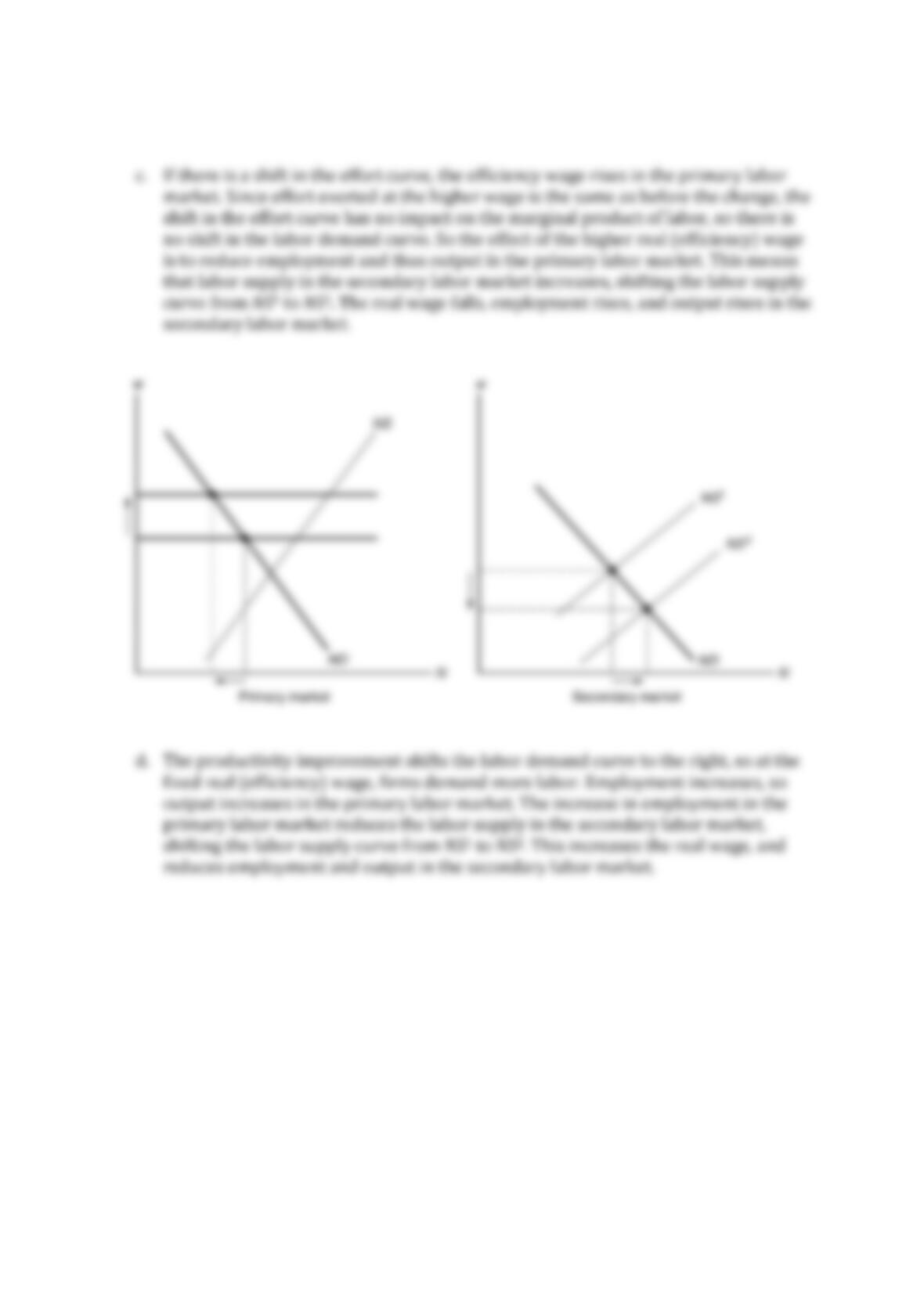
c. The effort curve changes so that a higher real wage is needed to elicit the greatest
effort per dollar in the primary sector. Effort exerted at the higher real wage is the
same as before the change in the effort curve.
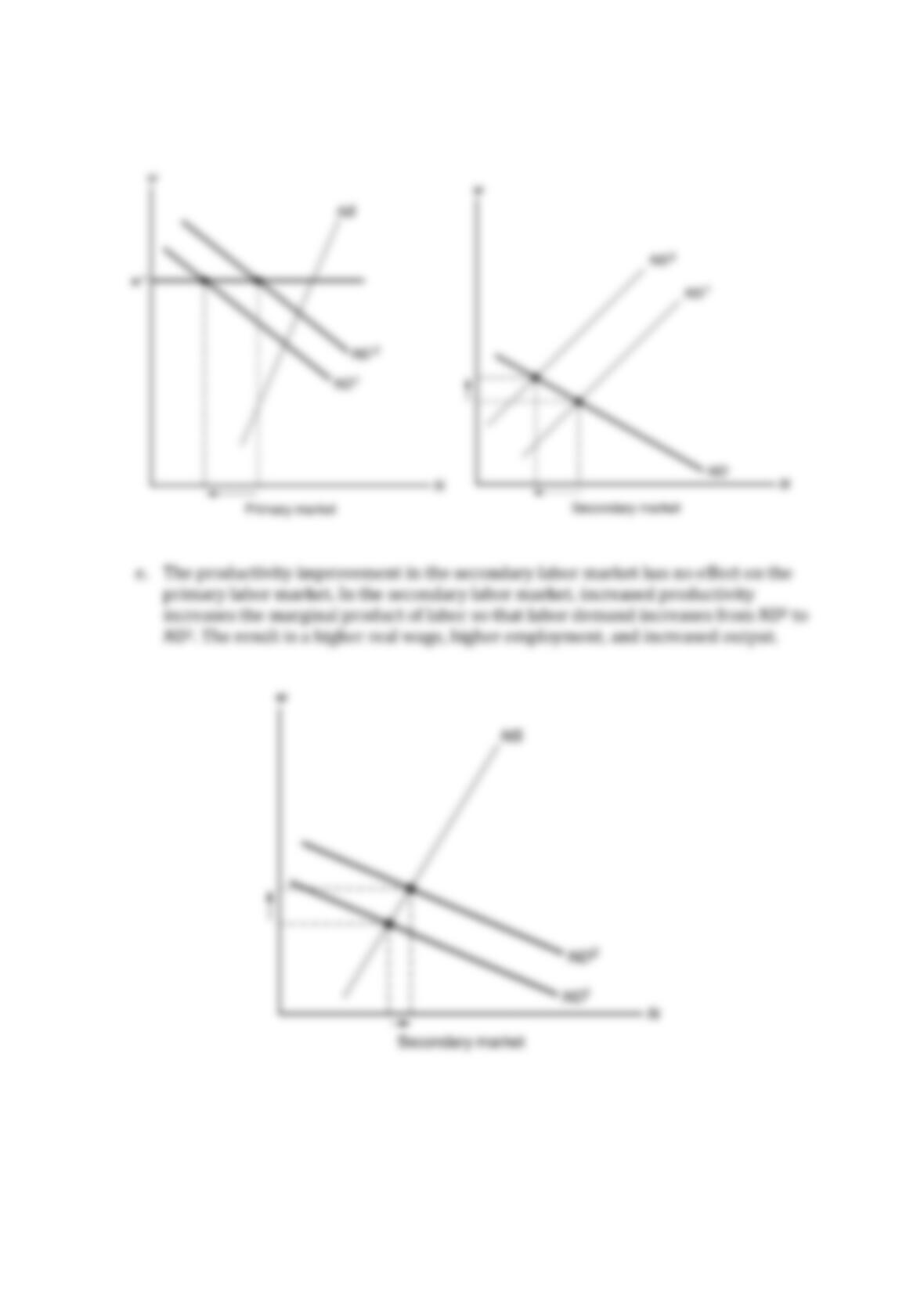
d. There is a temporary productivity improvement in the primary sector.
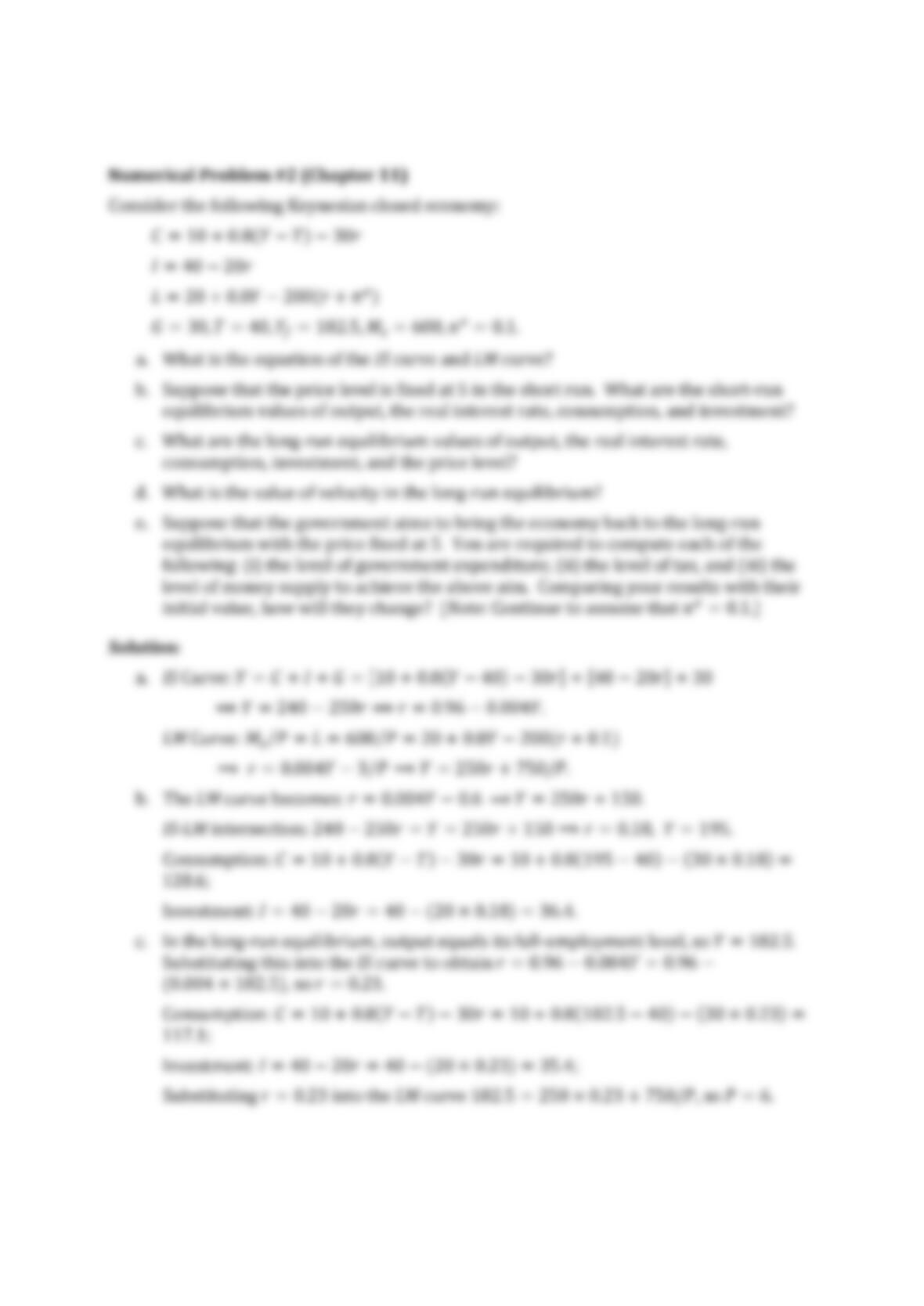
e. There is a temporary productivity improvement in the secondary sector.
Answer:
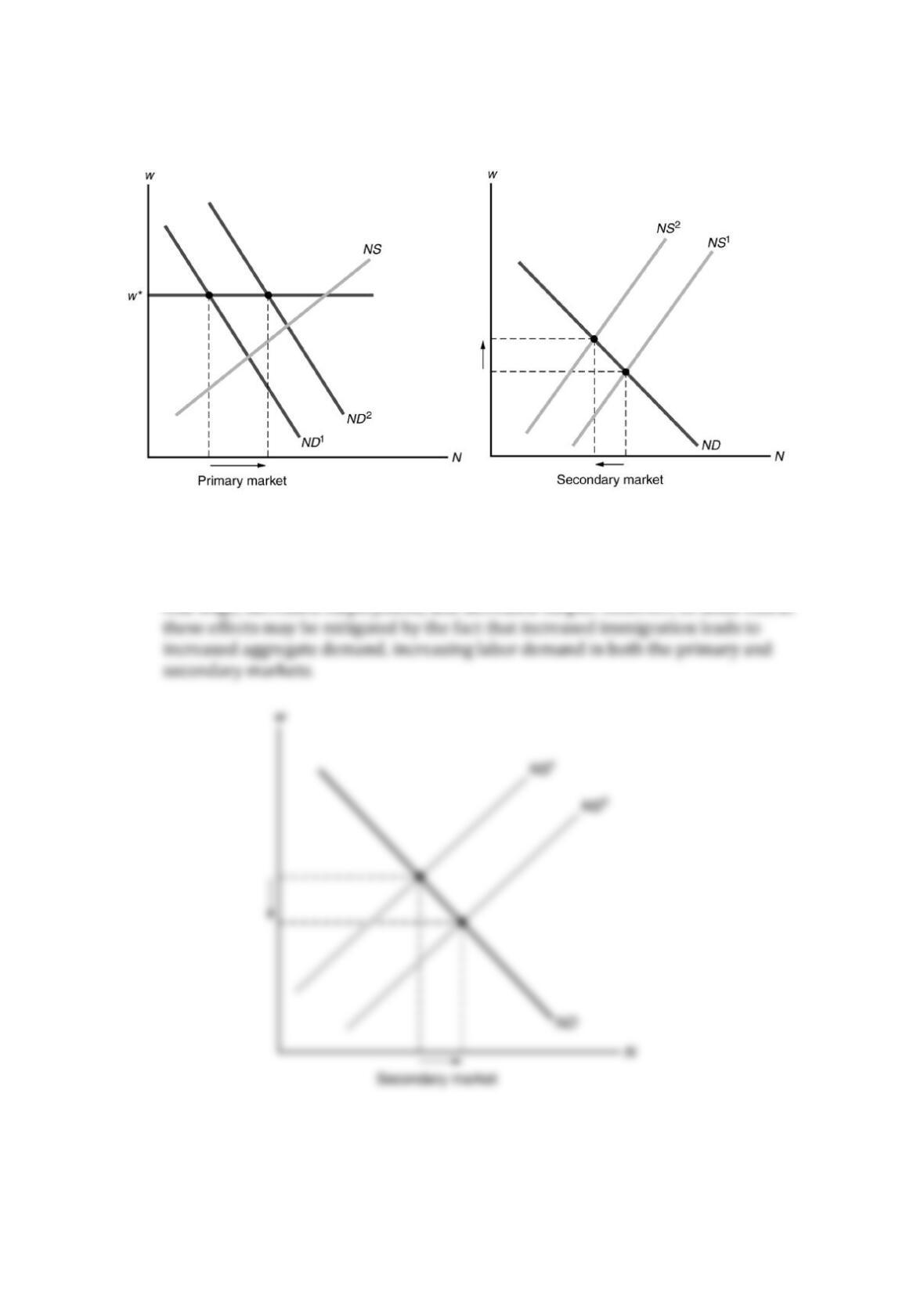
a. In response to expansionary monetary policy, aggregate demand increases,
increasing output and labor demand. This causes the labor demand curve to shift
from ND1 to ND2 in the primary labor market. The result is an increase in
employment and output with no change in the real wage in the primary labor
market. Since more workers are now in the primary labor market, the labor supply
in the secondary labor market decreases from NS1 to NS2. This causes an increase in
the real wage, a decrease in employment, and a decrease in output in the secondary
labor market.
b. Increased immigration has no effect in the primary labor market, since labor supply
changes in general have no effect. In the secondary labor market, the immigration
shifts the labor supply curve to the right from NS
1
to NS
2
, causing a reduction in the