DISC: 203 –Probability &
Statistics
Lectures 2 &3
Methods for Describing Sets of Data
1

Recap
•What is statistics
•Population
•Variable
•Sample
•Inference
•Reliability
•Data types
2

Outline –Descriptive statistics in detail
•Data
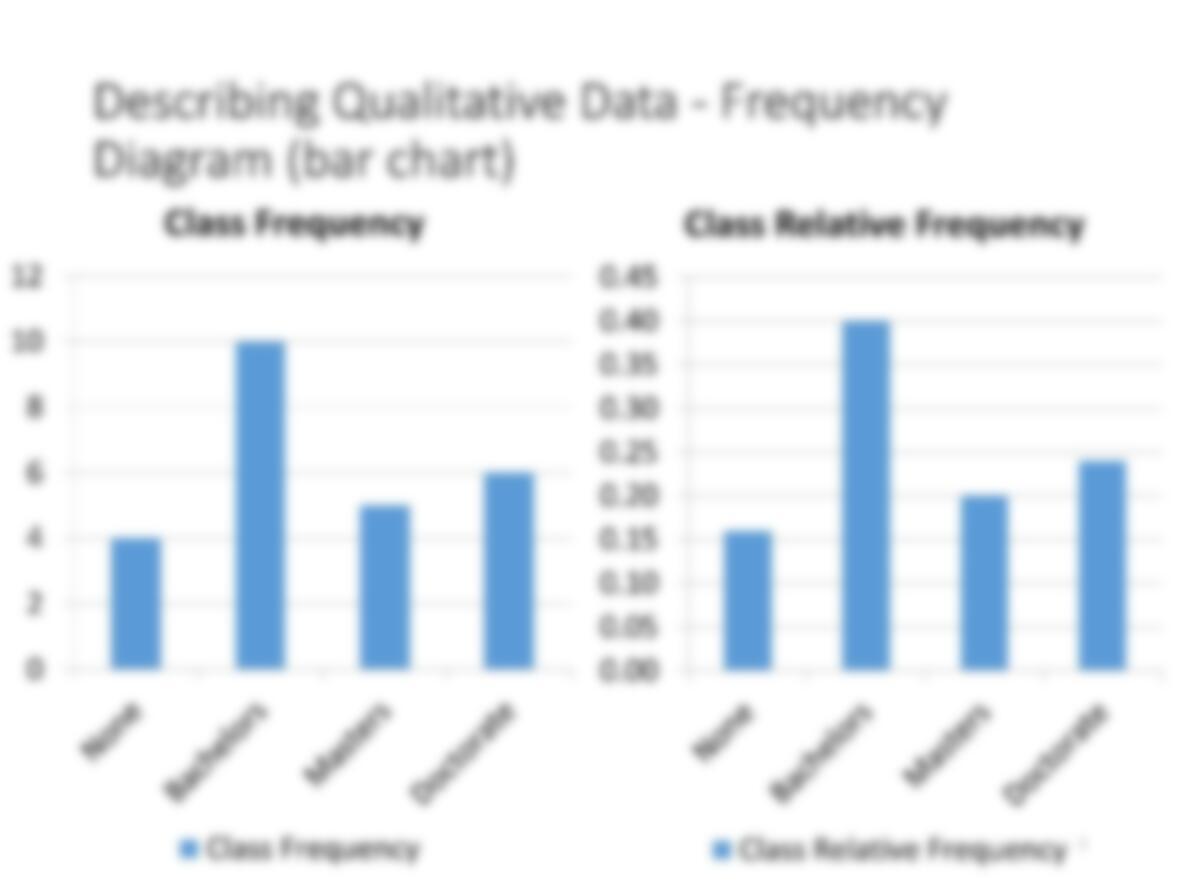
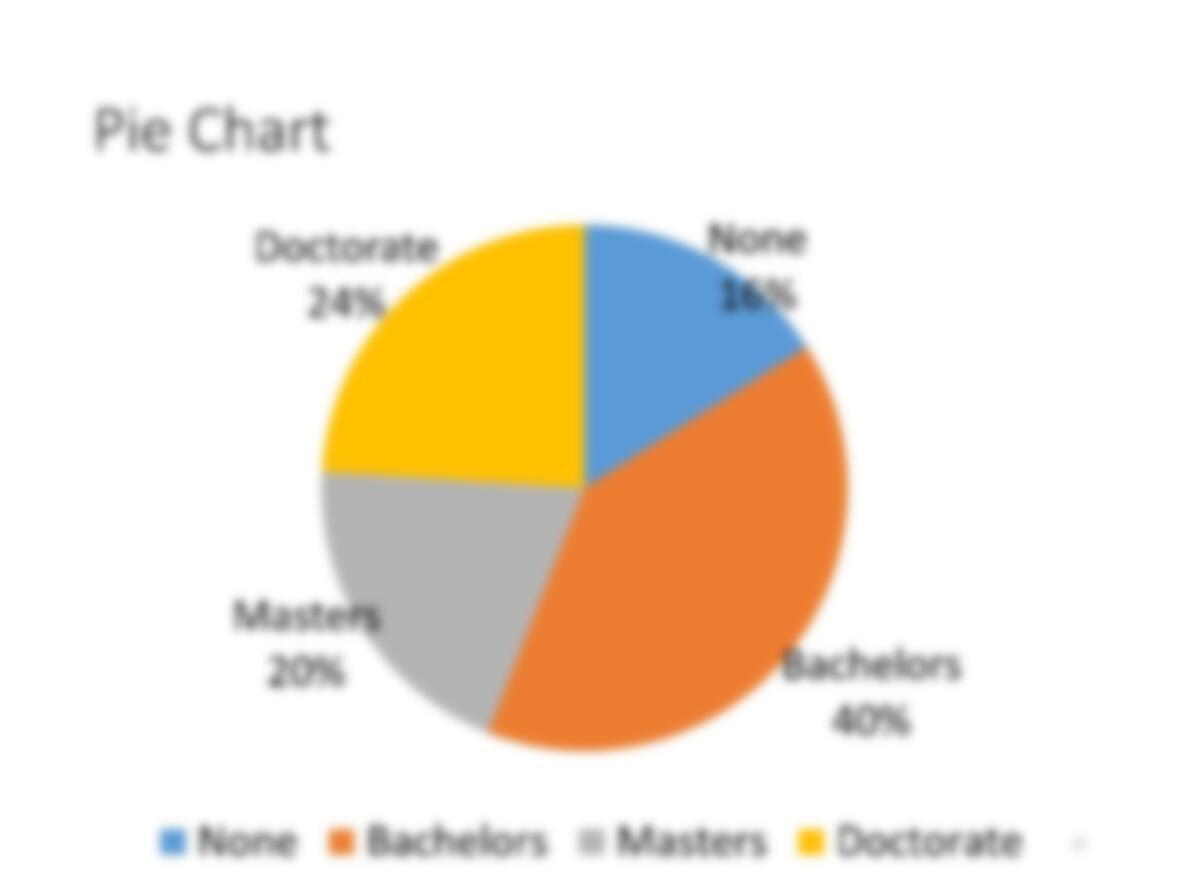
•Describing qualitative data
•Describing quantitative data
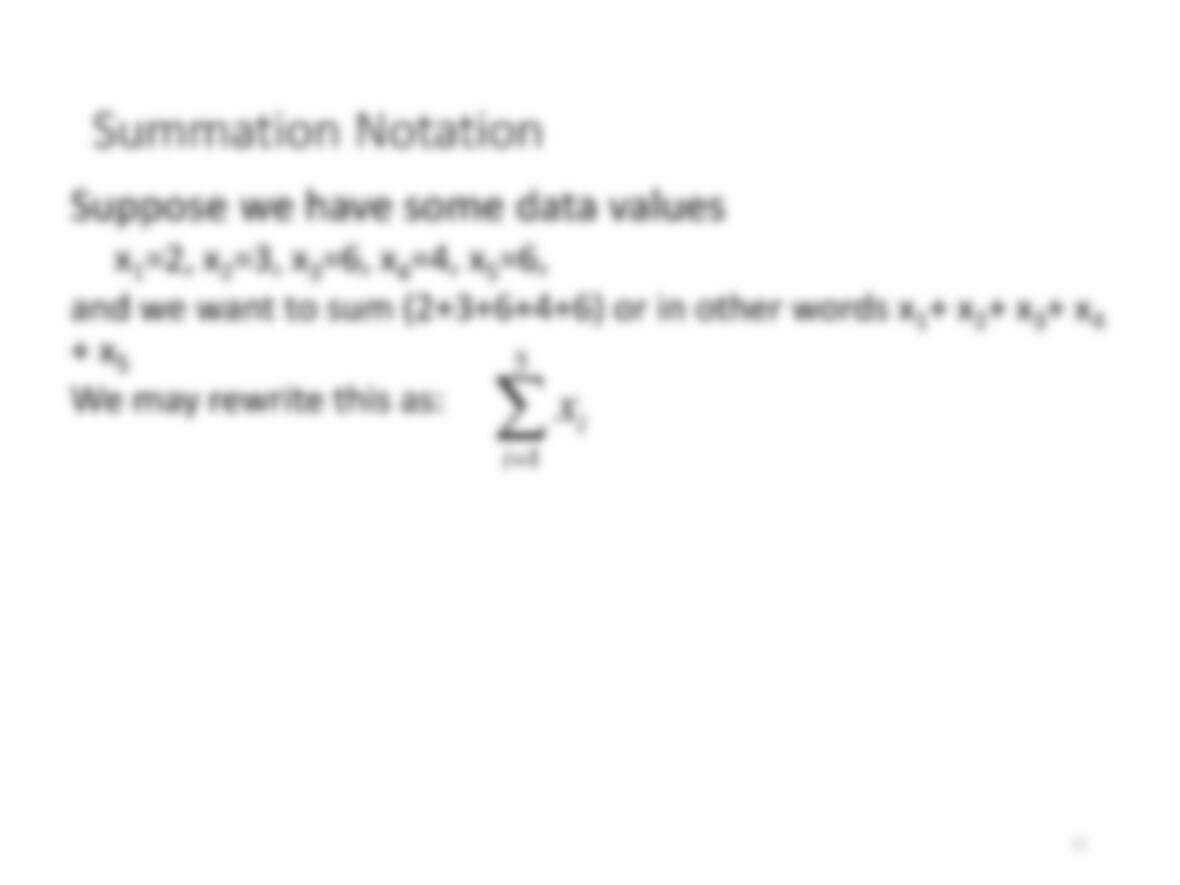
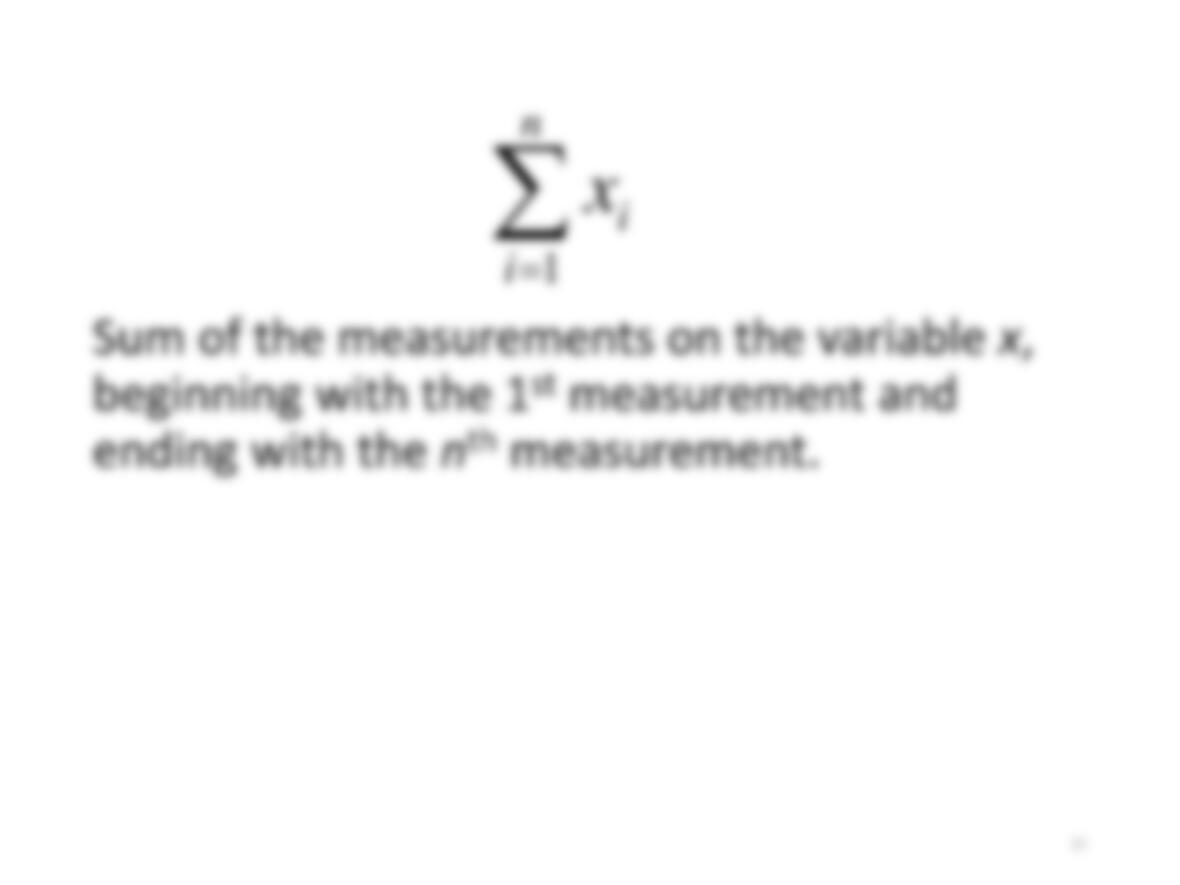
•Summation notation
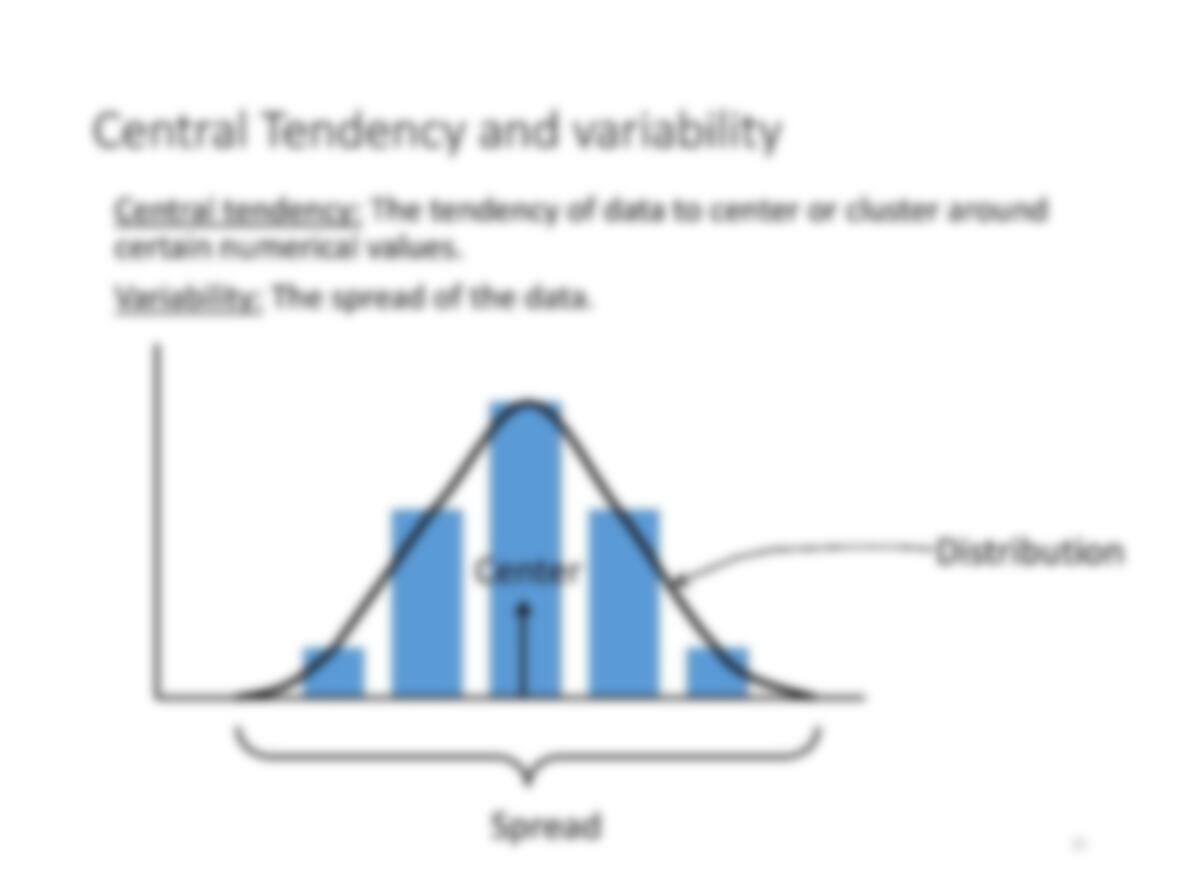
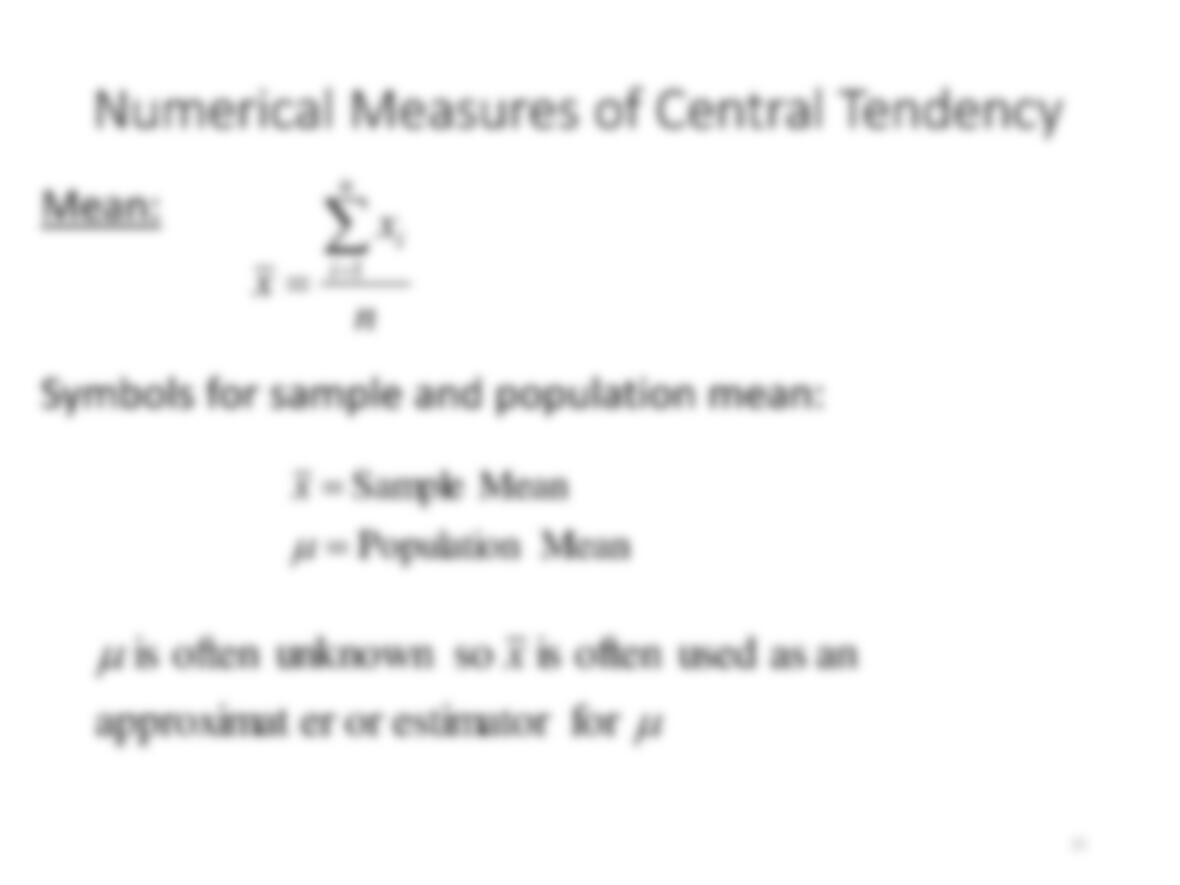
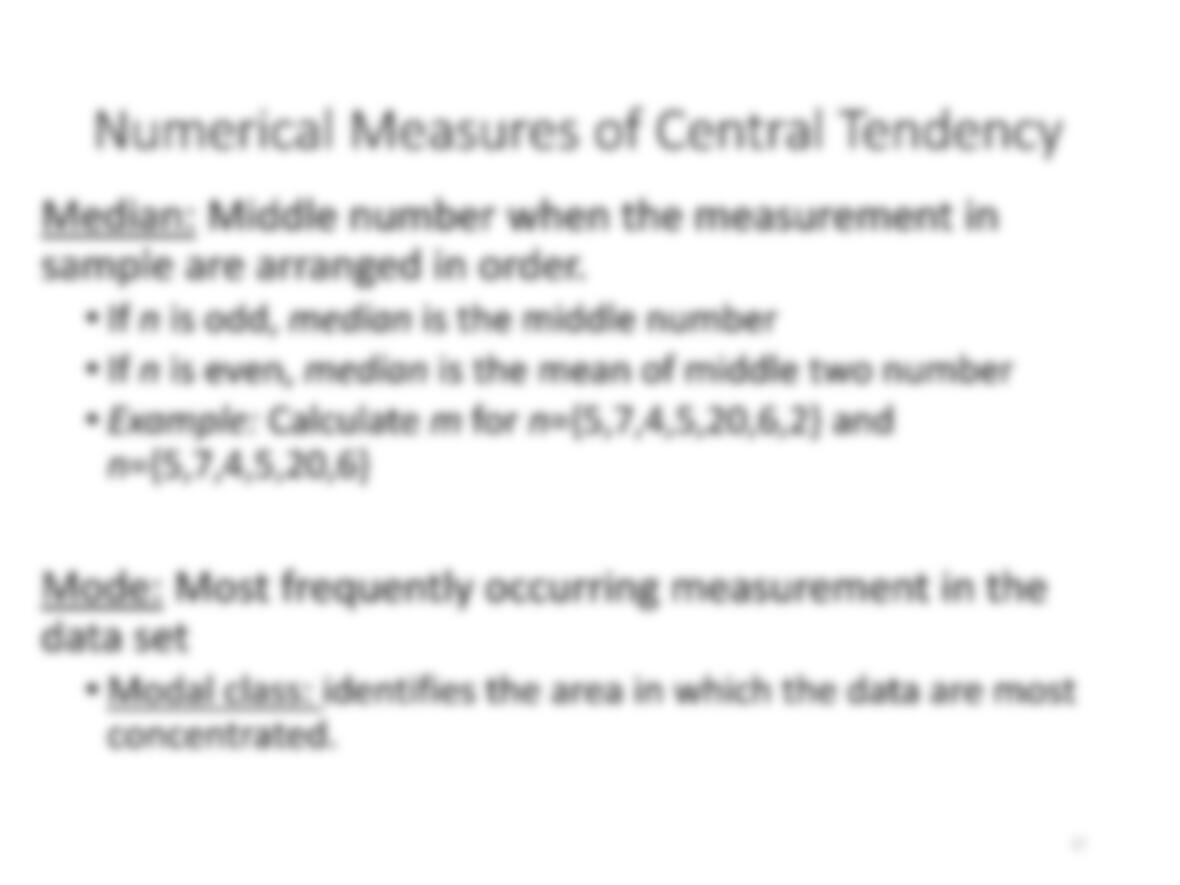
•Numerical measures of central tendency
•Chebyshev’s Rule & Empirical rule
•Numerical measures of relative standing
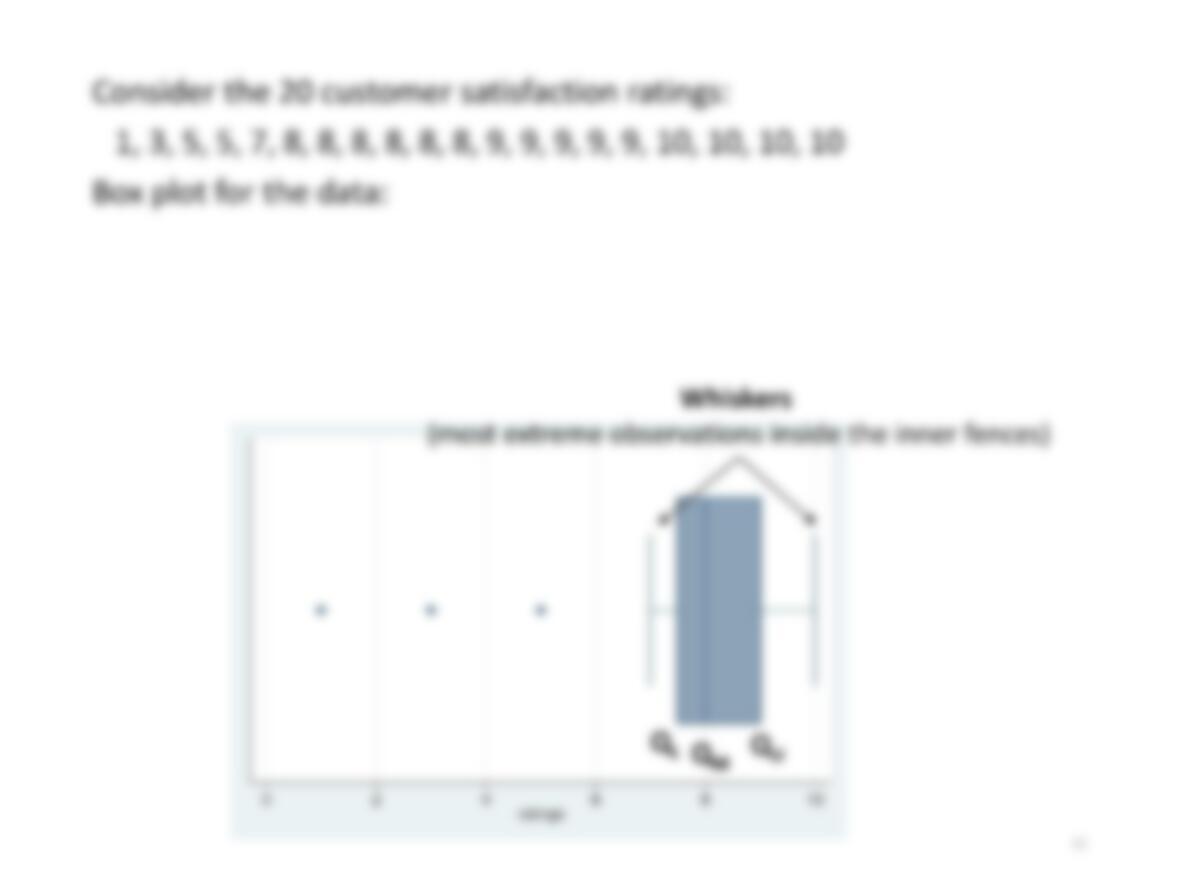
•Quartiles and box plots
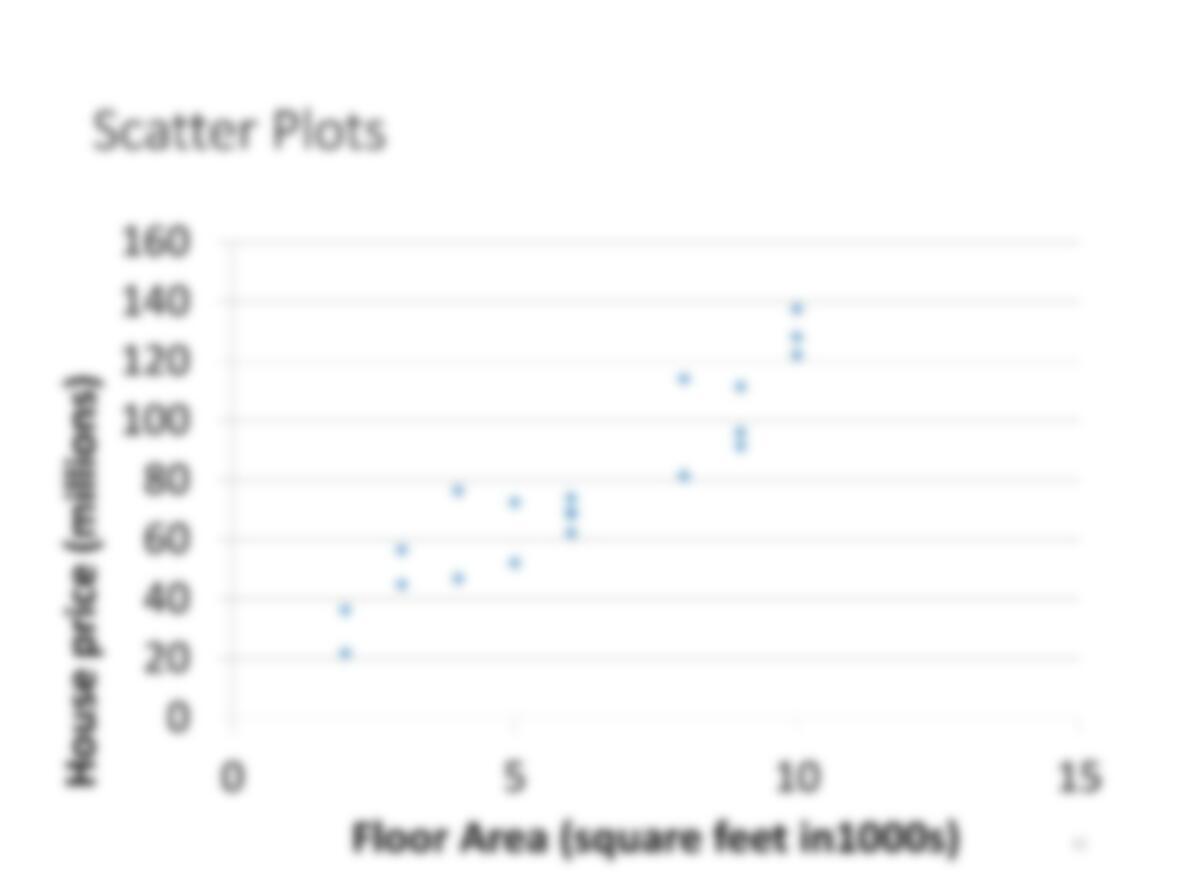
•Bivariate relationship
3

Descriptive Statistics
•“Complex ideas communicated with clarity,
precision, and efficiency”
•Many numbers in a small space
•Makes large data sets coherent
•Encourages the eye to compare different pieces of the
data
4

Data
•Qualitative data : Measurements classified into one of several
categories
•Nominal
•Ordinal (ranked or meaningfully ordered)
•Quantitative data: Measurements that can be recorded on natural
numeric scale, and may be discrete or continuous.
•Discrete data arise from a counting process.
•Continuous data arise from a measuring process.
5

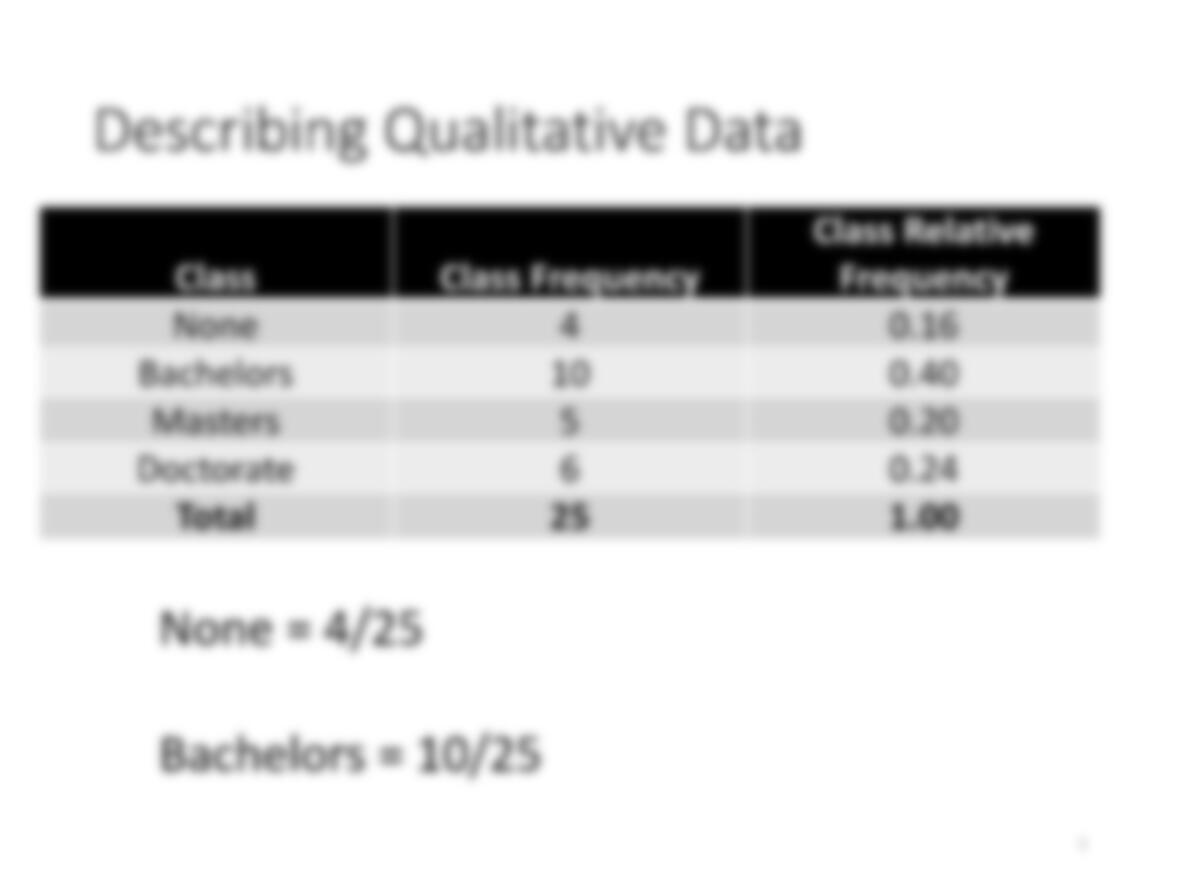
Describing Qualitative Data
Some definitions
Class: one of the categories into which qualitative data can be
classified
Class frequency: numbers of observations in the data set
falling into a particular class
Class relative frequency: the class frequency divided by the
total number of observations in the data set
6
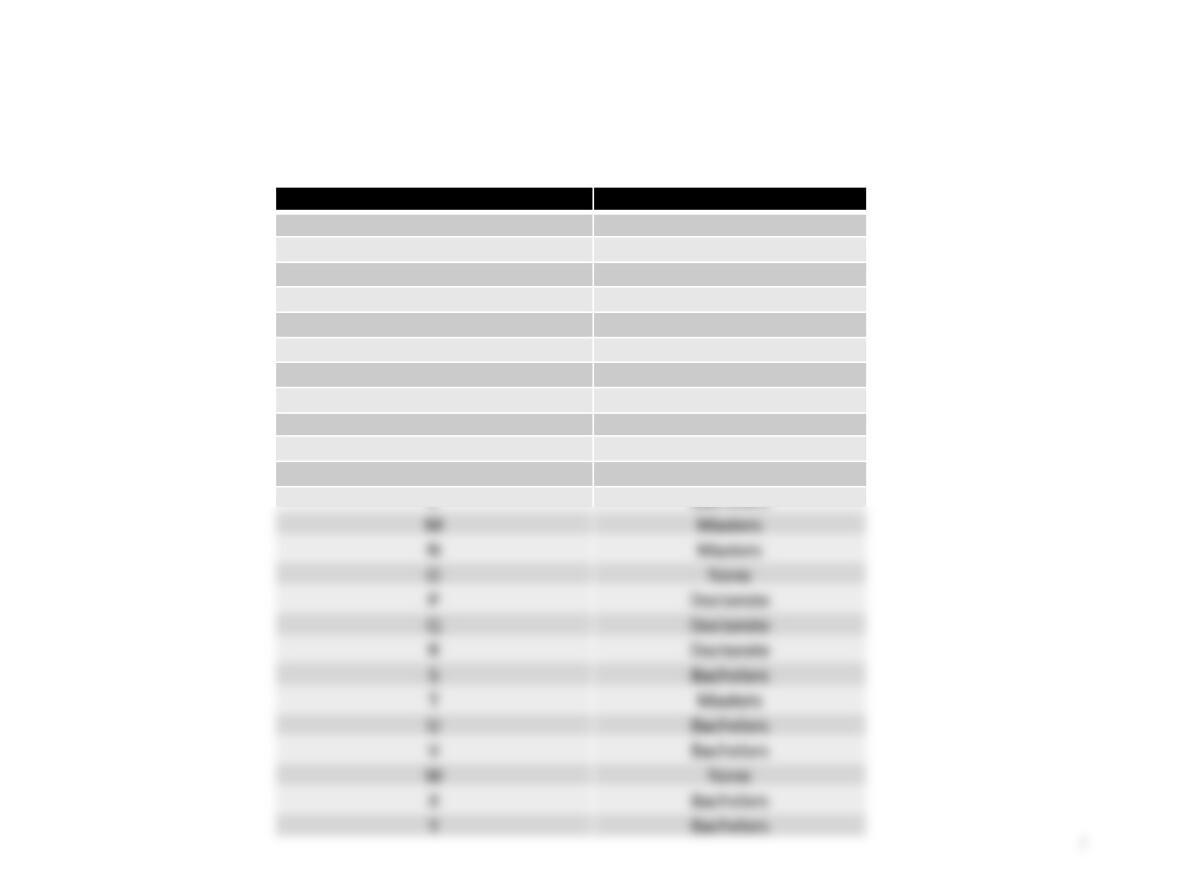
Describing Qualitative Data
CEO Highest Degree
A Masters
B None
C Doctorate
D None
E Bachelors
F Masters
G Bachelors
H Bachelors
I Doctorate
J Bachelors
K Doctorate