Pollution: An Overview of the Different Types and Adverse Effects
Christina Hamilton
Southeast Arkansas College
ENG-132302: English Composition 2
Tamela Turbeville
November 11,2020
Pollution: An Overview of the Different Types and Adverse Effects
Pollution is the admittance of any contaminant into the environment that causes a
negative change (Wikipedia, 2020). Throughout this paper I will briefly go over a few different
types of pollution including light pollution, noise pollution, land pollution, air pollution, and
water pollution. Pollution causes adverse effects on the environment, wildlife and human life.
Pollution can be produced through natural circumstances like volcanoes, but the term pollution
typically suggests a human made source (Nathanson, 2020). There are several things we utilize
on a daily basis that pollute our environment. Just a few of these include the use of electricity,
the use of most transportation, pesticides and our sewage. In this paper you will find examples
of all of these and several more. Humanity has spoiled itself with conveniences which are
polluting our world and affecting every aspect of life.
Pollution: Air Pollution
Air pollution is any substance present in the air that has harmful effects on the
environment (Wikipedia, 2020). Most consider the rising of major industrial companies to be a
great success and revolution in technology and the vast amount of services it has created, but
the amounts we have and the pollution they produce have become a bit concerning
(Manisalidis, Stravopoulou, Stravopoulous, and Bezirtzoglou, 2020). According to an article by
Richard Fuller, President of Pure Earth, “air pollution is linked to an estimated 4.2 million
premature deaths per year” (2020). On a singular level, driving a vehicle is generally the
greatest activity we conduct when contributing to air pollution. When our vehicles are running
they put off gases and particles that effect our environment in numerous ways, some of these
include: some substances put off collect on water and soil where they then enter the food chain
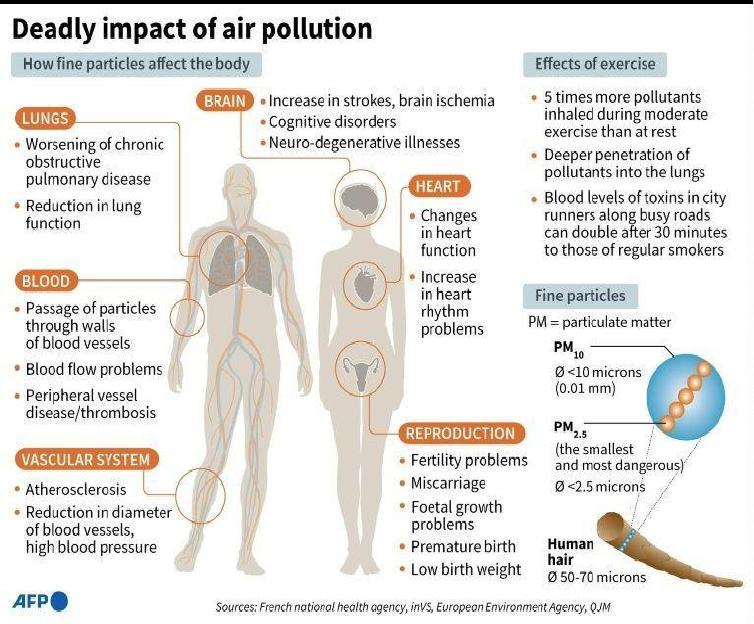
which can then affect many organ systems found in animals and others emit greenhouse gases
and contribute to global warming (King, 2018).Forms of agriculture have also become a concern
and is not something one would typically think contributes to air pollution. However, farming
has become a leading source of ammonia emissions.
According to Marianne Brooker, who is the co-editor for the news platform The
Ecologist, “Ammonia plays a major role in creating particulate matter, one of the biggest
threats to people’s health from air pollution, with emissions from farms harming the health of
people hundreds of miles away” (2019).
Even the use of electricity pollutes our air. Almost all machinery used for achieving
electricity releases gases that emit into our atmosphere and contribute a wealthy amount to
global warming (Thompson, 2020). These are just some of the contributing factors when it
comes to air pollution. There are so many more that we could look at and work towards
reversing. We are the cause of most air pollution and only we can reduce it.
Pollution: Noise Pollution
Another form of pollution is noise pollution. Noise pollution can be any harmful or
annoying level of noise. Noise pollution affects our health and the health of wildlife as well. Our
brains often send off danger signals associated with noise, which then produces stress and
releases hormones and in turn can cause your heart rate to increase, blood pressure to spike
and your immune system to depress (Ewald, 2014).
Noise pollution can also have adverse effects on one’s mental health. Ewald, an author featured
in the Life + Health Network, “While noise is not believed to be responsible for mental health
issues, it is assumed to accelerate and intensify the development of latent mental disorders.
Noise may cause or contribute to neurosis, hysteria, and psychosis” (2014). We may not realize
the adverse effects noise pollution can cause, but it is there.
Noise can also affect the wildlife. For instance, in high noise areas it affects how predators hunt
their prey, or how certain species here mating calls (Katz, 2019). Bill Streever, a biologist and
best selling nature writer stated, “Extremely powerful sound sources, including such things as
driving of large piles, use of air guns to explore seabed geology (a common practice in the
search for oil and gas and in research), and certain types of sonar have the capacity to damage
the hearing of marine mammals at close range” (2019).
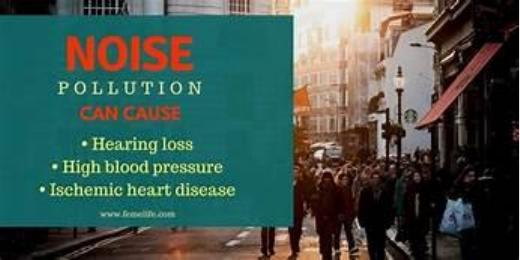
Some issues auditory or non-auditory such as sleep disturbance, hearing loss,
cardiovascular diseases, cognitive performance impact, and even adverse birth effects can be
linked to a form of noise pollution in some cases (Toa, Chai, Kou, and Kwan, 2019). Noise
pollution is all around us. Our ways of living have become so loud that we have blocked out