R O D R I G U E Z | 1
Police and Society
PTSD and Stress Disorders – Managing
the Mental Health of Police Officers
Professor: James Manning
Leslie A. Rodriguez
July 05, 2016

R O D R I G U E Z | 2
Post-Traumatic Stress Disorder in Law Enforcement
At the point when the American watches the nightly news or reads the paper, they are shelled by
stories of the awful brutality that individuals commit against each other. The media covers
school shooting, Movie Theater shooting and terrorism and since the attacks on the World trade
Center we as Americans have not been the same. Americans are stunned and remain in dismay of
these and comparable stories. A few people that see these stories will be influenced for a few
days and possibly weeks after the tragic event. Individuals who really witness occasions, for
example, these might be influenced for years to come, however shouldn’t something be said
about the cops, firefighters, and crisis medical faculty that need to react to these tragic events
again and again? How are they affected? What kind of long-term impacts will they be confronted
with?
In the article, Police Suicide: Understanding grief and loss (2002) Beverly J. Anderson states:
More than any other occupation, law enforcement is an emotionally and physically dangerous
job. Police officers continuously face the effects of murder, violence, rape, child abuse, accidents
and disasters. Long hours, rotating shifts and constant exposure to tragedy exacts a heavy toll on
police officers and their families. The results are alarming: Alcoholism, divorce, domestic
violence, heart attacks, cancer, depression and suicide. Law Enforcement, the media, and the
public all portray the myth that police officers can experience trauma and violence on a daily
basis without any ill effects. Research has shown just the opposite. When stressors are prolonged
and overwhelming, a person’s ability to cope becomes diminished.
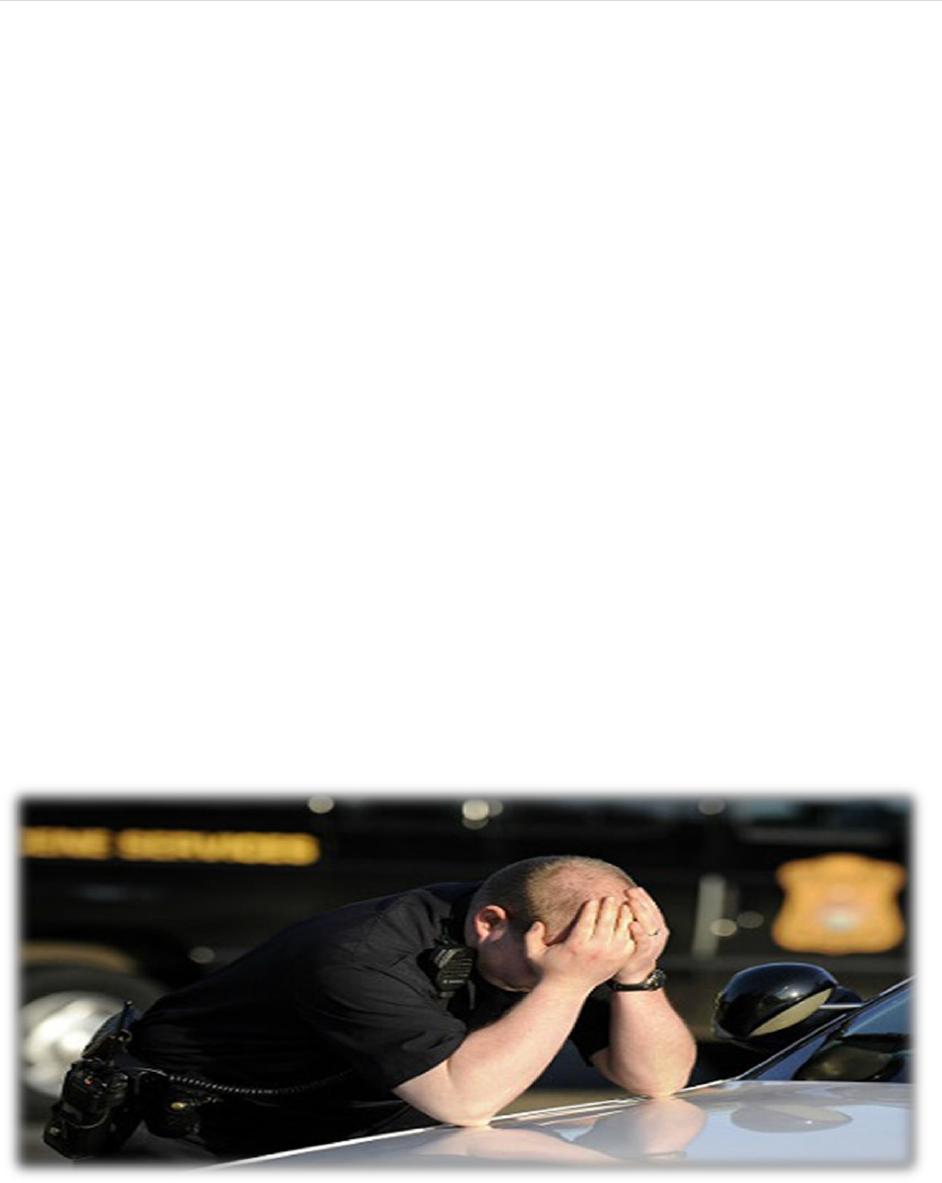
Police officers, by the very way of their jobs are exposed to more stress and trauma in one day
than a great many people will experience considerable amount of time. Perhaps their whole lives.
R O D R I G U E Z | 3
Some police officers thrive with anxiety. They search out episodes that a great many people
would not want to experience in their lifetime. Numerous individuals search out an occupation in
law enforcement for this test and the individual challenges it can give. Overcoming stress or
anxiety of incredible greatness can give awesome individual personal rewards, yet these jobs can
and as often as possible do ruin numerous lives.
In the article, In public safety: Police Depression: The Silent Killer (2014) Mark bond states:
Depression in police work is a silent killer. Depression can be stealthy, even for the most
resilient officer, and can take a physical and mental toll on the mind and body if it goes
unrecognized and untreated. Unfortunately, the silence within police culture discourages the
acknowledgment of depression and mental illness. This silence cannot continue. Every year, just