“Polaroid”
1. What are the main objectives of the debt policy that Ralph Norwood must recommend to
Polaroid’s board of directors?
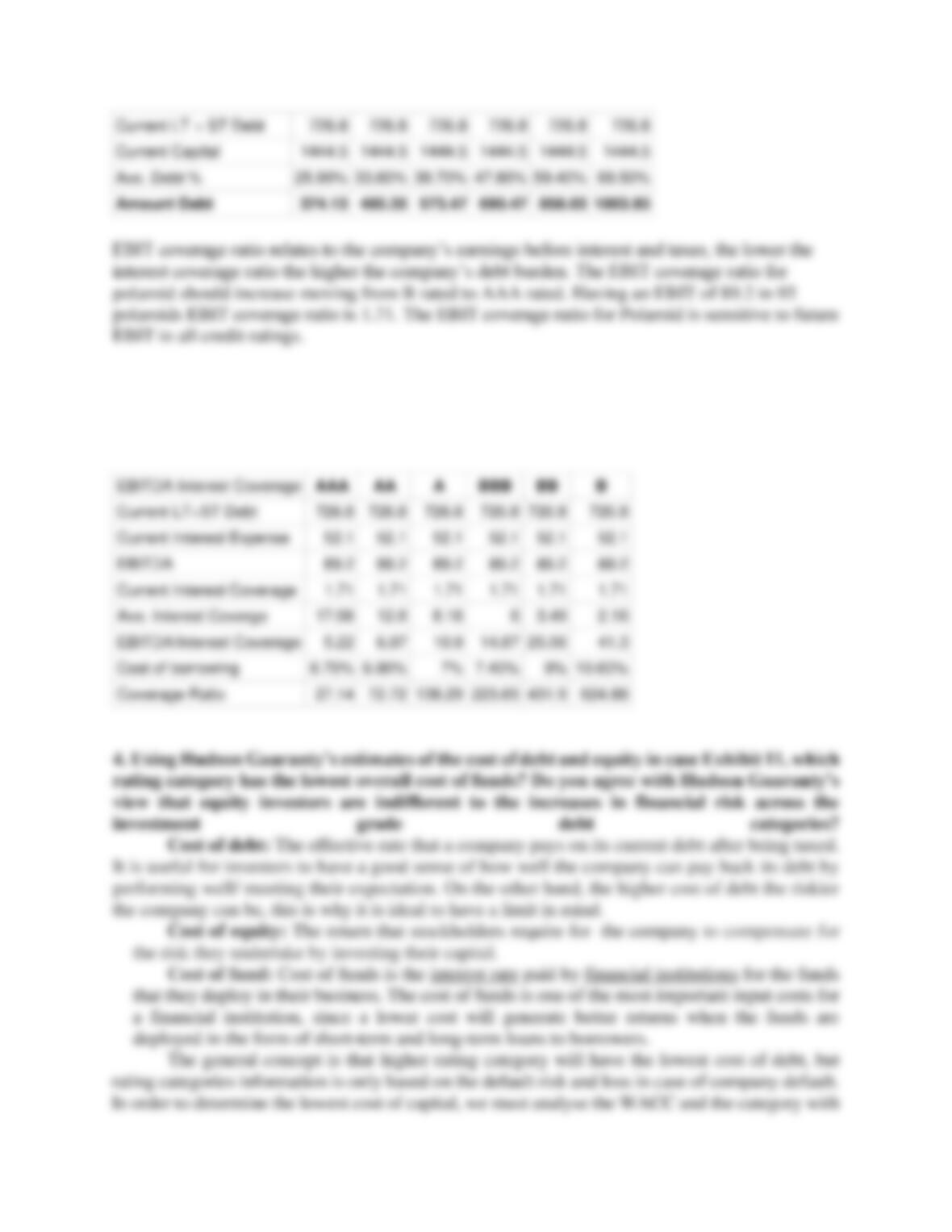
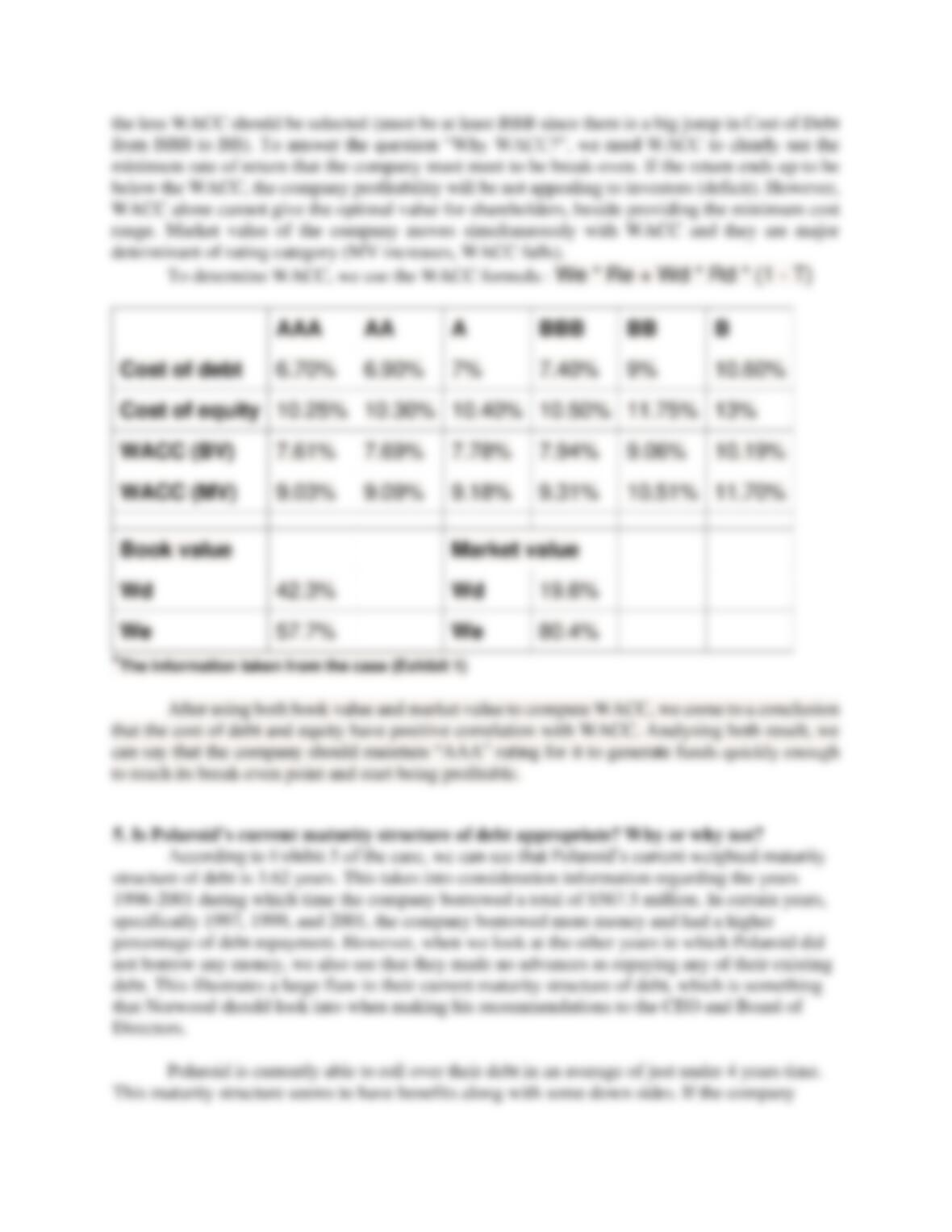
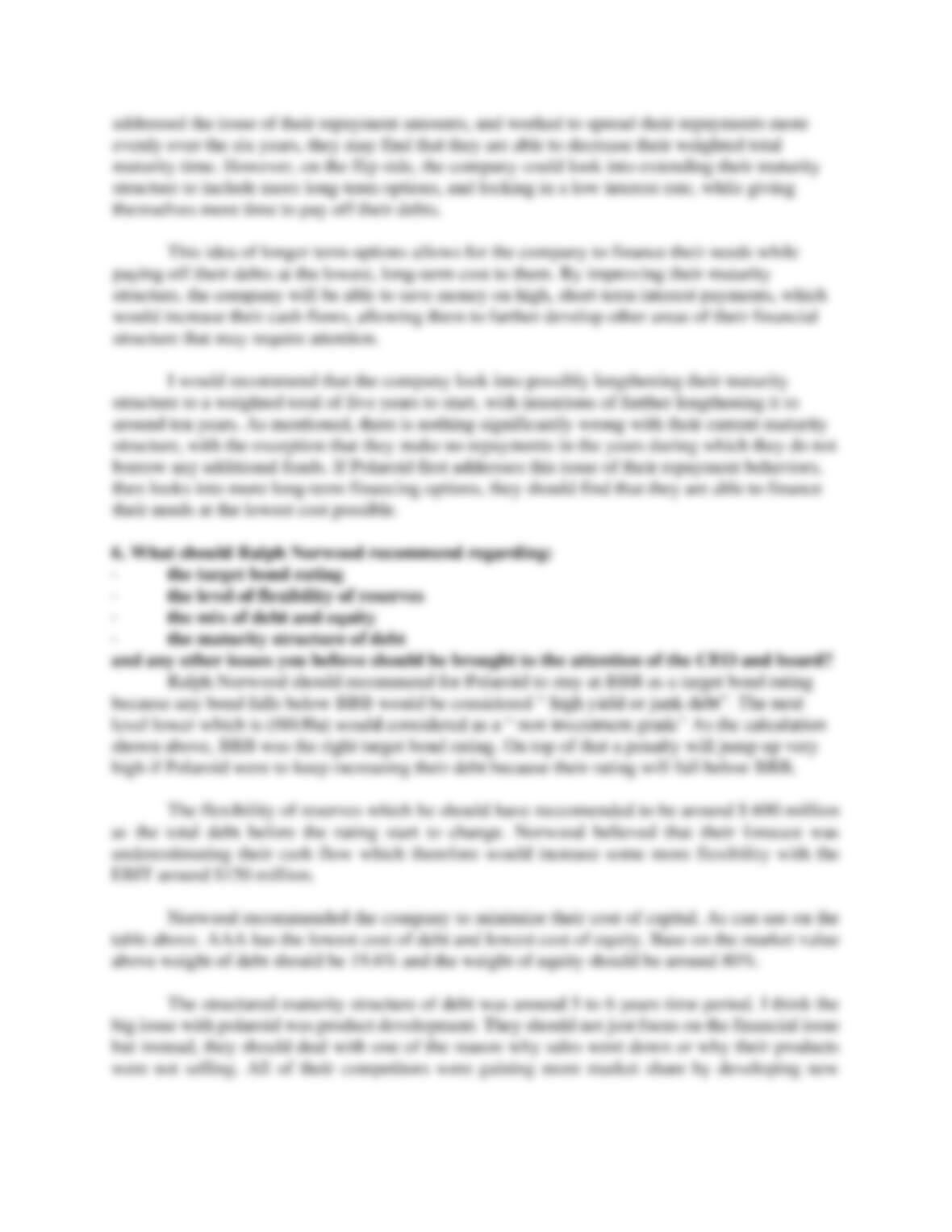
The main objectives of the debt policy that Ralph Norwoord must recommend to
Polaroid’s board of directors is the expansion of the firm. The firm is currently operating at a loss
because of increases with competition and consumers. Another objective that must be
recommended is for the tax shield and valued added to stakeholders to be raised as much as
possible. Debt should try to be minimized that way no financial stress arises.
2. What financing requirements do you foresee for the firm in the coming years? What are
the risks associated with Polaroid’s business and strategy? In your view, what firms are
Polaroid’s peer firms?
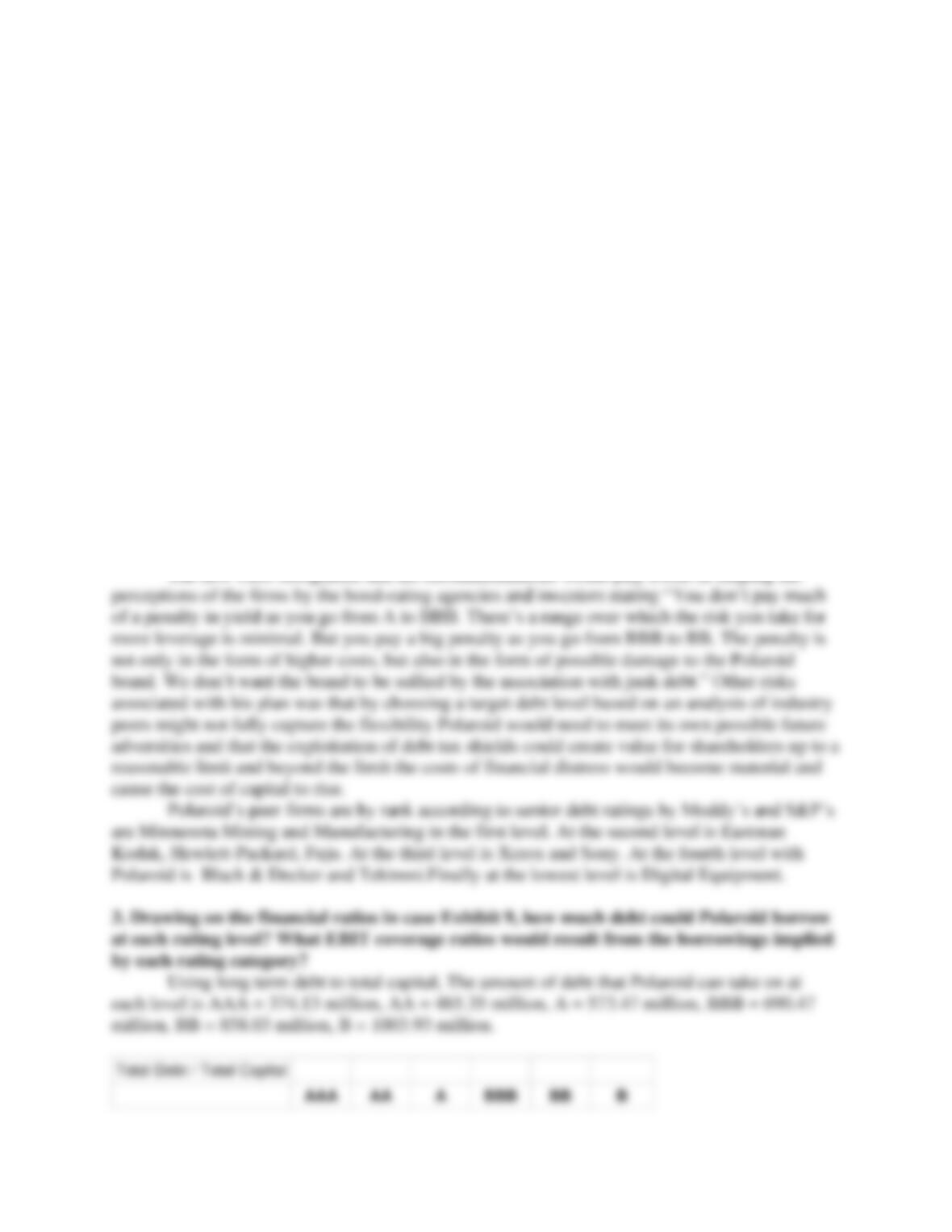
“One important issue for consideration was the extent to which the financing of the firm
would be impacted by the plans of the new CEO.” The new CEO announces major restructuring
of the firm that would reduce the workforce by some 2,500 positions (roughly 20%) and reduce
more expenses by more than $150 million annually. His termination of the Captiva camera and
of several research and engineering projects and intentions of emphasize projects that have the
greatest potential for commercialization will require the firm to redesign its finances. His
intention of sharply reducing overhead costs in order to trigger a special charge in earnings
resulted in the firm reporting a net loss of $140.2 million compared with the previous years
earnings of $117.2 million.
The new CEO announced that not only was he restructuring the finances but he intended
on restructuring management built around three core areas: consumer, commercial, and new
business. To meet its various financing needs Polaroid maintained a five-year $150 million
capital line of credit to be used for general purposes and it’s long term debt consisted of three
issues: notes, ESPO loan, and convertible subordinated debentures. One of the major risks the
firm was taking by refinancing at the time is that “virtually all of the firm’s debt was due within
six years.”
When reviewing other demands on the firm’s resources it was predicted that capital
expenditures would about equal depreciation for the next few years, sales might grow but
working capital turns should decline resulting in a reduction in net working capital in the first
year followed by increases later. Cash dividends would be held constant for the foreseeable
future and the firm would continue with its program of opportunistic share repurchases.