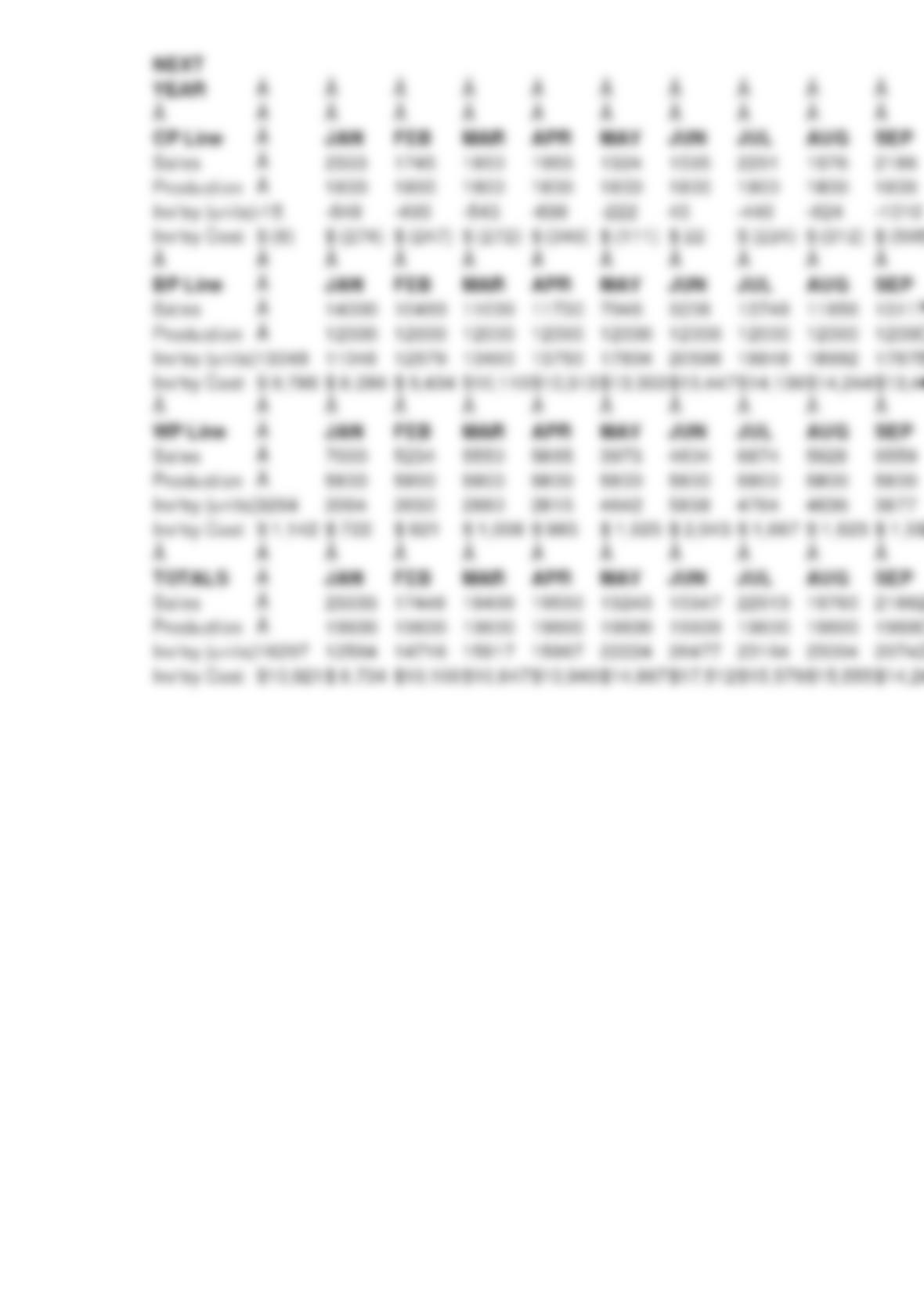
Is the projected inventory for THIS YEAR sending a message? If so, what is it?
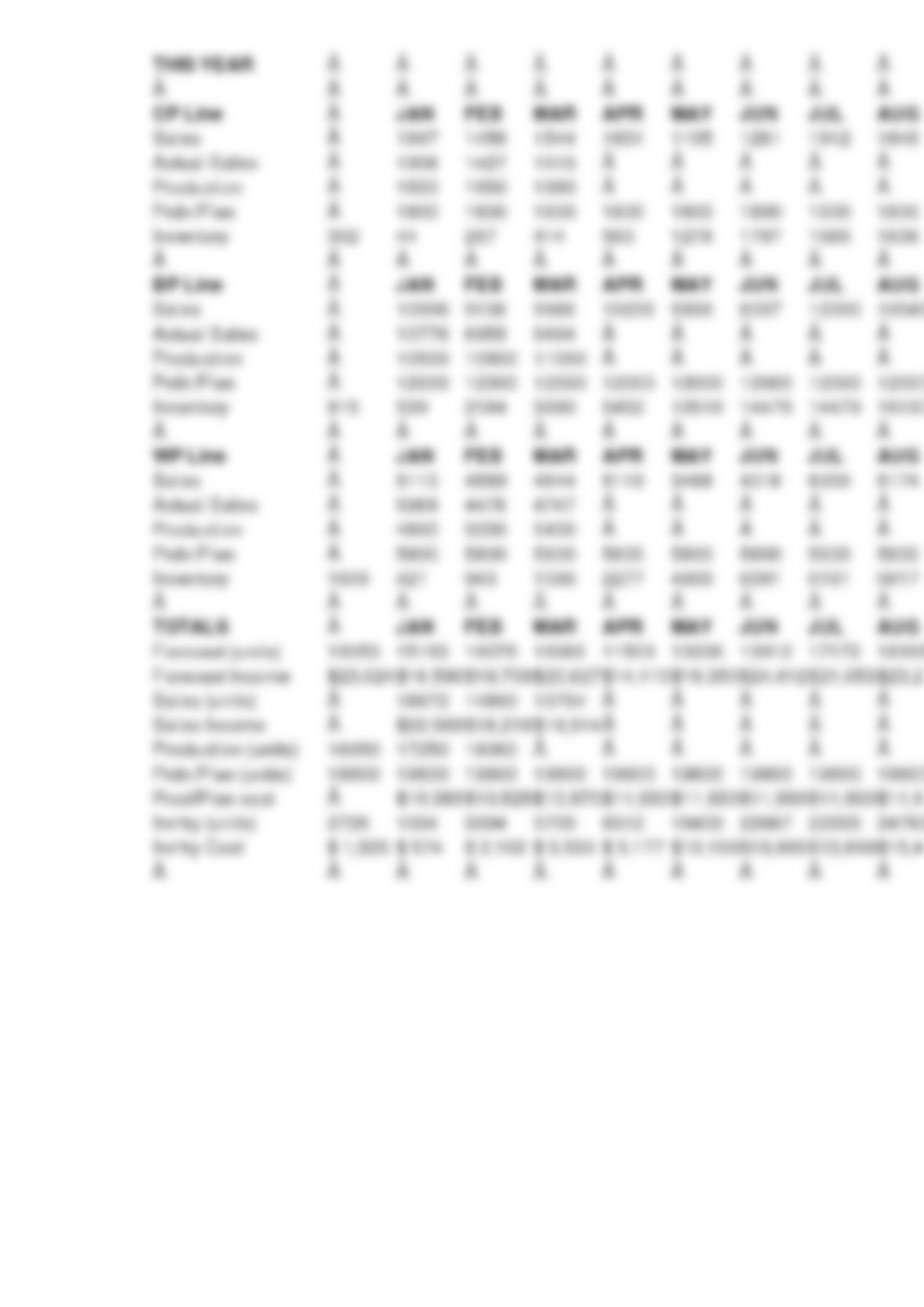
CP-Line: The projected ending inventory is -15. This means that, if the forecast is correct,
a stockout will occur in December if no action is undertaken.
BP-Line: At the end of the year there will be a huge inventory of finished goods, more than
one month’s production quantity. A lot of money is tied up in this. Production quantity is
set too high.
WP-Line: Ending inventory at the end of the year is twice as much as in the beginning of
the year, which suggests that the production is a bit too high.
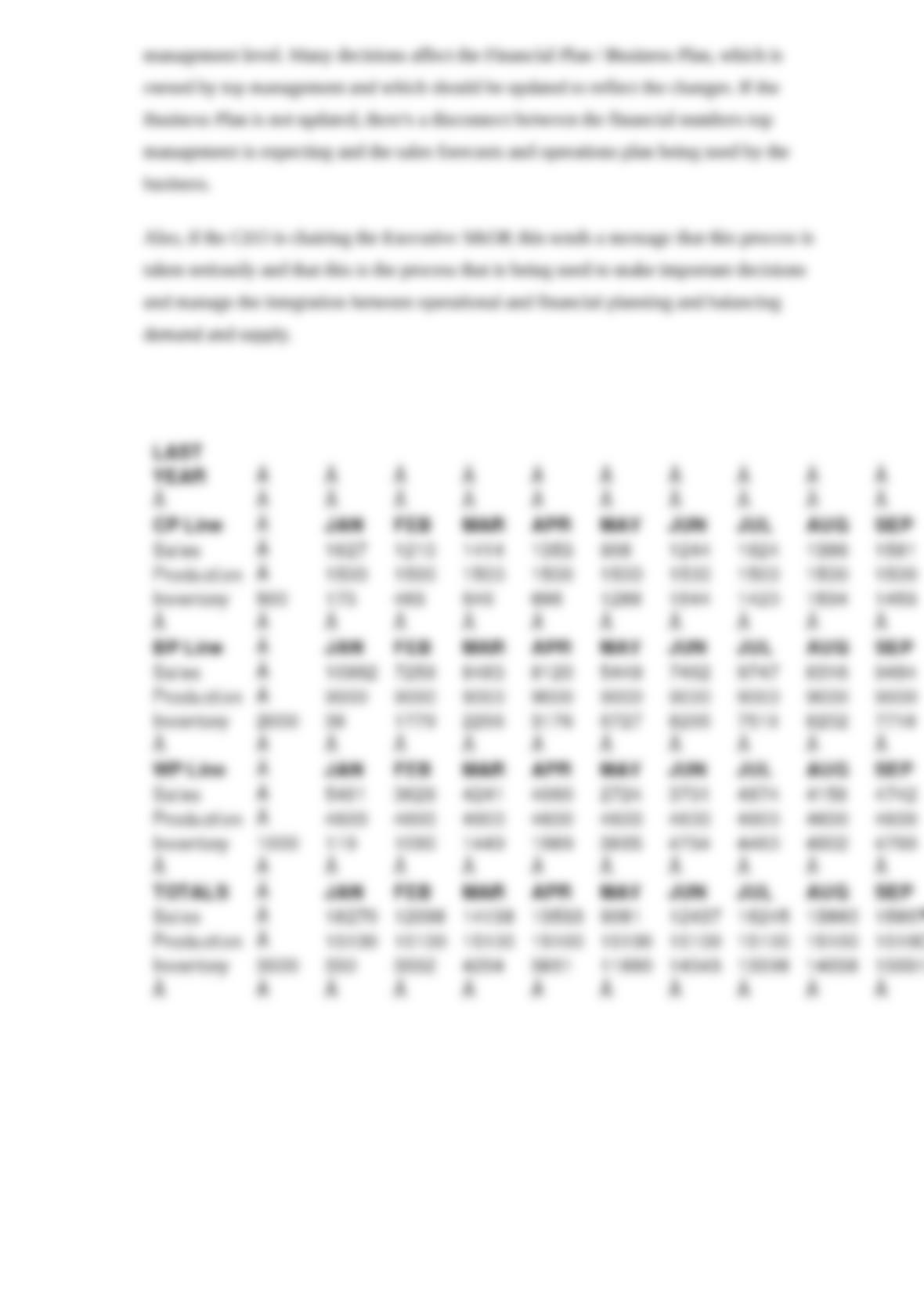
All lines: the build-up of projected inventory in the months Jan till May, a more or less
level projected inventory from June till September and decreasing inventory in the final
months of the year combined with a level production plan suggests a seasonal product.
Is there any way to determine the cost of leaving the schedule alone? That is, doing
nothing?
CP-Line: It is difficult to exactly determine the cost of a stock-out. It includes lost sales;
angry customers; expediting orders which could mean overtime and/or express delivery
amongst others; disrupting production schedules, etc.
BP-Line: ending inventory for the year represents a cost of $9,786. Carrying costs for
these goods could be 25%, which represents $2,447. Part of the money tied up in this
inventory could be used elsewhere, this amount is what it costs to leave the schedule for
the BP-line intact.
WP-Line: ending inventory for the year represents a cost of $1,143. Carrying costs for
these goods could be 25%, which represents $286. Part of the money tied up in this
inventory could be used elsewhere, this amount is what it costs to leave the schedule for
the WP-line intact. This amount is not a lot, compared to the BP-line, so I would aim my
efforts on the BP-line.
You are a newly appointed materials manager. Toward the end of the meeting, the CEO
asks if you can see some ways to fundamentally cut costs. What is your response?
CP-Line: Looking at this year, you have to make sure that you meet the forecasted
production schedule from now on and even exceed it a little bit in order to avoid the costs
of a potential stockout. For next year the production schedule has to be increased to an
average of ca 2110 units per month in order to meet the forecasted sales and avoid