Introduction
Chad Williams, a field geologist working for American Oil Company is overseeing the
improvement of machine work efficiency (Groebner, 2014, p. 254). Chad is to order about
800 capacitors to improve the functionality of a specific electronic machine. Although, his
dilemma is specifying the exact number of capacitors for the order. He needs to order as
few as possible to cut company’s expenses but order enough that he is within 98% chance
of assurance that the ordered electronics will work. The capacitors’ provider is able to
provide product that can operate to a normal distribution, with a mean of 12 microns and a
standard deviation of one micron, but Chad’s requirements are plus or minus .50 microns
from the standard of 12.
Problem Solving
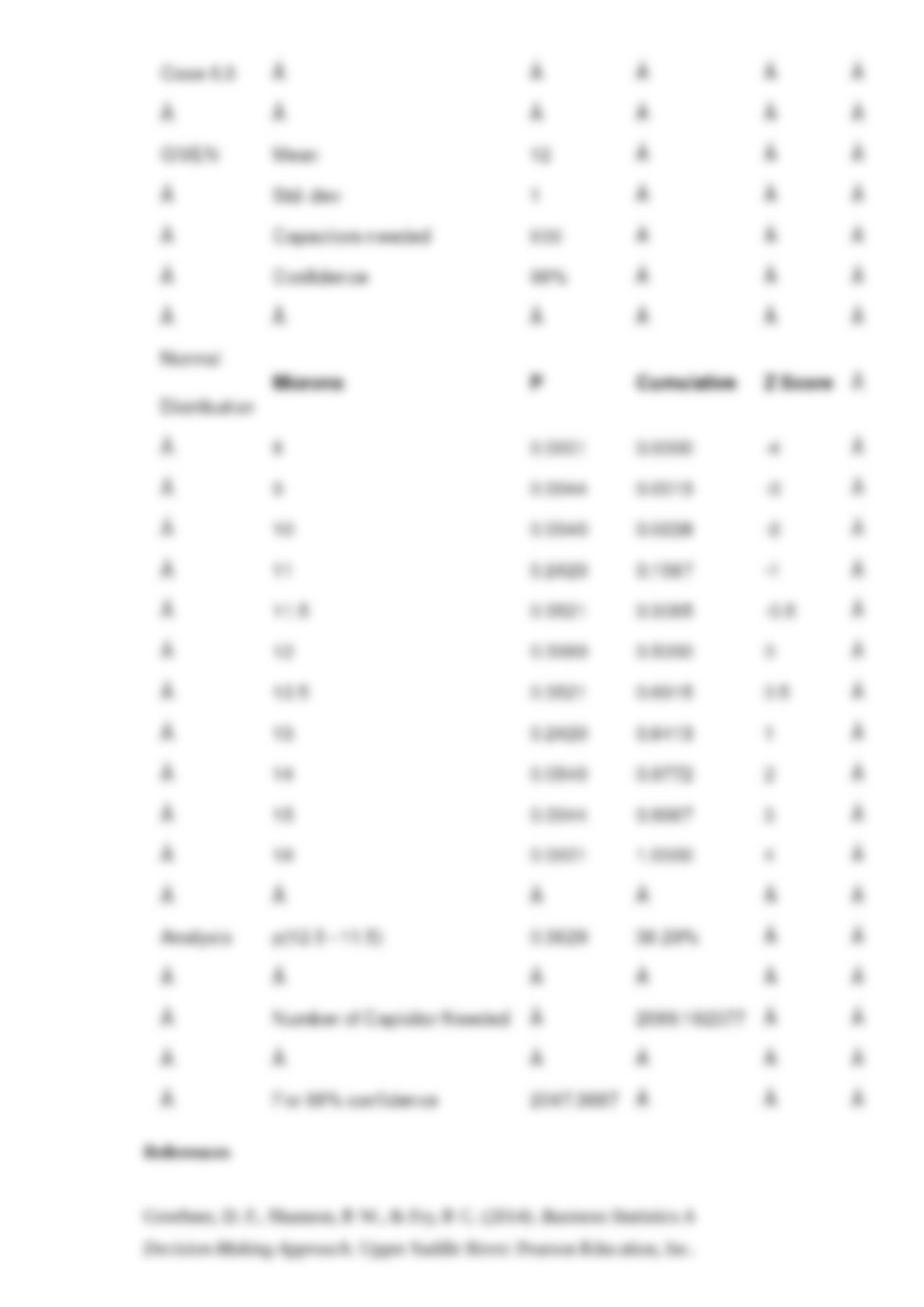
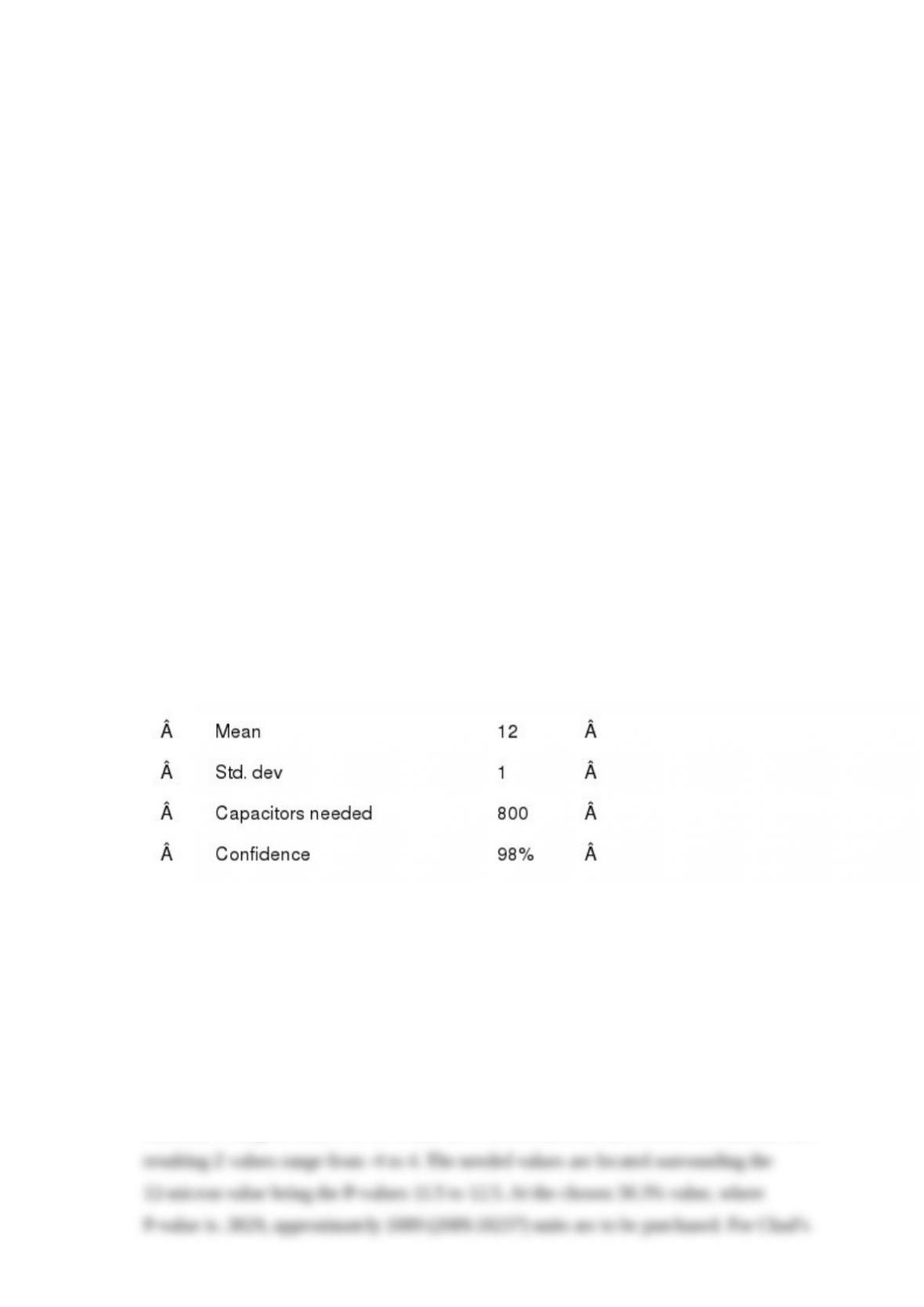
To solve Chad’s dilemma, we need to consider a mean of 12, a standard deviation of 1, a
number of 800 capacitors needed, and a confidence of 98%.
Table 1 Given data from Case 6.3
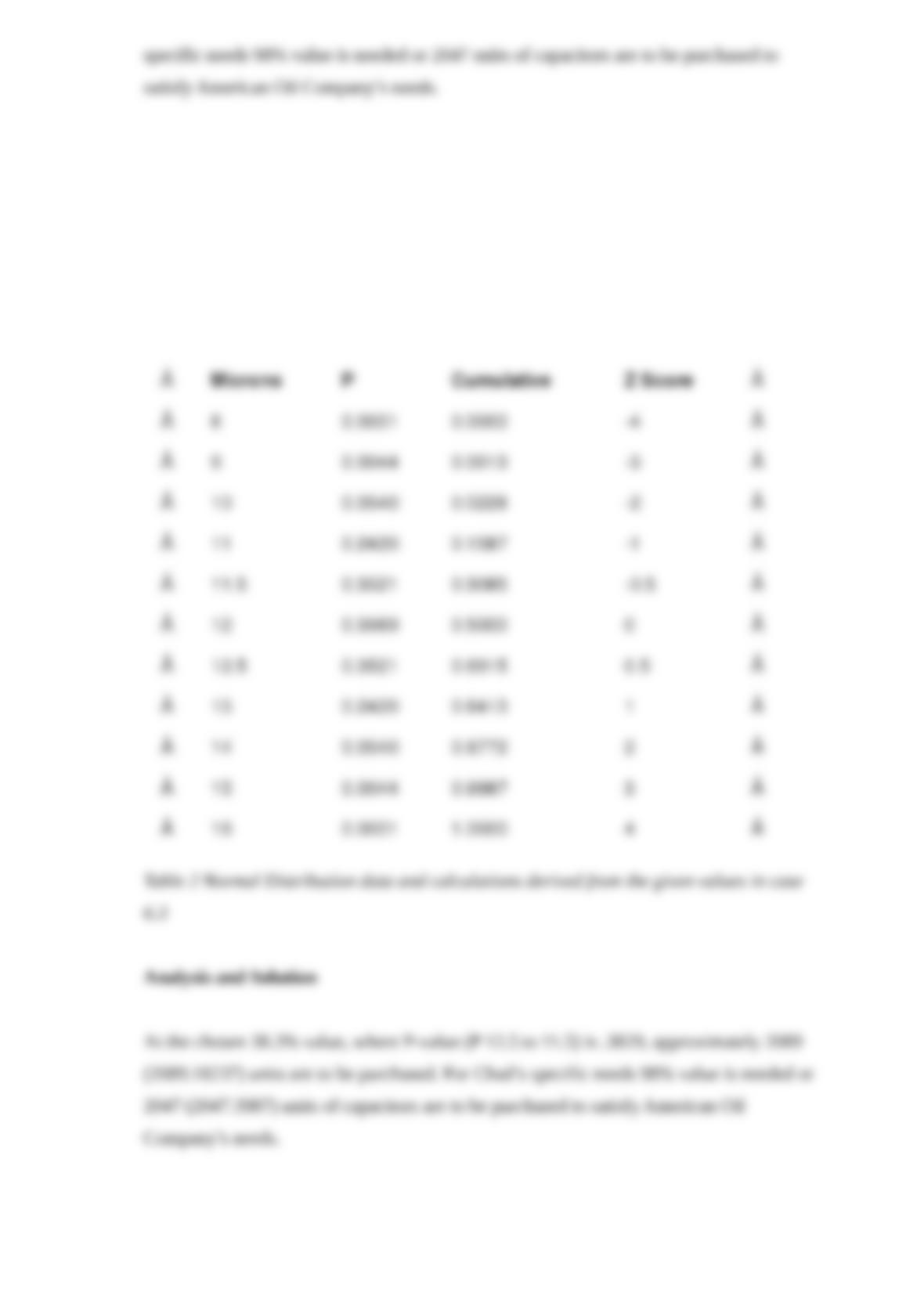
To calculate how many capacitors Chad will need to order with 98% chance assurance a
high enough random percentage of 38.3 is chosen based upon the data included in the
Table 2 shown before. 38.3% is chosen in order for the capacitors purchased to be equal to
800. A range of 8 to 16 microns is chosen for the encompassing values of the normal
distribution where the P-value is .0001 at 8 microns and .0001 at 16 microns. The
cumulative range is from 0 to 1.0 where the 0 is at 8 microns and 1.0 is at 16 microns. The