Experiment # 2: Diels- Alder Reaction: Synthesis of cis-Norbornene-5,6-endo-dicarboxylic
anhydride
Introduction/ Background:
“A Diels-Alder reaction is the one between a conjugated diene and a
compound containing a double bond called dienophile.” (Solomon 608) For the reaction to take
place, an electron withdrawing dienophile has to react with an electron donating diene. This
reaction will give rise to three new sigma bonds; it will also take away three already existing pi
bonds. The reaction is stereospecific; “it is a syn addition, and the configuration of the dienophile
is retained in the product as the diene is retained in the reaction. The diene reacts in the s-cis
rather than in the s-trans conformation and the endo product is the major and more stable
product” (Solomon 611)
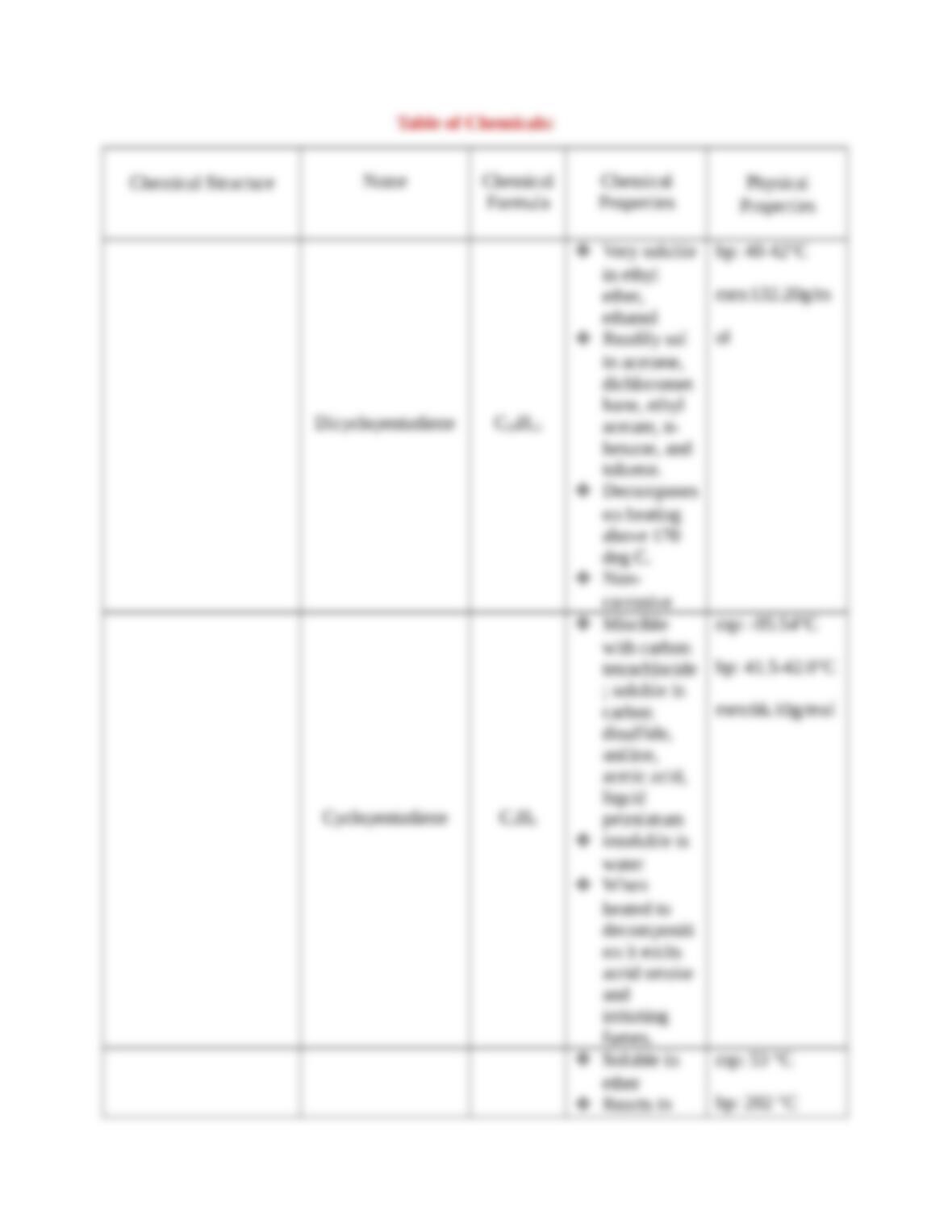
In today experiment, Cyclopentadiene, an electron withdrawing compound,
is reacted with Maleic anhydride, “a very potent electron withdrawing dienophile.” (Solomon
609) The Cyclopentadiene has to be kept at low temperatures since at room temperature it will
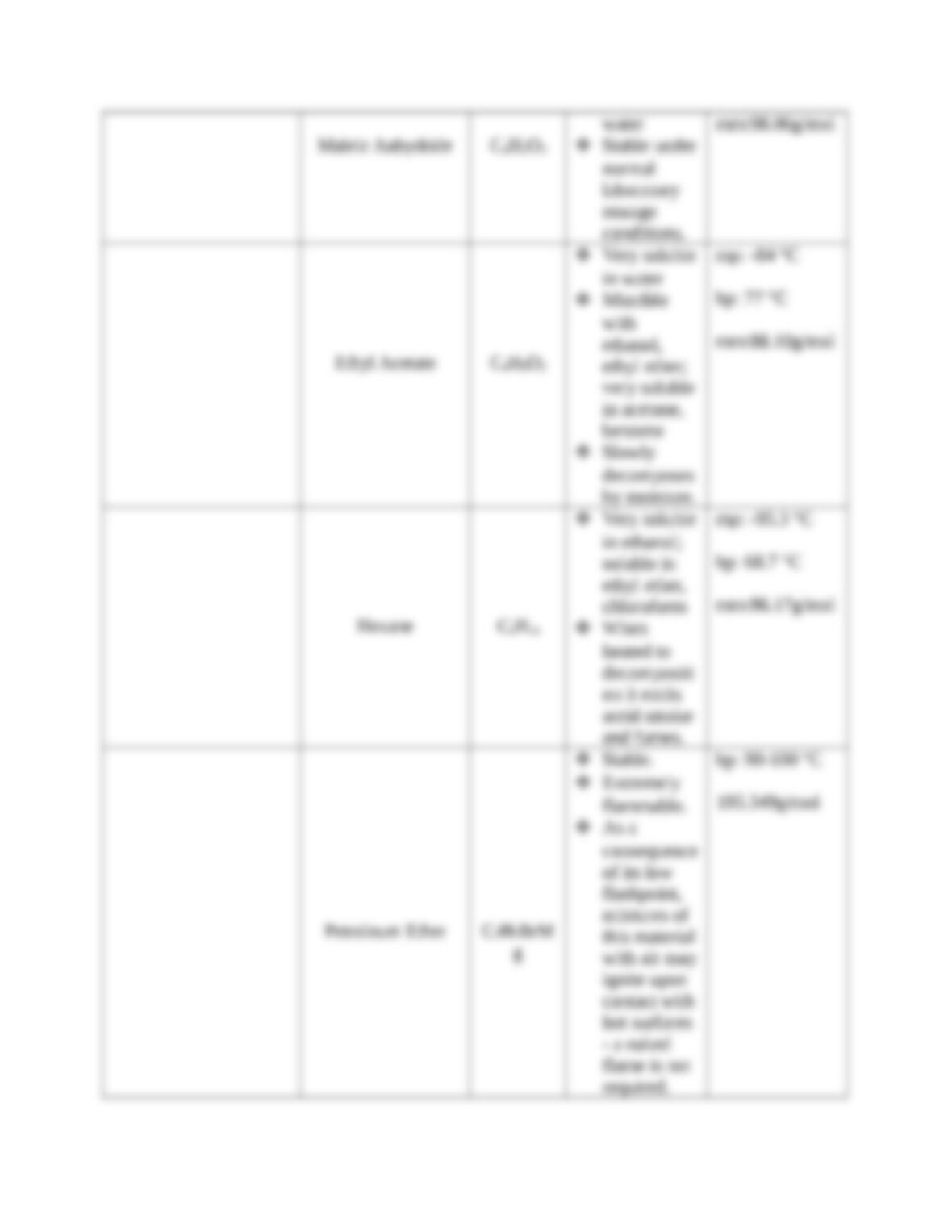
react with itself and form a dimer. In order to obtain a product, Maleic acid will be dissolved in
an ethyl acetate and hexane solution. This solution will perfectly dissolve the product for it to be
recrystallized later. After recrystallization, the crystals will be washed with petroleum ether,
filtered, and finally collected.
Diels-Alder reaction mechanism:

Side reaction Mechanism:
Experimental Section:
Cracking Dicyclopentadiene
5 ml of Dicyclopentadiene in 10
ml conical vial
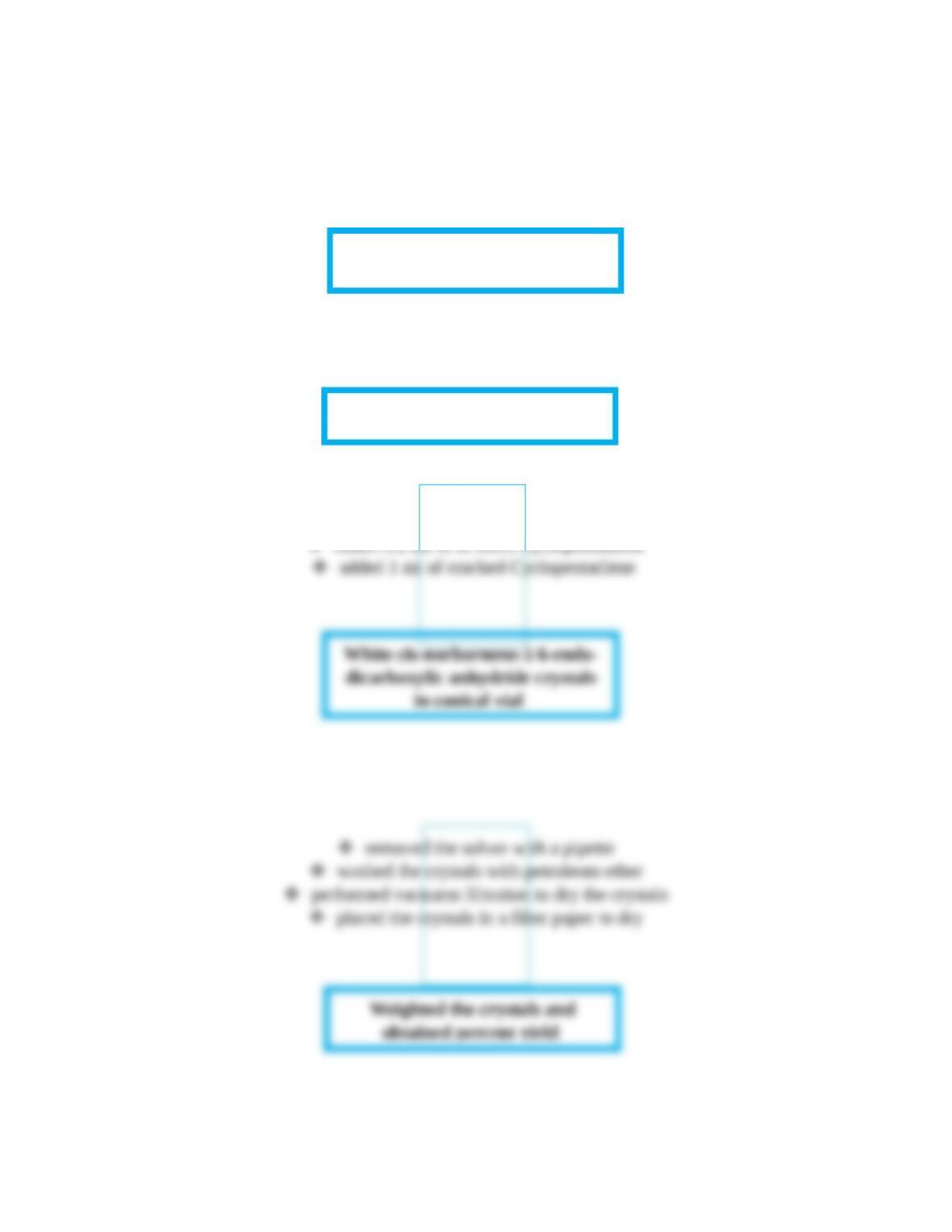
set up fractional distillation
placed receiver in an ice bath
distilled for 15 minutes without exceeding the boiling point (42 degrees C)
Diels-Alder reaction
added 1 ml of ethyl acetate
added 1 ml of hexanes
Monomeric diene in ice cold
receiver
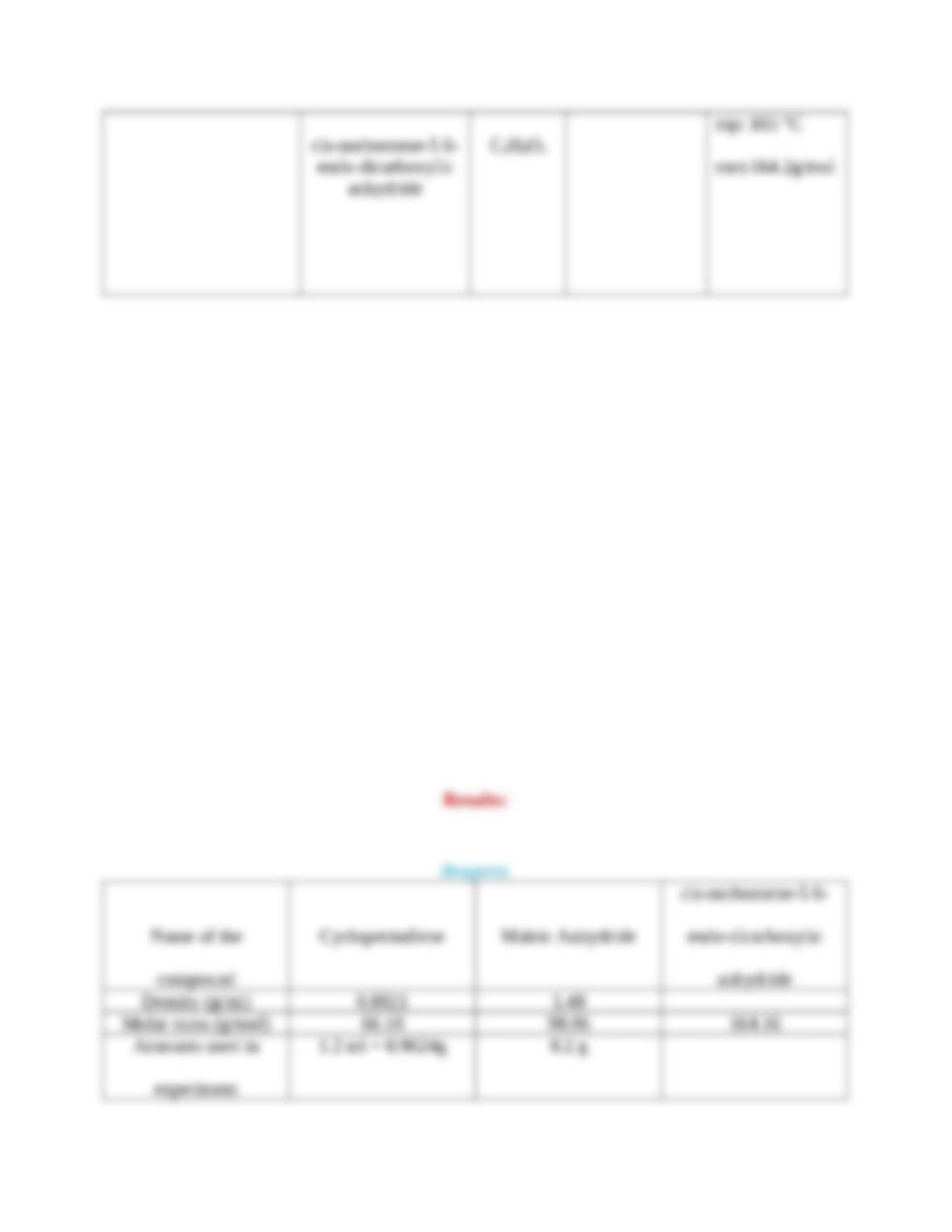
0.2 g of powdered Maleic
anhydride in conical vial