OAM 331 Notes
Vertical Integration vs. Virtual Integration
What is Vertical Integration?
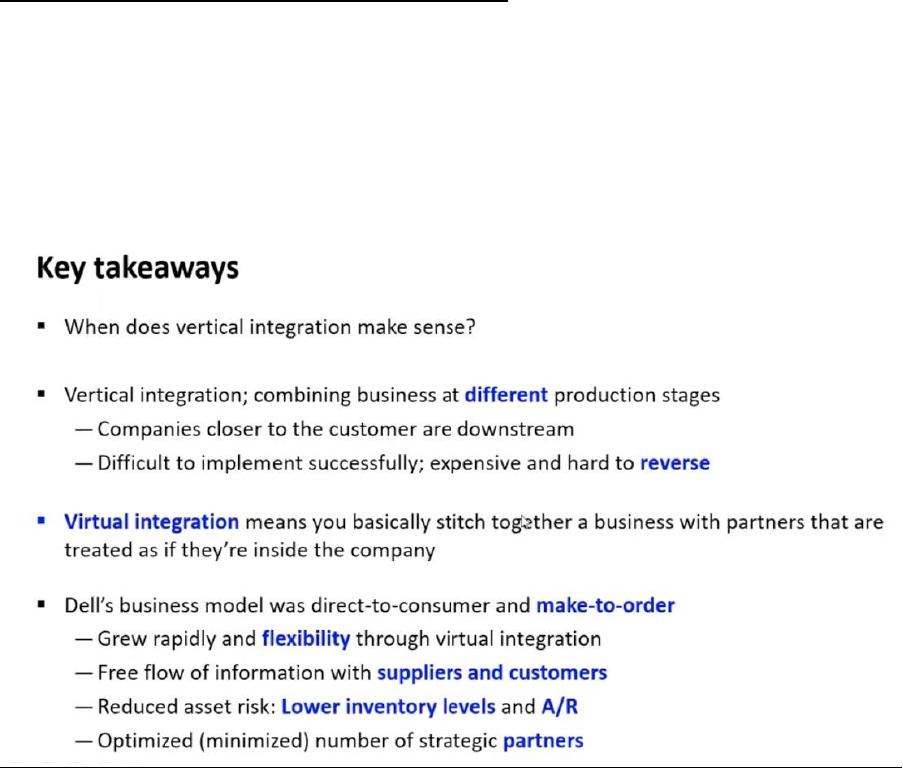
• Vertical integration is the merging together of two business that are at different
stages of production
o Ex. A food manufacturer and a chain of supermarkets
o Merging with something further on in the production process (Closer to final
consumer) is forward integration
• Horizontal Integration is the merging together of business that are at the same
stage of production
o Ex. Such as two supermarkets
o Merging something back in the process is backward integration
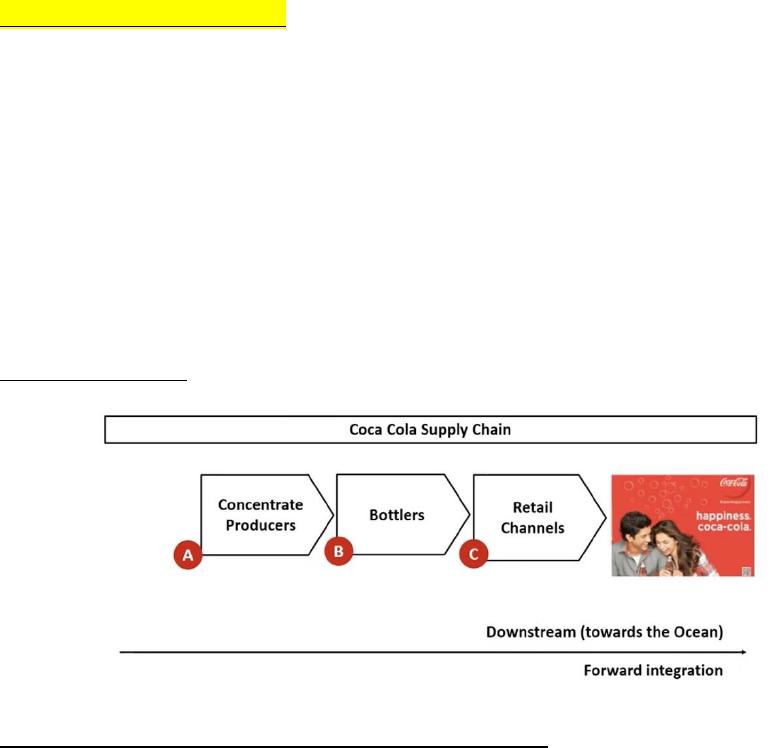
Coca Cola Example
What are the potential benefits of vertical integration?
• Gives organization greater capacity to control access to inputs (and to control the
cost, quality, and delivery times of those inputs
o In line with the changing organizational structure of the late 20th century, this
logic became less compelling
o Ex. Oil Industry → Shell and BP control every step involved in bringing oil
from sea to fuel tank
• Vertical integration is a difficult strategy for companies to implement, it is often
expensive (removing profits of all the middlemen) and hard to reverse + specialize
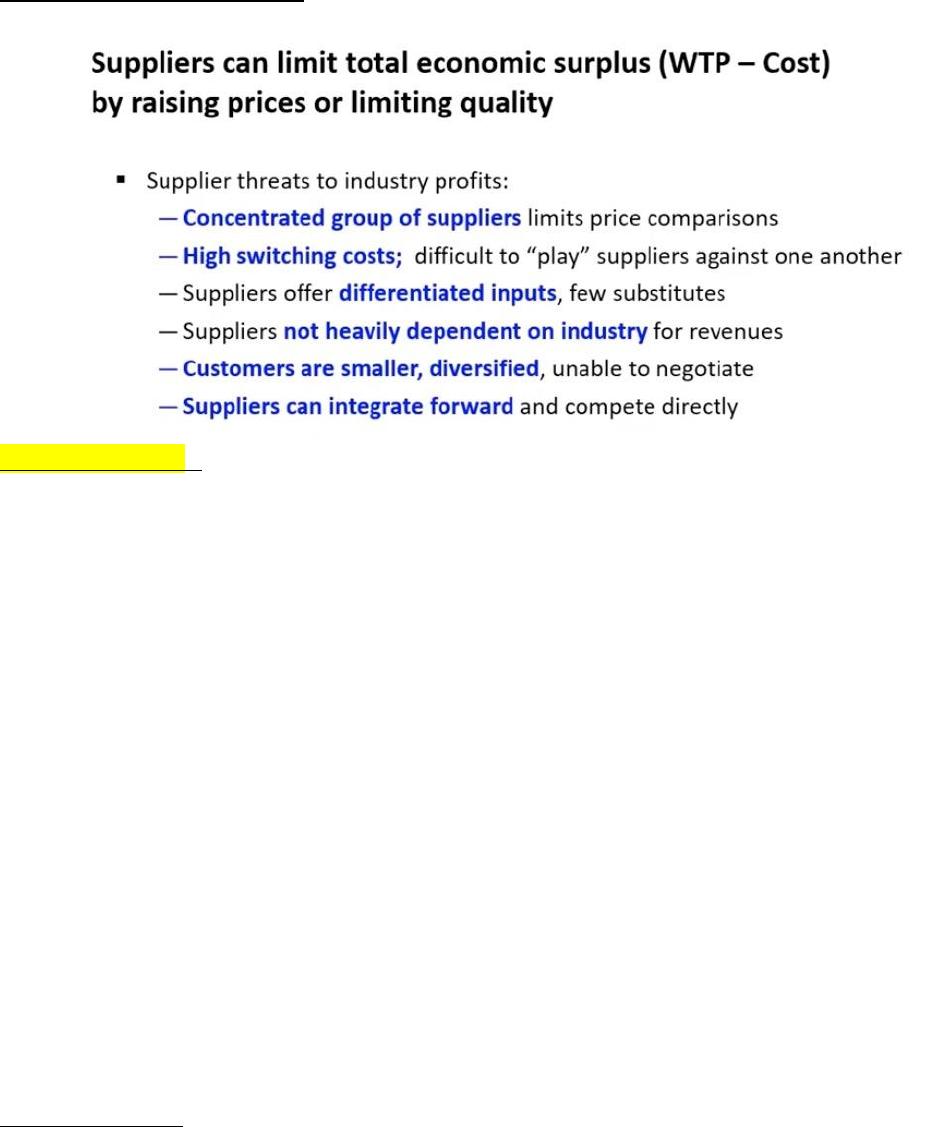
Amazon and Fedex Tug of War
Virtual Integration – provides benefits of tightly coordinated supply chain + flexibility
Dells business model is direct-to-consumer for made-to-order (MTO) products
• Bypass the dealer channel by selling directly to customers and build products to
order
• Eliminated the reseller’s mark-up and the costs and risks associated with carrying
large inventories of finished goods
• Relationship with customer → provide valuable information to Dell
Why did this allow Dell to Evolve Faster?
• Capital: Suppliers build factories and capabilities
• Headcount: Fewer number of employees
How is this different from Outsourcing?
• Quality: Set service level agreement
• Information: Build data linkages – free flow of information
• Purchase Agreements: (e.g. 25% of Dell’s next year productions)
• Partners: Optimize (fewer the better) the number of partners
Takeaway: Virtual integration means you basically stitch together a business with partners
that are treated as if they’re inside the company
Assets Collect Risk
• Assets collect risks around them in one form or another. Inventory is one risk, and
accounts receivable is another risk
• In the computer industry, inventory can actually be pretty risky because if the cost of
materials goes down 50% a year and you have two/three months of inventory = cost
disadvantage
• Also, you’re vulnerable to product transitions, when you can get stuck with
obsolete inventory
Do Combined Business have more Value Together?
• Four ways to add value
o You buy an asset on the cheap (portfolio managers), but it requires being
smarter than the market in pricing the asset
o You run the target company more effectively (restructurers)
o You gain market power, so you have to price higher
o You exploit synergies, combining assets to create more value
Strategy Execution Gap
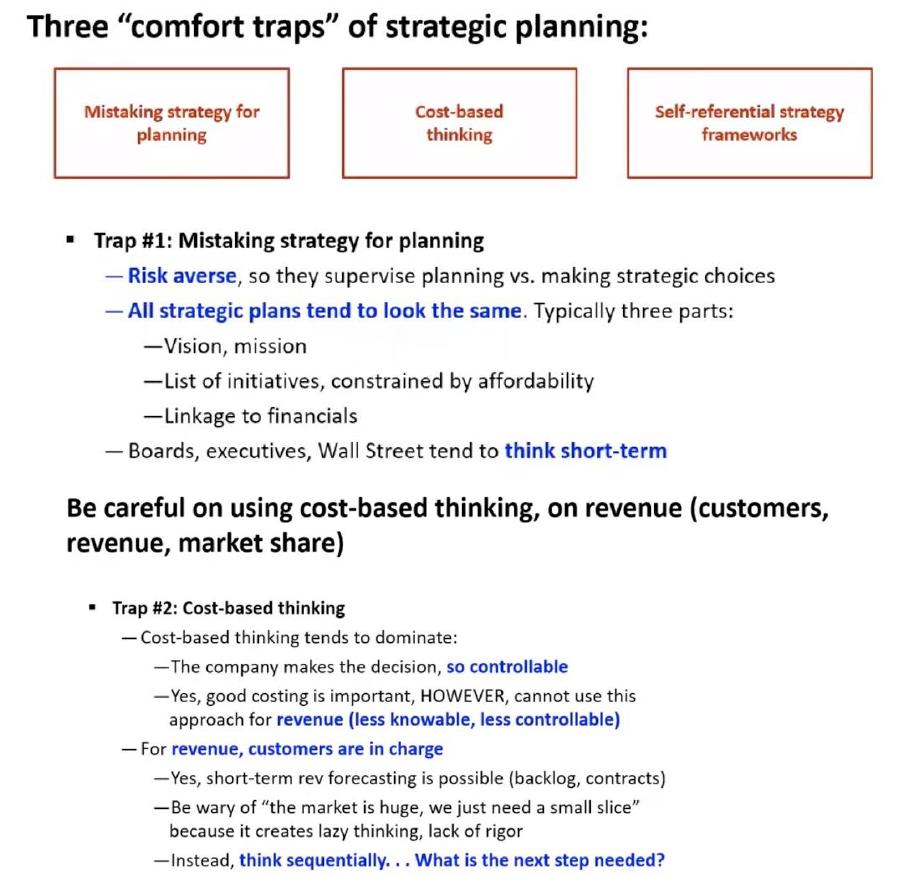
Why is strategy (potentially) a scary thing?
• Scary because it forces them to confront a future, they can only guess at
• Choosing a strategy entails making decision that explicitly cut off possibilities and
options
The typical approach to strategic planning…
1.) Can be made less daunting by turning it into a problem that can be solved with
tried and tested tools (best practices)
Alternatives
2.) True strategy is about placing bets and making hard choices. The objective is not
to eliminate risk but to increase the odds of success
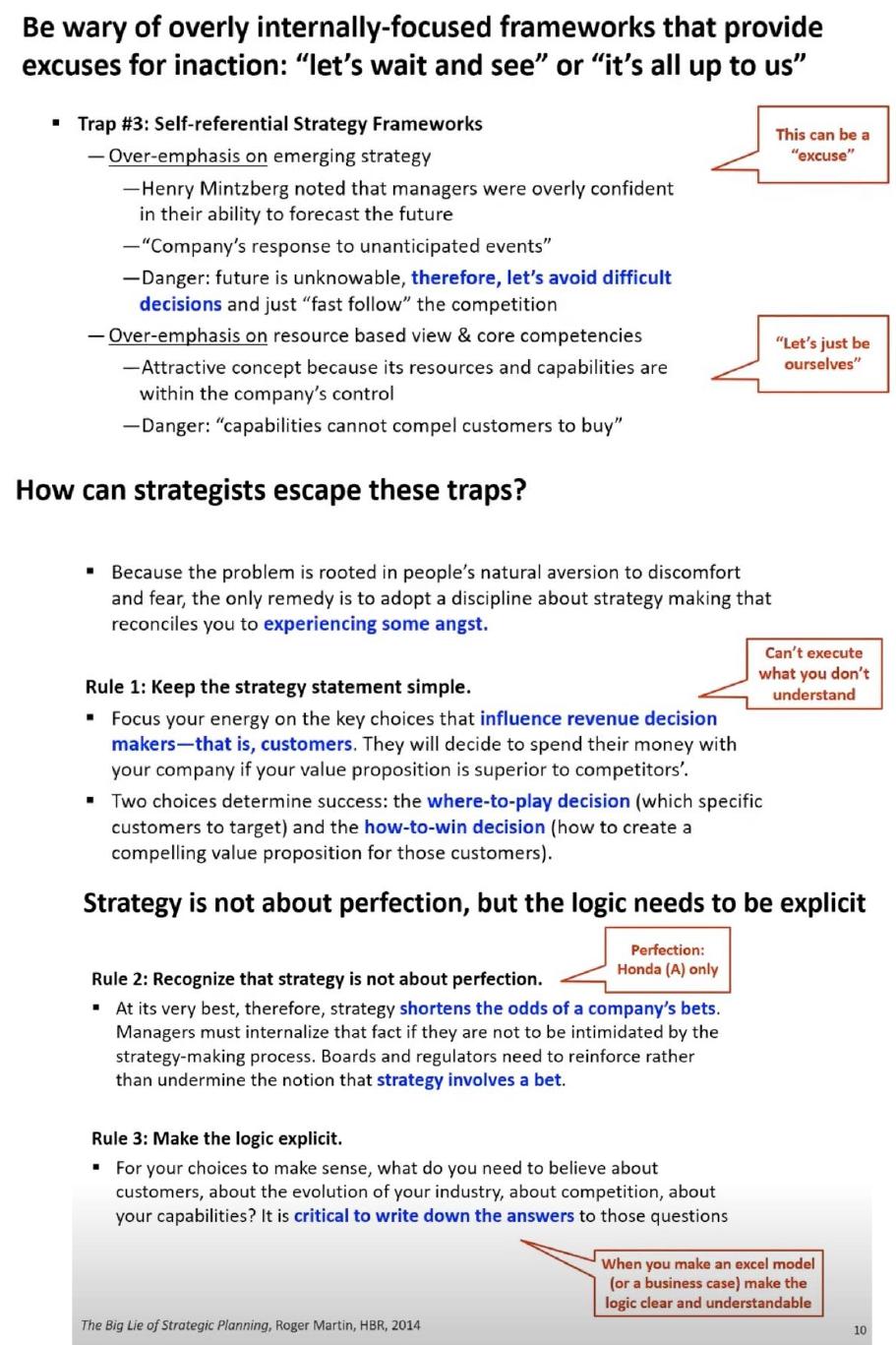
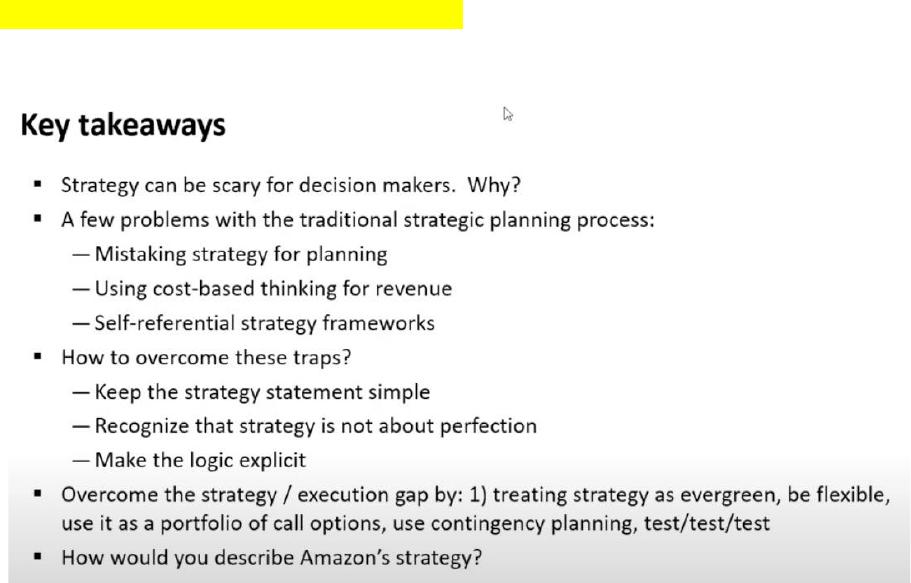
5 Ways to Close the Strategy-Execution Gap
1.) Treat strategy as evergreen – the best companies see strategy less as a plan and
more as a direction and agenda of decision, in effect, a company’s strategy is
the sum of decision it makes and executes over time
2.) Value flexibility
3.) Think of strategy as a portfolio of options, not bonds.
4.) Create response mechanisms. Rigorous contingency planning is as important as
disciplined action planning. It requires that you identify the most important
known unknowns associated with the strategy
5.) Test and learn, then test some more. agile planning can be thought of as a series
of timeboxed sprints or micro-battles
LEFT TO DO: DESCRIBING AMAZON’S STRATEGY
Intel
Intel essentially started both the memory business and also the microprocessor business
Why are semiconductors important?
Moore’s Law
• Double the number of transistors per square inch on integrated circuits had doubled
every 2 years
o Doubles in speed and lowers cost
o Has continues for 50+ years
• Will likely meet its economic limit first
o New semiconductor “fab” cost $6b
o Technically possible, but too expensive
o Distributed computing means desktop speed is less important
If Moore’s law applied to cars, space, air travel
• Cars: if fuel efficiency followed Moore’s Law, a person could drive a car for their
entire life on a single tank of gas
• Real Estate: If house prices fell at the same rate as transistors, a person could
purchase a home for the price of a candy
• Space: trip to moon took 3 days in 1969, today it would take 1 minute
• Air Travel: flight from NZ to NY takes as long as it takes to fasten seatbelt
Semiconductor manufacturing is a large industry dominated by US, Korea, Taiwan
• Semiconductor is $300b+ industry, growing at 6% CAGR
o Big three (Intel, Samsung, TSMC) make up almost 30%
• Highly profitable, but cyclical business
o Gross margins – 60%; EBITDA margin – 30%
o R&D expense – 20% of revenues; 5 of top 10 US patent holders
What are the characteristics of semiconductor manufacturing?
• Large facilities requiring lots of fixed costs
o Processing and automation equipment
o Factories maintain ultra-pure clean rooms
• Complex manufacturing process has high marginal costs too
o Hundreds of process steps
o Long production time of 4+ weeks
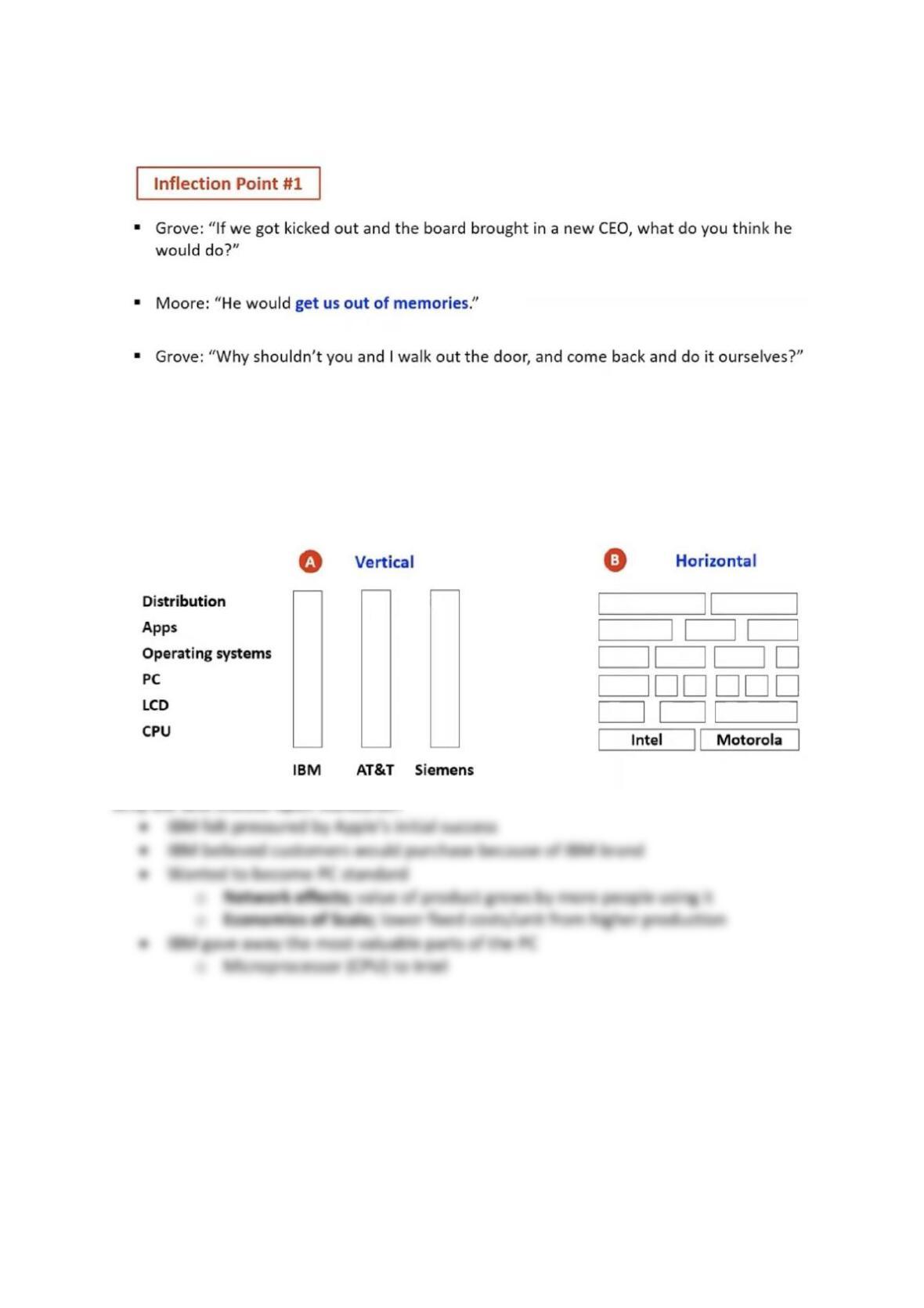
What was the moment when Andy Grove and Gordon Moore decided to exit DRAMs?
What change in industry structure served as a catalyst for Intel to become the CPU leader?
• Intel invented the microprocessor, but were late bringing it to market
• Apple II, based on Motorola processor was the first breakthrough
• Then IBM entered the market in 1981, they adopted open standards (create parts
and pieces compatible with IBM)
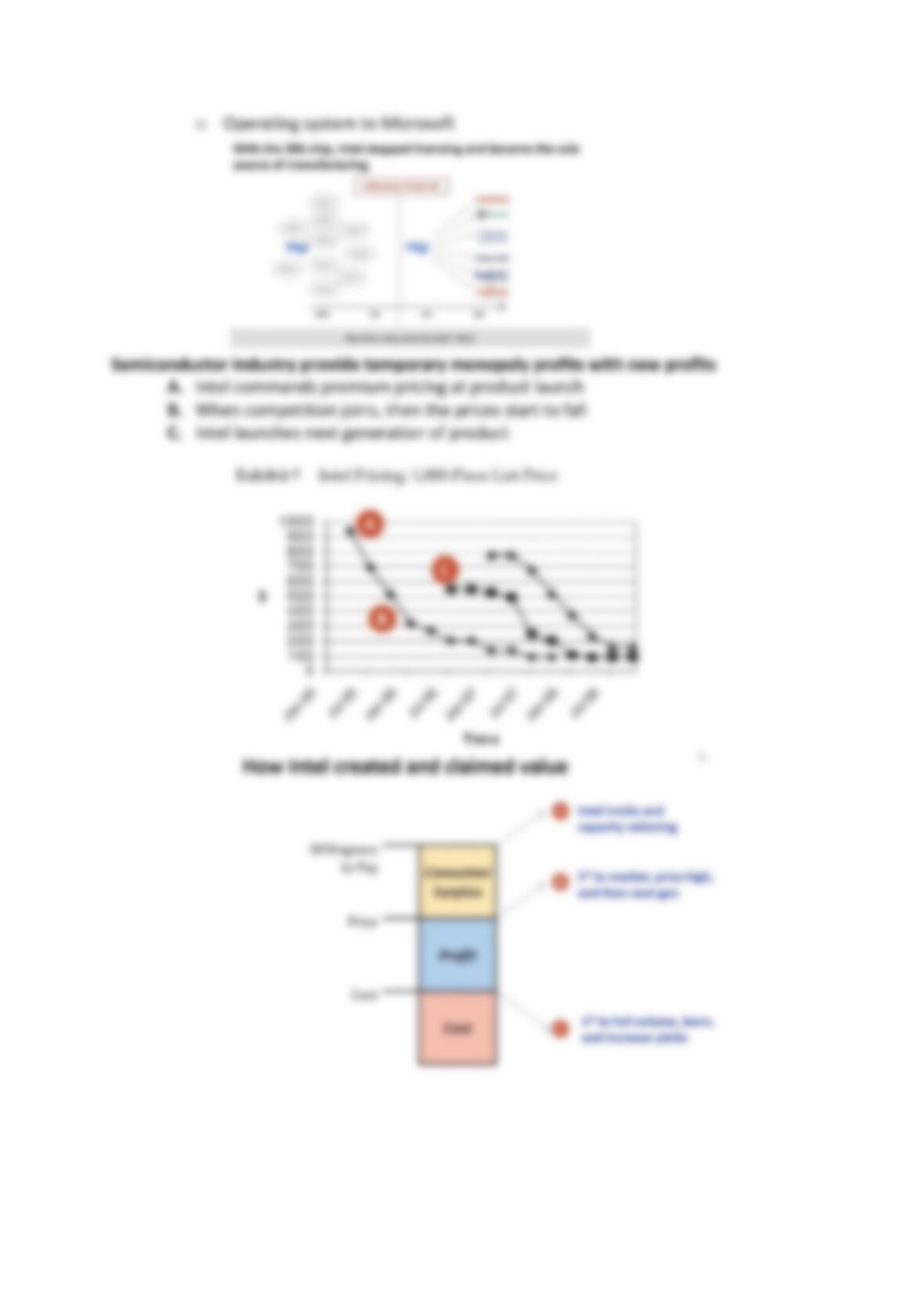
o The PC industry shifted from ‘A’ to ‘B’