

Homeostasis
• The body must maintain a delicate
balance of acids and bases.
• Metabolic and respiratory processes must
work together to keep hydrogen ion (H+)
levels normal and stable.

pH of Blood
• The pH of blood indicates the
concentration of H+
• Normal pH – 7.35 – 7.45
– Less than 7.35 is acidosis
– Greater than 7.45 is alkalosis

pH of Blood
• Principle substance affecting acid
– Carbon dioxide combines with water
• Partial pressure exerted by carbon dioxide
– 35 – 45 mmHg
• Principle alkaline substance
– Bicarbonate, or HCO3-
• Slowly binds with free H+ making H2CO3
– HCO3- levels 22-26

The body compensates for the
imbalance
• The body strives to maintain a normal pH.
– Sometimes the causes of an acid-base
imbalance can’t be corrected or changed.
– In these cases a healthy renal or respiratory
system can partially or completely offset the ill
effects of a fluctuating pH.

The body compensates for the
imbalance
• Ex.
– A pt with COPD may experience respiratory acidosis
as a result of elevated CO2 levels caused by
hypoventilation.
• Since both CO2 and HCO3- affect the pH, and the body is
unable to correct the CO2 problem, the renal system
compensates: excretion of H+ and reabsorption of
bicarbonate
– Likewise, the respiratory system can compensate for
a metabolic acid-base imbalance by regulating CO2
levels

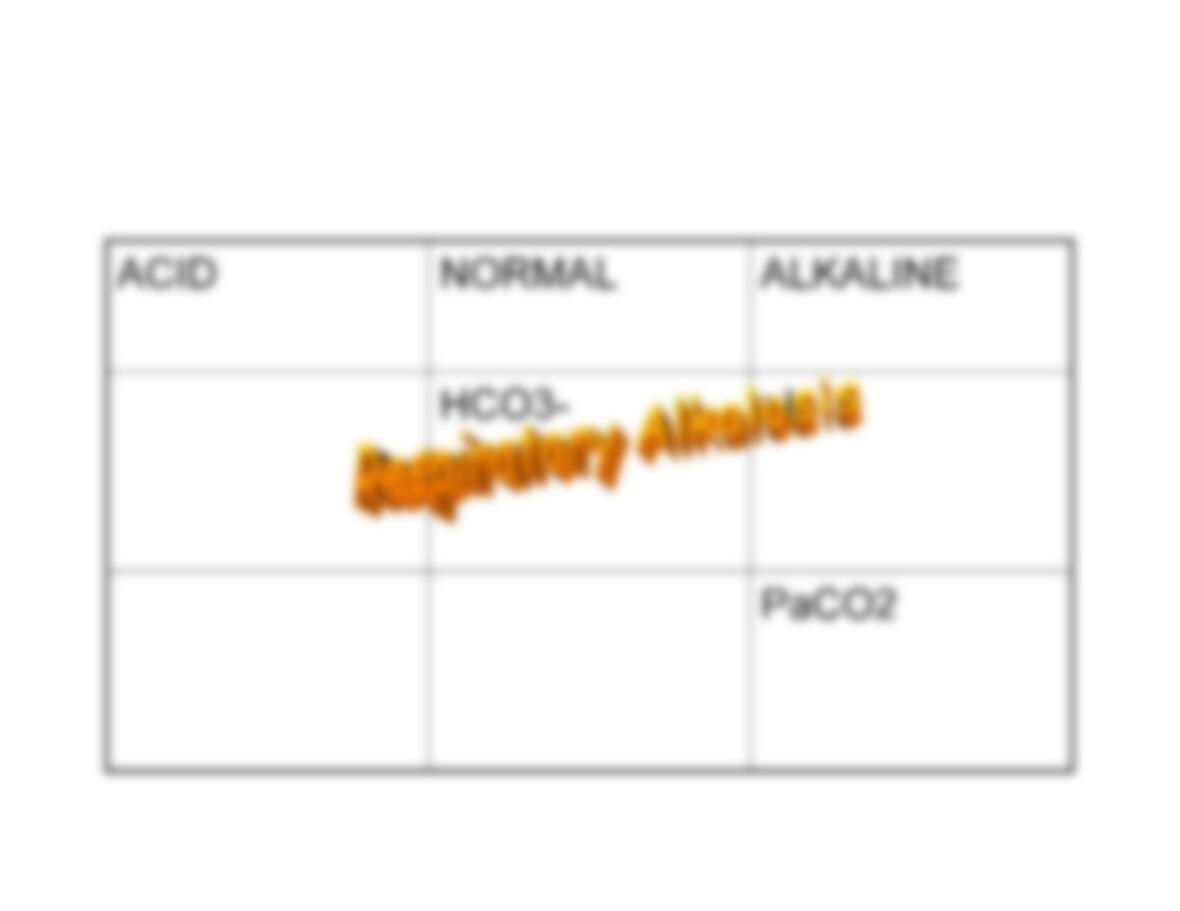
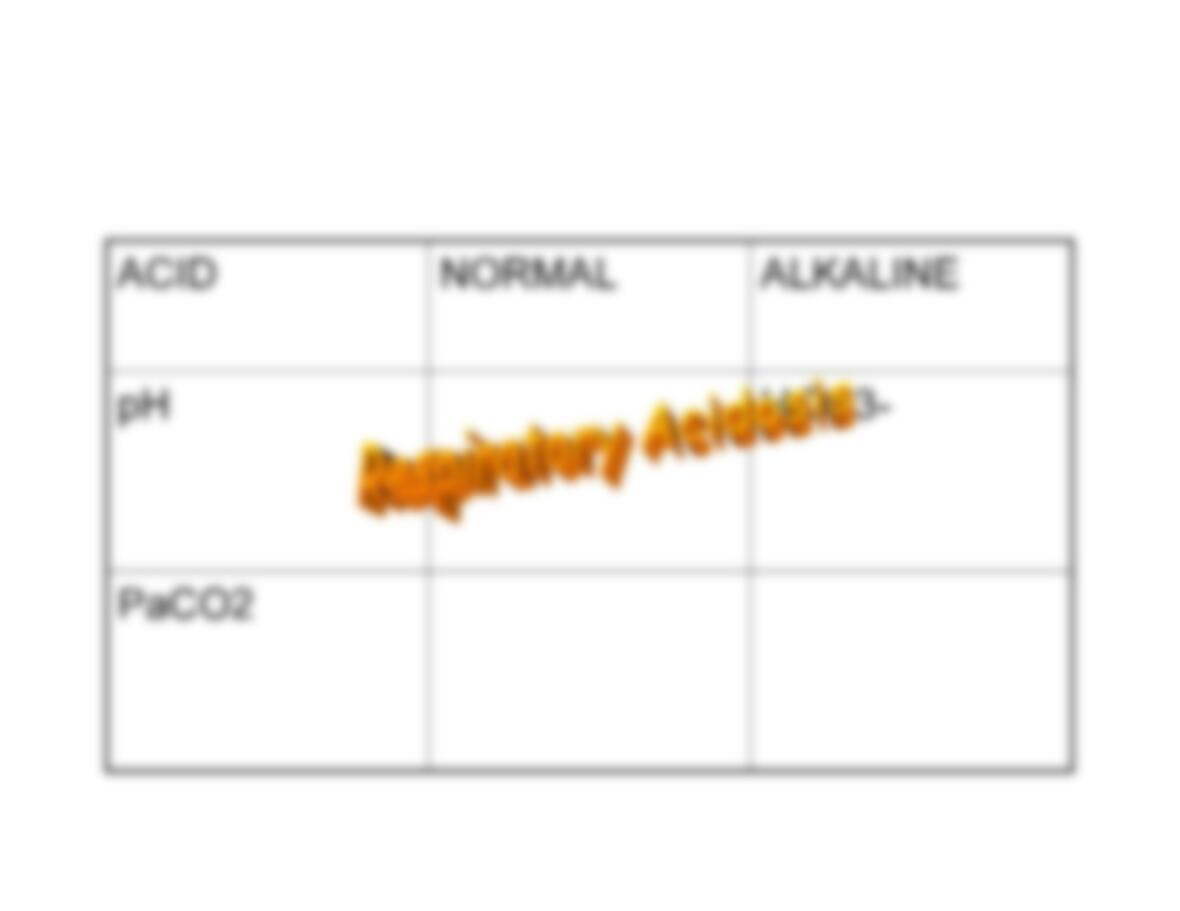
Tic-tac-toe, three in a row
• To diagnose an acid-base imbalance, you
need to ask yourself three questions:
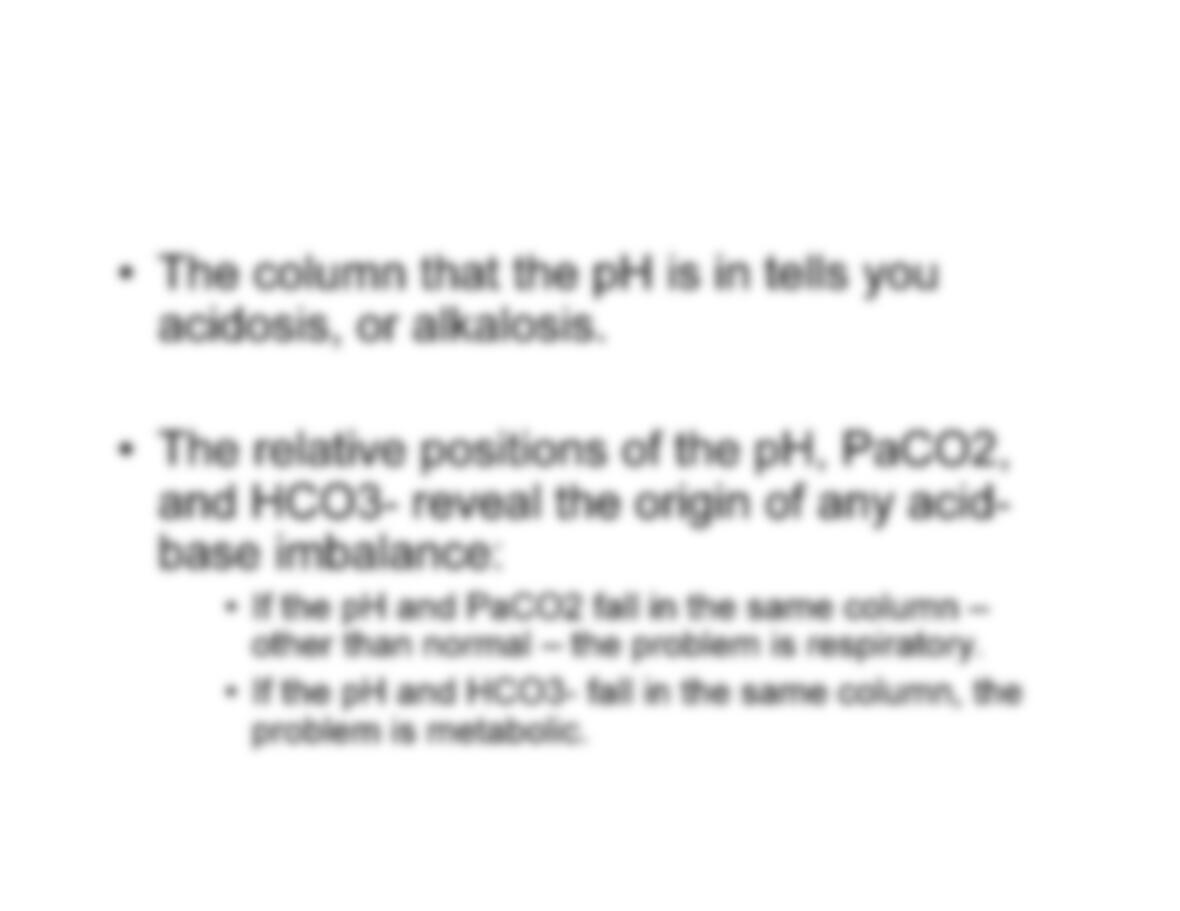
– 1) Does the pH indicate acidosis or alkalosis?
– 2) Is the cause of the pH imbalance
respiratory or metabolic?
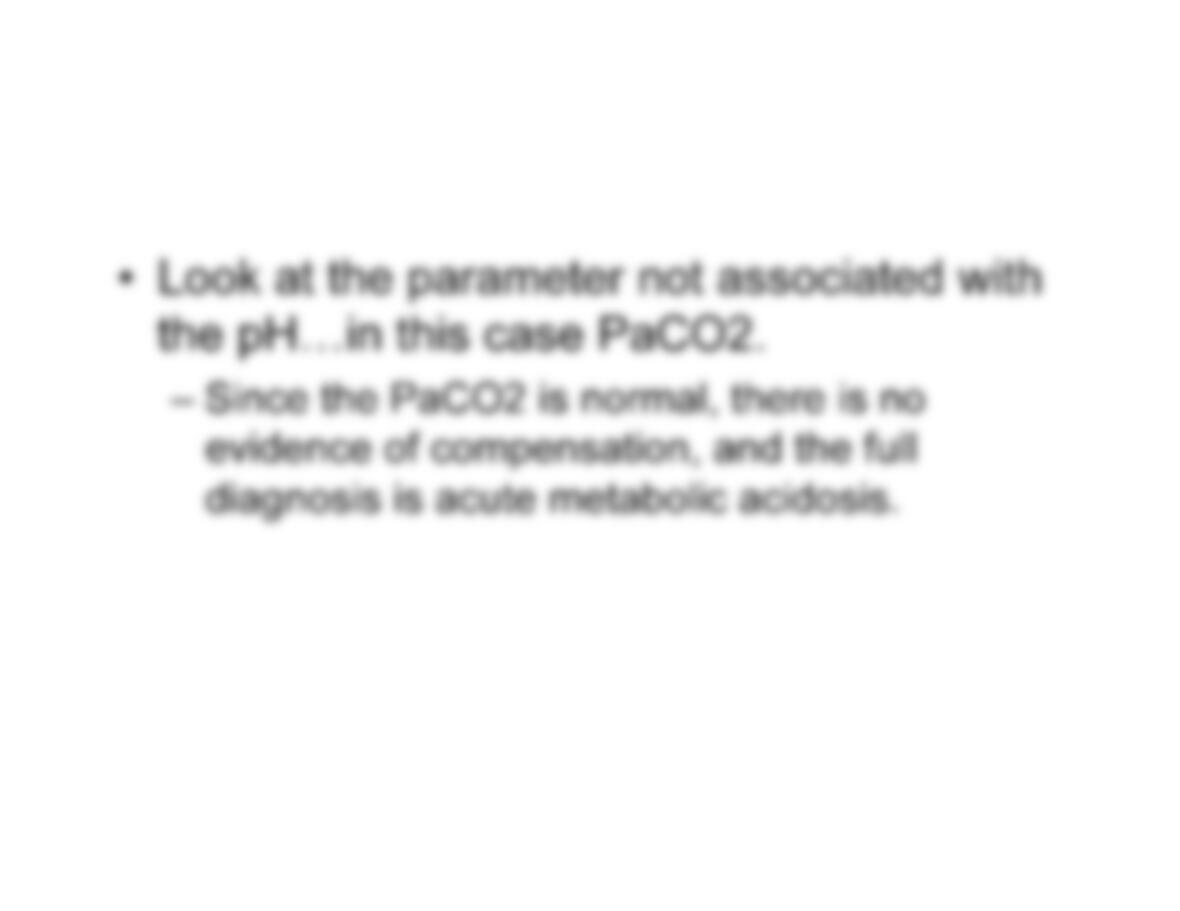
– 3) Is there compensation for the acid-base
imbalance?

To answer these questions
• pH 7.35 – 7.45
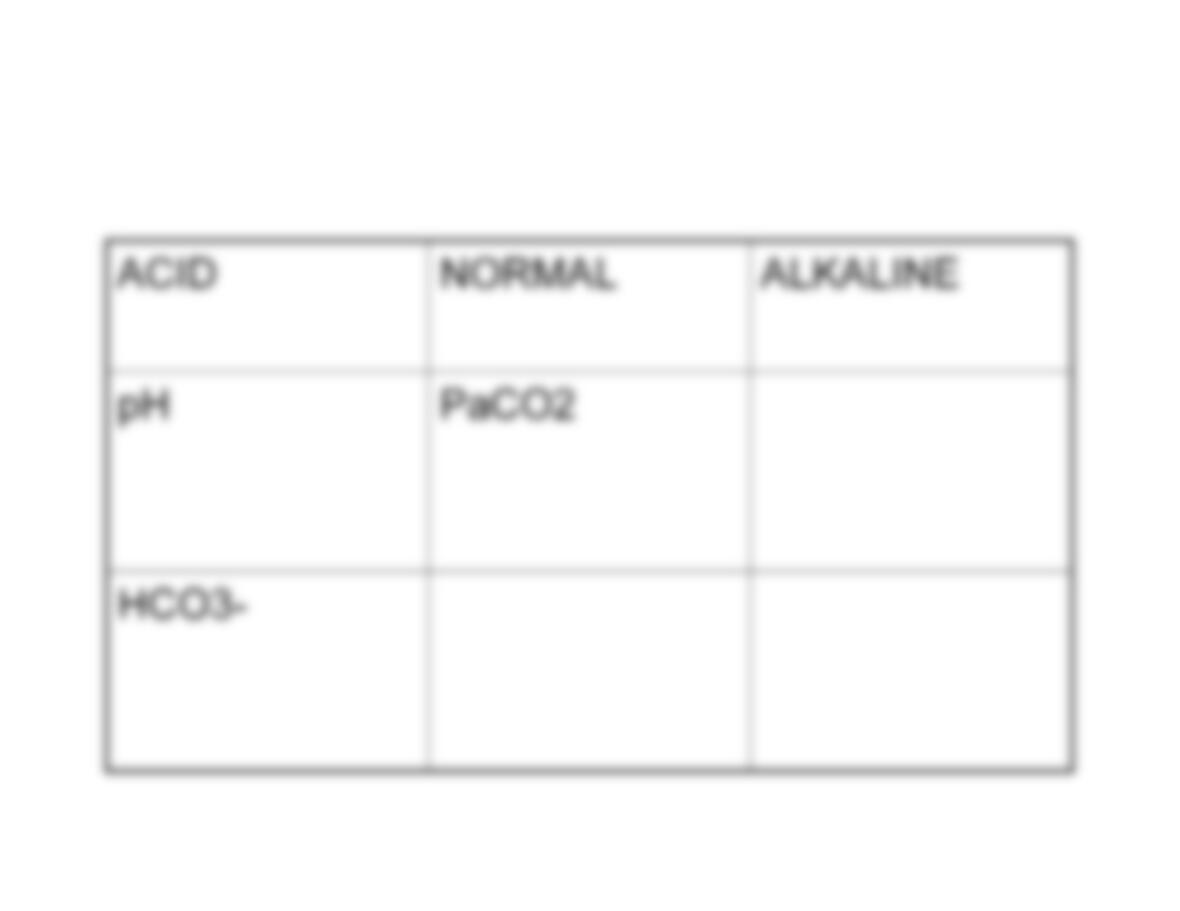
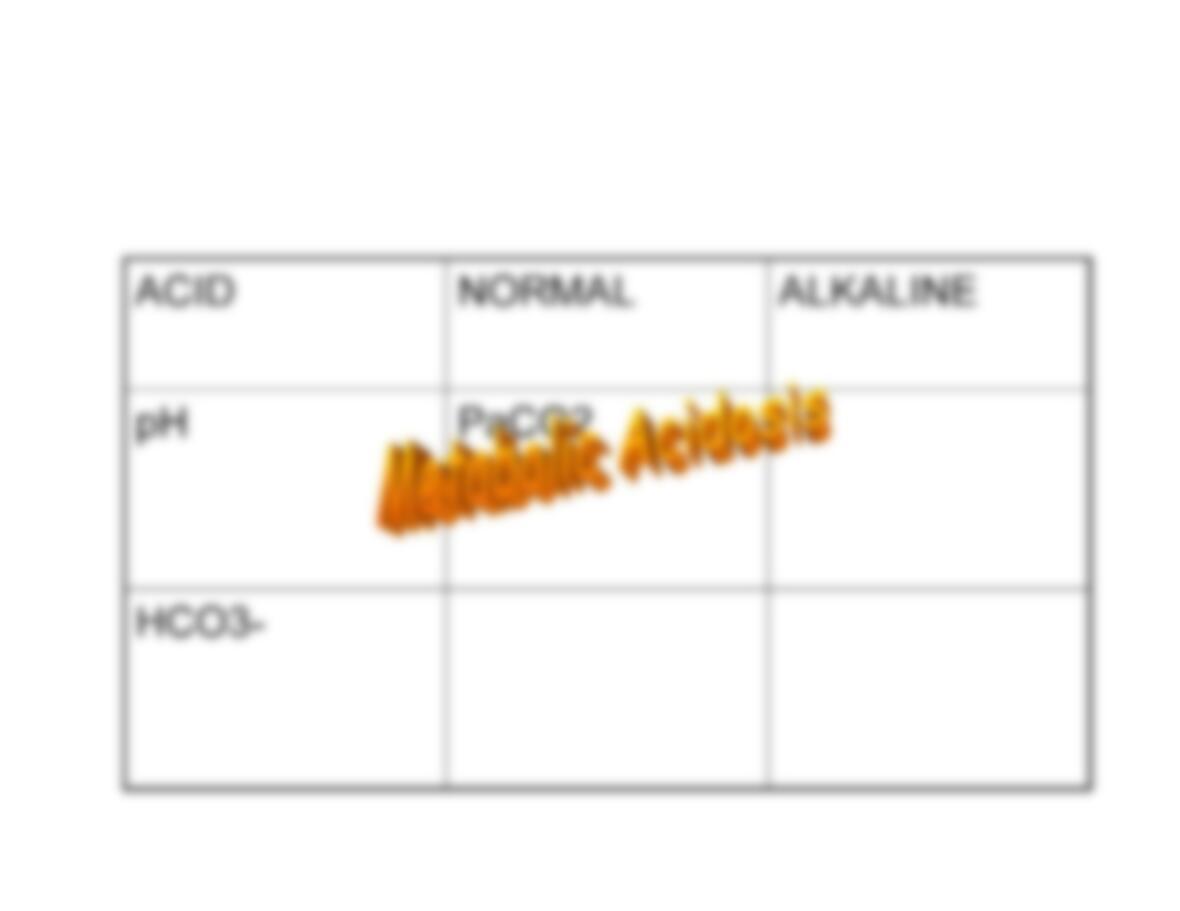
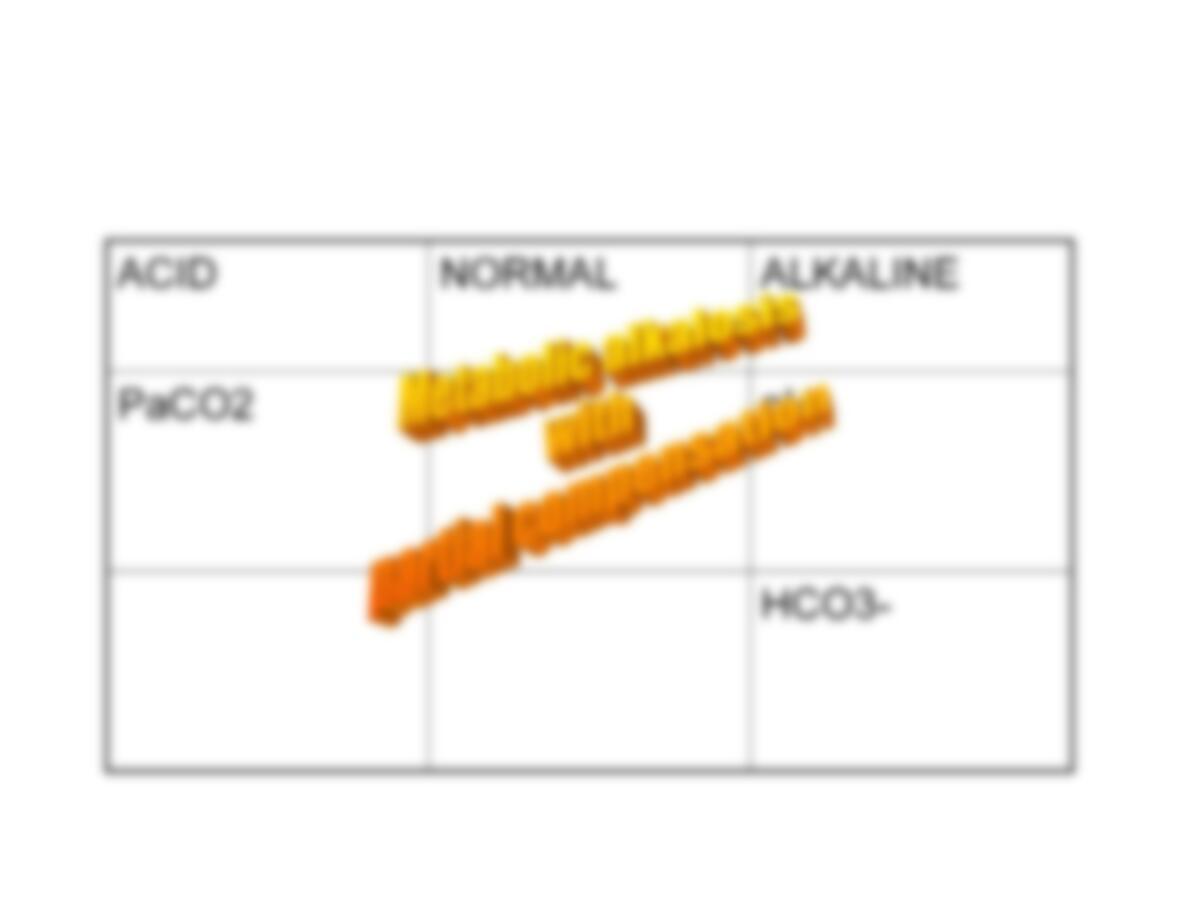
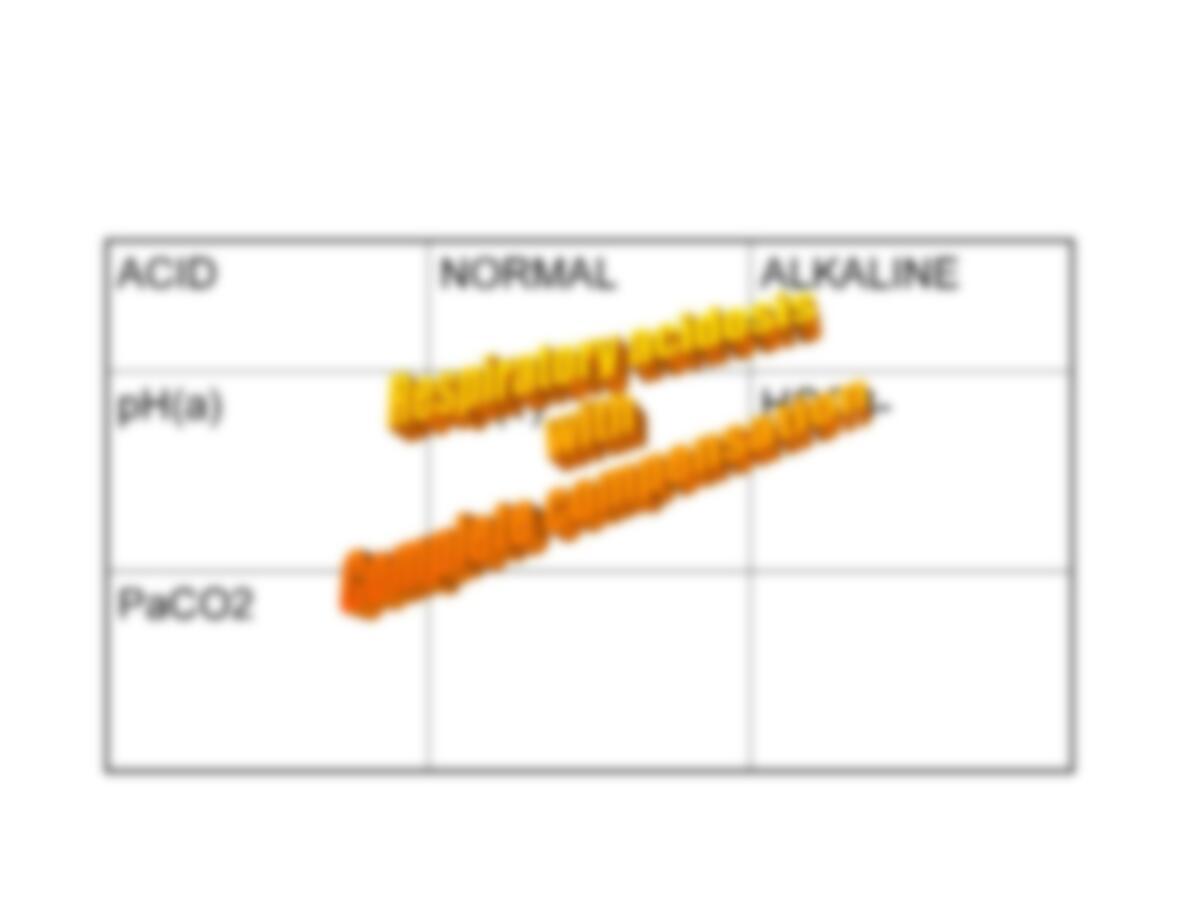
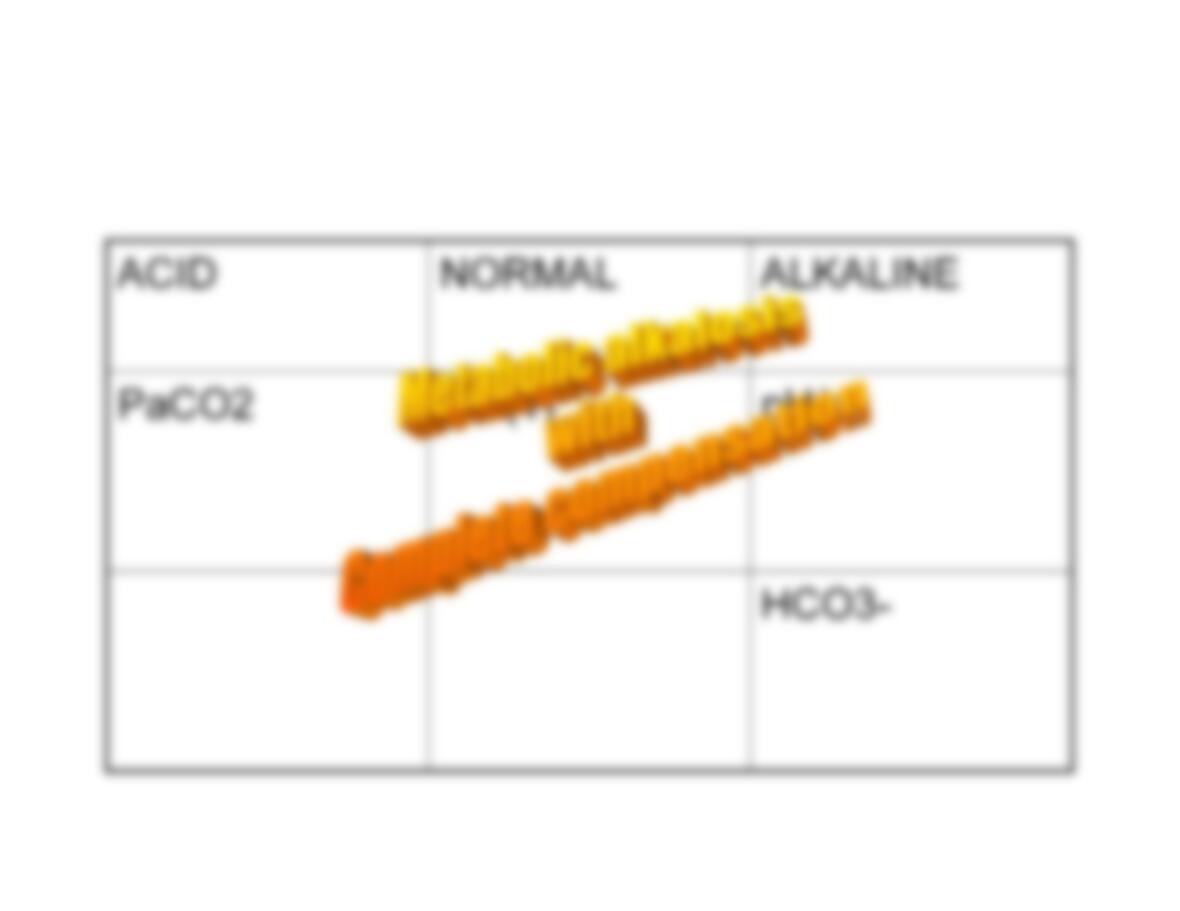
ACID NORMAL ALKALINE