WRITTEN CASE #2 NUCOR
Nina Grabowiecki
GBA 490-009
1
Table of Contents
Executive Summary ………………………………………………………………………………………………… 2
Issue #1: Globalization …………………………………………………………………………………………….. 3
Issue #2: Falling Steel Prices ……………………………………………………………………………………… 4
Issue #3: High Degree of Competition ………………………………………………………………………… 5
Key Recommendation ……………………………………………………………………………………………… 6
Appendix A: PESTEL Analysis …………………………………………………………………………………….. 7
Appendix B: Five Forces Analysis ……………………………………………………………………………….. 9
Appendix C: Driving Forces Analysis …………………………………………………………………………. 10
Appendix D: Strategic Group Map ……………………………………………………………………………. 12
Appendix E: Competitor Analysis …………………………………………………………………………….. 13
Appendix F: Key Success Factors & Industry Outlook for Profitability …………………………..…. 15
Appendix G: Financial Analysis………………………………………………………………………………… 16
Appendix H: Resources and Capabilities Analysis; VRINE …………………………..…………………. 17
Appendix I: Weighted Competitive Strength Assessment …………………………..…………………. 18
Appendix J: Value Chain Analysis …………………………………………………………………………….. 20
Appendix K: TOWS Analysis ……………………………………………………………………………………. 22
Appendix L: Current Strategy ………………………………………………………………………………….. 23
2
Executive Summary
Nucor began their journey in the 1960’s starting as an obscurity and turning into a steel
industry leader. They were one of the first steel companies in the United States and appointed F.
Kenneth Iverson as president and CEO. Iverson concluded that the best move for the company
would be to exit the nuclear instruments and electronics business and join the steel joist business.
By 1985, Nucor had become the 7th largest steel producer in North America generating revenues
of $758 million by producing steel with recycled scrap metal. Nucor gained a reputation as an
excellently managed company and gave employees a lot of leeway in the workplace to make
decisions for the plant on their own. The company was able to accomplish being a low-cost
provider and lead other companies into the best manufacturing processes at the time. They also
lead the industry into a new era of steel making by using recycled scrap metal. Nucor is known
for their aggressive innovation and technological excellence, while also providing a high-quality
product. After decades of being in the steel industry, Nucor has found ways to stay at the top and
continuously make a profit each year.
While Nucor may seem perfect, there are still some issues the company faces. The first
being globalization. Although it seems Nucor has reached peak potential there is still a lot of
room to expand their globalization efforts. Compared to competitors Nucor falls short to
ArcelorMittal NAFTA for being the global leader in the steel industry. Increase of globalization
also makes competition between companies more intense because they all want to gain the most
amount of global consumers to increase their profitability. For a company to expand globally it
also causes an increase in demand due to the need of more steel to different markets worldwide.
Nucor management is working on expanding into newer markets they seek fit for profitability.
Their next issue is the falling of steel prices. Due to China’s excess capacity of steel, they
were able to undercut U.S. steel producers and sell their product for drastically cheaper than
other companies could afford. The Trump Administration had placed regulations on China
undercutting U.S. steel prices and announced a 25 percent tariff on steel and aluminum imports
from China. But China has found ways to escape the tariffs being imposed. Nucor could not
compete with China’s prices, and it resulted in them losing market share. This forced them find
solutions to compete with China and remain profitable
Their third issue is the high level of competition throughout the industry. Steel is an
industry of high rivalry because buyers are easily able to switch their orders from one supplier to
another due to the minimal product differentiation and low switching costs. This forces steel
producers to be very price competitive while also producing high quality material that customers
want to purchase. Nucor needs to do better with using their resources to take bigger risks to
differentiate themselves from competition to gain the liking of more consumers worldwide.
My overall recommendation for Nucor would be to continually grow their acquisitions
and joint ventures to combat competition. The penetration into a new market will help Nucor
gain a larger market share which will result in the rise of profits. As the profits increase Nucor
will have extra capital to invest in other factors to grow their business, such as investing in
technological innovations. Acquiring companies will also help Nucor fight off rivals globally
and domestically, this will raise their ranking of a 12th leading competitor to potentially number
3
one. If Nucor takes this recommendation, they will be able to stay ahead of rivals, diversify their
products, and increase their global presence. All three of these outcomes will increase Nucor’s
revenues and better their company as a whole.
Issue #1: Globalization
Nucor is the largest manufacturer of steel and steel products in North America but only
the 12th largest steel company in the world based on tons shipped in 2018. They have a very
strong reputation in North America by investing in new facilities and capabilities to produce an
ever-wider range of high-quality steel products. Nucor offers a lineup of products that are the
broadest of any steel producer in North America. Their top management team wanted to shift
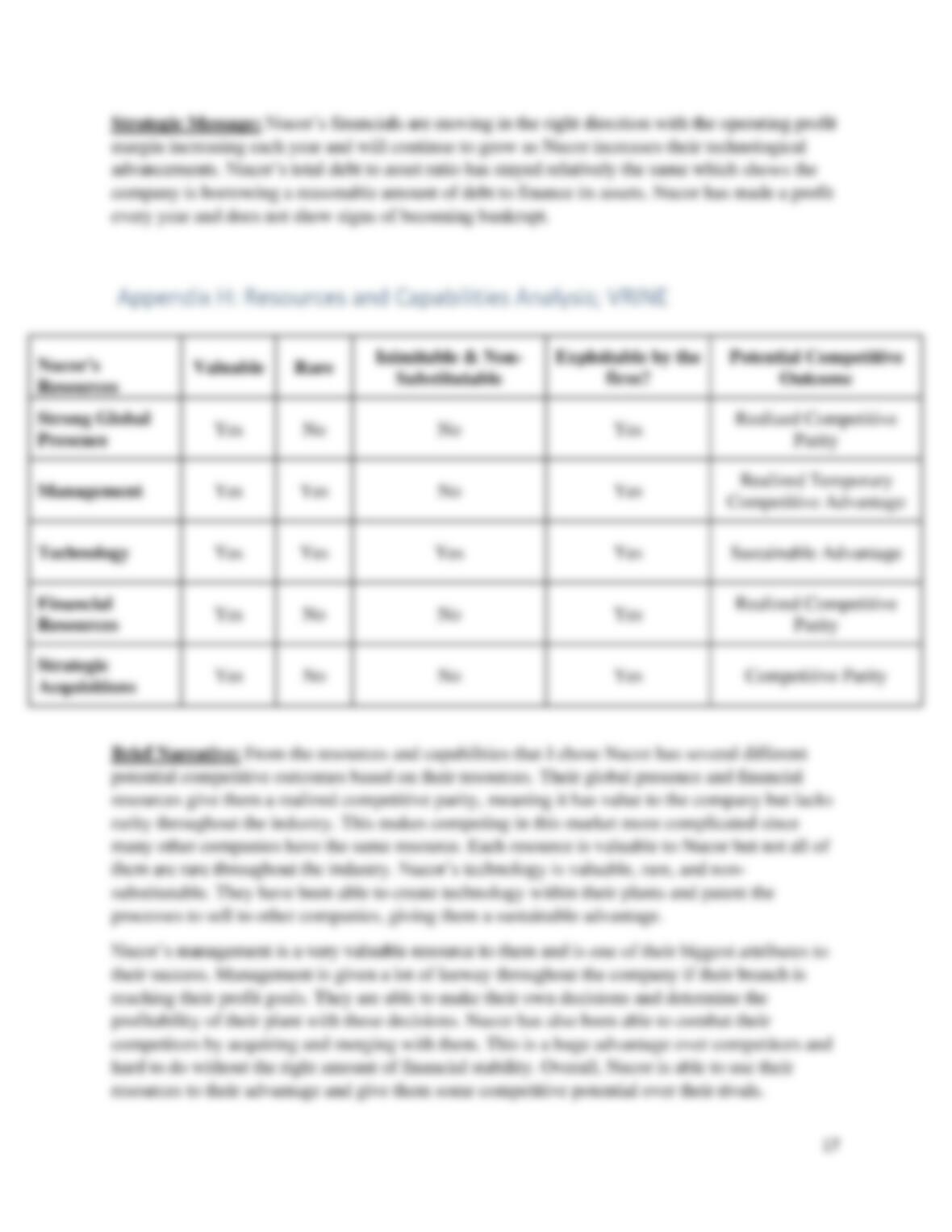
their focus into the expansion of even more products and market segments (see Appendix H:
Resources and Capabilities Analysis on page 17 for more information on Nucor’s resources and
competitive outcomes). Nucor has valuable and exploitable resources such as global presence,
management, technology, financial resources, and strategic acquisitions. Some of these could be
threatened by competitors, but they are not at a disadvantage, instead up to par or even ahead of
their competitors in certain aspects.
Although it seems Nucor has reached peak potential there is still a lot of room to expand
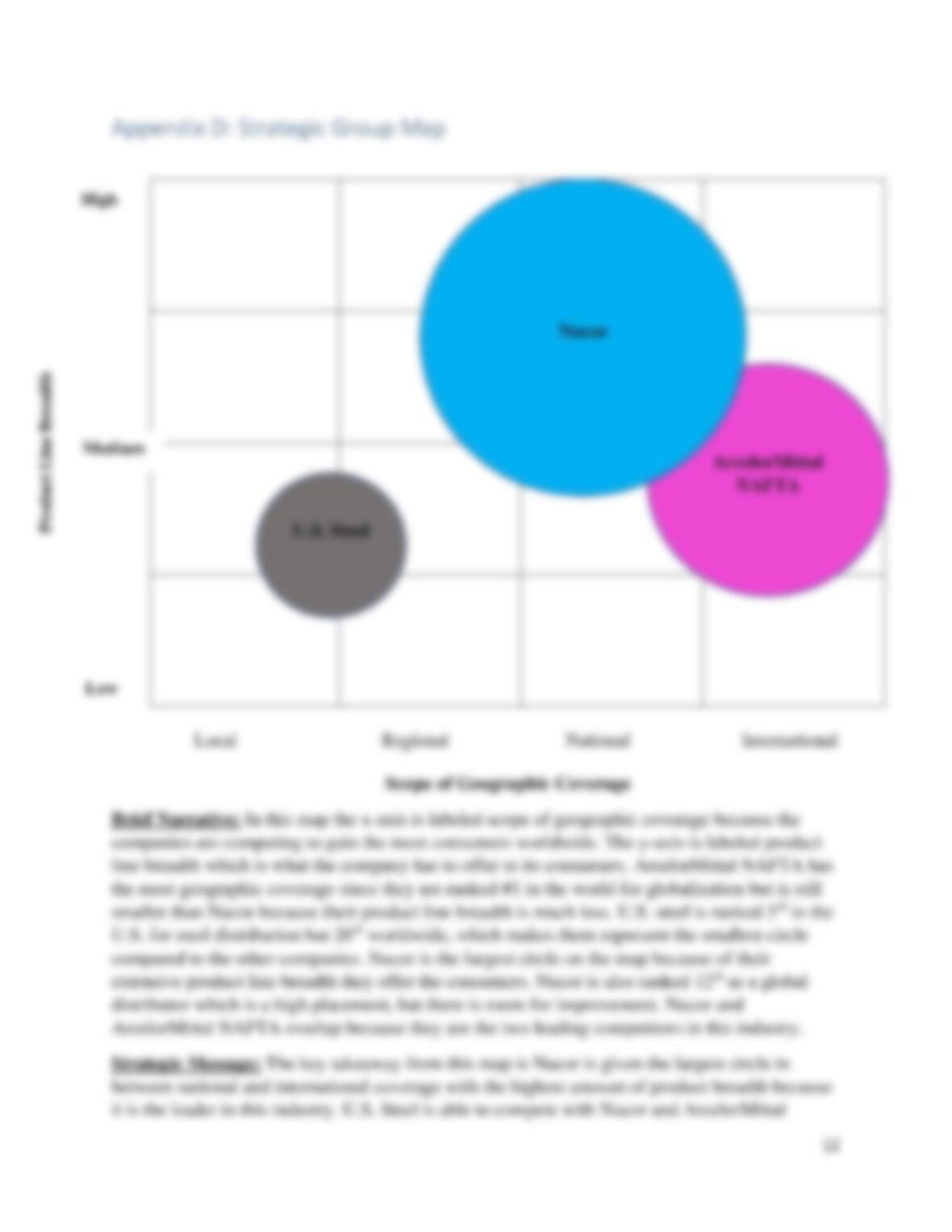
their globalization efforts (see Appendix D: Strategic Group Map on page 12 to see where
Nucor falls globally compared to competitors). Compared to competitors Nucor falls short to
ArcelorMittal NAFTA for being the global leader in the steel industry. While Nucor has a larger
product breadth, they are still only ranked 12th globally while ArcelorMittal NAFTA is number
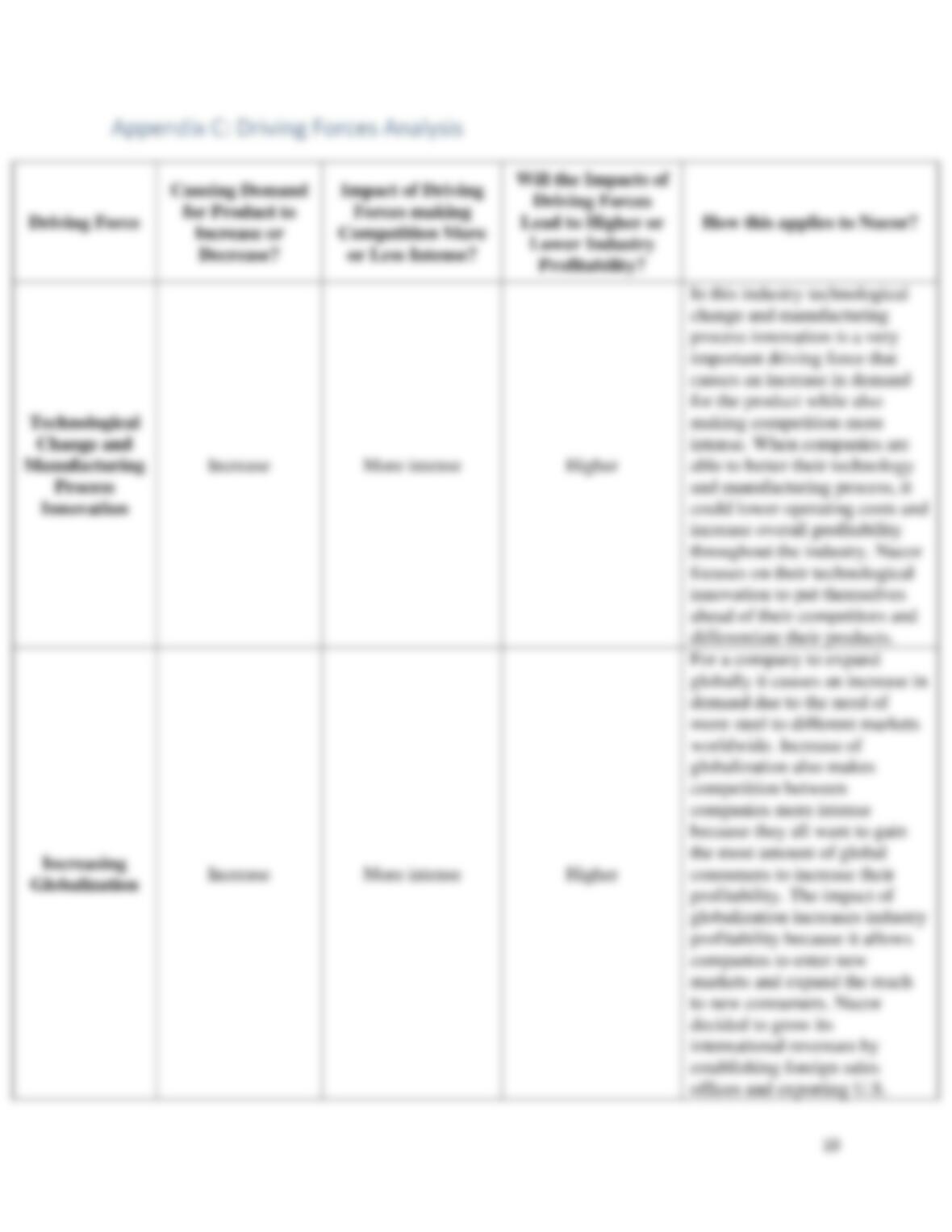
one in the world. Increase of globalization also makes competition between companies more
intense because they all want to gain the most amount of global consumers to increase their
profitability (see Appendix C: Driving Forces Analysis on page 10 for more information on the
industry’s driving forces). For a company to expand globally it causes an increase in demand due
to the need of more steel to different markets worldwide.
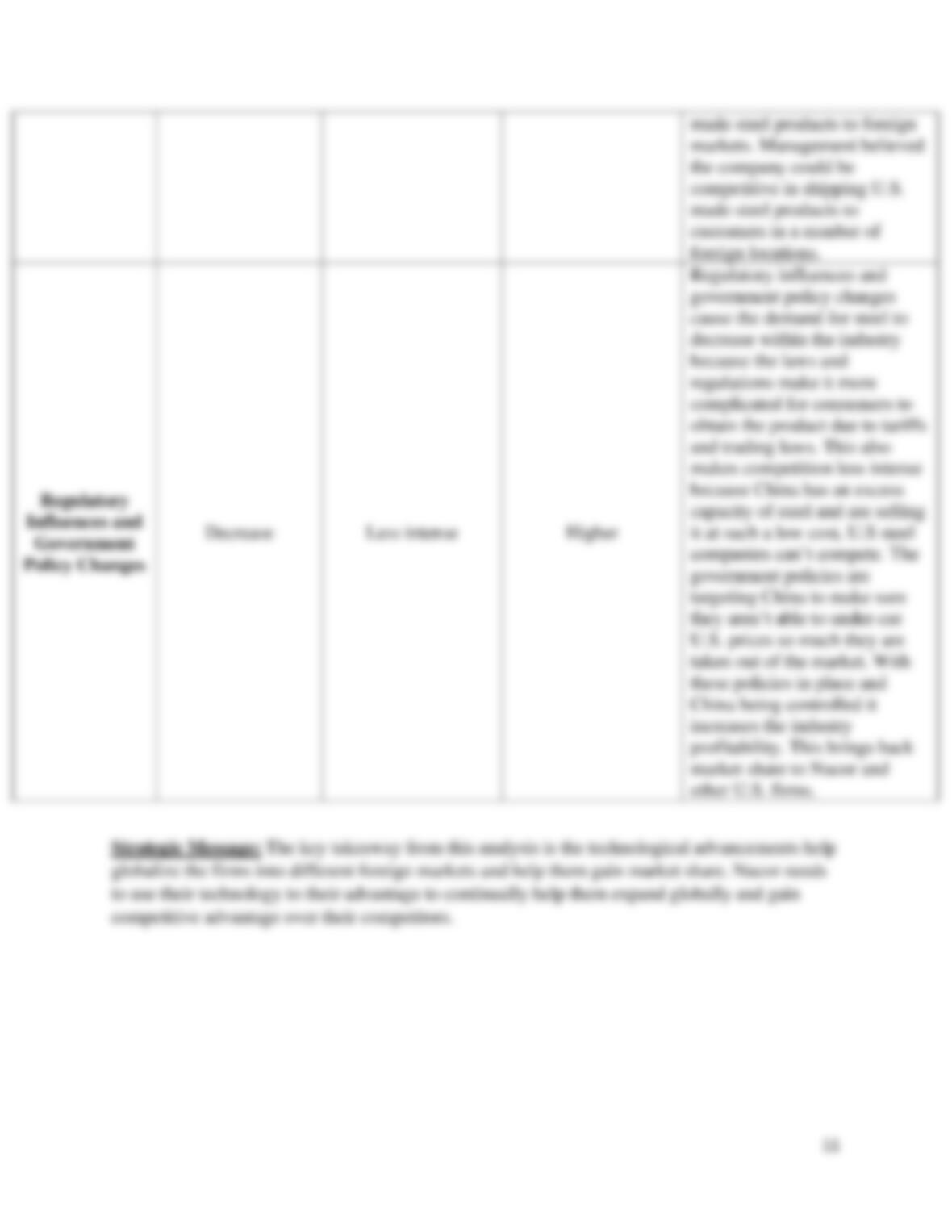
The impact of globalization increases industry profitability because it allows companies
to enter new markets and expand the reach to new consumers. Nucor decided to grow its
international revenues by beginning to establish foreign sales offices and exporting U.S. made
steel products to foreign markets. Management believed the company could be competitive in
shipping U.S. made steel products to customers in a number of foreign locations. Nucor could
not increase globally without the technological advancements to help them differentiate their
products and gain market share. Nucor needs to continue to use their technology to their
advantage to continually help them expand globally and gain competitive advantage over their
competitors.
Nucor is working on fixing the globalization issue with their current strategy (see
Appendix L: Current Strategy on page 23 for more information on what Nucor needs to do to
fix their issues). Nucor is following a broad low-cost strategy which will continue to help them
increase their global consumers long-term. Nucor needs to use their financial capability and
technology to differentiate their products from competitors and maximize brand awareness
outside of the U.S. Nucor is falling short of reaching their maximum global capacity because
4
they have yet to reach peak technological capability. Once they are able to do that, their cost of
labor will decrease, and they will begin to quickly gain market share in the global market.
Issue #2: Falling Steel Prices
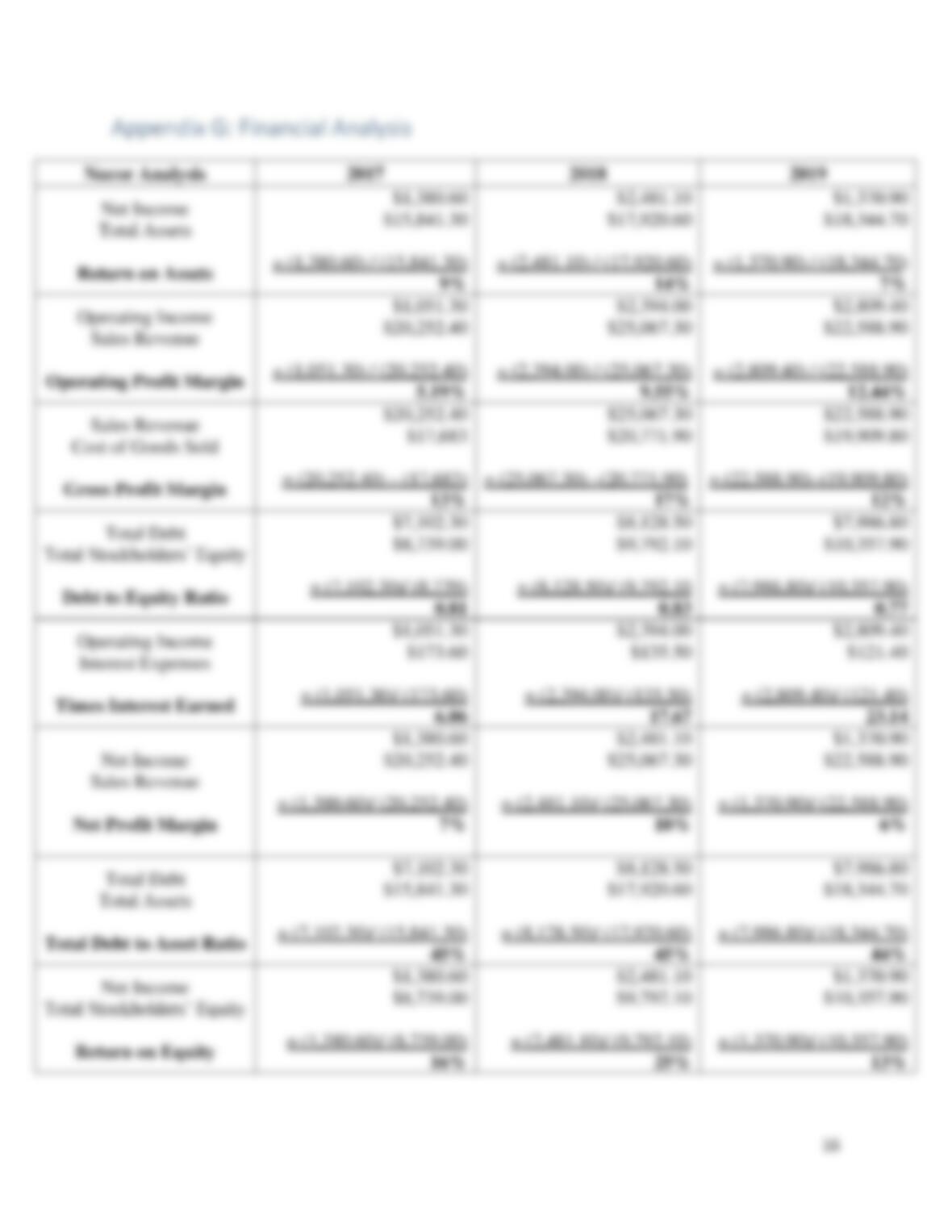
Falling steel prices, coupled with widespread customer action to reduce their steel
inventories, caused Nucor’s sales to drop from a high of $25.1 billion in 2018 to $22.6 billion in
2019. Net earnings suffered an even larger loss of 46 percent. Nucor also shipped five percent
fewer tons of steel, steel products, and scrap metal to outside customers in 2019 compared to
2018 and received an average percent lower price on tons shipped (see Appendix G: Financial
Analysis on page 16 for more information on the overall finances of Nucor).
The global marketplace for steel was intensely price competitive and expected to remain
so unless the estimated 700 million tons of excess steel-making capacity across the world shrunk
substantially and global demand for steel products rose sufficiently to match global supplies
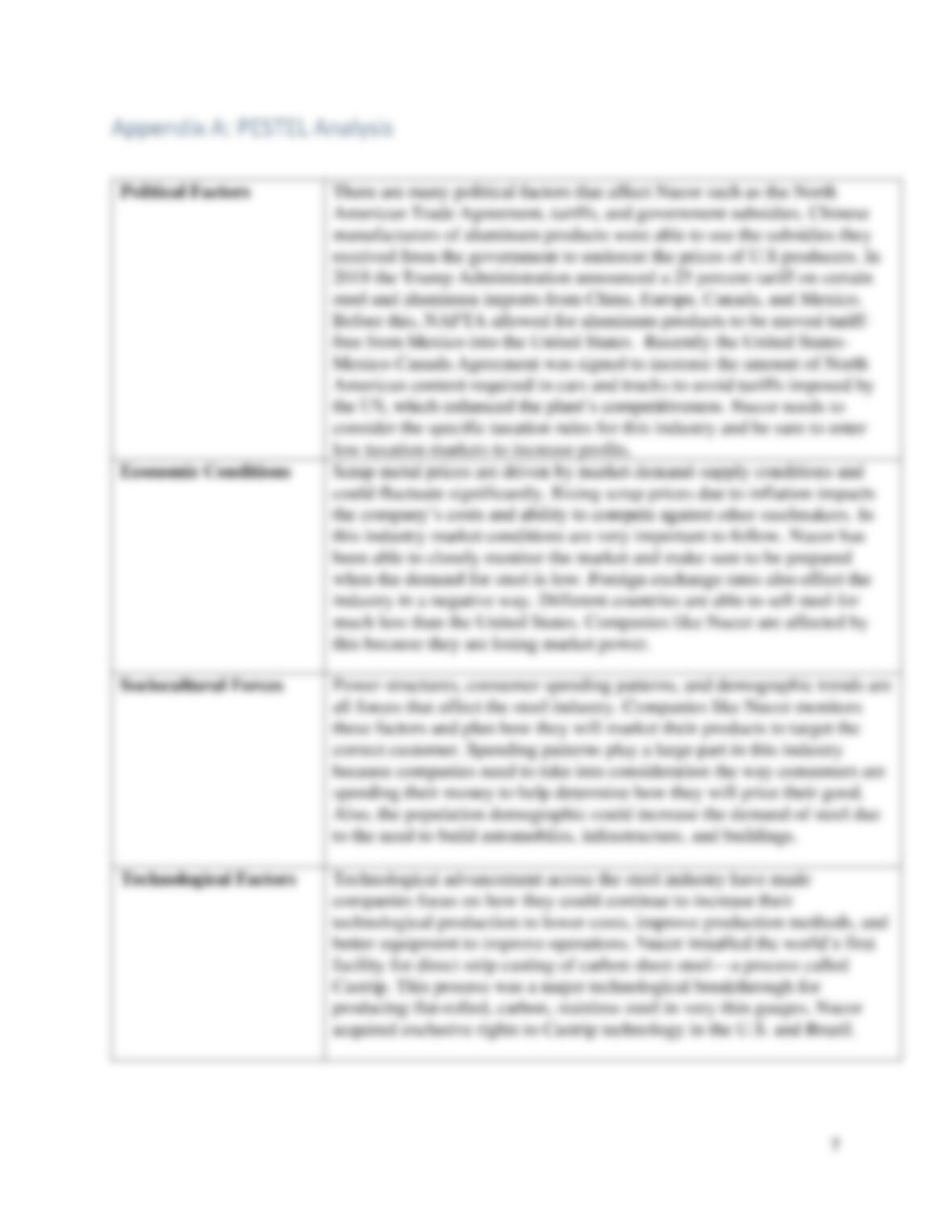
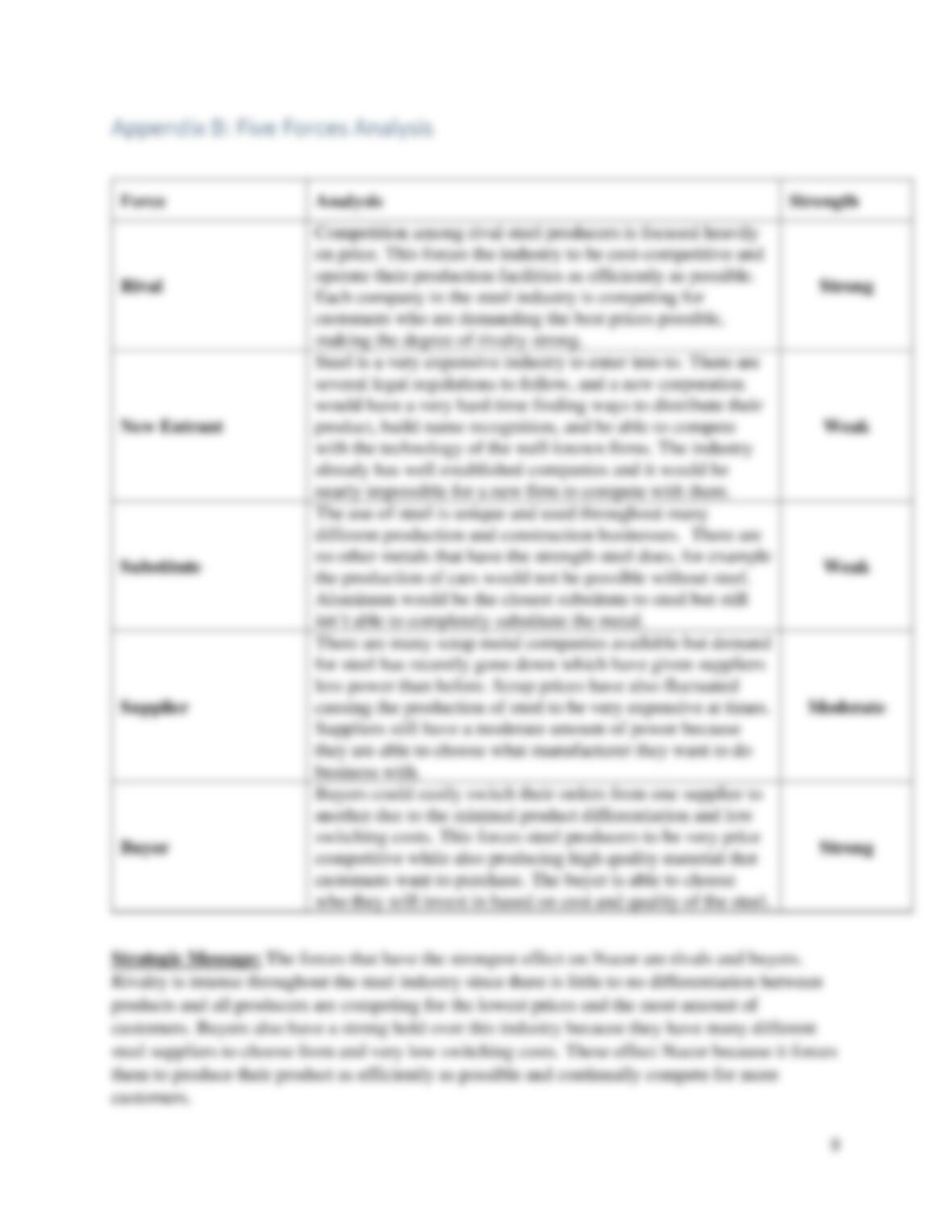
more closely (see Appendix B: Five Forces Analysis on page 9 to see what forces have the
largest effect on Nucor). Rivalry is intense throughout the steel industry since there is little to no
differentiation between products and all producers are competing for the lowest prices and the
most amount of customers. With China having over 150 million tons of the world’s excess steel–
making capacity they were able to undercut U.S. steel makers prices and take away their market
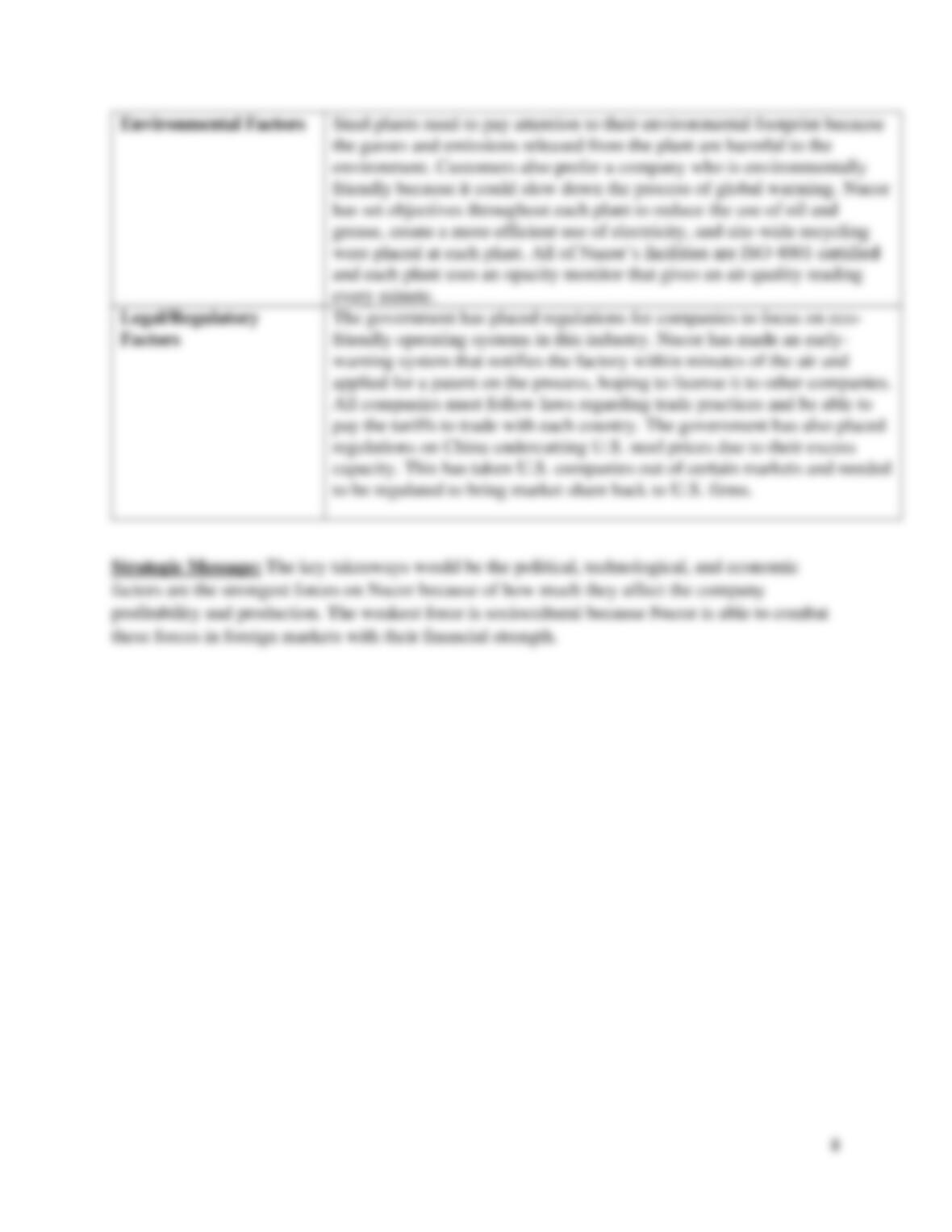
share (see Appendix A: PESTEL Analysis on page 7 for more information on the
legal/regulatory aspect that affected Nucor’s global market share).
The Trump Administration has placed regulations on China undercutting U.S. steel prices
and announced a 25 percent tariff on steel and aluminum imports from China. But China has
found ways to escape the tariffs being imposed. Chinese steel producers were shutting down
some production in China but started to aggressively expand overseas using billions of dollars
supplied by Chinese lenders owned the government to buy and build steel plants around the
world. U.S steel companies like Nucor cannot compete with this and came out with a statement
saying they have joined three other domestic steelmakers in filing a petition alleging China is
circumventing previously levied duties by shipping products through third-party countries (see
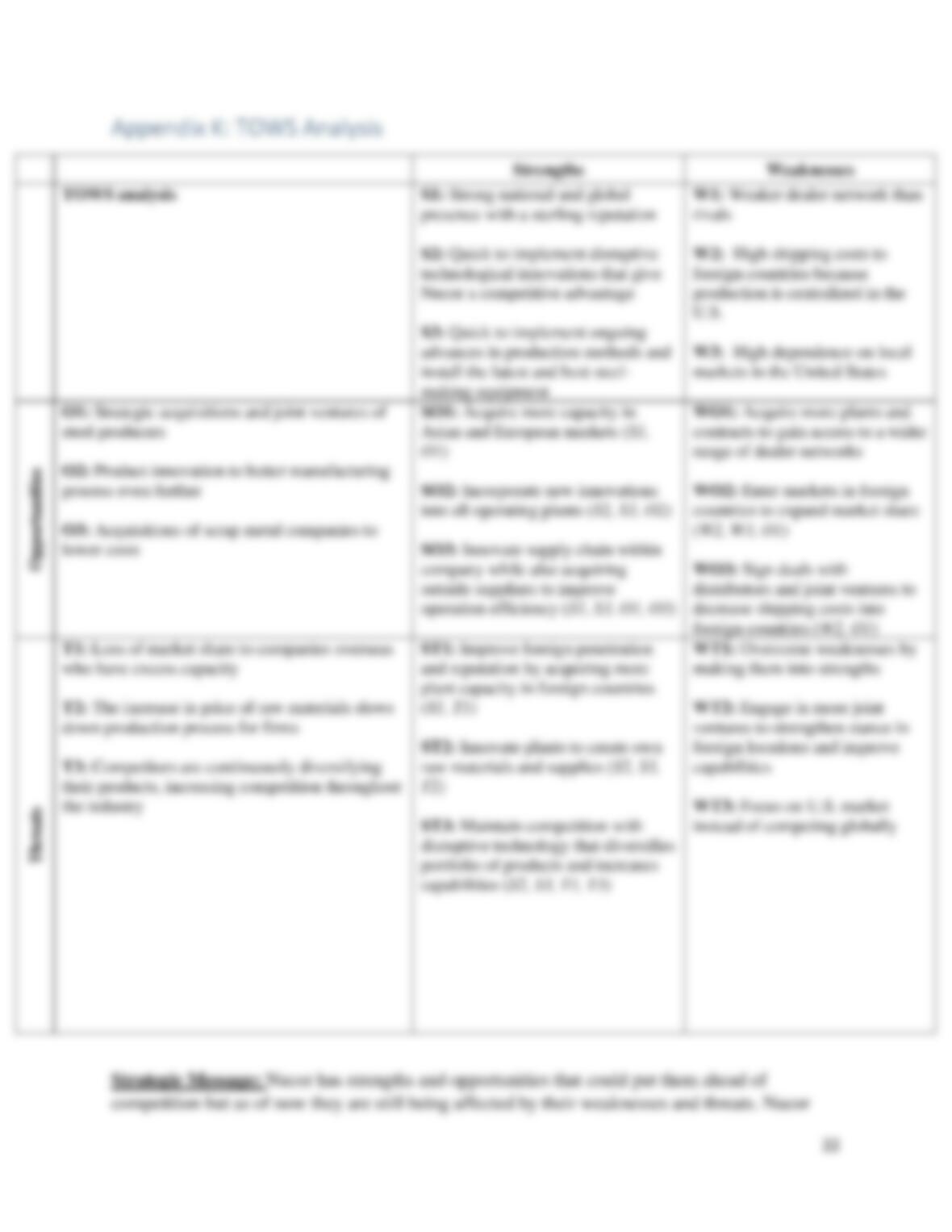
Appendix K: TOWS Analysis on page 21 for more information on foreign producers stealing
market share).
Nucor is facing a lot of adversity due to the Chinese government finding loopholes
around the tariffs being imposed and stealing global market share from U.S. firms. Nucor needs
to continue to face this issue with bettering their technology and finding new and efficient ways
to operate their production facilities to lower operating costs. If they are performing at peak
capability, Nucor will be able to continue to compete with China and other foreign producers.
Nucor has stayed resilient over the past few years where they have faced economic issues of steel
prices fluctuating and have been able to stay profitable (see Appendix A: PESTEL Analysis on
page 7 for more information on the economic forces the industry has faced). Nucor has a sterling
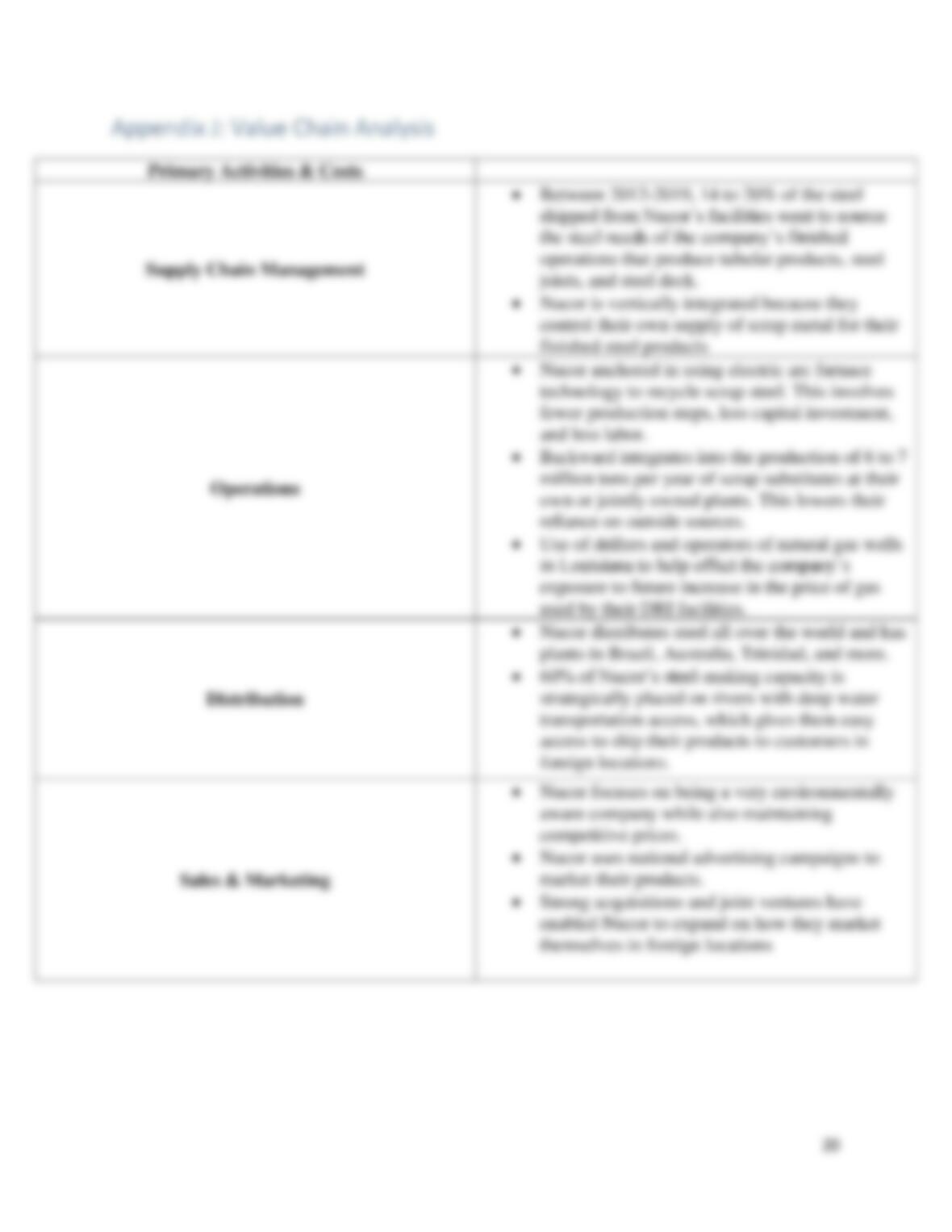
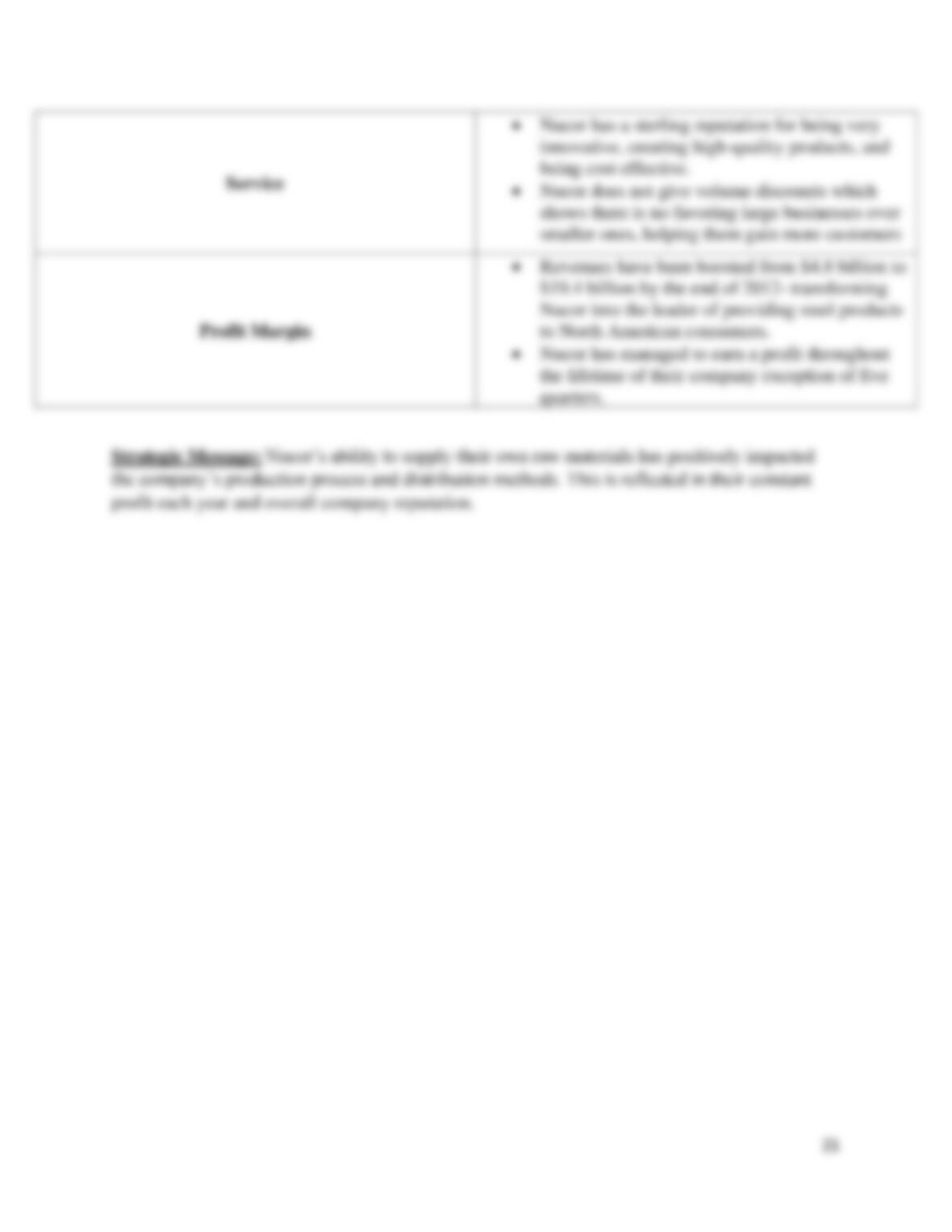
reputation for being very innovative, creating high-quality products, and being cost effective (see
Appendix J: Value Chain Analysis for more information on Nucor’s services). With these
qualities Nucor can compete with China and continue to stay profitable.
5
Issue #3: High Degree of Competition
Competition among rival steel producers is focused heavily on price. This forces the
industry to be cost-competitive and operate their production facilities as efficiently as possible.
Each company in the steel industry is competing for customers who are demanding the best
prices possible, making the degree of rivalry strong. The steel industry has several factors that
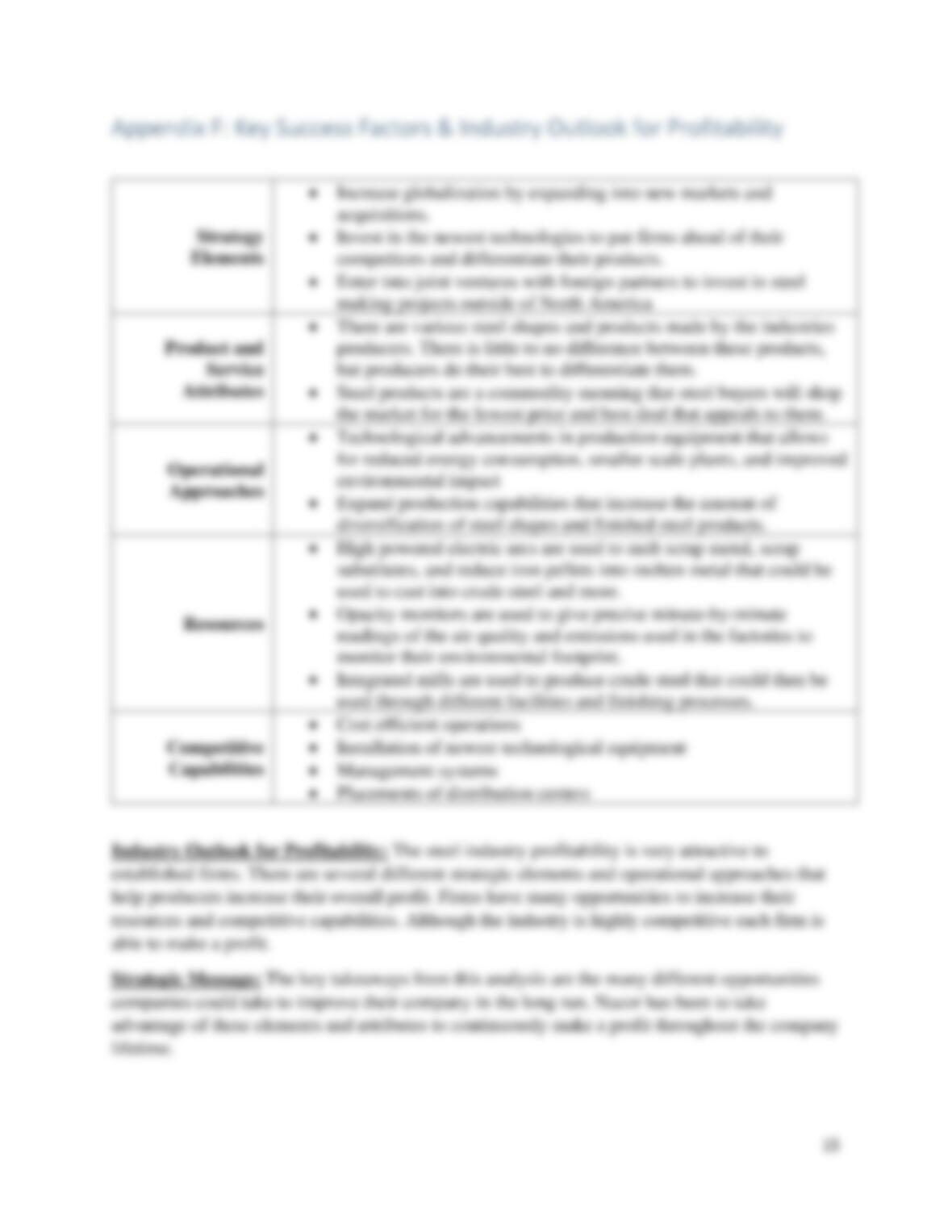
allow it to be successful (see Appendix F: Key Success Factors and Industry Outlook for
Profitability on page 15 for more information on how the industry stays profitable despite
competition). The steel industry profitability is very attractive to established firms. There are
several different strategic elements and operational approaches that help producers increase their
overall profit. Firms have many opportunities to increase their resources and competitive
capabilities. With so many technological resources and operational approaches, there are endless
opportunities for Nucor and other firms to be successful within the steel industry.
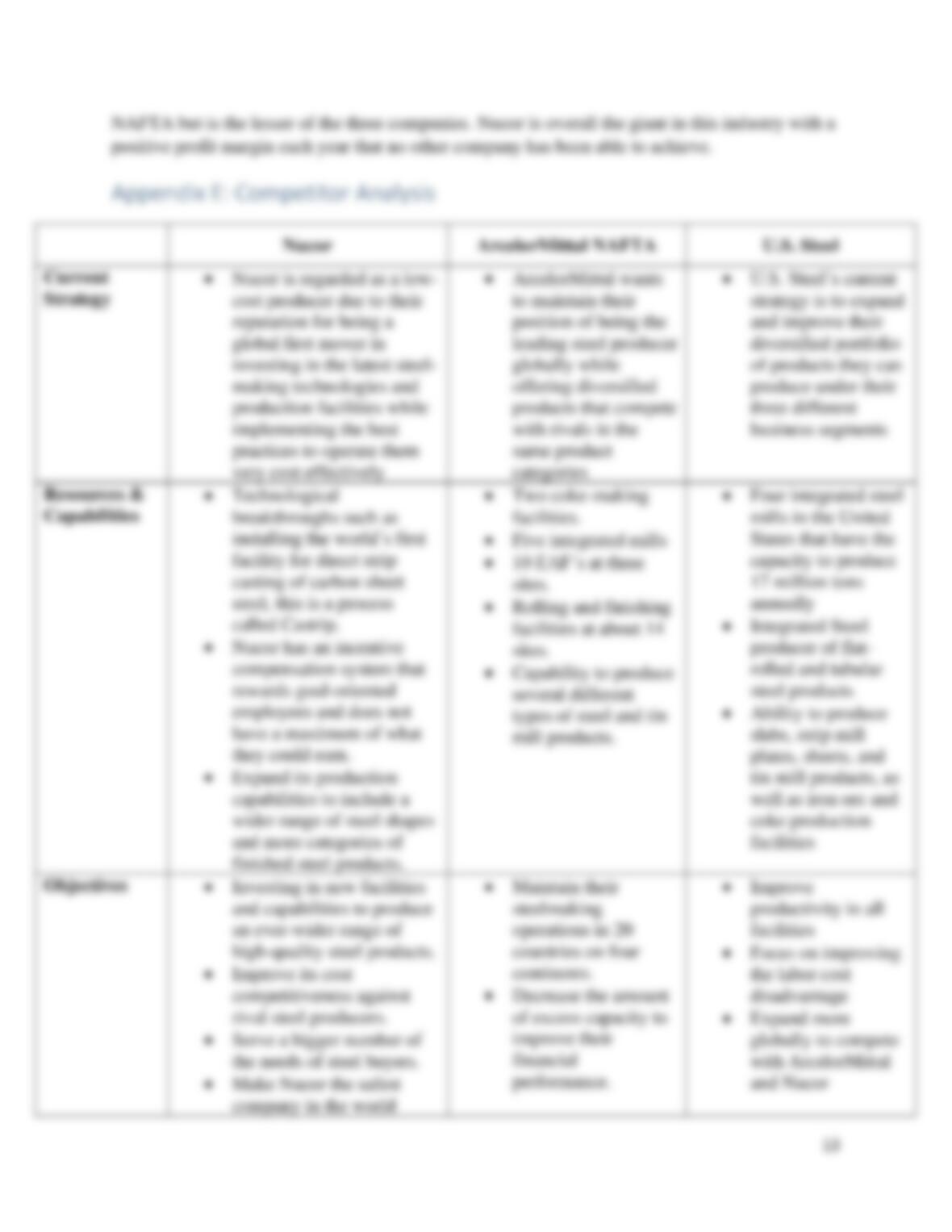
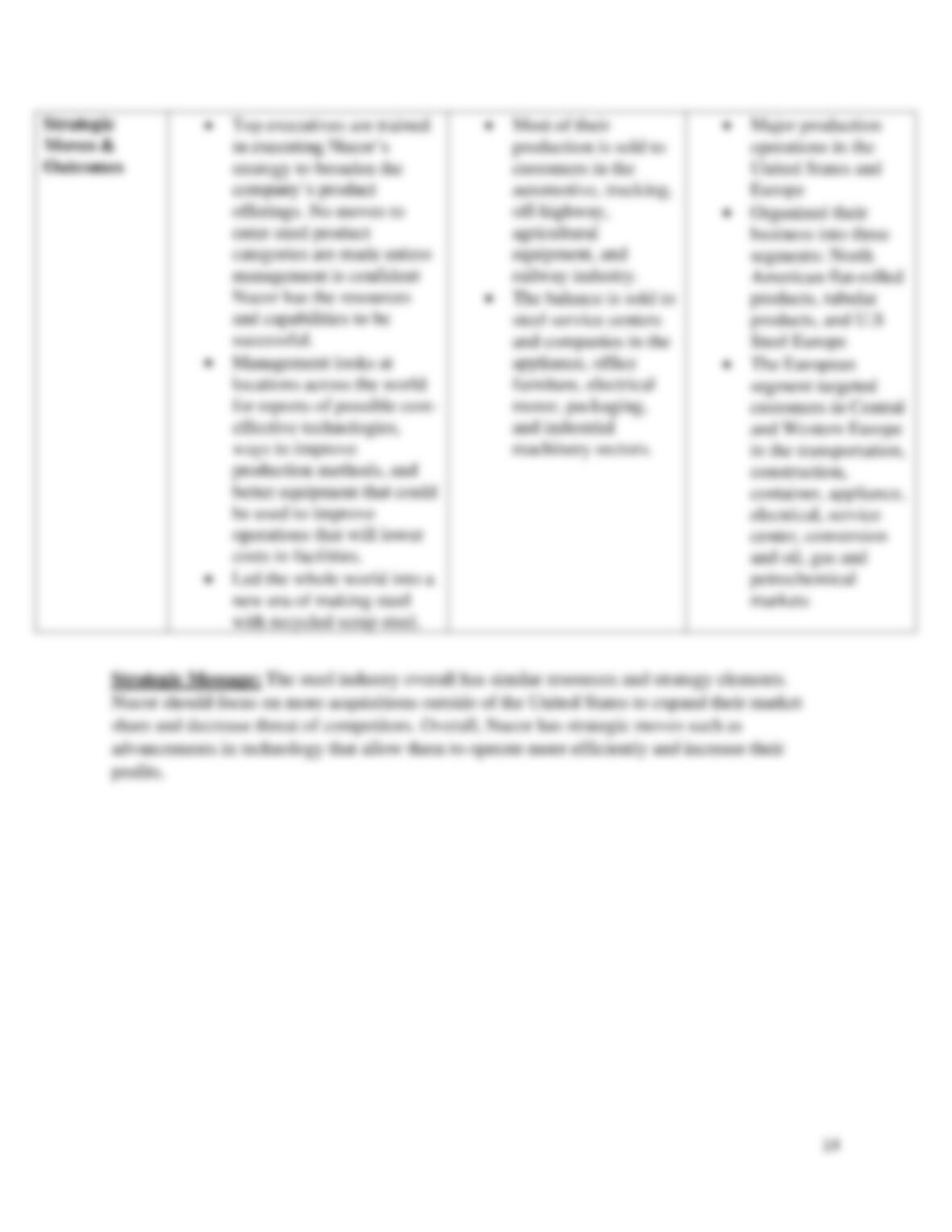
Nucor has two main competitors: ArcelorMittal NAFTA and U.S. Steel. ArcelorMittal is
the global leader in the steel industry. They have the capability to produce hot-rolled and cold-
rolled coils of sheet steel, steel plates, and more. They are the worlds largest steel producer with
operation in 20 countries on four continents, annual production capacity of about 112 million
tons of crude steel. U.S. Steel is an integrated steel producer of flat-rolled and tubular steel
products with major production operations in the United States and Europe. They are the third
largest producer of crude steel in the United States. ArcelorMittal has a spotty financial
performance, even though they are the leading global producer, due to China’s excess capacity of
steel. U.S. Steel may be the third largest producer in the United States, but they are only twenty-
sixth in the world (see Appendix E: Competitor Analysis on page 13 for more information on
who Nucor is competing with).
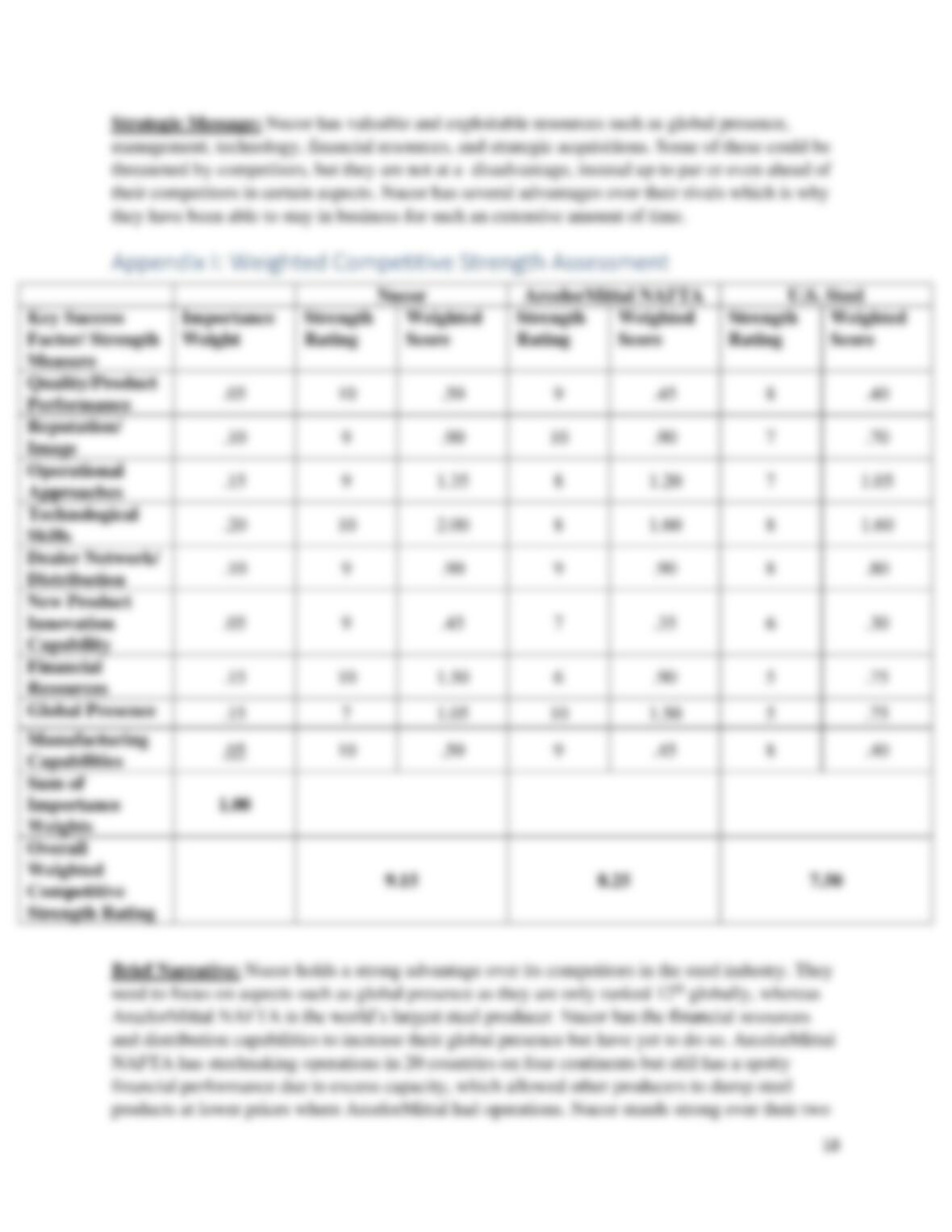
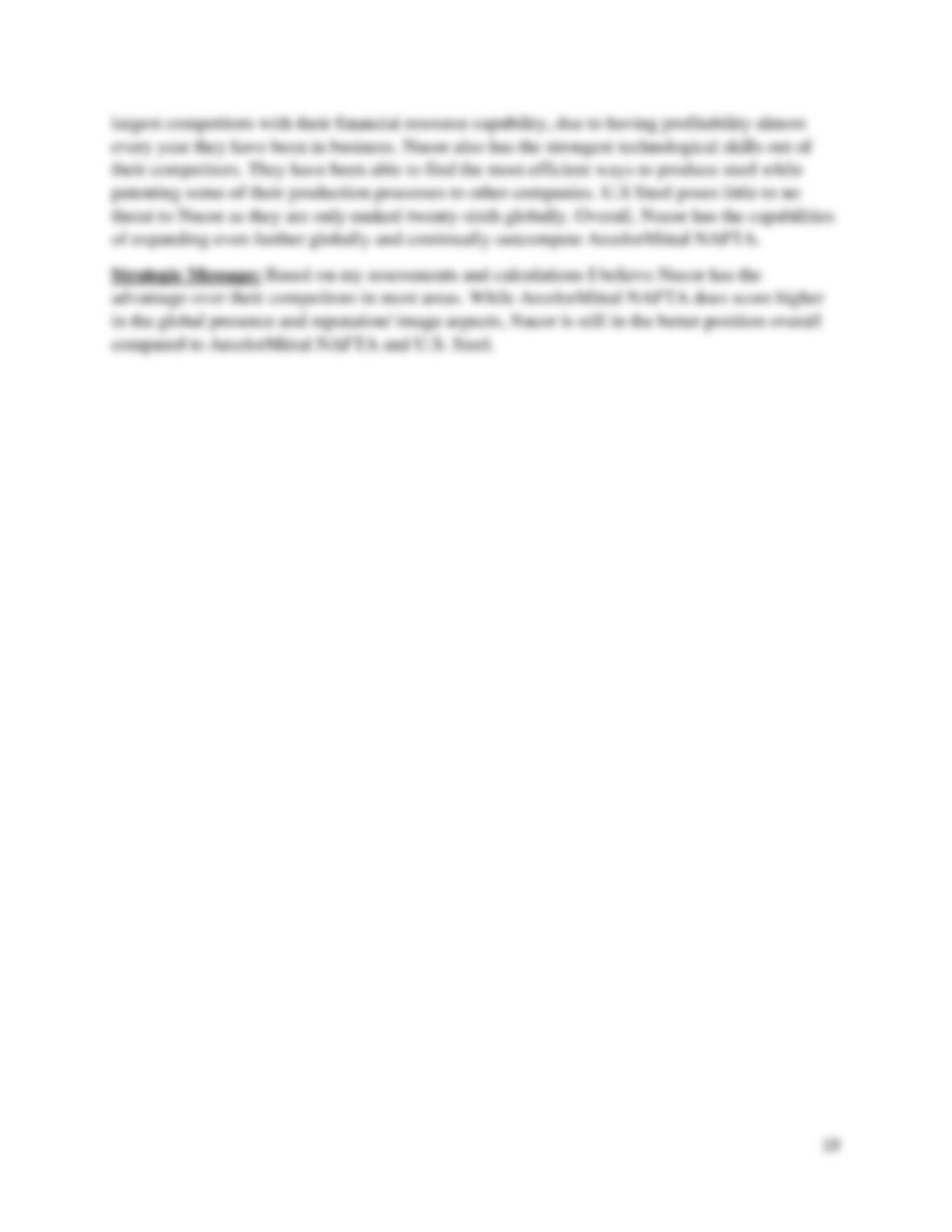
Nucor holds a strong advantage over its competitors in the steel industry. They need to
focus on aspects such as global presence as they are only ranked 12th globally, whereas
ArcelorMittal NAFTA is the world’s largest steel producer. Nucor has the financial resources
and distribution capabilities to increase their global presence but have yet to do so. Nucor still
stands strong over their two largest competitors with their financial resource capability, due to
having profitability almost every year they have been in business. Nucor also has the strongest
technological skills out of their competitors. They have been able to find the most efficient ways
to produce steel while patenting some of their production processes to other companies. U.S
Steel poses little to no threat to Nucor as they are only ranked twenty-sixth globally. Overall,
Nucor has the capabilities of expanding even further globally and continually outcompete
ArcelorMittal NAFTA (see Appendix I: Weighted Competitive Strength Assessment on page 18
for more information on how Nucor is rated compared to their largest competitors).
Buyers could easily switch their orders from one supplier to another due to the minimal
product differentiation and low switching costs. This forces steel producers to be very price
competitive while also producing high quality material that customers want to purchase. Nucor
needs to do better with using their resources to take bigger risks to differentiate themselves from
competition to gain the liking of more consumers worldwide.
Key Recommendation
The three recommendations I would give to Nucor are to continue driving operation costs
down to follow a low-cost strategy, grow their acquisitions and joint ventures to combat
competition, and make investments in bettering their technology. Each of these
recommendations solves the three main issues Nucor faces such as globalization, falling steel
prices, and the high degree of competition. If Nucor were to use one of these recommendation,
their issues would be solved, and they would be the number one steel company in the world.
The first recommendation I would offer to Nucor is to continue driving operation costs
down to follow a low-cost strategy. The market for steel is becoming more competitive so it is
important for Nucor to continue to grow to remain competitive. This will allow Nucor to offer
products at lower prices than rivals trying to compete with them. Nucor remains a leader as a
low-cost provider due to their ability to make investments in research and developmental
activities. As the industry’s technology changes and manufacturer innovations change the way
steel is produced, it allows room for firms to grow and change the way they operate to reach
customers’ needs. If Nucor made more investments in bettering their technology, they would
directly increase their competitive advantage over rivals. The investment would also allow them
to keep operating costs low by reducing labor costs and differentiate themselves from
competitors.
Nucor has made several strategic acquisitions and joint ventures of plant capacity in