Isabella Dragovic
Lecture Seven PSYC2003 – Early Childhood Physical, Motor, and Cognitive
Development:
Physical Development in Early Childhood:
– Growth starts to slow down between ages 2 and 6.
– Skeletal growth continues to grow.
Brain development –
– 90% of it is at adult weight between the ages 2 and 6.
– Pre-schoolers are getting better at coordination.
– Language is “incredible” between ages 2 and 6 – putting together sentences.
– Start to development logical thinking.
– Sense of imagination – Make-Believe play.
– Their brain is still considered very plastic.
Influences on Physical Growth and Health:
– Emotional wellbeing – Ability for children to learn and develop.
– Sleep habits – The brain needs to rest.
– Nutrition – Because of this rapid growth, it is important that children get as
much nutrition as possible.
– Childhood injuries – Cause of death through young children is often through
injury e.g. falling off something.
Heredity and Hormones:
– Genetics tends to influence what you look like.
– Thyroid-stimulating hormone is extremely important for growth.
Nutrition:
– Toddlers want to be independent and do things themselves.
– It can become very messy.
– They have the ability to go “yuck”.
– You can disguise the food in order for them to get the nutrients.
– Parents make the decision on what children eat.
– Kids who live in poverty lack high-quality food.
Dietary Deficiencies in Early Childhood:
– Children with low nutrition or have high deficiencies in e.g. iron or calcium will
score lower in IQ tests etc.
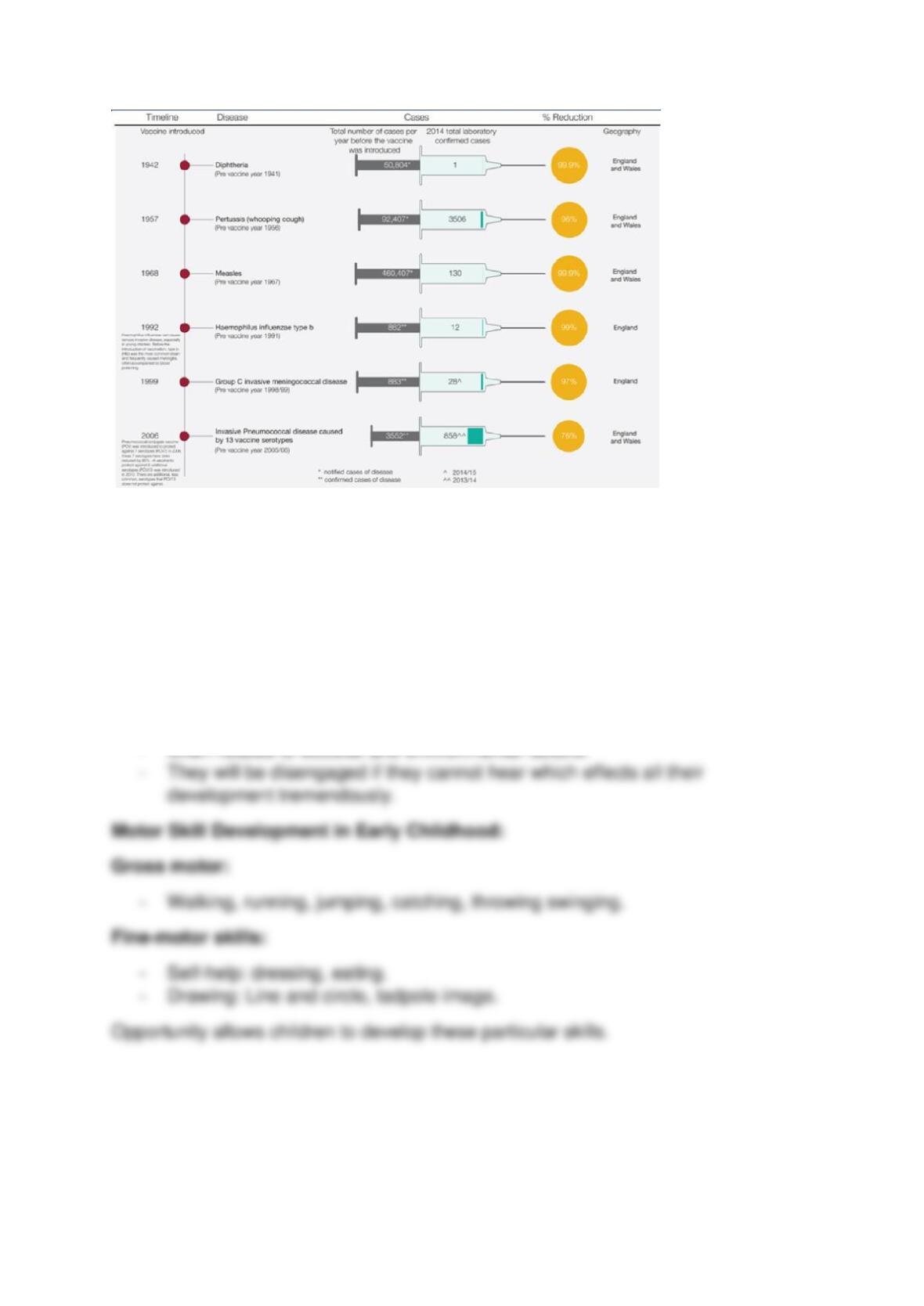
Immunization:
– A topic that attracts a lot of debate.
– There are anti vaccinations campaigns.
– Herd immunity is important for closing off a breakout of a particular disease.
– Emotive topic.
Isabella Dragovic
– Cost-benefit analysis is looked at when looking at vaccines.
Otitis Media and Development:
– Middle ear infection (most common between 6 months and 3 years).
– Kids are more often to end up with ear infections when they get sick.
– Kids who go to day-care have double the risk.
– Can impact the ability to develop language.
Otitis Media and Aboriginal Children:
– Five times more likely to be diagnosed.