NI
KE
M
AR
Table of Contents
I. Situaon Analysis……………………………………………………………………………………………………………………..2
A. Nature of Demand……………………………………………………………………………………………………………2
B. Extent of Demand……………………………………………………………………………………………………..……..4
C. Nature of compeon………………………………………………………………………………………………………6
D. Environment Climate………………………………………………………………………………………….………….…9
E. Stage of Product Life Cycle…………………………………………………………………………………………….…11
F. Cost Structure of the Industry…………………………………………………………………………………………..12
G. Skills of the Firm……………………………………………………………………………………………………….……12
H. Financial Resources of the .rm…………………………………………………………………………………………14
I. Distribuon structure……………………………………………………………………………….…………….………15
II. Problems and Opportunity…………………………………………………………………………………….……………16
A. Key problem areas…………………………………………………………………………………………..……………..16
B. On balance, the situaon…………………………………………………………………………………………………18
III. Evaluaon of Alternave Markeng programs………………………………………………………..………….…….18
IV. Decision…………………………………………………………………………………………………………..……………23
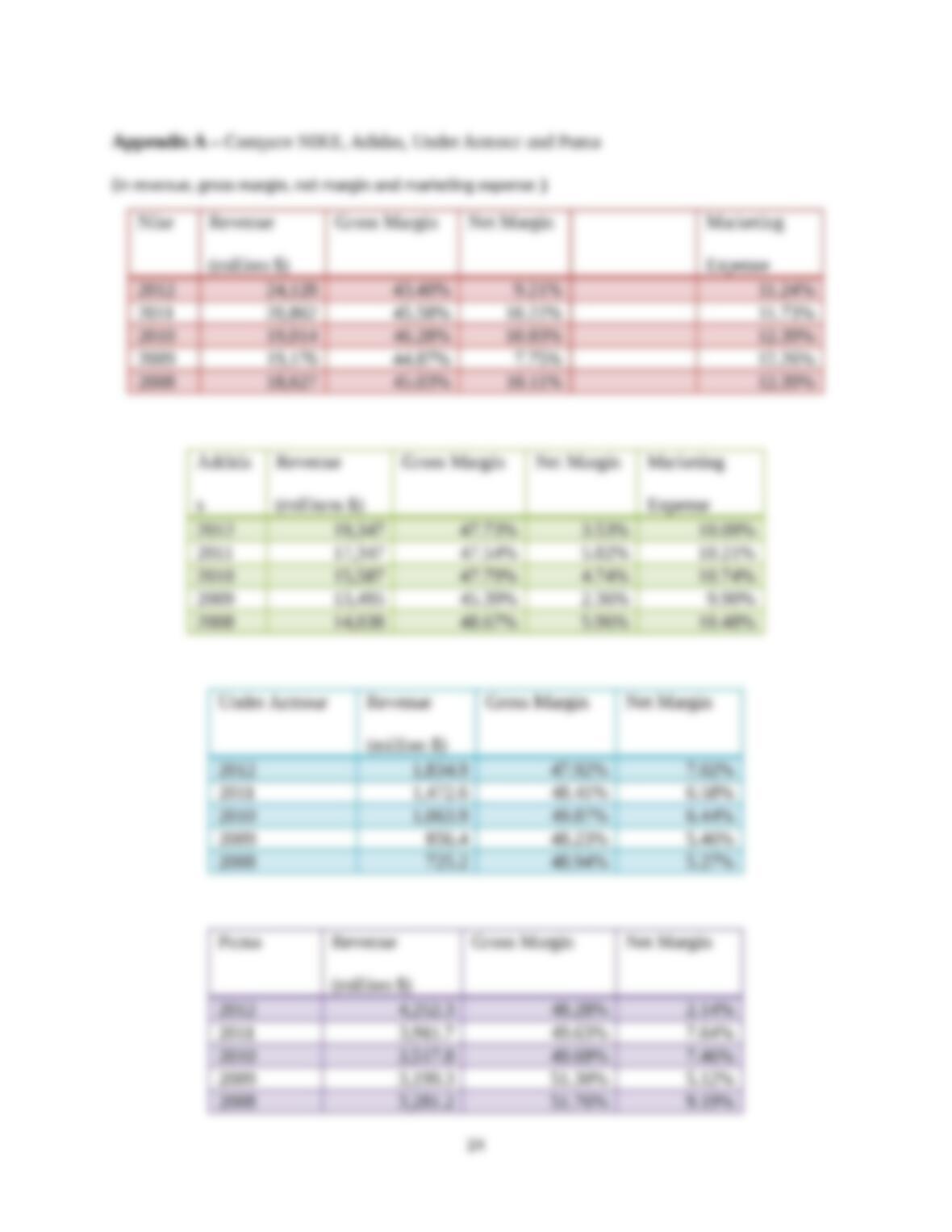
Appendix A – Compare NIKE, Adidas, Under Armour and Puma……….…………..…………………....……..…...25
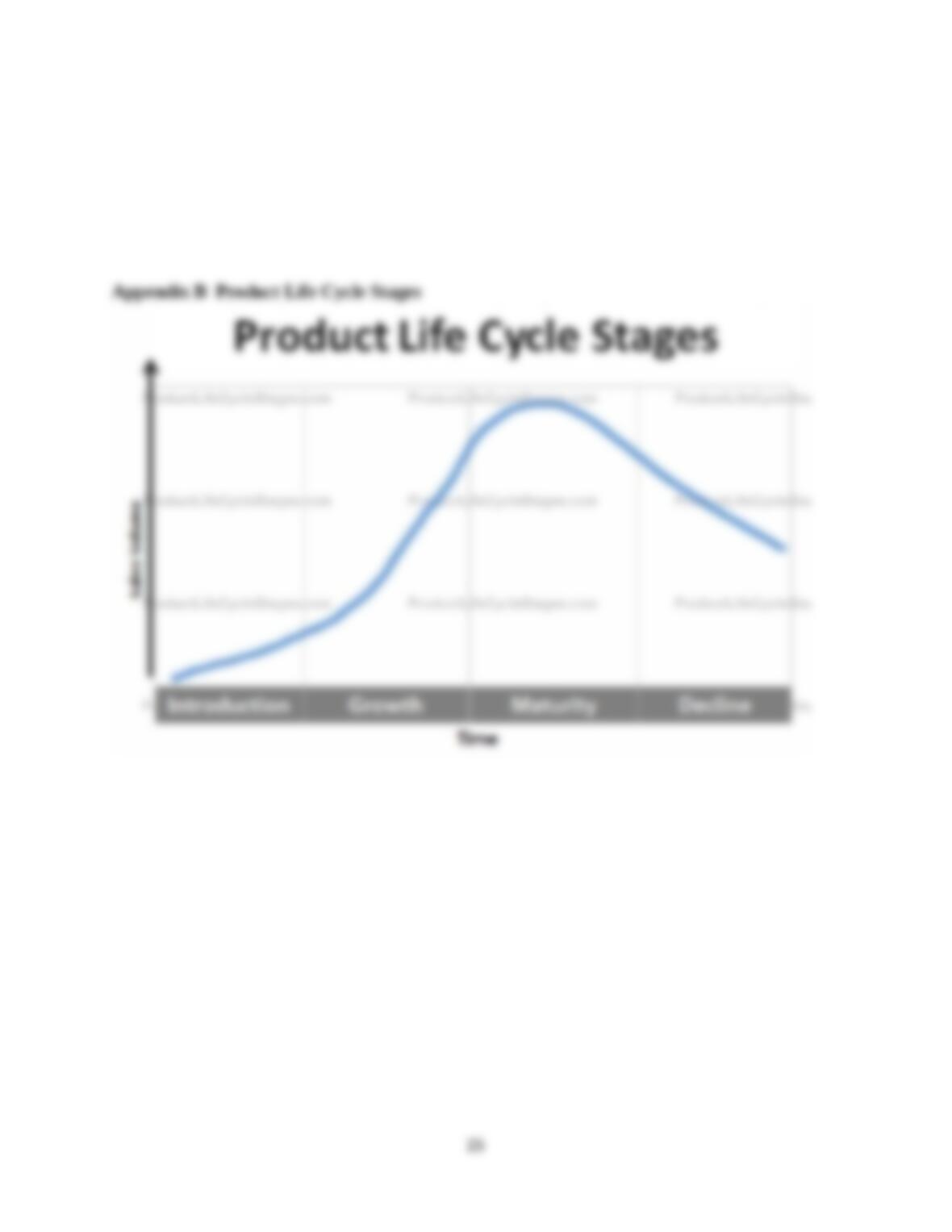
Appendix B Product Life Cycle Stages……………………………………………………………………………………….…27
References……………………………………………………………………………………………………………………..………..28
1
I. Situation Analysis
A. Nature of Demand
1. Analysis –
Nike is a company that is well known globally. The “swoosh” is a distinguished label.
It took Nike’s founders almost 40 years to begin getting recognition for their products
(Video). They sell everything sports related, starting with running shoes and moving to
customized shoes to sports gear such as balls, mitts and golf clubs. They even have products
for sports fans such as NFL and MLB jerseys and other fan related clothing.
Nike’s first endorsed athlete was in 1973 (Video). They used a winning athlete to
show their winning products. Using endorsed athletes Nike became an excellent and
distinguished company by association. However, since the beginning things have changed,
not only is Nike’s products used by athletes, they are also used for leisure, style, or just
anyone who enjoys sports even if they don’t play.
The “swoosh” can be found in 160 countries worldwide and employs over 48,000
people. Although there are direct to consumer Nike stores, a large portion of their products
are wholesaled. According to Nike’s 3rd Quarter Fiscal Report for 2014 their operating
overhead costs have increased 15% due to a rise in direct to consumer costs meaning new
stores are in process (“Nike Fiscal 2014 third Quarter Result.”). E-commerce is also picking
up, last quarter it had a 33% revenue growth (“Factors Underlying Our $68 Valuation of
Nike.”).
Brand awareness is no problem for Nike. They are involved with almost every major
sporting even in the world. These events are a big marketing opportunity. Nike’s Q3 Report
shows a demand creation expense rising by 18% and inventories are up 7%. When looking at
those rises it is important to take in to account marketing moving towards the 2014 World
2
Cup along with new product launches (“Nike Fiscal 2014 third Quarter Result.”). Between
that major event and new products Nike is expecting to sell more and have a higher demand.
The uses of the World Cup and soccer in general has been used and is still being used
to create demand for Nike’s products in foreign countries. They include those in Europe and
South/Central America where soccer is very popular. Nike even sponsored a Brazilian team
(Video). Within the past few years Nike has caught up to Adidas and Puma who were
previous the only sports giants in their area (“Nike Faces Tough Competition In Europe and
China.”).
The products sold by Nike are demanded globally and by a variety of age groups. In
its nature Nike has an obvious appeal to athlete but it is not uncommon to see a toddler in a
brand new pair of Nike’s shoes or to see males of various ages anticipating the release of
basketball player’s new shoes. Many of Nike’s shoes, especially for males, are highly
anticipated and will buy a new pair of shoes every time the newest versions are out. There is
also an increase in future orders showing how anticipated their products are. Runners on the
other hand generally trade up shoes based on how many miles they run, some say for it to be
between 350-500 miles (“Are your shoes worn out ?.”).
2. Market Segmentation –
Nike uses various market segmentation methods. Following are important basis Nike uses
to segment the market.
a. Geographic – Nike support popular sports in various country. For example sports
such as running, soccer, football, basketball, Cricket, skateboarding, snowboarding,
volleyball, track & field etc. Nike does business in various geographic location such
as USA, UK, India, and Malaysia.
b. Demographic – Nike uses demographic segmentation as below :
Age – Nike mainly targets 13 to 25 year old
Gender – manufacture shoes for male, female participating in various sports. It
also market to kids which includes youth, preschoolers, Infant/Toddler.
3
c. Psychographic – Nike’s mission statement: “To bring inspiration and innovation to
every athlete in the world”. Sportsmen are the majority consumers of Nike’s products.
An athlete or sportspersons is more possible to choose shoe designed that is marketed
by the company more than an individual who hate sports as well as exercises.
d. Behavioral – Nike targets certain selected behavior in their customer as below –
Utility Based – Nike promotes shoes and apparel based on utility –
Basketball, Cricket, Football, Outdoor, Baseball, Tennis, Track & Field.
Style Based – Nike has various products based on style like cleats &
spikes, court sandals & flip-flops etc.
Technology Based – Nike’s products employs different technology such as
Nike Free, Nike Shox, Air Max, Lunarlon etc.
B. Extent of Demand
The global sports apparel market is estimated to grow by 4% by 2019 based on
compound annual growth rate (“Why Nike Will Outpace The Sports Apparel Market’s
Growth.”). As of 2012 the global sports apparel market was worth $135. Also, as of the
2012 fiscal year Nike’s sales were higher than all key companies in the market except
Adidas.
In 2011 the global athletic footwear was worth $74.7 billion, it is expected to
grow to $84.4 billion by 2018 (“New Global Athletic Footwear Market Research
Report.”). It is believed the demand and recent trends pushing athletic footwear is
because of the need to live an active and healthy lifestyle. There has also been a need for
shoes that are comfortable and distinguished in design. Nike is suspected to grow their
4
market share in this area by 6.5% by 2019 (“Why Nike Will Outpace The Sports Apparel
Market’s Growth.”)
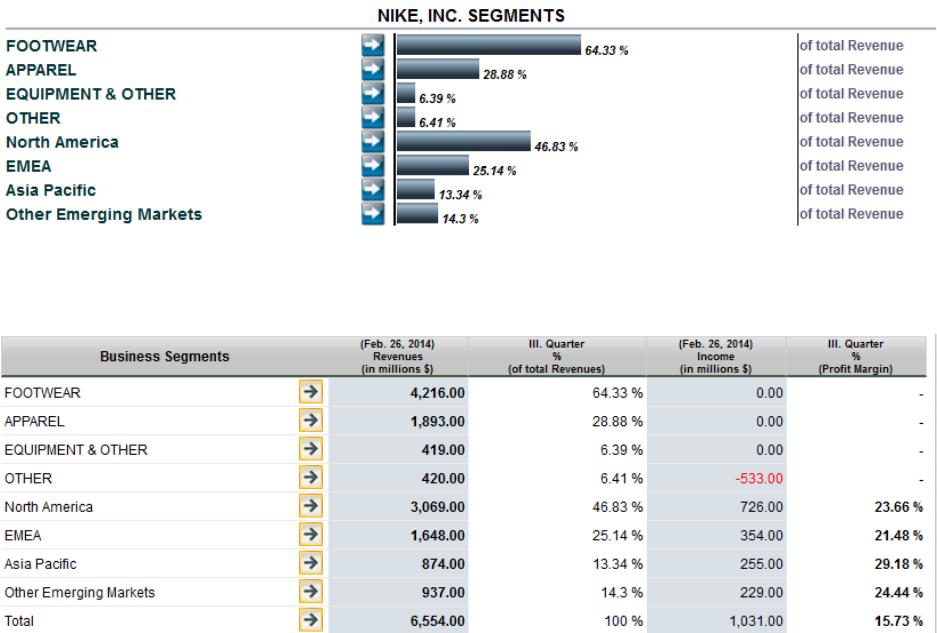
It is best to analyze Nike’s market based on a segmented basis. As of right now
Nike excels in some areas of the world and are facing difficulties in other areas such as
China (“Nike Faces Tough Competition In Europe and China.”). The tables below show
Nike’s market share based on product category and area of the world.
(“Nike Divisions quarterly segment results.”)
(“Nike Divisions quarterly segment results.”)
C. Nature of competition
1. Present and future structure of the competition
5
NIKE is involved in the design, development and worldwide marking and selling of
athletic footwear, apparel, equipment, accessories and services. NIKE Brand products are offered
in several categories: running, basketball, football (soccer), men’s training, women training,
NIKE sportswear (sports-inspired lifestyle products), and action sport. Subsidiaries include
Converse Inc. and Hurley International LLC. Converse designs and distributes in athletic and
casuals footwear, apparel and accessories under Converse®, Chuck Taylor®, All Star®, One
Star®, Star Chevron® and Jack Purcell® trademarks; headquartered in North Andover,
Massachusetts. Hurley International LLC designs and distributes a line of action sports and youth
lifestyle apparel and accessories under the Hurley trademark.
In addition NIKE market products designed for kids along with other recreation use such
as; baseball, cricket, golf, lacrosse, outdoor activities, football, tennis, volleyball, walking, and
wrestling. NIKE’s athletic footwear products are designed of specific athletic use; a large amount
of the products are worn for casual or leisure purposes.
NIKE is the largest seller of athletic footwear and athletic apparel in the world. NIKE has a
considerable amount of emphasis on high quality construction and innovation in their product.
NIKE sportswear, running, basketball, football (soccer) and kid’s shoes are the top-selling
footwear categories. Other NIKE products are apparel and accessories such as; bags, socks, sport
balls, eyewear, timepieces, digital devices, bats, gloves, protective equipment, golf club and
other equipment designed of sports activities.
a. Number of competitors (5 versus 2,000):
NIKE main competitors are: Adidas, Reebok, New balance, Puma and Under Armour
(Appendix A).
6
Any athletic footwear company would be a competitor to NIKE. Some examples
outside the main competitors are: Asics, Brooks, Saucony, Sketchers, and Mizuno
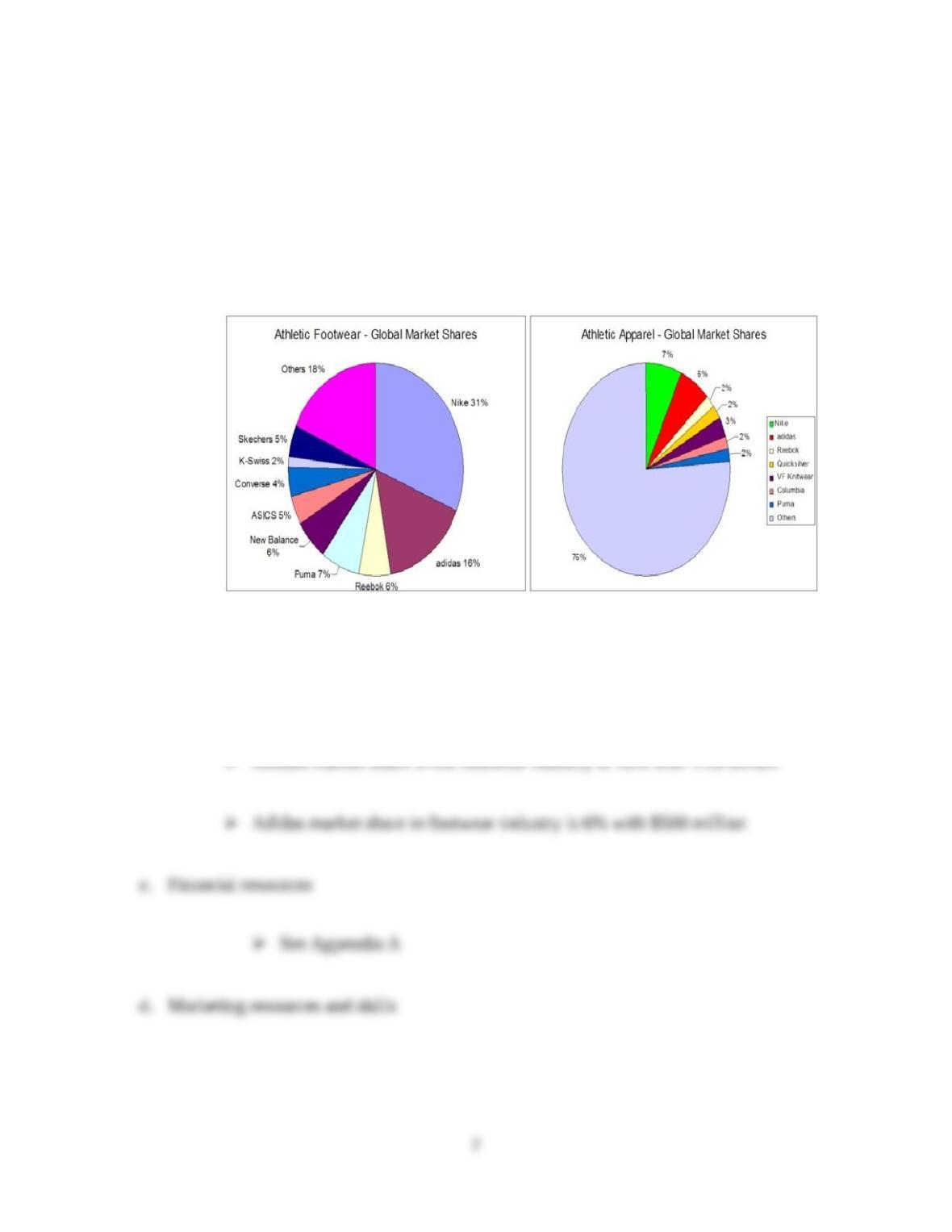
Table 1: Indicates the Global Market Shares in Athletic Footwear and Athletic
Apparel among NIKE competitors.
b. Market shares:
NIKE market share in the footwear industry is 47%, with 3.77 billion.