Case Study –
Nike Inc.:
Cost of Capital
Case Background:
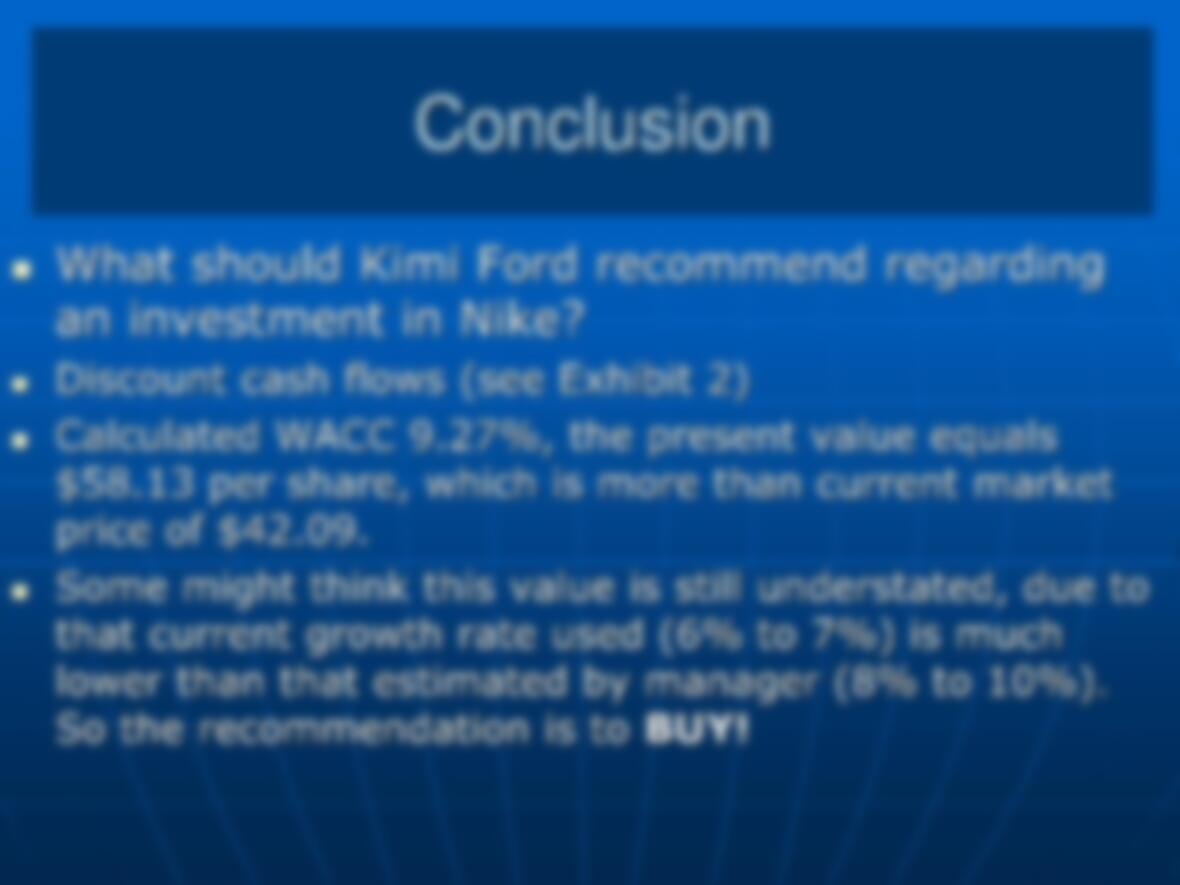
•NorthPoint Large Cap Fund –consider to
buy Nike’s stock?
•Nike declines in sales growth, profits and
market share.
•Strategic Plan –to increase exposure in
mid-price footwear and apparel lines;
commits to cut down expenses.
•Market response: mixed signals
•Kimi Ford has done a cash flow estimation,
and ask her assistant, Joanna Cohen to
estimate cost of capital.
Nike Inc.:
What is WACC? Why is it important to
estimate a firm’s cost of capital?
Cost of capital – rate of return required by
a capital provider in exchange for foregoing
an investment in another project or business
with similar risk (or opportunity cost).
Invest only in projects that generate returns
in excess of WACC.
The WACC is set by the investors (or
markets), not by managers. Cannot observe
the true WACC, only estimate it.
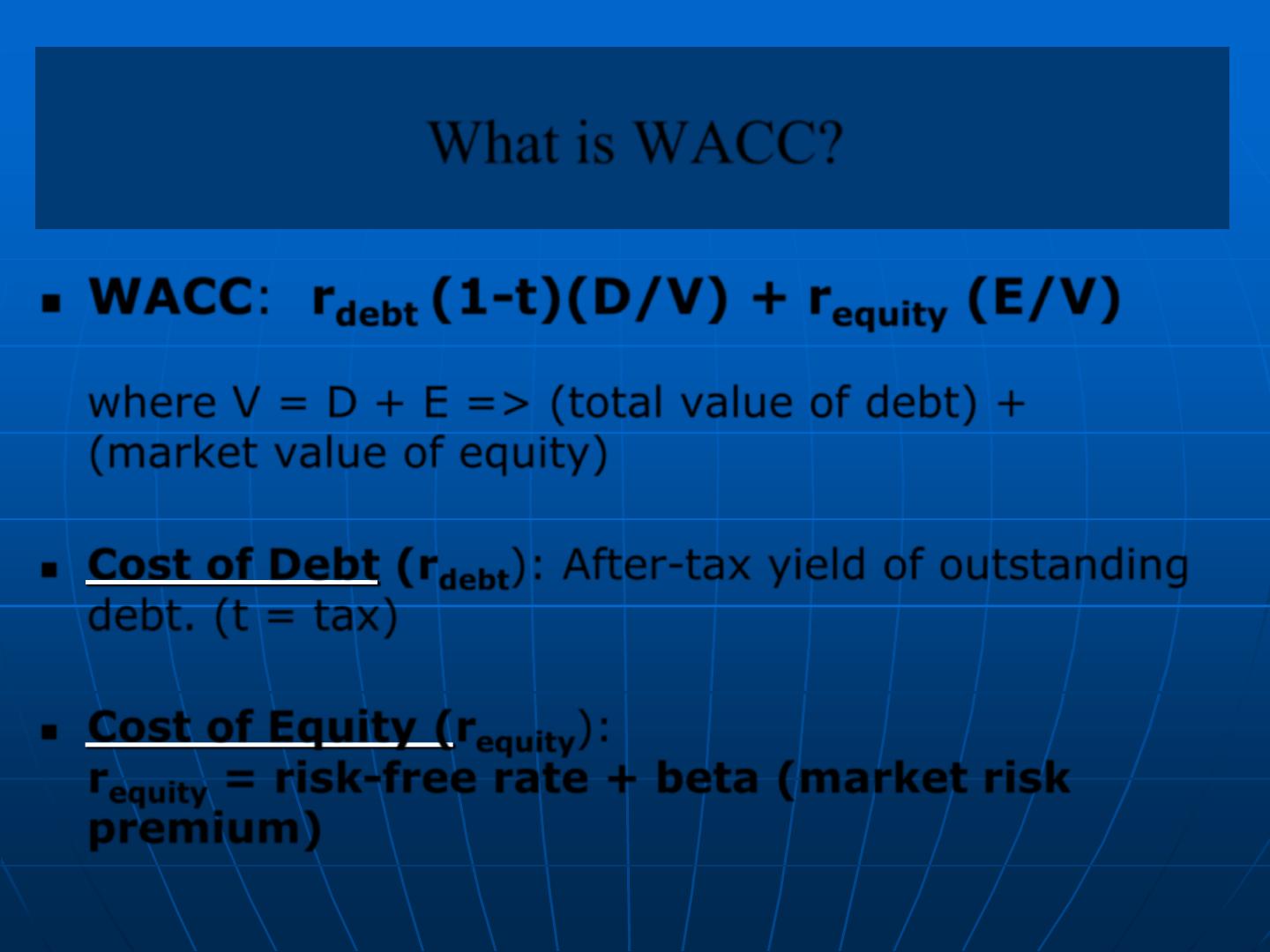
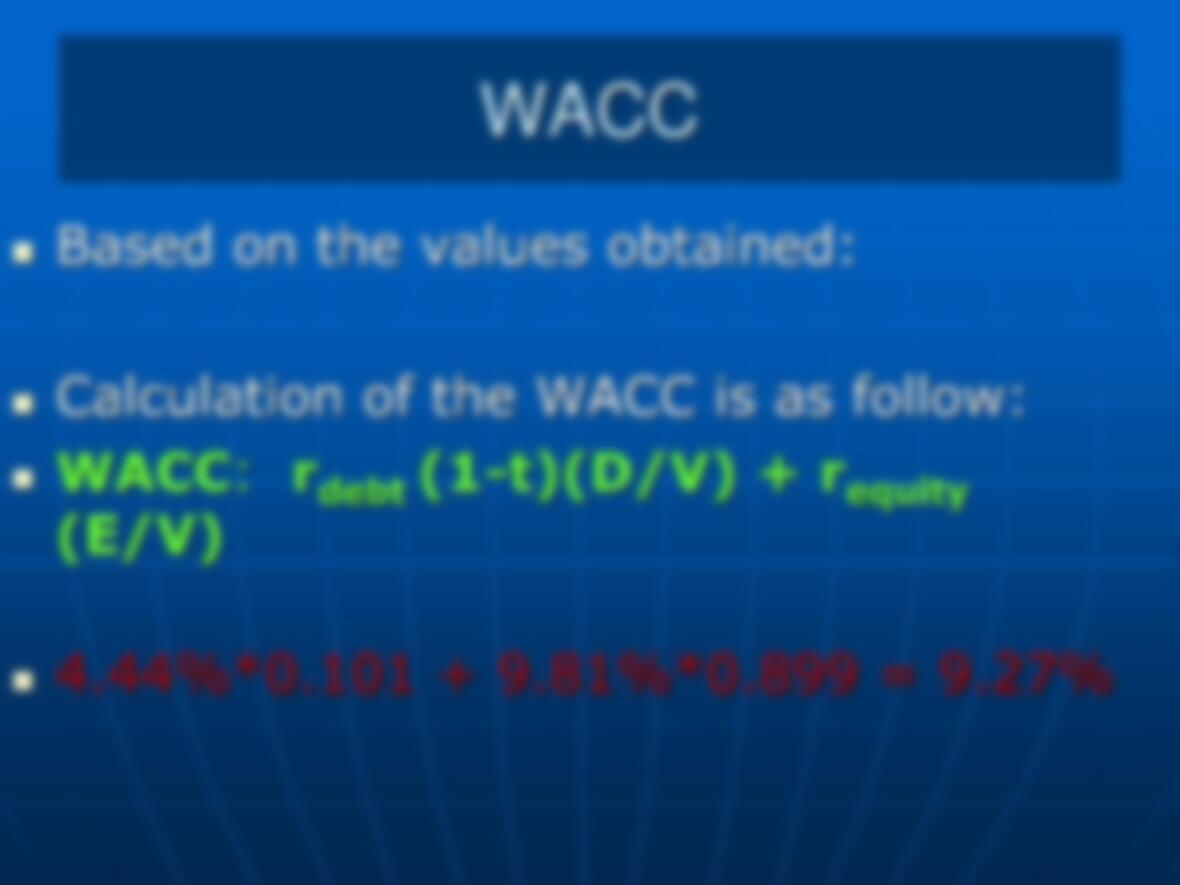
What is WACC?
WACC: rdebt (1-t)(D/V) + requity (E/V)
where V = D + E => (total value of debt) +
(market value of equity)
Cost of Debt (rdebt): After-tax yield of outstanding
debt. (t = tax)
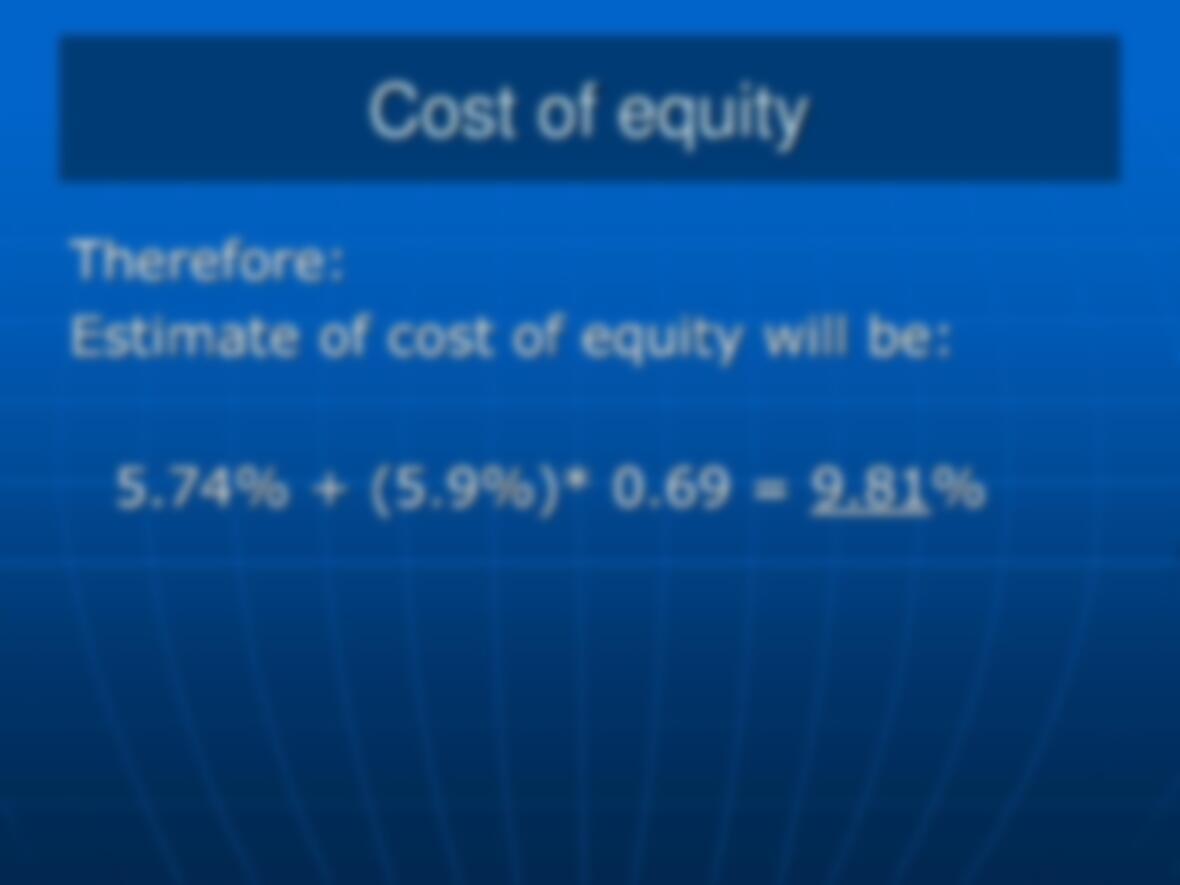
Cost of Equity (requity):
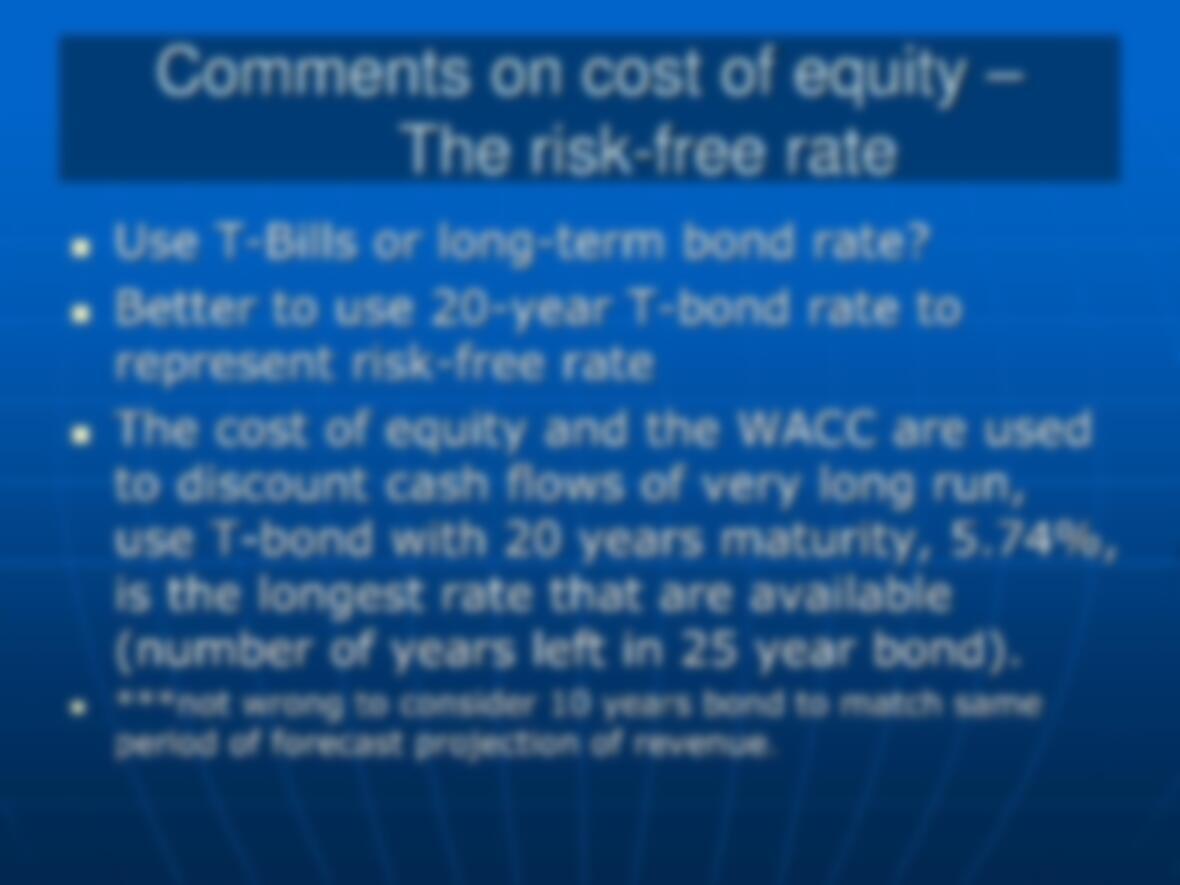
requity = risk-free rate + beta (market risk
premium)

Assumptions and Considerations to
determine intrinsic value?
Issues
•Projected free cash flow
•Single cost or Multiple Cost of
WACC?
•Cost of debt
•Cost of equity
•Weights of capital components

Free cash flow projections
Assumptions
•What is FCF?
•Sales growth –different business units?
•Capital Expenditure requirement?
•Working capital
•Depreciation
•Tax
•Terminal value –growth at what rate?
I. Single cost or Multiple Cost?
Use different cost of capital for footwear
and apparel divisions?
In this case, use single cost instead of
multiple costs of capital.
Other related businesses is relatively small