Death of a Salesman
A Study of its Attitudinal Structure
Mutee Abdul Salaam al-Sarory
Under the Supervision of
Dr. John Eliezer
Thesis Submitted to the Department of English, Faculty
of Arts in Partial Fulfillment of the Requirement of the
Master’s Degree Awarded by the University of Sana’a.
Sana’a
Republic of Yemen
2004
ii
ABSTRACT
The structure and theme of Death of a Salesman have been separately studied by many critics.
The structure’s various aspects such as events, time, plot, etc., have been identified and
described by different but related terms. The themes, too, have been identified and described.
This study, however, takes a new approach to Death of a Salesman and reads it to show how
its structural elements interact to reveal the themes, i.e. to express the dramatist’s perspective
of the drama of the principal protagonist.
As there are two events in the play: present events and past events, or the past time switches
as we can also call them, we apply a reading strategy that involves evaluating the significance
of each type of event separately, and then evaluating their significance together as a whole.
In our interpretation of events and situations of the play, we use the linguistic concept of
‘context of situation,’ as it shows the dramatic function of the past time switches. More
specifically, our study understands the past time switches as the ‘context of situation’ for a
proper perspective of present events. We should mention, however, that we apply the concept
of ‘context of situation’ without using the technical jargon of field, tenor, and mode of
discourse, because using the technical jargon would take the study’s focus to a linguistic level
that would be distracting.
We first examine the structure of the play. Then, we read the present events alone, i.e. without
the past time switches or the ‘context of situation.’ When we do so, we find that the present
events of the play make an ineffective dramatic and thematic presentation though they
chronologically present the last twenty-four hours of Willy’s life, i.e. the protagonist’s life. In
a similar way, we read the past events by themselves. When we do so, we find them episodic.
That is, we cannot impose a time order on them, because the play provides little or no clue for
deducing a strict sequence. Then, we read the play as a whole, i.e. present and past events
together. When we do so, we find that the play’s dramatic and thematic significance becomes
evident.
The interaction between the present and past events, finally, paves the way for us to observe
the impact of Willy’s value system on his own life ultimately leading to his death. That is, it
makes clear the thematic issues of the play. All of Willy’s ideas about success and parenthood
are found in the past time switches. We observe that the dialectical sequencing of Willy’s past
in his present determines the attitudinal rubric of Death of a Salesman. The sum total of
Willy’s value-system, as it is laid bare in the past time switches, unleashes forces that work
against Willy himself and ultimately leads him to self-destruction. We identify these attitudi-
nal underpinnings to be Willy’s self-defeating dream of success, his sense of possession, his
sense of achievement, his agonizing guilt, his oversized self-image, and reality vs. illusion.
iii
Contents
Dedication vi
Acknowledgements vii
CHAPTER 1: Introduction
1.1. The Significance of the Phrase “Attitudinal Structure” 2
1.2. Objectives 4
1.2.1. Broad Objective 4
1.2.2. Specific Objectives 4
1.3. Literature Review 5
1.3.1. Regarding the Structure 5
1.3.2. Regarding the American Dream 8
1.3.3. Regarding Willy’s Neglect of his Natural Abilities 12
1.4. The Concept of ‘Context of Situation’ as used in this Study 13
1.5. Outline of Study 18
CHAPTER 2: Death of a Salesman Without Past Time Switches
2.1. A Description of the Play’s Structure 20
2.2. Summary of Present Events in Textual Form 24
2.3. The Loman Family Story Read with Present Events by Themselves 26
2.3.1. Conflict between Willy and Biff 26
2.3.1.1. Apparent Reasons for Conflict 27
2.3.1.2. Allusions to Hidden Reason of Conflict 28
2.3.1.3. Suspense 33
iv
CONTENTS
2.3.2. Willy’s Suicide 36
2.3.3. Some Negative Aspects in Biff’s and Happy’s personalities 39
2.3.4. Biff’s Accusation of Willy 46
2.3.5. Willy’s Behavior With Bernard 46
2.4. Lack of Coherence in the Present Events 47
2.5. Table of Present Events Summarizing Chapter Argument 48
CHAPTER 3: Past Time Switches in Death of a Salesman
3.1. Summary of Past Time Switches in Textual Form 53
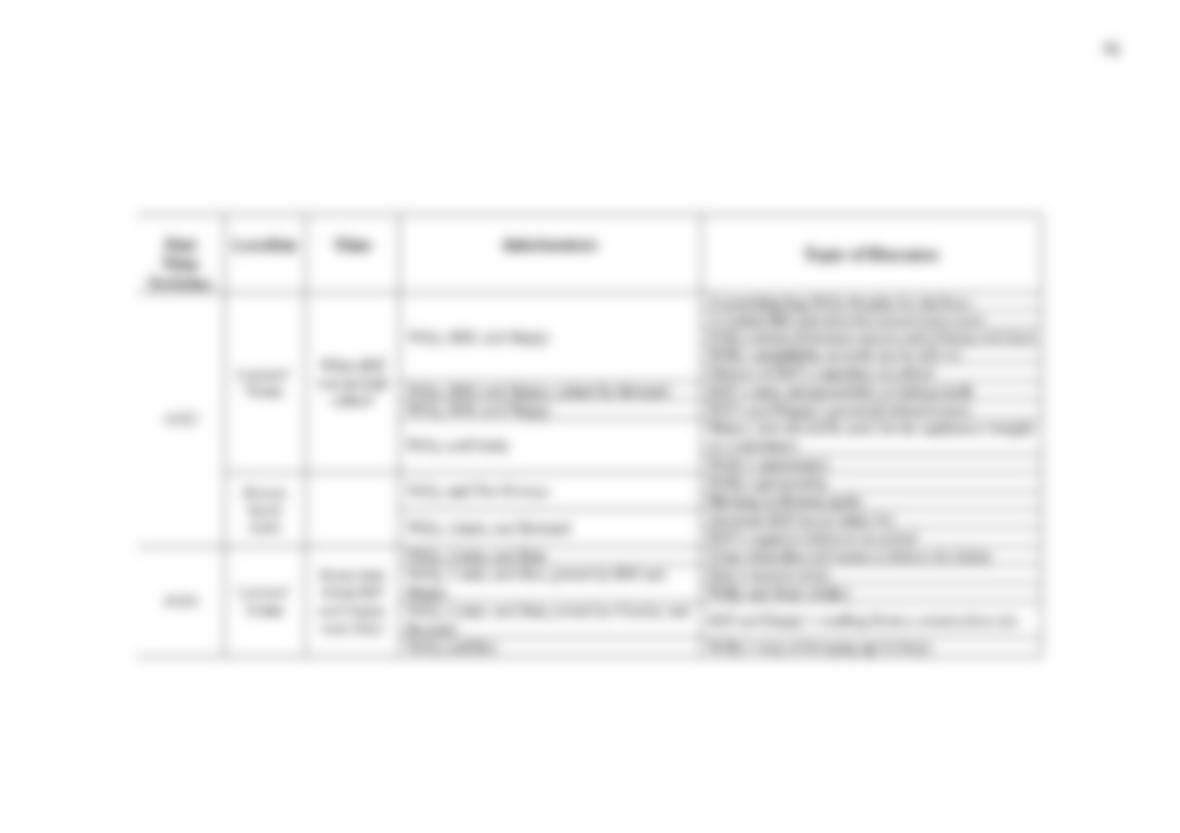
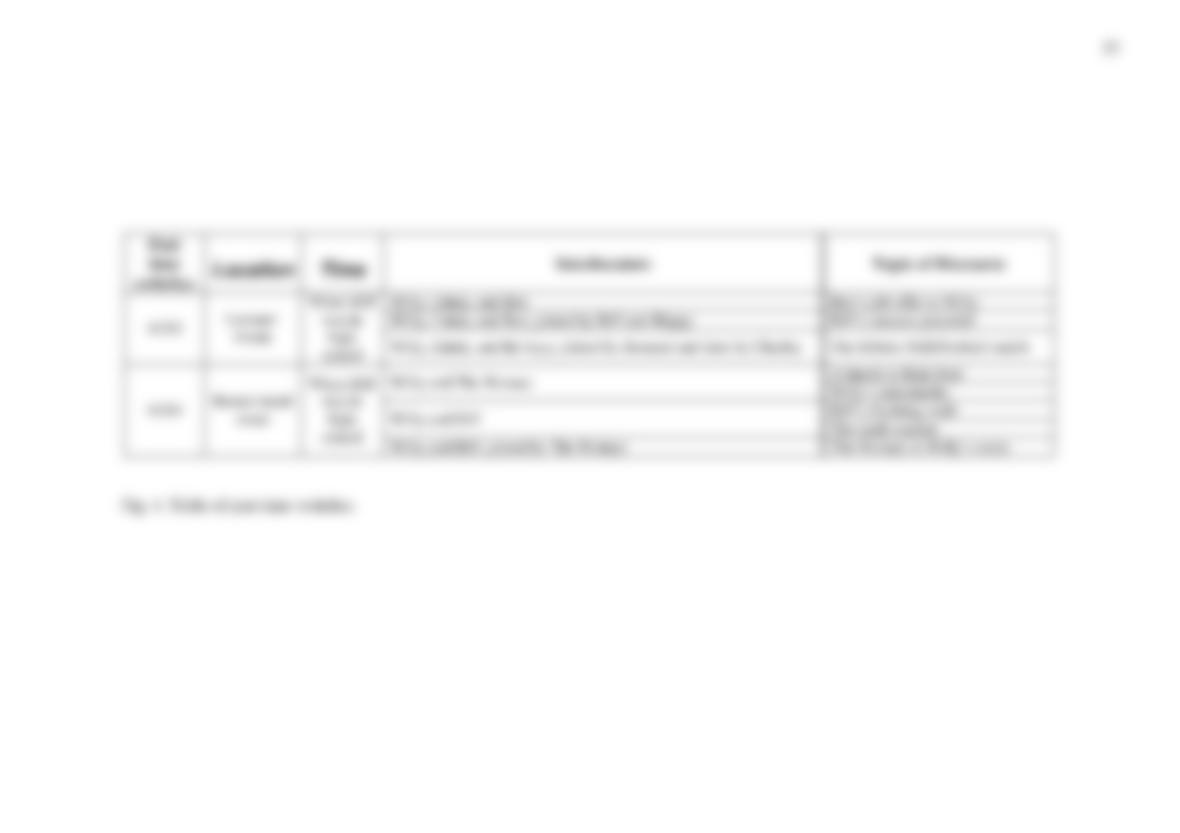
3.2. Table of Past Time Switches 55
3.3. Coherence of the Play’s Plot Structure (Present and Past Events
Together) 58
3.3.1. Light Effects, Music, and Preparatory Stretches of Speech as
Cohesive Elements 58
3.3.2. Past Events and Situations as Coherent Elements 64
3.3.2.1. Willy’s Value-System 65
3.3.2.2. Impact of Willy’s Value-System on Biff and Happy 74
3.3.3. Characters as Coherent Elements 76
3.3.4. Suspense as Coherent Elements 79
3.3.4.1. Reason of Willy and Biff’s Conflict 79
3.3.4.2. Willy’s and Biff’s Visits to Howard and Oliver 86
3.4. Table of Present and Past Events Together Summarizing Chapter
Argument 88
v
CONTENTS
CHAPTER 4: Impact of Willy’s Value-System on Willy
4.1. Self-Defeating Dream of Success 93
4.1.1. Loss of Love and Respect 94
4.1.2. Loss of Peace of Mind 95
4.2. Troublesome Sense of Possession 98
4.3. Troublesome Sense of Achievement 99
4.4. Agonizing Guilt 100
4.5. Oversized Self-Image 102
4.5.1. Denying Facts 102
4.5.2. Claiming Importance and Admiration 103
4.5.3. Admiring Salesmanship 106
4.5.4. Disdaining Manual Work 107
4.6. Reality Vs. Illusion 108
CHAPTER 5: Conclusion
Works Cited 115
vi
Dedication
To my late mother who balanced my life with her affection and love.
May Allah have mercy on her.
vii
Acknowledgements
Praise be to Allah, the Almighty, Who enabled me to finish this thesis successfully.
No words can express my sincere gratitude, appreciation, and respect to my supervisor, Dr.
John Eliezer, Associate Professor, Department of English, Faculty of Arts, Sana’a University.
I am deeply indebted to him for his guidance and help in making this thesis see the light.
I am thankful to all members of the Department of English, Faculty of Arts, Sana’a
University, who taught me in the MA program. Among them, I am sincerely grateful to Dr.
Thakur, the Professor and Chairman of the Department for suggesting the title of the thesis.
I am also thankful to all members of the Department of English, Faculty of Education,
Hodiedah University, who taught me in the BA program. Among them, I am sincerely
grateful to Dr. Balasubramanian, the then Professor and Chairman of the Department, Dr.
Chanda Roy, Dr. C. B. Sinha, Dr. A. K. Sinha, and Mrs Shamim, for their first guidance into
the academic and intellectual realm.
My heart-felt thanks are also due to Dr. Ramakant Sahu whose help at the beginning of my
MA research I will never forget.
I am highly indebted to these dear people for their moral as well as material support that I
could never forget:
• My father
• My sisters and brothers
• My wife
• My cousins: Asma Saif al-Sarory and Fadhl Bajash.
• Mr. Faze’ al-Musalami
• Miss. Yasmeen al-Haimi, Head of the Department of English, Sana’a Community College
• Mr. Zaid Ali Iysa Akeel
I am also obliged to my friends: Dr. Radhwan al-Najar, Hamid Abdul Mughni, Yahya al-
Wadaf, Fahd Ojaili, Abdul Gafoor al-Najar, Khalid al-Qudaimi, Akram Ali Iysa Akeel, and
Nushwan al-Marebi for their unforgettable help.

1 Introduction
1.1. The Signification of the Phrase “Attitudinal Structure”
1.2. Objectives
1.2.1. Broad Objective
1.2.2. Specific Objectives
1.3. Literature Review
1.3.1. Regarding the Structure
1.3.2. Regarding the American Dream
1.3.3. Regarding Willy’s Neglect of his Natural Abilities
1.4. The Concept of ‘Context of Situation’ as used in this Study
1.5. Outline of Study
2
1.1. THE SIGNIFICATION OF THE PHRASE “ATTITUDINAL STRUCTURE”
We first consider the definitions of the two words attitude and structure separately, and
then we interpret their meaning as a phrase.
The word attitude is defined as “settled behaviour, as representing . . . opinion; (also
attitude of mind) settled mode of thinking” (Oxford Talking Dictionary). The Merriam-
Webster Dictionary defines it as “mental position with regard to a fact or state.” Macmillan