Alicia Harley
Negative Stereotypes and the Effects
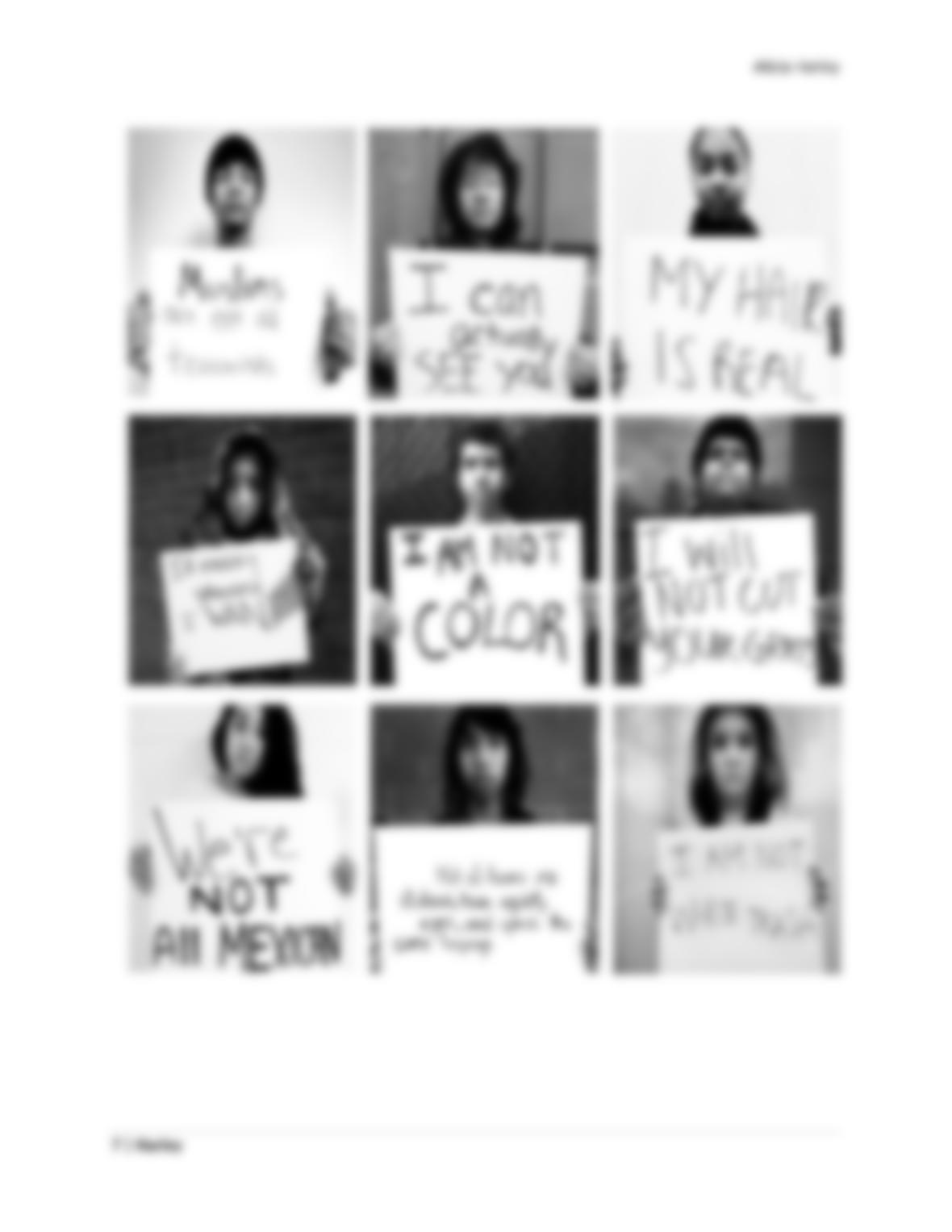
What naturally comes to mind when you hear someone talk about Mexicans? What
about African Americans? Or even Asians? When I asked a few people what first came to mind
the responses I received for the thought on Mexicans were illegal immigrants, Drunks, Gang
members, all work in construction; just to name a few. As for African Americans I received Lazy,
Fake Hair, Fro, Most likely to go to jail, and Poor. For Asians the replies were smart, martial
artist, work in or own a nail shop or Chinese restaurant. All of these replies I received can be
viewed as some type of stereotype. Most stereotypes probably tend to convey a negative
impression. These Negative Stereotypes
Why do we form stereotypes? Earlier on, Tajfel (1971) argued that stereotypes
developed through a natural process of social categorization, which is when people categorize
groups of people based on common traits or characteristics. So just by looking at someone we
form a stereotype based off of what they look like. There is also stereotype treat which Steele
(1997) explains that the stereotypes of prejudice is the cause of spotlight anxiety, an emotional
stress that inhibits a stereotype-targeted individual’s performance. Stereotypes are the reason
we feel under pressure to meet a certain level of expectations.
When I looked up the definition of stereotype the definition I found read “to believe
unfairly that all people or things with a particular characteristic are the same.” (2015 Merriam-
Webster, Incorporated). When I read this I thought that is a simple way to put it .I remember in
chapter 3 of our class book text book that “Hamilton and Harwood (1997) noted that while
cultural differences may be the most visible among people, they may not be the differences
most likely to cause conflict.” Without recognizing the Individuality that may be important to them
we threaten people as members of the culture. Some psychologists argue that it is a “natural”
1 | Harley
Alicia Harley
aspect of human behavior, which can be seen to benefit each group because it helps in the
long-run to identify with one’s own ethnic group and so find protection and promote the safety
and success of the group. The Fact is Stereotyping is a part of our everyday life, we don’t intend
to do it but we do. The affect that stereotypes have on the everyday lives can be surprising.
Stereotype threat prevents perceptual learning