MULTI PHASE
SYSTEMS
Chapter 6

Introduction
•Virtually all commercial processes involve operations in
which material is transferred from one phase (gas, liquid
or solid) into another;
•These multiphase operations include all phase-change
operations on a single species, such as freezing,
melting, evaporation, and condensation, and most
separation and purification processes, which are
designed to separate components of mixtures from
one another;
•Most separations are accomplished by a feeding mixture
of species A and B into a two phase system under
conditions such that most of the A remains in its original
phase and most B transfers into a second phase.

•The two phases then either separate themselves under
the influence of gravity-as when gases and liquid or two
immiscible liquids separate-or are separated with the
aid of a device such as filter or skimmer;
•Here are some examples of multiphase separation
processes;
•Brewing a cup of coffee;
•Removal of sulfur dioxide from a gas stream;
•Recovery of methanol from an aqueous solution;
•Separation of parraffinic and aromatic hydrocarbons;
•Separation of an isomeric mixture;

Gas–Liquid Systems: One Condensable
Components
•Systems containing several components, of which only
one is capable of existing as a liquid at the process
conditions, are common in industrial processes;
•Separation processes that involve such systems include
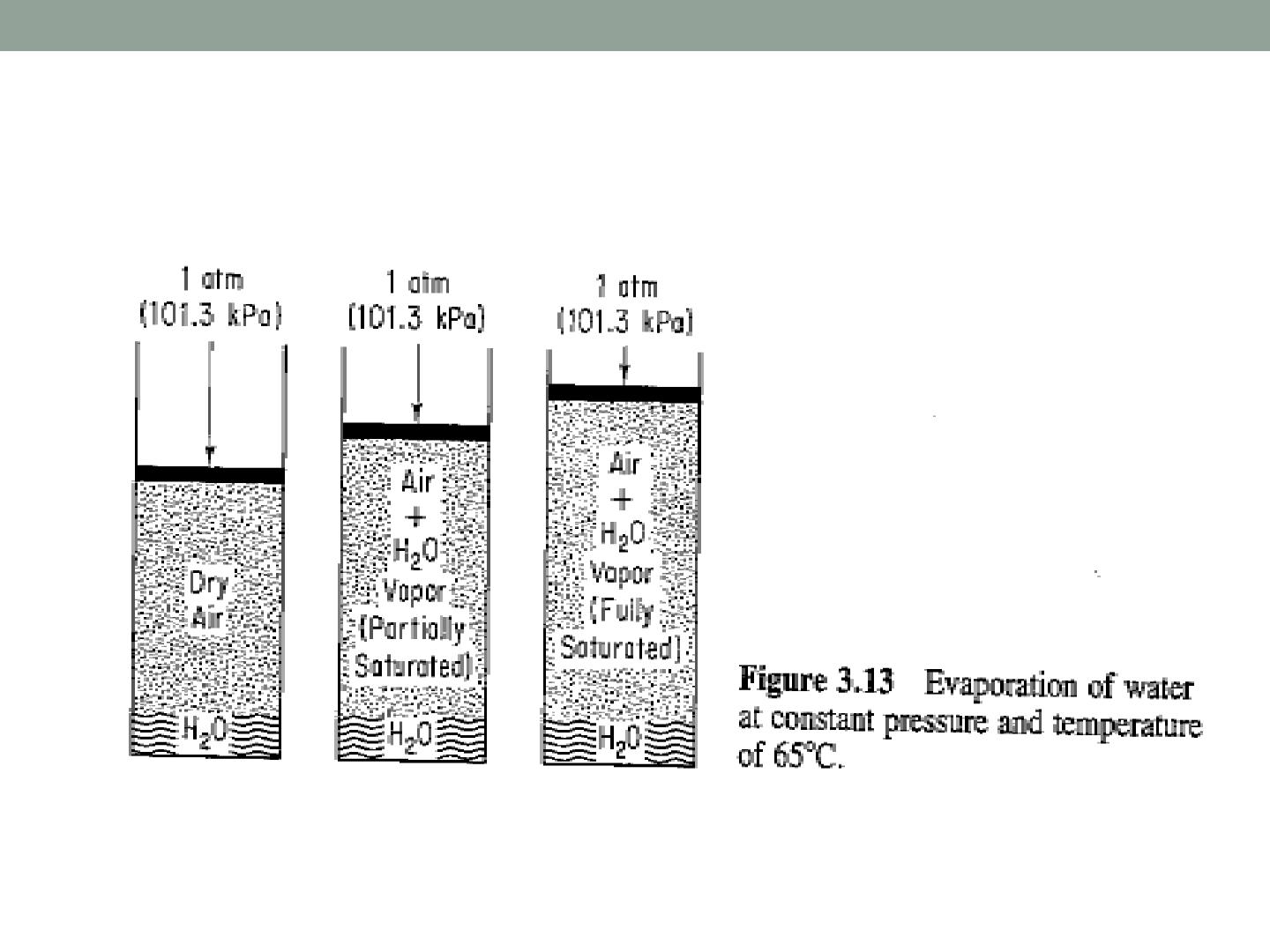
evaporation, drying and humidification-all of which
involve transfer of liquid into the gas phase-and
condensation and dehumidification, which involve
transfer of the condensable species from the gas to the
liquid phase.
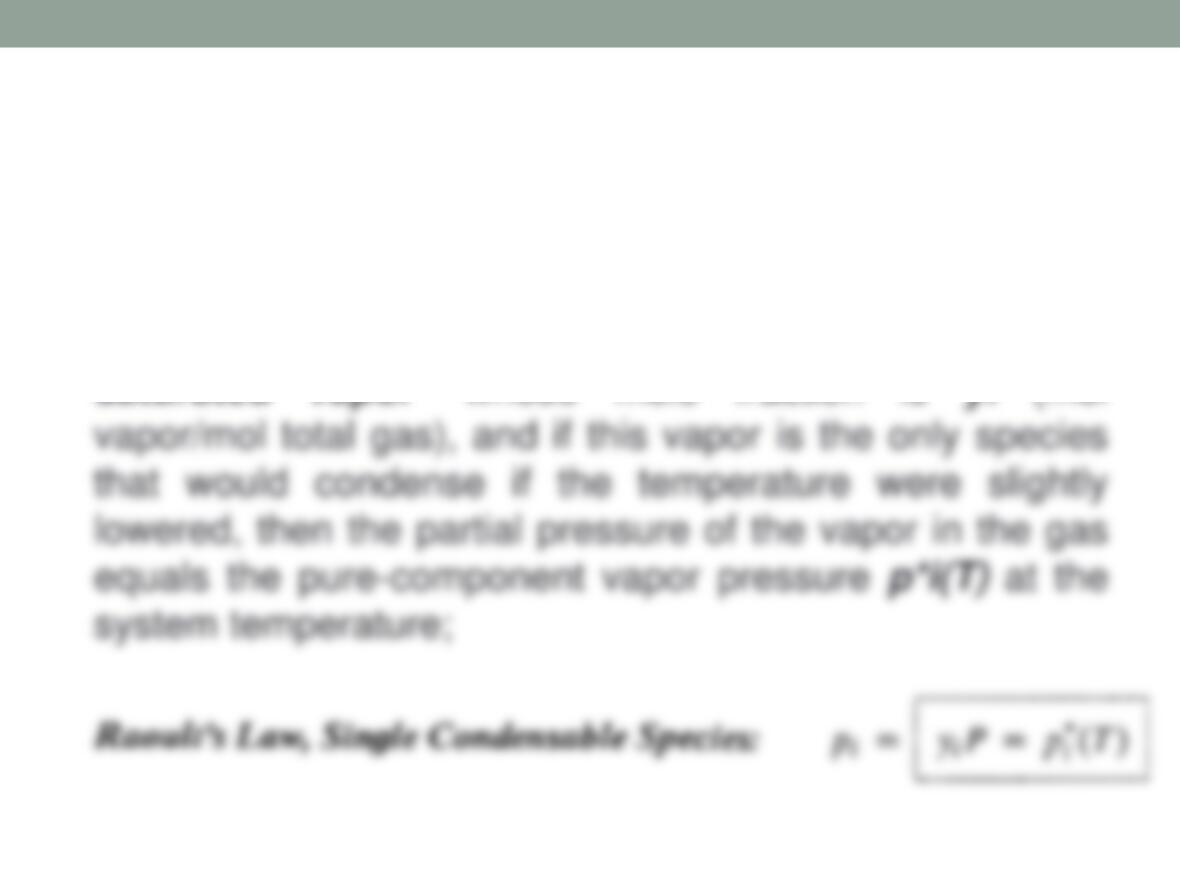
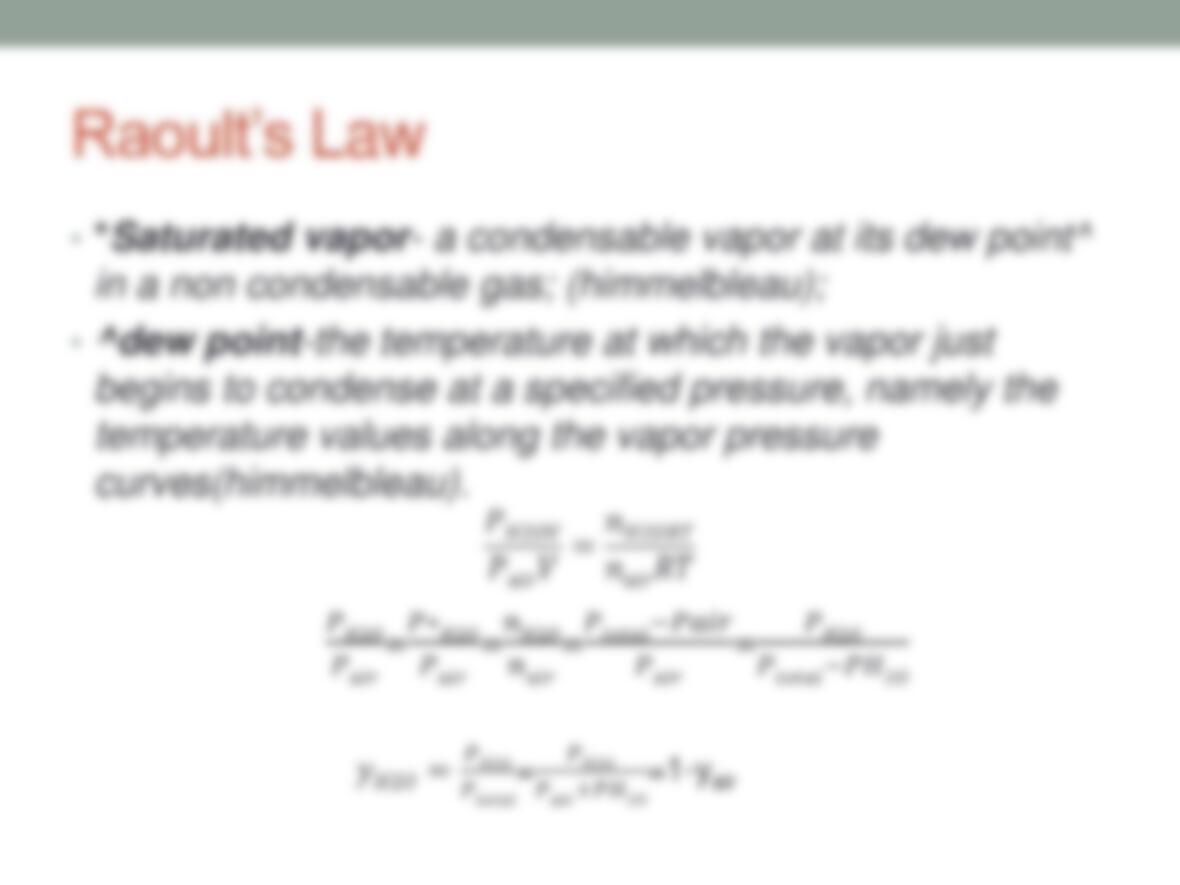
Raoult’s Law (Single Condensable
Species)
•A law that describes the behavior of gas-liquid systems
over a wide range of conditions the desired relationships;
•If agas at temperature Tand pressure Pcontains a