Loan growth continues in Q1-2020 but NIM contracts on rate cuts…
GCC banking sector reported healthy loan growth during Q1-2020 as the economic impact of Covid-19
was felt close to the end of the quarter. The pandemic has led to delayed financial reporting for banks in
Kuwait and Bahrain and as a result this report excludes data for banks in these two countries and
includes analysis of banks in Saudi Arabia, UAE, Qatar and Oman. Banks in these four GCC countries
showed strengthening balance sheets during Q1-2020 with continued assets growth during the quarter.
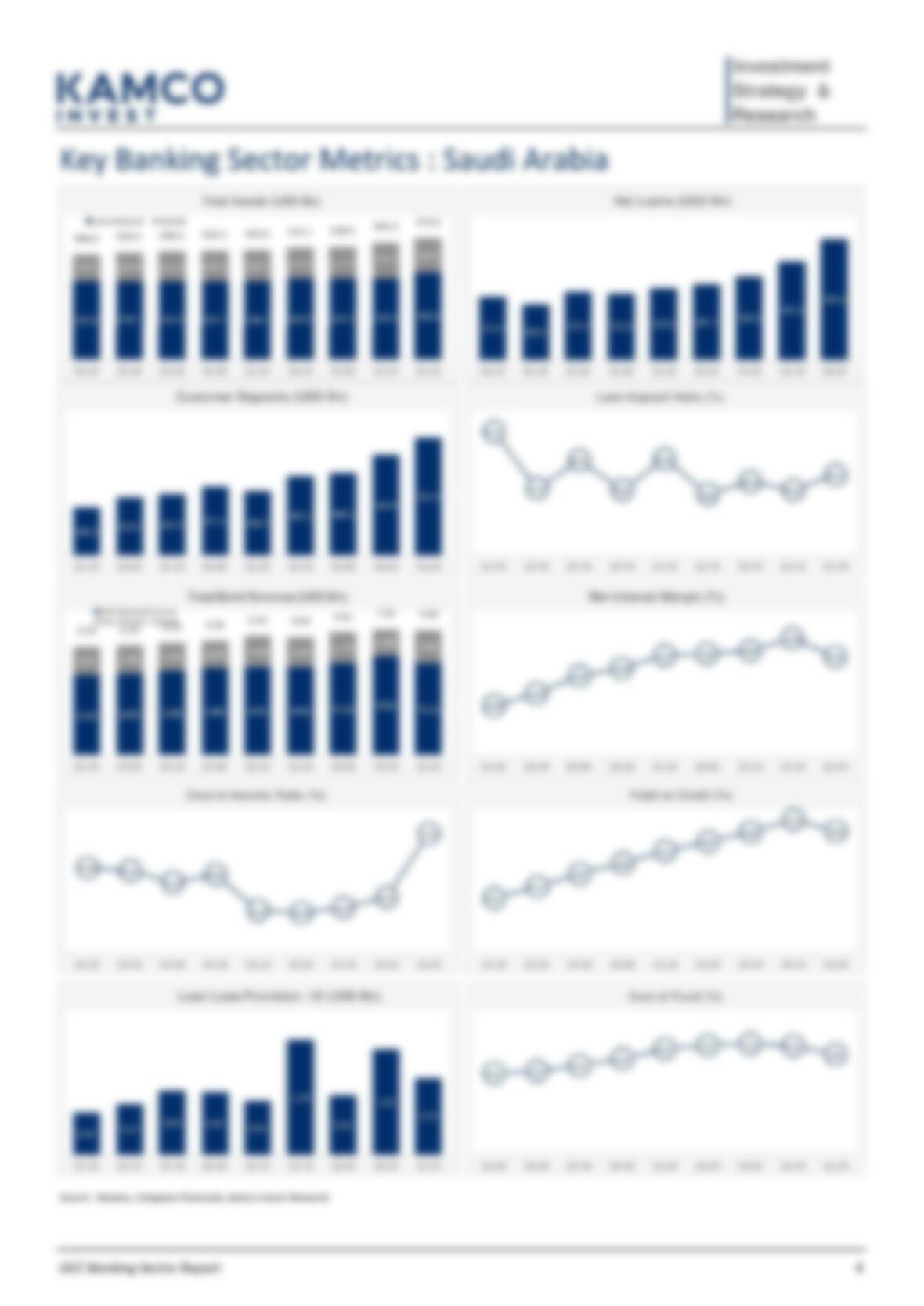
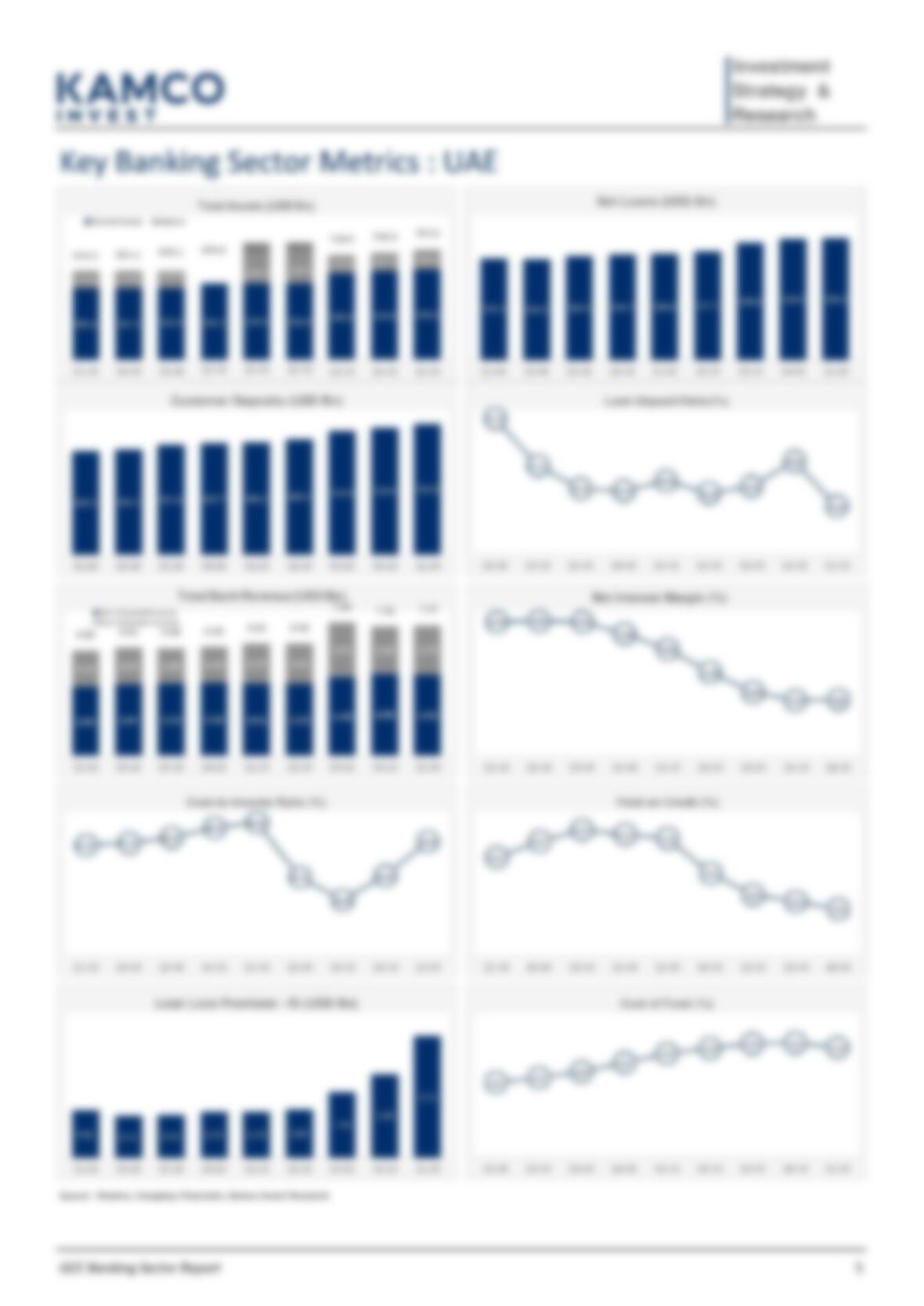
Aggregate total assets in the four countries increased by 2.7% q-o-q to USD 1.97 Trillion during Q1-2020
as compared to USD 1.92 Trillion at the end of Q4-19. As compared to previous year, total assets
increased by 12%. Listed banks in Saudi Arabia reported the biggest sequential increase in assets at 3.5%
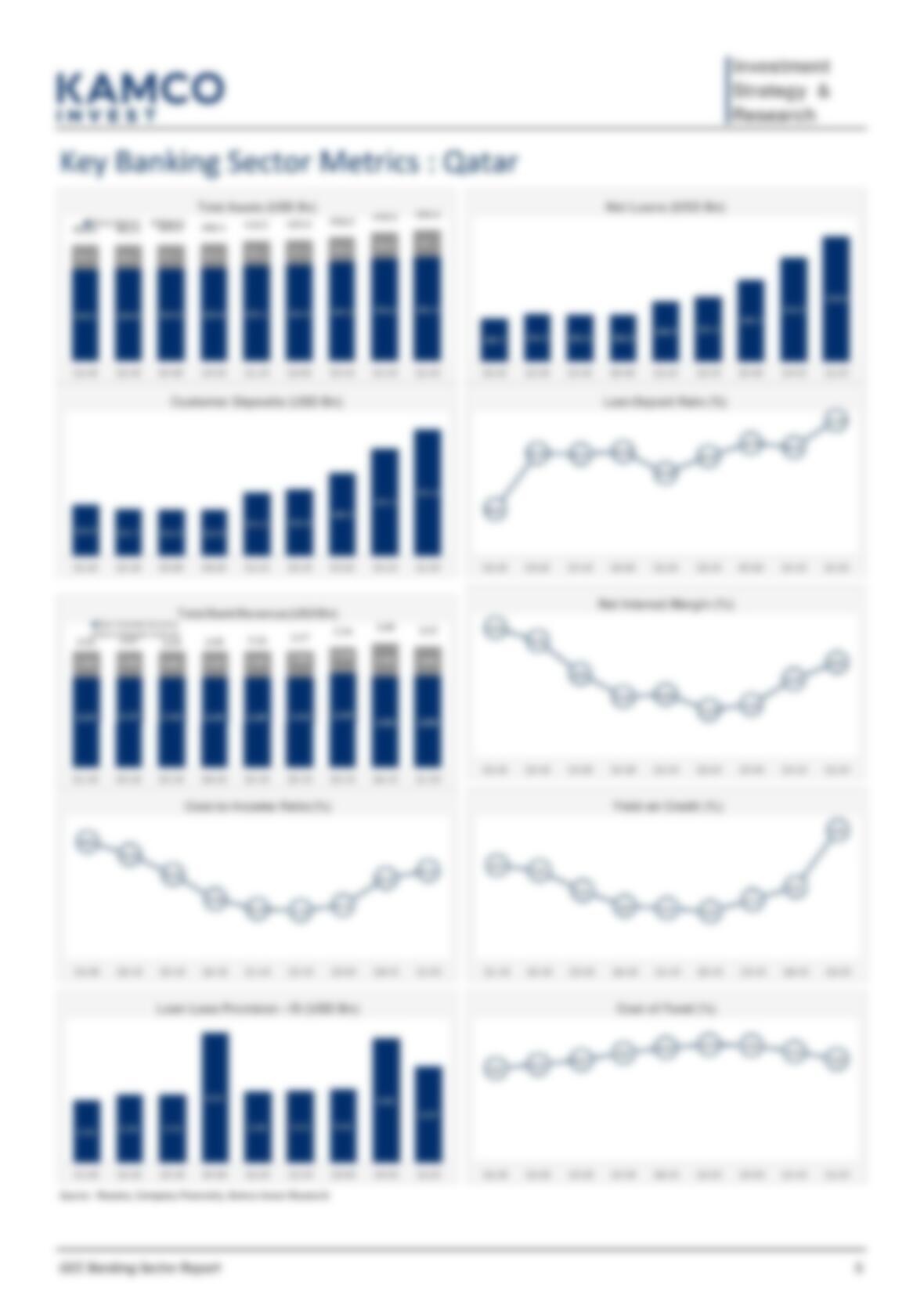
followed by UAE at 2.9% while Qatari banks grew assets by 1.8%.
Asset growth during the quarter was once again supported mainly by Islamic banks that grew assets at
one of the fastest q-o-q growth rates of 4.6% as compared to 2.3% for conventional banks. In terms of y-
o-y growth, however, conventional banks showed a higher growth of 12.3% vs. 11.0% for Islamic banks.
Meanwhile, q-o-q growth in earning assets was the lowest in three-quarter at 2.4% reported at
USD 1.64 Trillion in Q1-2020 as compared to USD 1.60 Trillion during Q4–19.
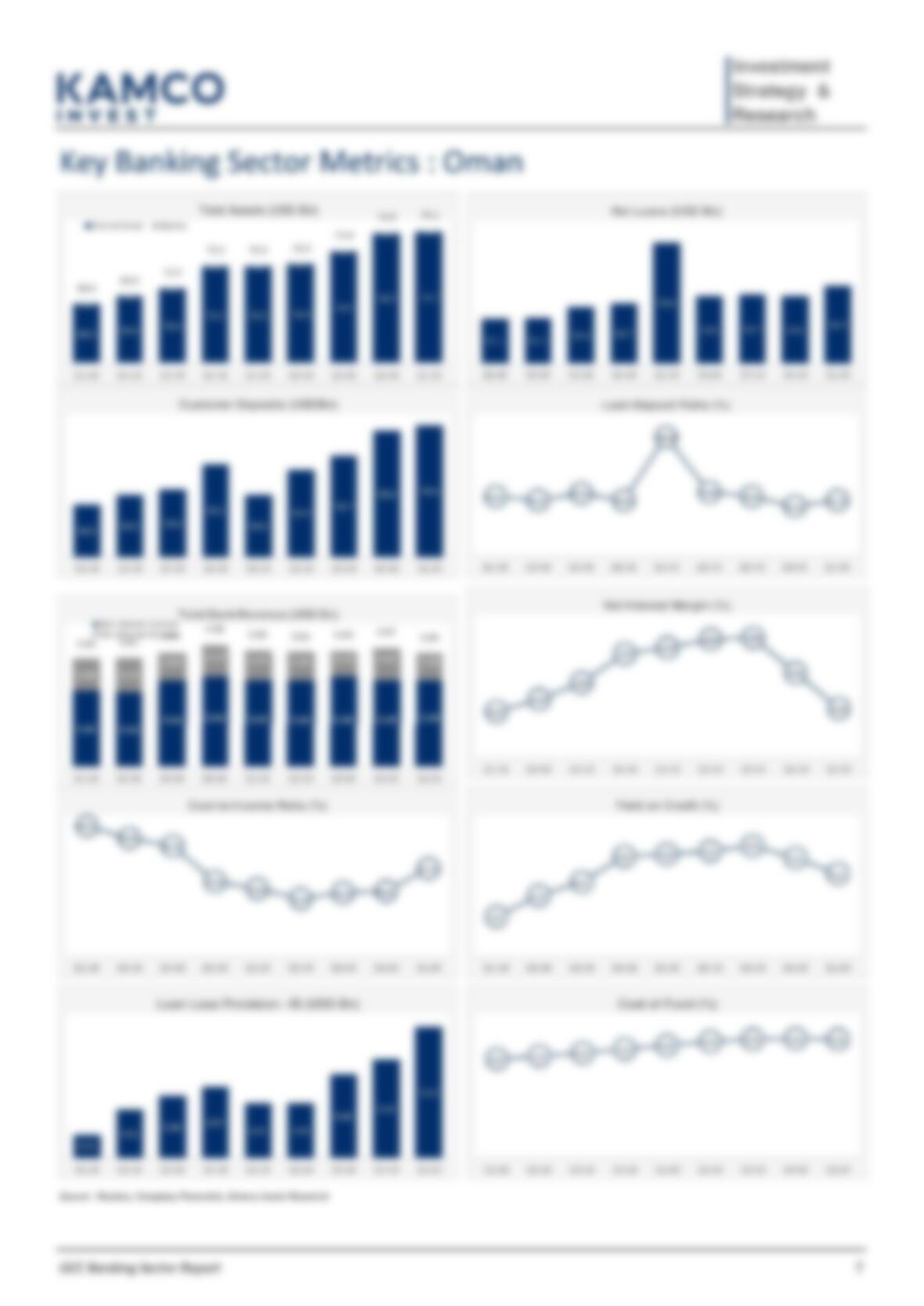
Banks showed continued growth in lending with both gross loans and net loans increasing by 2.8% to
reach USD 1.28 Trillion and 1.22 Trillion in Q1-2020, respectively. Saudi Arabian banks reported the
biggest q-o-q increase in net loans at 4.6% followed by Qatar at 3.4% while UAE banks showed a growth
of 0.8%. Customer deposits also increased by 3.1% q-o-q to reach USD 1.5 Trillion in Q1-2020. Saudi Arabia
once again reported the biggest q-o-q growth in customer deposits at 3.5% followed by UAE at 3.2% and
Qatar at 2.7%. A faster growth in customer deposits during the quarter vs. net loans resulted in a slight
contraction in the loan-to-deposit ratio that reached an aggregate of 82.7% for banks in the four
countries during Q1-2020 as compared to 82.9% during Q4-19.
We believe that GCC banks are in a relatively better position to withstand the near-term impact of Covid
-19 with adequate capital and liquidity buffers. Banks are expected also play a key role in the revival of
the economy from the current crisis and would stand to benefit from an increase in participation from
private sector in the overall economic activity.
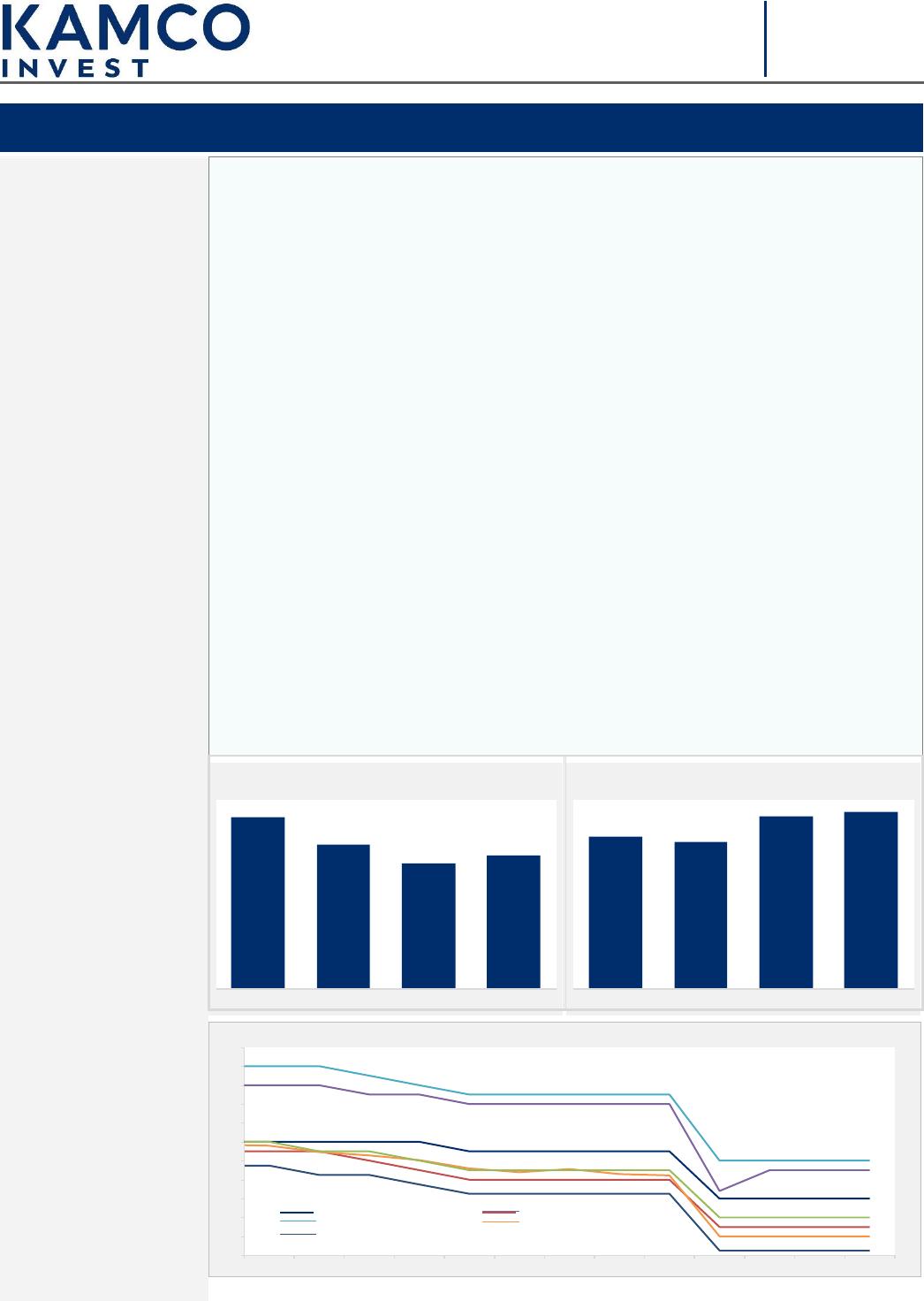
GCC Banking Sector | Net Interest Margin (%)
3.64% 3.06% 2.65% 2.82%
Saudi Arabia UAE Qatar Oman
GCC Banking Sector | Loan-to-deposit Ratio(%)
91.3% 93.7%
80.5% 78.0%
Saudi Arabia UAE Qatar Oman
GCC – Key Central Bank Rates vs. Fed Fund Rate (%)
5.50
5.00
4.50
4.00
3.50
3.00
2.50
2.00
1.50
1.00 Kuwait CB Disc Rate UAE Repo Rate o Rate
KSA Repo Rate Bahrain ON Rep
0.50 Qatar ON Lending Rate CBO Repo Rate
Fed Fund Rate
0.00 Jun-19 Jul-19 Aug-19 Sep-19 Oct-19 Nov-19 Dec-19 Jan-20 Feb-20 Mar-20
Source : Reuters, Bloomberg, Company Financials,
2.50
2.25
1.50
1.00
0.75
0.50
0.13
Apr-20
May-20
15-Jun-20
GCC Banking Sector Report – Q1-2020
June – 2020

Investment
Strategy &
Research
GCC Banking Sector Report
2
Oman
Saudi Arabia
Qatar
Highlights – GCC Banking Sector
This report analyzes financials reported by 37 listed banks in four GCC economies i.e. Saudi Arabia, UAE, Qatar and Oman for Q1-2020.
Banks in Kuwait and Bahrain have deferred financial reporting for Q1-2020 due to the Covid-19 crisis. The individual banking data has been
aggregated to the country level. Some of the key observations from the most recent financial for the GCC Banking Sector includes the
following:
Total bank revenue sees one of the first q-o-q declines during Q1-2020
Total bank revenue for listed banks in the four economies reached USD 18.2 Bn during Q1-2020 as compared to USD 18.3 Bn during Q4-
19, a q-o-q decline 0.5%. This was one of the first declines seen over the last few years that came mainly on the back of USD 80 Mn or 2.3%
drop in revenues reported by Qatari banks followed by declines in revenues reported by Saudi Arabian and Omani banks. These declines
were partially offset by a marginal growth of 0.8% reported by banks in UAE. The decline in revenues came mainly on the back of falling
interest income during the quarter whereas growth in non-interest income partially offset this decline.
Aggregate non-interest income increased by 6.3% during the quarter to reach USD 5.6 Bn during Q1-2020 as compared to USD 5.3 Bn during
Q4-19. Saudi Arabian banks reported the biggest increase in non-interest income during the quarter increasing by 24.3% to reach USD 1.8
Bn followed by 3.7% growth for UAE-listed banks. On the other hand, a decline of 11.3% in non-interest income of Qatari banks and 11.0%
fall in Omani banks partially offset the overall growth.
Net interest income (NII) declined for the first time in eight quarters by 3.3% q-o-q to reach USD 12.6 Bn during Q1-2020 that came as a
result of decline in three out of four GCC countries. Saudi Arabian banks reported a decline of 7.4% in net interest income followed by 1.3%
and 0.9% declines reported by Omani and UAE-listed banks. On the other hand, Qatari banks reported a growth of 1.0%, partially offsetting
the overall decline. The decline in net interest income came as GCC banks lowered interest rates during March-2020 by almost 125 bps in
most cases following US Fed’s rate action that pushed the key rate to near zero percent in order to deal with the slowdown led by Covid–
19 pandemic.
A decline in NII resulted in a marginal decline in net interest margin (NIM) that reached an aggregate of 3.16% for the four countries during
Q1-2020 as compared to 3.18% during the previous quarter. NIM was once again highest in the case of Saudi Arabian banks at 3.64% during
Q1-2020, a slight decline from 3.70% in Q4-19 followed by 3.2% in the case of Omani banks and 3.06% for UAE-listed banks. The decline in
Saudi Arabia’s NIM was primarily due to the fall in NII that was partially offset by slightly better loan–to-deposit ratio of 80.5% during Q1-
2020 as compared to 79.6% at the end of Q4-19.
Net income reached one of the lowest quarterly levels during Q1-2020
Aggregate net income for listed banks in the four countries reached one of the lowest recorded quarterly levels during Q1-2020 after
declining by 1.2% to reach USD 6.9 Bn. The decline was primarily on the back of fall in net incomes for Omani and UAE-based banks that
recorded q-o-q declines of 26.8% and 19.0%, respectively. These declines were partially offset by growth in net income by 14.4% and 8.7%
for Qatari banks and Saudi Arabian banks, respectively, due to decline in quarterly impairments during Q1-20, whereas UAE and Omani
banks reported higher impairments. Overall impairment charge during the quarter stood at USD 3.5 Bn, an increase of 7.9% as compared
to previous quarters USD 3.2 Bn. The impairment charge in Q1-2020 was one of the highest aggregate for the four countries led by an
almost 50% increase in impairments for UAE-listed banks that reached USD 2.1 Bn during the quarter. Within UAE, six out of twelve banks
reported higher impairment charge during Q1-2020 with ADCB reporting the biggest jump in impairment charge that reached USD 505 Mn
vs. USD 182 Mn during Q4
–19. ENBD’s impairment charge was also up by
USD 155 Mn to reach USD 692 Bn in Q1-2020.
Banks brace for a steeper impact of
Covid-19 in the near term
Financial regulators across the GCC announced a
number of policy measures during Q2-2020 to
deal with the Covid-19 crisis that was marred by
lockdowns across the GCC. A significant element
of these efforts involved the banking sector in
Source : Reuters, Kamco Invest Research
Investment
Strategy &
Research
the region that had to postpone installments, waive numerous charges, and support the vital SME sector. Business activity in the region
came to a halt due to the lockdowns that affected project activity and loan offtake and repayments by businesses. To offset the impact,
governments announced numerous monetary and cash-flow measures. Central banks in the region rolled out a number of policy measures
starting with rate cuts to encourage borrowing, efforts that focused on continued lending by banks to support businesses and eased the
burden of loan payments. Regulatory capital requirement for banks were also relaxed to enable higher lending.
Nevertheless, despite the aforementioned measures, the banking sector is expected to see severe impact in the near–term as businesses
would require time to recover. Lockdown opening up plans are being drafted and implemented in a phased manner in the GCC but a full
recovery and a complete end to the lockdowns cannot be predicted as the risk of a second wave could jeopardize the efforts over the last
three months. This was seen in the US recently where the cases have once again started rising and in Beijing that issued a severe risk of a
second wave this week.
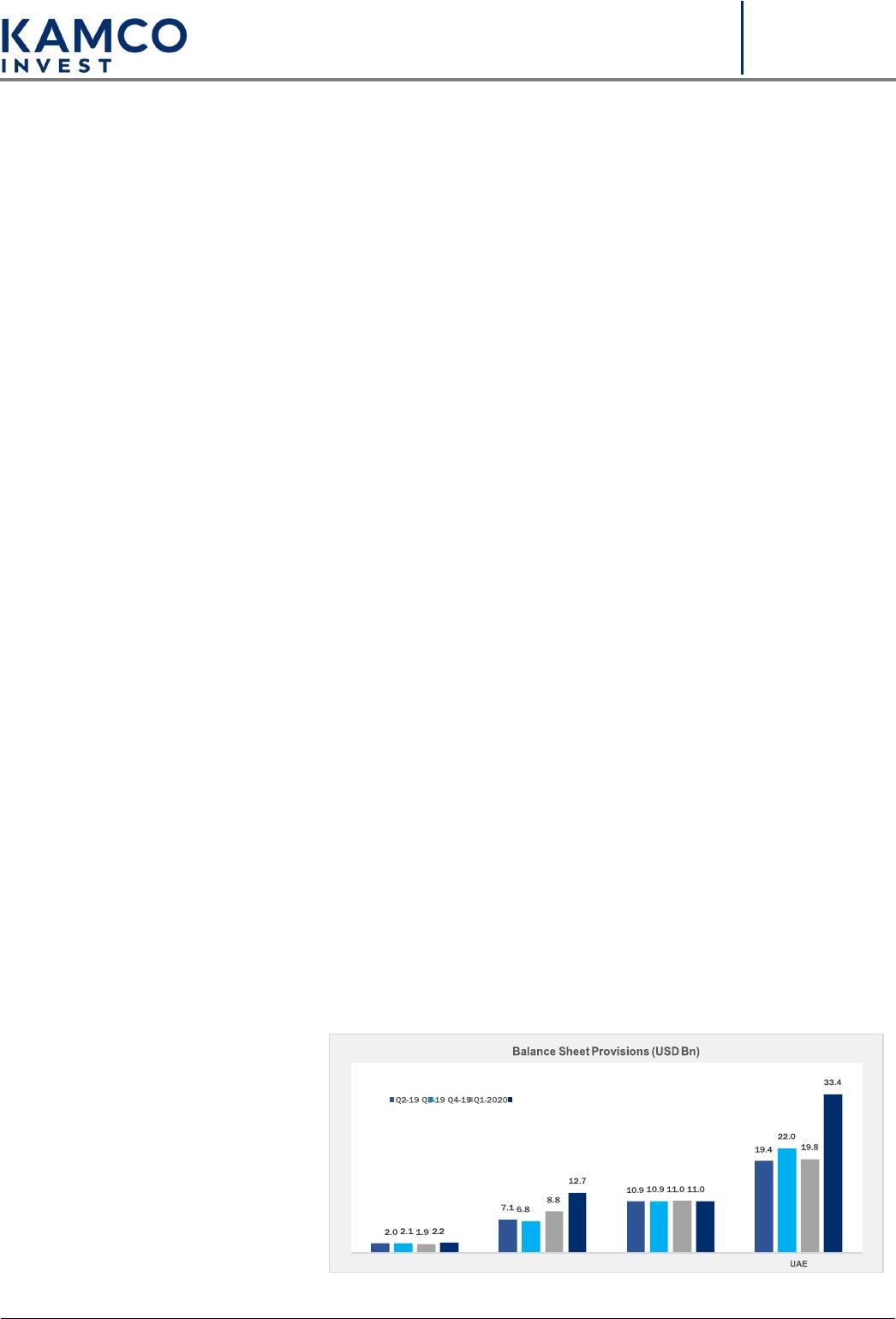
The GCC banking sector has significant exposure to some of the most vulnerable sectors like oil and gas, construction and real estate which
could affect the health of the banking sector in the near-term. Banks globally have set aside additional provisions for the Covid-19 impact;
however, in the GCC, UAE and Qatari banks reported an increase in balance sheet provisions during Q1-2020, whereas Saudi Arabian banks
reported only a marginal growth. We believe that the proportion of bad loans in the GCC loan book is expected to increase in case of a
delayed opening of the economy. That said, adequate liquidity and strong balance sheet should cushion the sector from an economic
slowdown in addition to active support from the regulators.
Islamic vs. conventional banks – which banks can weather the Covid-19 impact