Chapter 1
1-1 Define marketing and outline the steps in the marketing process. (AASCB: Communication)
Marketing is a process by which companies create value for customers and build strong customer relationships
in order to capture value from customers in return.
Outline the five steps in the marketing process
Step 1 – Understand the Marketplace and customer needs and wants.
Step 2 – Develop a Customer-Driven Marketing Strategy.
Step 3 – Construct an integrated marketing program that delivers superior value.
Step 4 – Build profitable Relationship and create Customers delight.
Step 5 – Capture Value from Customers to Create Profits and Customer Equity.
1-2 What is marketing myopia? What are the short- and long-term implications for business in this
situation? (AACSB: Communication; Reflective Thinking)
Marketing myopia is focusing only in existing wants and losing sight of underlying consumer needs.
1-3 Describe the five different competing marketing orientations that a business organization can adopt
to drive its marketing strategy. (AACSB: Communication; Reflective Thinking)
Marketing management orientations
Production concept: consumer will favor products that are available and highly affordable.
Product concept: consumer favor products that offer the most quality, performance, and features focus is on
continuous product improvements.
Selling concept: consumer will not buy enough of the firm’s products unless it undertakes a large scale selling
and promotion effort.
Marketing concept: knowing the needs and wants of the target markets and delivering the desired satisfaction
better than competitors do.
Societal concept: make good marketing decisions by considering: consumers’ wants and long-term interests,
company’s requirements, society’s long-run interests.
1-4 Discuss the concept of customer relationship management. Why is it essential that a business
incorporates this in its operations? (AACSB: Communication; Reflective Thinking)
Customer relationship management (CRM) — the overall process of building and maintaining profitable
customer relationships by delivering superior customer value and satisfaction.
Relationship Building Blocks: customer value and satisfaction
-Customer- perceived value
• The difference between total customer perceived benefits and customer cost
-Customer satisfaction
• The extent to which perceived performance matches a buyer’s expectations
➢ Customer-Engagement Marketing fosters direct and continuous customer involvement in shaping brand
conversations, experiences, and community.
➢ Consumer-Generated Marketing
Brand exchanges created by consumers themselves.
Consumers are playing an increasing role in shaping brand experiences.
➢ Partner relationship management involves working closely with partners in other company departments and
outside the company to jointly bring greater value to customers.
➢ CRM helps businesses build a relationship with their customers that, in turn, creates loyalty and customer
retention. Since customer loyalty and revenue are both qualities that affect a company’s revenue, CRM is a
management strategy that results in increased profits for a business. At its core, a CRM tool creates a simple
user interface for a collection of data that helps businesses recognize and communicate with customers in a
scalable way.
1-5 Why is marketing as important for non-profit organizations as profit-driven ones? (AACSB:
Communication; Reflective Thinking)
Marketing is as important for nonprofit organizations as it is for businesses and uses many of the same
marketing tactics to connect with donors and volunteers. It is also often challenging, as nonprofits must
convince their audience to give money without getting anything concrete in return.
Digital and social media marketing involves using digital marketing tools such as web sites, social media,
mobile ads and apps, online video, e-mails, and blogs that engage consumer anywhere, at any time, via their
digital devices. This is often used for nonprofit organizations.
Critical Thinking Exercises
1-6 Select an FTSE 100 company. How much did the company spend on marketing activities in the most recent
year for which data are available? What percentage of sales does marketing expenditure represent for the
company? Have these expenditures increased or decreased over the past five years? Write a brief report of your
findings. (AACSB: Communication; Analytic Reasoning)
1-7 Some believe that social marketing is primarily effective only for bigger companies with the time and capacity
to manage and update their media content. Choose a local business and evaluate its effectiveness in creating
customer engagement. Is the content up-to-date and relevant? How does it manage its content? (AACSB:
Communication; Use of IT; Reflective Thinking)
1-8 Use the Internet to search for salary information regarding jobs in marketing in your country or region. What is
the national average salary for five different jobs in marketing? How do the averages compare in different
areas of the country? Write a brief report on your findings. (AACSB: Communication; Use of IT; Reflective
Thinking)
Chapter 2
2-1 Define strategic planning and briefly describe the four steps that lead managers and the firm
through the strategic planning process. Discuss the role marketing places in this process.
Steps in strategic planning:
Step 1: Set goals for the company
Set goals or goals that the company wants to achieve in the future. Those goals must be realistic and be
quantified to show exactly what the company wants to achieve. In the strategic planning process, special
objectives are: revenue, profit, market share, reinvestment.
Factors to consider when setting goals include Shareholders’ Wishes, Financial Capabilities and Opportunities.
Step 2. Assess the situation
There are two areas to assess:
Assessing the business environment: Research the business environment to determine which factors in the
current environment are at risk or an opportunity for the company’s goals and strategies. Assessment of the
business environment includes a number of factors such as economy, political events, technology, market
pressure, relations and society.
Internal resource assessment: Fully analyzing the strengths and weaknesses of the company in the following
areas: Management, Marketing, finance, production activities, research and development.
Step 3: Develop a strategy
After the evaluation step is completed, the planner will move to the selection stage. In order to make a choice,
it is necessary to consider internal forces as well as objective variables. The usual choice is clear from all
relevant information in the evaluation part of the planning process. However, in order to make a choice, each
project must be considered in terms of cost, using scarce resources, time – and relative affordability.
Step 4: Prepare and implement a strategic plan
Prepare and implement a strategic plan that includes two different but interrelated processes:
Organizing stage: is the implementation process including: organizing people and resources to strengthen
choices.
Policy phase: is the development of functional policies to consolidate, in more detail the selected strategy.
Step 5: Review and control the plan
At this stage of the business strategy planning process, senior managers determine whether their chosen
strategy in the implementation model is consistent with the business goals. This is a process of controlling cost
estimates and management, but adding to the scale.
2-2 Describe how a company’s mission statement and objectives affect the way management plans its
business portfolio. (AACSB: Communication; Reflective Thinking)
How to create a vision statement
Creating a vision statement is an important first step in the strategic governance process. The steps to writing
an effective statement are detailed below.
Step 1. Bring together a group of managers, employees and shareholders
Vision is a statement that must be understood by all employees at all levels. As many people as possible should
participate in this process as participation leads to a stronger commitment to the company’s vision. After
choosing which people will be involved, you should also briefly tell them about the organization’s vision and
ask people to take that as a background.
Step 2. Ask everyone to write their own vision version
The next step is to ask everyone to write their own version of the statement and send it to the responsible team.
After receiving the report, the group will incorporate the draft views among all submissions. This is also a
great opportunity to resolve any conflicting views about the company’s ultimate goal.
Step 3. Revise the statement and present the final version
The draft statement should be given to the members at the last revision. Upon receipt of a response, the final
version of the vision statement should be presented to all employees.
How to make a mission statement
Creating a mission statement is an important first step in clearly identifying your business reason. Hard to get it
right. The steps and instructions below can help you write an effective mission statement.
Step 1. Gather a group of managers, employees and shareholders
The mission is a statement that must be understood by staff at all levels. Gathering more people will allow you
to learn how each of them sees an organization and its core purpose. In addition, employees will support the
mission statement more if they participate in the process of creating it.
Step 2. Answer questions for an effective mission statement
A comprehensive mission statement should include all 9 components (mentioned above). Only then can it
benefit a company. At this stage, try to answer all your questions honestly and identify your customers,
markets, values, etc. It may take a lot of time but it is worth it.
Step 3. Find the best combination
Collect answers from people and try to incorporate a mission statement from them. In this process, you can be
sure that everyone understands the reason for the company’s operation and there are no conflicting views.
Every mission statement must be communicated to the organization’s stakeholders to have a positive impact. It
must be continually revised and adapted to meet any changing situation.
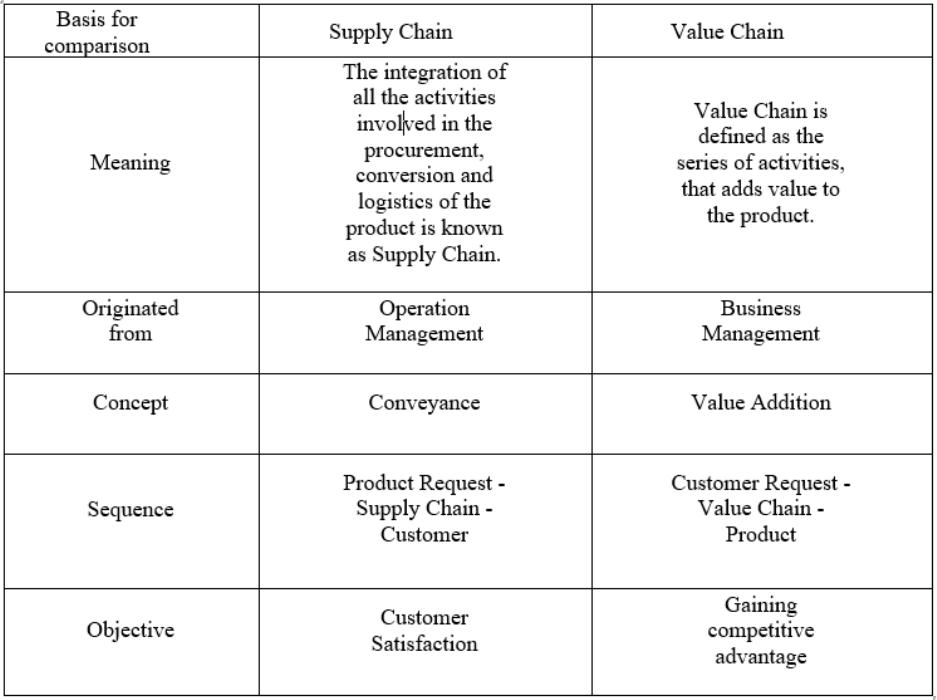
2-3 Describe the differences between a value chain and a value delivery network.
(AACSB: Communication; Reflective Thinking)
2-4 Discuss how a new brand manufacturer would go about defining their market segments and then
begin to target them. (AACSB: Communication; Reflective Thinking)
Market segmentation research has the power to help identify the target consumers an organization should
prioritize and target. The first important thing is to identify the target market, trends and segment scope. Then
build a market model, it is important to identify the trends of consumers in your market as well as how to apply
them to your own market model. The transactions made can provide a wealth of information about consumers
and it is important that this information is used to create a huge advantage in terms of consumer understanding
for your business. This also includes definitions of products or services. By identifying the characteristics and
nature of a purchase as well as the decisions made at the time of purchase, businesses can more accurately
assess the characteristics and needs of consumers.
Businesses can observe and test consumers to find the core factors driving their consumerism. After selecting
compelling micro segments, you need to think about the key distinguishing characteristics for these segments.
What needs should be met? The question must be asked to select the right segment when the customers’ needs
are reflected through their buying decision criteria.Product features must be relevant to the consumer. Once
you have analyzed and understood the needs and benefits of consumers, businesses can create the value that
consumers want, thereby setting appropriate prices and associating values with specific characteristics. charged
for the product. By assigning values with key properties to specific segments, you can more easily identify,
calculate needs, prices and consumer benefits. Therefore, your market segmentation analysis will also become
more accurate. After analyzing and comparing the appropriate markets, your goals have identified the
appropriate segments to target.
Choosing a target is the process that follows the segment step. This is the process of helping businesses
actually identify potential markets and plan for advertising and marketing strategies to attract targeted
customers in this segment. Non-fixed targeting methods that change over time. The traditional methods of
advertising through print and other media facilities have created the opportunity for the appearance of social
media, which leads to a greater focus on “connecting to the site”. Targeting on consumer behaviour is one of
the results of this change. Businesses gradually switched to a focus on online advertising optimization and data
collection to bring the message to potential segments. This process is based on the collection of “cookies” by
users-small pieces of information collected from the consumer’s browser and sold to businesses that need to
use identify potential segments.
The final stage in the segment is brand positioning. This focuses on how customers perceive your product or