NATIONAL OPEN UNIVERSITY OF NIGERIA
SCHOOL OF SCIENCE AND TECHNOLOGY
COURSE CODE: CIT 364
COURSE TITLE: MANAGEMENT INFORMATION
SYSTEMS

CIT 364 COURSE GUIDE
ii
CIT 364
MANAGEMENT INFORMATION SYSTEM
Course Team Dr. B.C.E Mbam (Course Developer/Writer) –
EBSU
Dr. Juliana Ndunagu (Programme Leader) – NOUN
COURSE
GUIDE

CIT 364 COURSE GUIDE
iii
NATIONAL OPEN UNIVERSITY OF NIGERIA
National Open University of Nigeria
Headquarters
14/16 Ahmadu Bello Way
Victoria Island, Lagos
Abuja Office
5 Dar es Salaam Street
Off Aminu Kano Crescent
Wuse II, Abuja
e-mail: centralinfo@noun.edu.ng
URL: www.noun.edu.ng
Published by
National Open University of Nigeria
Reprinted 2014
ISBN: 978-058-311-4
All Rights Reserved
CIT 364 COURSE GUIDE
iv
CONTENTS PAGE
Introduction……………………………………………….………………... iv
What you will Learn in this Course………………………. iv
Course Aim……………………………………………….. iv
Course Objectives………………………………………… iv
Working through this Course…………………………….. v
Course Materials………………………………………….. v
Study Units……………………………………………….. vi
Textbooks and References………………………………… vi
Assignment File…………………………………………… ix
Presentation Schedule…………………………………….. ix
Assessment………………………………………………… ix
Tutor-Marked Assignments………………………………. ix
Final Examination and Grading…………………………... ix
Course Marking Scheme………………………………….. x
Course Overview…………………………………………. x
How to Get the Most from This Course………………….. xi
Facilitators/Tutors and Tutorials…………………………. xii
CIT 364 MODULE 3
43
INTRODUCTION
CIT 364: Management Information System is a 2 – credit unit course for
students pursuing Bachelor of Science degree in Computer Science and
other related disciplines.
The course is divided into 3 modules and 10 study units. It discusses the
different stages involved in developing good and functional information
technology, different ways of information representations and
information storage media.
This course guide therefore gives you an overview of what the course:
CIT 364 is all about, the textbooks and other materials to be referenced,
what you expect to know in each unit, and how to work through the
course material.
WHAT YOU WILL LEARN IN THIS COURSE
The overall aim of this course is to introduce you to basic concepts of
management information system to enable you understand the basic
elements of management involves in every organisation. This course
highlights and enumerates modern technologies that transform the
society into the global village as far as information dissemination is
concerned. You will be put through the definitions of common terms in
relation to management information system, the characteristics of
information, internet and its usage, the different management levels, and
lastly, numerous ways of information representation and storage media.
COURSE AIM
This course aims at introducing you to the basic concepts and features of
management information system. It is believed that the knowledge will
boost your capacity and enable you to perform effectively in your
career.
COURSE OBJECTIVES
It is important to note that each unit has specific objectives. You should
study them carefully before proceeding to subsequent units. Therefore, it
may be useful to refer to these objectives in the course of your study of
the unit to assess your progress. You should always look at the unit
objectives after completing a unit. In this way, you can be sure that you
have done what is required of you at the end of the unit.
However, below are overall objectives of this course. On completing
this course, you should be able to:
CIT 364 MANAGEMENT INFORMATION SYSTEM
44
define what Management Information System is all about
explain the meaning of management
define the meaning of information
list characteristics of information
list the advantages of MIS
enumerate the values of information
state the goals of MIS
pinpoint problems of MIS
discuss the levels of management
discuss types of MIS
give an overview of Information Technology
state reasons for Information Technology
state the technologies for Information System
state the ethics of Information Technology
state the application of Information Technology
discuss the origin of the Internet
list the requirements for Internet connectivity
explain the information format on the Internet
list the limitation of the Internet
state different ways of information representation in computer
system
discuss storage media in computer.
WORKING THROUGH THIS COURSE
To complete this course, you are required to study all the units, the
recommended textbooks, and other relevant materials. Each unit
contains some self-assessment exercises and tutor–marked assignments,
and at some point in this course, you are required to submit the tutor–
marked assignments. There is also a final examination at the end of this
course. Stated below are the components of this course and what you
have to do.
COURSE MATERIALS
The major components of the course are:
1. Course Guide
2. Study Units
3. Textbooks and References
4. Assignment File
5. Presentation Schedule
CIT 364 MODULE 3
45
STUDY UNITS
There are 10 study units and 3 modules in this course. They are:
Module 1 Management Information Fundamentals
Unit 1 Introduction to MIS
Unit 2 Types of MIS
Unit 3 Levels of Management
Module 2 Information Technology
Unit 1 Overview of Information Technology
Unit 2 Technologies for Information System
Unit 3 Internet
Unit 4 Modes of Information Communication
Module 3 Information Representation, Storage and Security
Unit 1 Information Representation
Unit 2 Information Storage Media
Unit 3 Information Security
TEXTBOOKS AND REFERENCES
These texts will be of enormous benefit to you in this course:
Agbasi, K.C. (1993). Computer Appreciation: An Individual Computer
to Systems . Enugu: ACENA Publishers.
Ahituv, N.; Neumann, S. & Riley, H. N. (1994). Principles of
Information Systems for Management. (4th ed.). Dubuque, IA:
Wm. C. Brown Communications.
Alo, U. R..; Ugah J. O. & Igwe, J. S. (2009). Computer Application and
Information Technology. Abakaliki: WilyRose and Appleseed
Publishing Co. Ebonyi State, Nigeria.
Ashwin, D. (2008). Characteristics of Management Information
Services. Online @ http://www.blog.maia_intelligence.com,
visited on 24th September, 2010.
Awad, E. M. & Gotterer, M. H. (1992). Database Management.
Danvers, MA: Boyd & Fraser.

CIT 364 MANAGEMENT INFORMATION SYSTEM
46
Banerjee, U. K. & Sachdeva, R. K. (1995). Management Information
System: A New Frame Work. New Delhi: Vikas Publishing
House.
Christensen, C. M. (1997). The Innovator’s Dilemma. New York: Harper
Business. p. 19. ISBN 0-06-662069-4.
Chandler, D. (September 26, 1988). “Start up Ships 2.5-Inch Hard Disk
Aimed for Portables, Laptops”. PC Week: 6.
Davis, G. B. & Olson, M. H. (1985). Management Information Systems:
Conceptual Foundations, Structure, and Development. New
York: McGraw-Hill.
Imboden, N. (1980). Managing Information for Rural Development
Projects. Paris: Organisation for Economic Co-operation and
Development.
Inyiama, H. C. (2000). Understanding Computers. 15A Bank Avenue,
Aguowa, Trans-Ekulu, Enugu, Nigeria: The Dynamic Informer.
Inyiama H. C. (2000). Computer Applications and Information
Technology. Enugu: Dynamic Informer.
Kotler, P. & Keller, K. L. (2006). Marketing Management. (12th ed.).
Pearson Education.
Keen, P. G. W. & Morton, M. S. S. (1978). Decision Support Systems.
Reading, MA: Addison-Wesley.
Lee, A. S. (2001). “Editor‘s Comments”. MIS Quarterly 25 (1): iii-vii.
Livinus, C. N. (2003). Internet Literacy. Enugu, Nigeria: Horizon
Publications.
Lucas, H. C. Jr. (1990). Information Systems Concepts for Management.
New York: McGraw-Hill.
Martin, J. (1990). Telecommunications and the Computer. (3rd ed.).
Englewood Cliffs, NJ: Prentice-Hall.
Mason, R. D. & Swanson, B. E. (1981). Measurements for Management
Decision. Reading, MA: Addison-Wesley.

CIT 364 MODULE 3
47
Mbam, B. C. E. (2002). Information Technology and Management
Information System. Enugu, Nigeria: Our Saviour Press Ltd.
Mbam, B. C. E. (2003). Computer Applications. Abakaliki, Nigeria:
Green Light Computers.
McLeod, R., Jr. (1995). Management Information Systems: A Study of
Computer-Based Information Systems. (6th ed.). New Delhi:
Prentice Hall of India.
Nwafor, C. E. (2005). Computer and Internet Literacy. Enugu: Joans
Publishers.
Nwafor, C. E. (2006). Computer and Information Technology Literacy.
Dynamic Informer.
O‘Brien, J. (1999). Management Information Systems: Managing
Information Technology in the Internetworked Enterprise.
Boston: Irwin McGraw–Hill. ISBN 0071123733.
Osmond, V. (2009). Characteristics of a good Management Information
System. Online @ http://www.ehow.com, visited on 22nd
September, 2010.
Ramesh, A.; Singh, Y. & Sachdeva R. (2008). Establishing a
Management Information System. Online @ http://www.fao.org,
visited on 22nd September, 2010.
Richard, W. & Teffrey M. (1986). Using Computer in an Information
Age. Delmar Publisher.
Schmid, Patrick & Achim Roos (2010-05-08). “3.5” Vs. 2.5″ SAS
HDDs: In Storage, Size Matters”. Tomshardware.com.
http://www.tomshardware.co.uk/enterprise-storage–sas–
hdd,review-31891.html. Retrieved 2010–06-25.
Terry, L. (1997). Management Information Systems. Hampshire, USA:
Ashford Colour Press, Gosport.
Williams, K. B. (1999). Using Information Technology. United States:
Irwin/McGraw-Hill.
CIT 364 MANAGEMENT INFORMATION SYSTEM
48
ASSIGNMENT FILE
The assignment file will be given to you in due course. In this file, you
will find all the details of the work you must submit to your tutor for
marking. The marks you obtain for these assignments will count towards
the final mark for the course. Altogether, there are 15 tutor-marked
assignments for this course.
PRESENTATION SCHEDULE
The presentation schedule included in this course guide provides you
with important dates for completion of each tutor-marked assignment.
You should therefore endeavour to meet the deadlines.
ASSESSMENT
There are two aspects to the assessment of this course. First, there are
tutor-marked assignments; and second, the written examination.
Therefore, you are expected to take note of the facts, information and
problem solving gathered during the course. The tutor-marked
assignments must be submitted to your tutor for formal assessment, in
accordance with the deadline given. The work submitted will count for
30% of your total course mark. At the end of the course, you will need
to sit for a final written examination. This examination will account for
70% of your total score.
TUTOR-MARKED ASSIGNMENT
There are 10 tutor-marked assignments (TMAs) in this course. You need
to submit all the TMAs. The best 3 will therefore be counted. When you
have completed each assignment, send them to your tutor as soon as
possible and ensure that it gets to your tutor on or before the stipulated
deadline. If for any reason you cannot complete your assignment on
time, contact your tutor before the assignment is due to discuss the
possibility of extension. Extension will not be granted after the deadline,
unless on extraordinary cases.
FINAL EXAMINATION AND GRADING
The final examination for CIT364 will last for a period of 2 hours and
have a value of 70% of the total course grade. The examination will
consist of questions which reflect the self-assessment exercise and tutor-
marked assignments that you have previously encountered. Furthermore,
CIT 364 MODULE 3
49
all areas of the course will be examined. It would be better to use the
time between finishing the last unit and sitting for the examination to
revise the entire course. You might find it useful to review your TMAs
and comments on them before the examination. The final examination
covers information from all parts of the course.
COURSE MARKING SCHEME
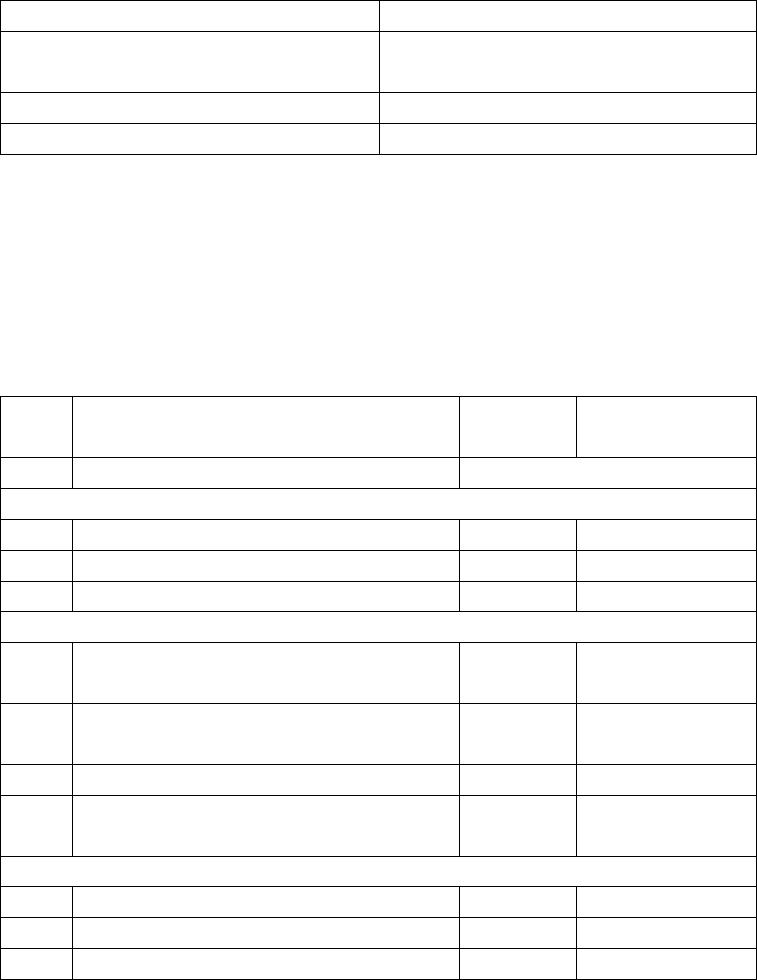
The following table shows the course marking scheme.
Table 1: Course Marking Scheme
Assessment
Marks
Assignments
Four assignments, 30% for the
best 3 Total = 10% x 3 = 30%
Final Examination
70% of overall course marks
Total
100% of Course Marks
COURSE OVERVIEW
This table indicates the units, the number of weeks required to complete
them and the assignments.
Table 2: Course Organiser
Unit
Title of the work
Weekly
Activity
Assessment
(End of Unit)
Course Guide
Module 1 Management Information System Fundamentals
1
Introduction
Week 1
Assessment 1
2
Types of MIS
Week 2
Assessment 2
3
Levels of Management
Week3
Assessment 3
Module 2 Information Technology
1
Overview of Information
Technology
Week 4
Assessment 4
2
Technologies for Information
System
Week 5
Assessment 5
3
Internet
Week 6
Assessment 6
4
Modes Information
Communication
Week 7
Assessment 7
Module 3 Information Representation, Storage and Security
1
Information Representation
Week 8
Assessment 8
2
Information Storage
Week 9
Assessment 9
3
Information Security
Week 10
Assessment 10

CIT 364 MANAGEMENT INFORMATION SYSTEM