a) Increasing infrastructure development and industrialization has accelerated the iron
ore demand. The market is competitive with many iron ore mining companies in more
than 50 countries producing and selling homogeneous iron ores. The large number of
buyers and sellers are assumed to be price takers because their actions have negligible
impact on market. Therefore, the industry can be considered as perfect competitive
market.
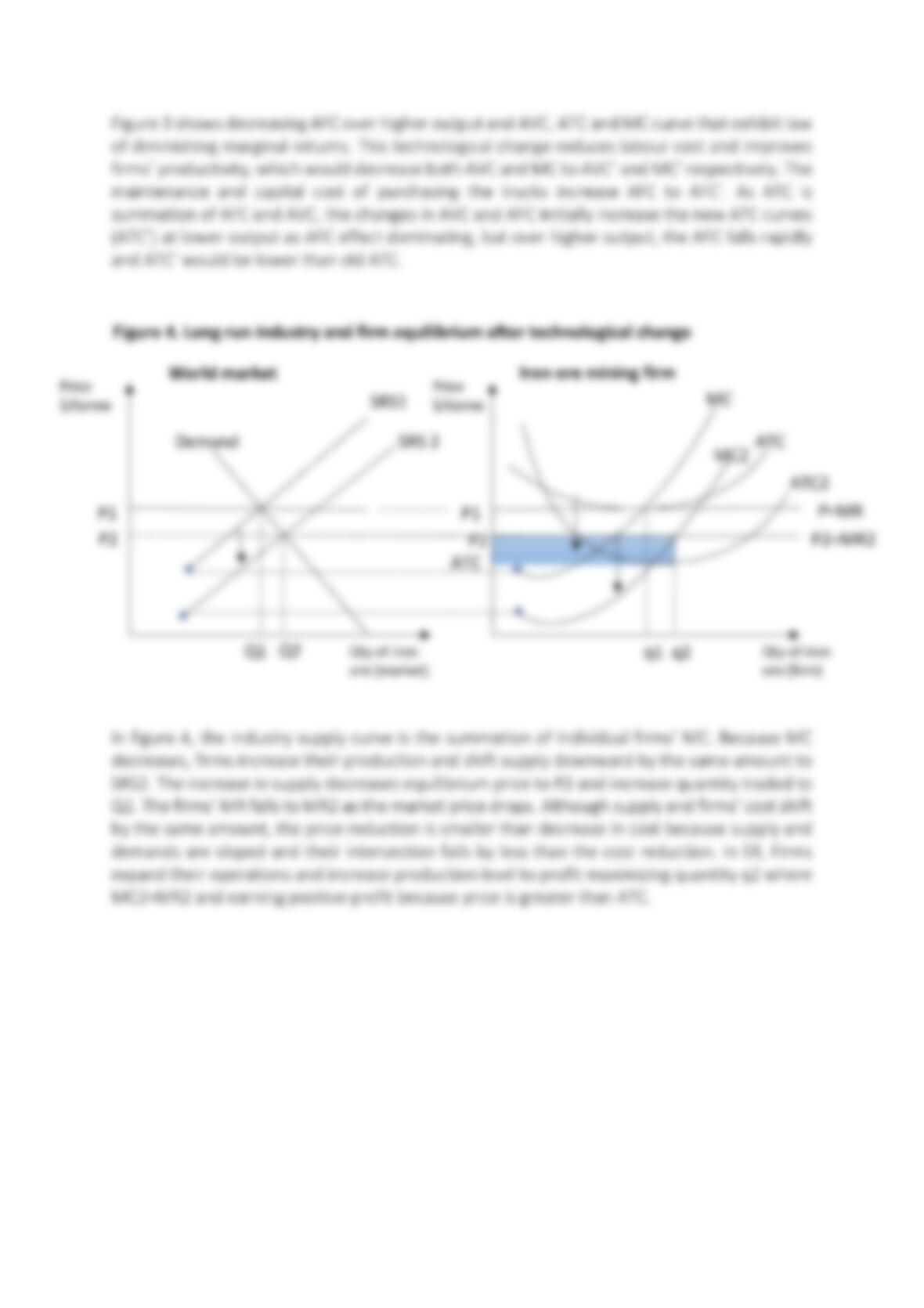
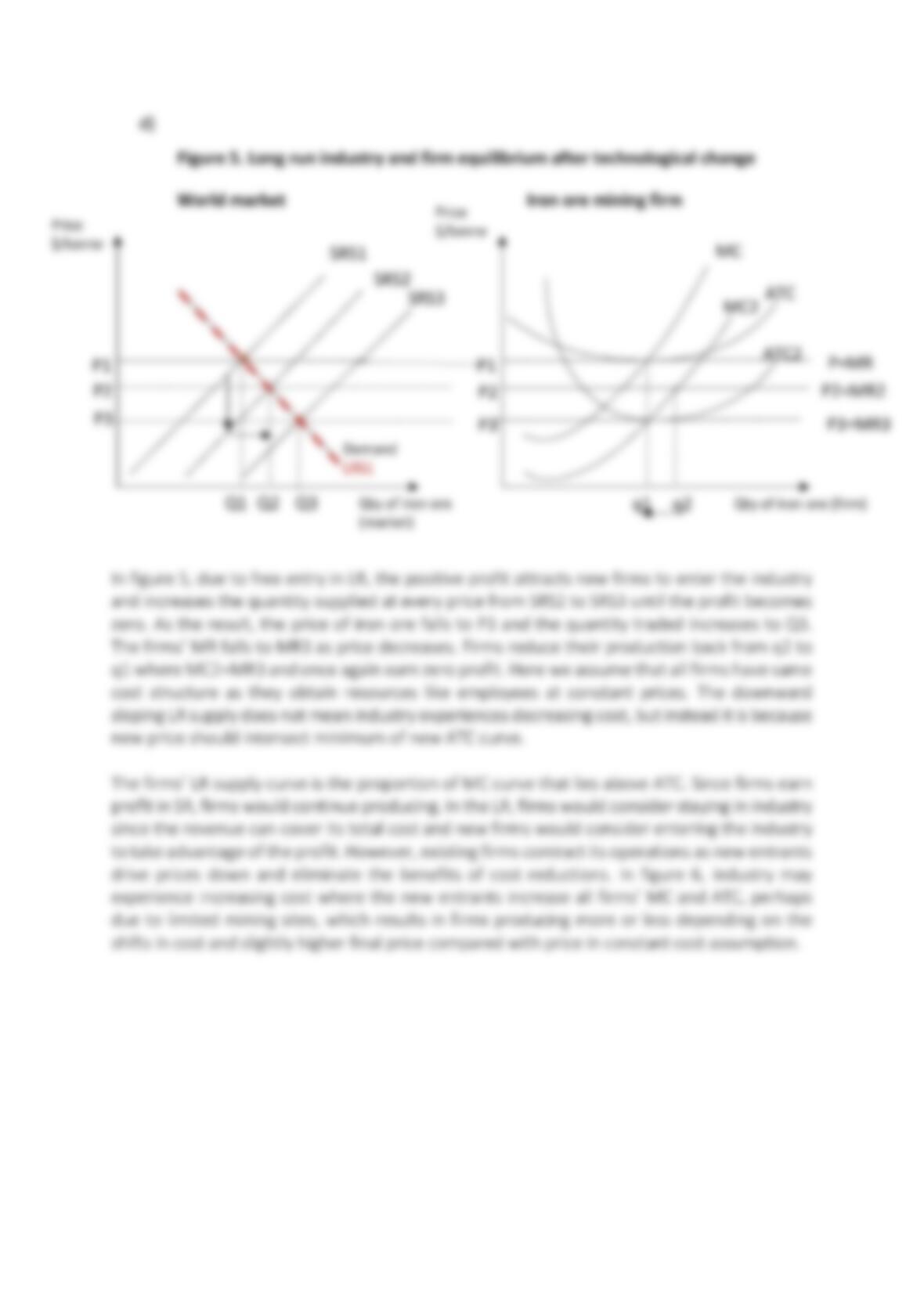
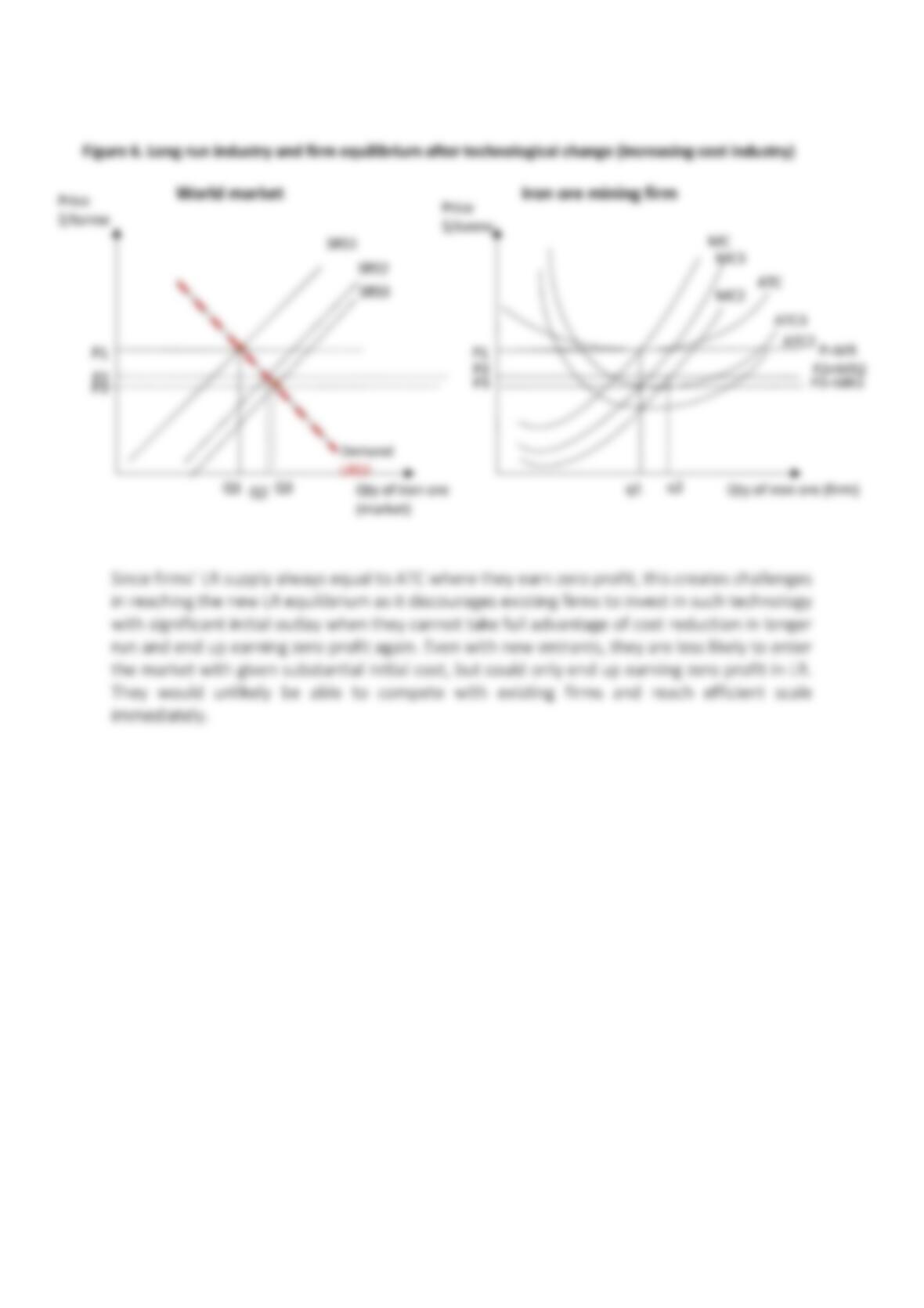
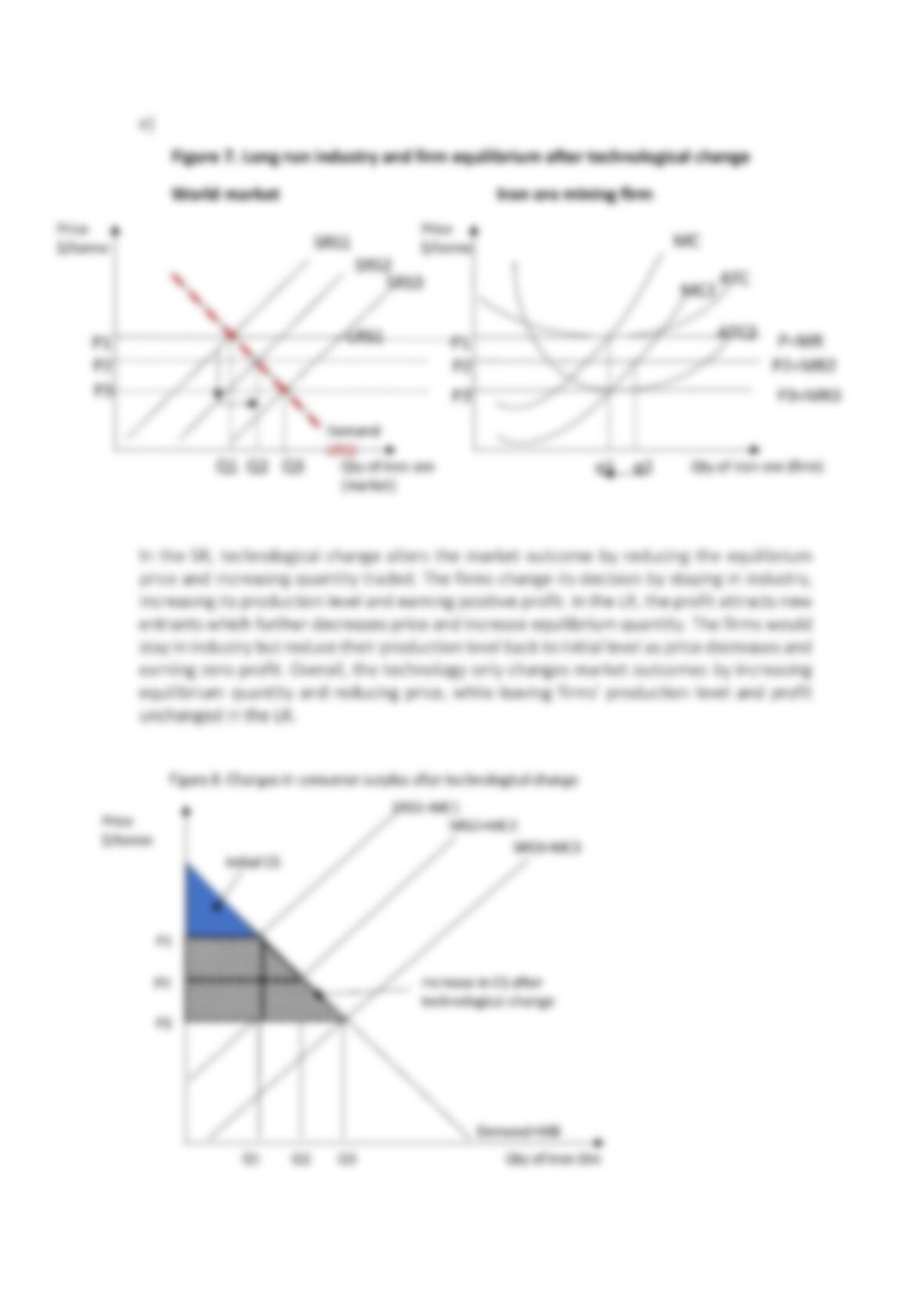
Haulage is by far a mine’s largest operational cost. Around 2015, many iron ore mining
firms, such as Rio Tinto, started to use autonomous haul trucks that can run 24 hours,
position themselves for loading and move to their assigned dump location without
operators on board. Each truck can save around 500 work hours a year, thus slashing
operating cost while improving the overall productivity of mining operations.
b)
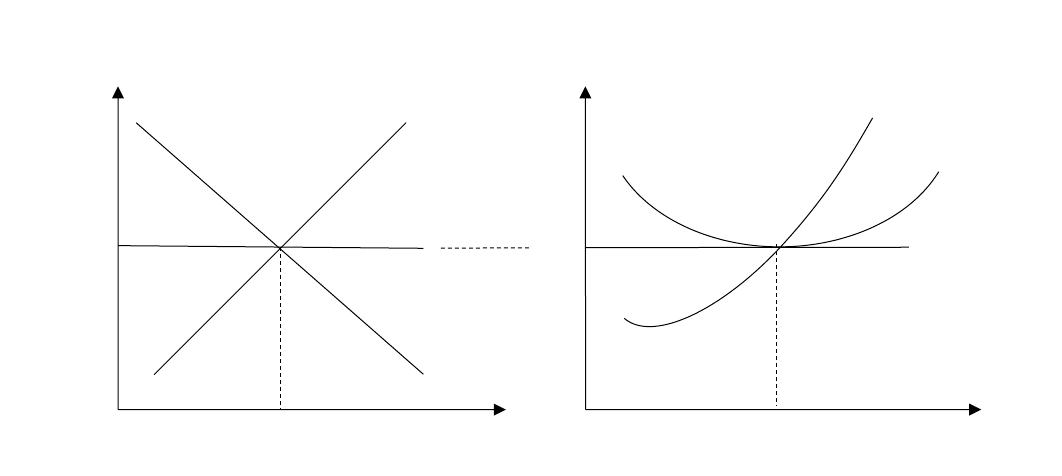
In the LR, all factors of productions become variables and firms can freely enter and exit the
industry. In figure 1, the industry would be in equilibrium at price P1 and quantity traded Q1
where the market supply curve intersects the demand. As firm is price taker, it must sell at
market determined price P1, which is also equal to MR because price is fixed at every output
produced. The firms have rising MC curves and u-shaped ATC curves due to property of
diminishing MP where MP decreases for additional labour employed and MC curve crosses the
minimum of ATC curve. Firms produce at profit maximizing output q1 where MC=MR and
earning zero profit as price is equal to ATC.
Price
$/tonne
Price
$/tonne
Qty of iron ore
(market)
Qty of iron ore
(firms)
P1
P1
Supply
Demand
MC
ATC
Q1
P=MR=AR
World market
Iron ore mining firm
q1
Figure 1. Long run industry and firm equilibrium before technological change
LRS
c)
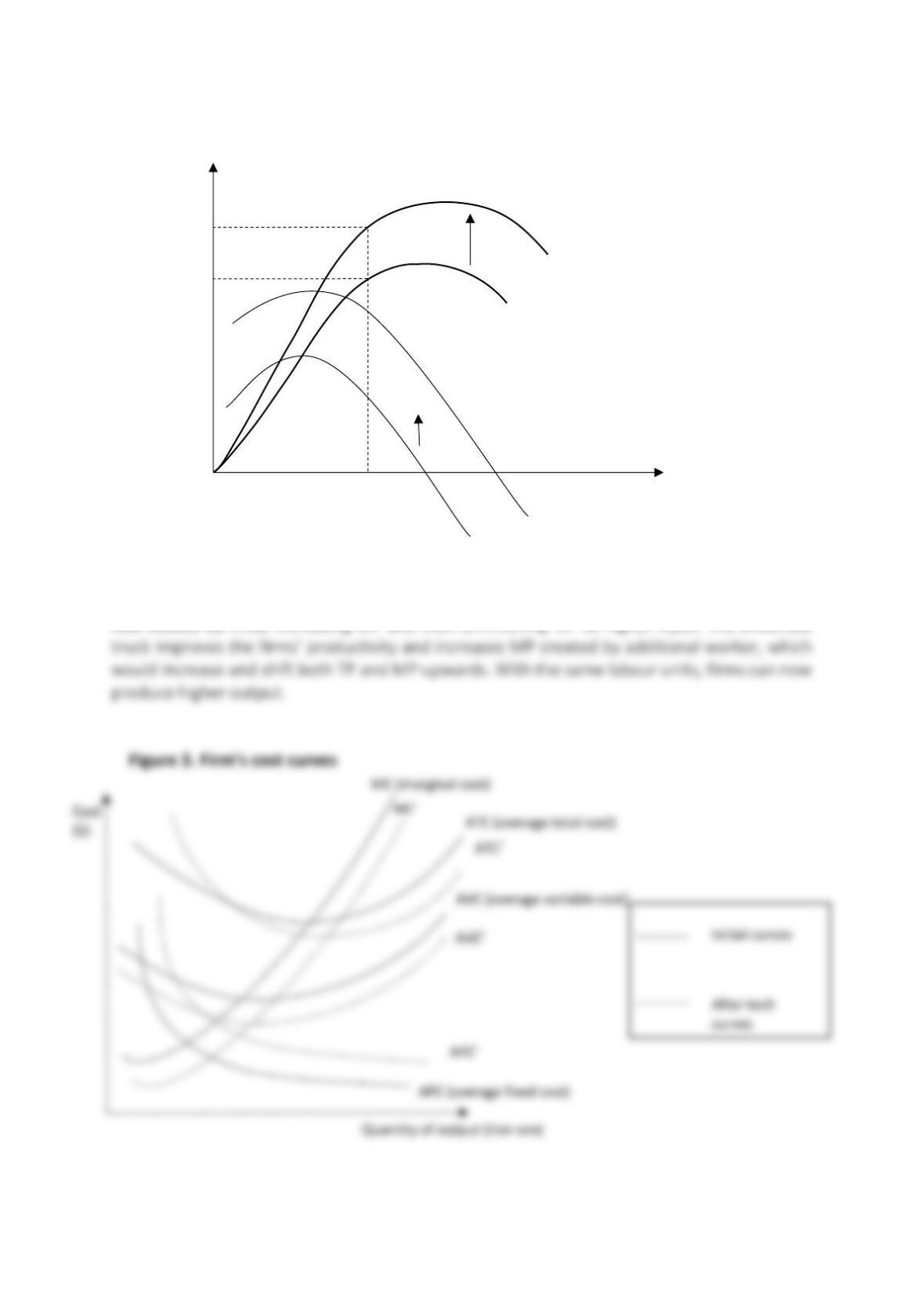
Figure 2 shows the firm’s TP with high initial growth rate, followed by slower and then declining
L
1
Figure 2. Firm’s production function
Quantity of
output (iron
ore)
Total Product 2
(TP2)
Total Product 1
(TP1)
Units of variable input (labour)
O2
O1
Marginal
product 1
(MP1)
Marginal
product 2
(MP2)