– inhibits thrombin activity
DRUGS THAT AFFECT HEMOSTASIS
DRUG
MOA
NOTES
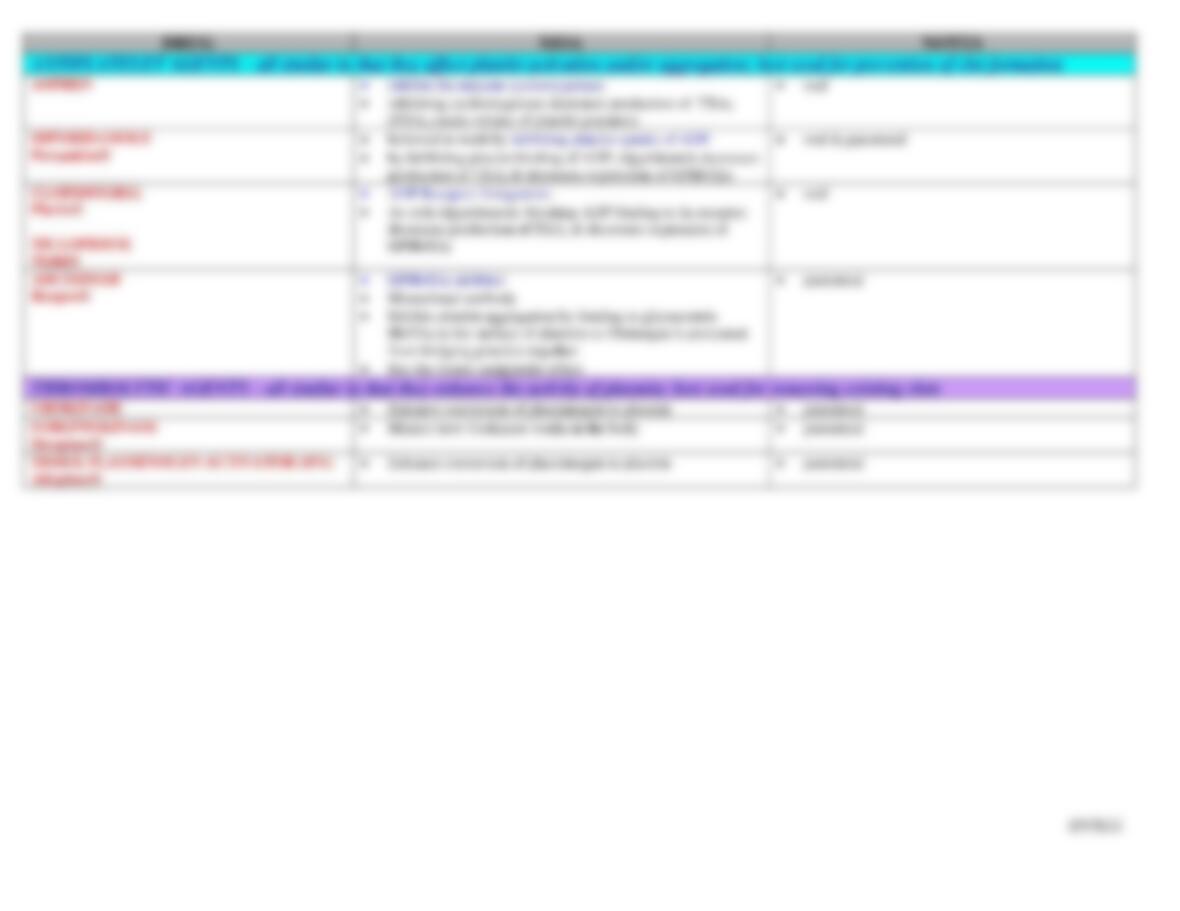
ANTICOAGULANTS – all similar in that they interfere with the clotting cascade; best used for prevention of clot formation
WARFARIN
Coumadin®
• Inhibits the reduction of the epoxide form of vitamin K to the
dione form
• Results in inhibition of the reaction that carboxylates glu
residues in the precursor proteins for the clotting factors II,
VII, IX, and X
• Inhibits synthesis of vitamin K-dependent clotting factors
• Avoid consuming vitamin K-rich foods like green
leafy vegetables etc…
• Takes 7-10 days before seeing the effects
• Causes an increase in aPTT & PT
• Very narrow therapeutic index
• Warfarin therapy monitored using INR (2.0-3.0)
HEPARIN
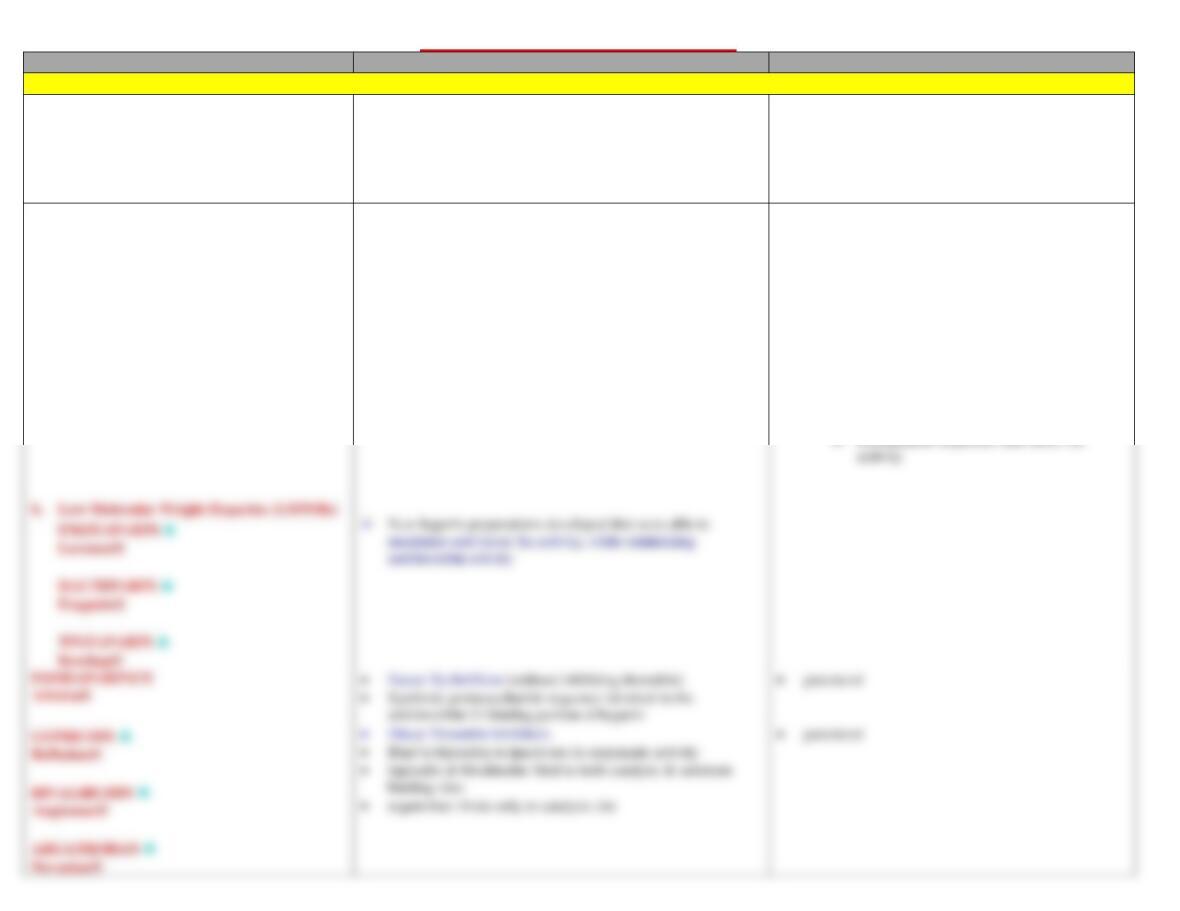
a. Unfractionated Heparin (UFH)
• Potentiates activity of antithrombin III
• Binds to antithrombin III causing conformational change in
antithrombin III; new conformation has a higher affinity for
thrombin & factors IXa, Xa, XIa, and XIIa
❖ Naturally occurring mucopolysaccharide
❖ Heterogeneous, containing heparin polymers of differing
lengths
❖ Variability can lead to variability in pharmacological response
& rate of elimination
• Causes an increase in aPTT & PT
• Parenteral
• Heparin therapy monitored by assessing aPTT, ACT,
& anti-factor Xa activity
❖ Patient’s response to UFH can be unpredictable &
requires closer monitoring to avoid under– or over-
coagulation
❖ Specific portions of heparin polysaccharide polymer
responsible for different components of its activity:
❖ Pentasaccharide sequence: high affinity
binding to antithrombin III
❖ Monomeric segment: inhibit thrombin