2.0 Leadership and Management Style
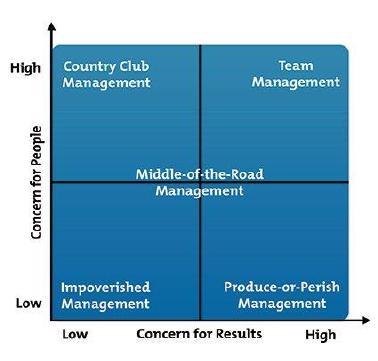
Figure 1.1 Blake Mouton Grid (Mind Tools Content Team, n.d.)
Leadership defines the influence based on the relationship between leaders and followers who
intend real changes and outcomes that reflect their shared purposes (Salas-Vallina, 2020).
Leadership theories emphasize the traits and behaviors that individual can adopt to boost their
own leadership abilities (Corporate Finance Institute, n.d.). Those theories including great man
theory, trait theory, contingency theory, situational theory, and behavioral theory. Refer to
figure 1.1, illustrates the identify the managerial style used by leaders (Mind Tools Content
Team, n.d.). The managerial styles show in Blake Mouton Grid are impoverished management,
country club management, middle-of-the-road management, team management and produce or
perish management.
3.0 Leadership Theory and Management Style Used for the Case Study
3.1 Great Man Theory
The Great Man Theory of Leadership is a theory that defines that great leader are born and not
made. Certain characteristics and traits that not found in all people can be processed by these
individuals (Villanovau University, 2021). Characteristic of a leader base on great man theory
are charismatic and pleasant, bring order to chaos, born with the right traits and pick with a
suitable hero class (Lindberg, n.d.). Those heroes can categorize into six classes such as the
divine hero, prophet hero, poet hero, priest hero, king hero, and the man of letters hero
(Lindberg, n.d.). Example of leader who process great man theory are Abraham Lincoln, Julius
Caesar, Mahatma Gandhi, and Alexander the Great, helped contribute to the notion that great
leaders are born and not made (Cherry, 2020). The great man theory is being criticized due to

as being important to be an effective leader are typical masculine traits. In contemporary
research, there is a significant shift in such a mentality (Management Study Guide, n.d.).
3.2 Blake Mouton Grid
The Blake Mouton Grid plots a manager’s or leader’s degree of task-centeredness versus their
person-centeredness and identifies five different combinations of the two and the leadership
styles they produce (Mind Tools Content Team, n.d.).
Refer to figure 1.1, the first management style shows in Blake Mouton Grid is impoverished
management that having low concern for people and production. This type of leadership style
where the leader directs and divides the tasks, authorities and responsibilities but does not go
for a follow up of the plans made (PRABHAKARAN, 2021). Second, country club
management, having high concern for people but low concern for productivity. This leader is
more concerned and inclined towards the social requirements of the members of his group
rather the task. In such cases, employees work in a very friendly environment but might not be
productive (PRABHAKARAN, 2021). Third is middle-of-the-road management that having
middle concern for people and production. This leader is not highly ambitious regarding both,