5070 N. SIXTH STREET, SUITE 109
FRESNO, CA 93710
(559)477–4202, FAX (559)248–8202
www.jobanalysis.biz
JOB ANALYSIS
Date of Analysis: 11/16/09
EMPLOYEE Joe Smith
CLAIM # 98765XXZZ87
JOB TITLE Warehouseman
EMPLOYER Food and Warehouse Co
LOCATION/ADDRESS 87605 N. “Z” Street
Calwa CA 93299
NATURE OF JOB FULL–TIME PART–TIME ON–CALL PERMANENT
TEMPORARY SEASONAL OTHER:
SHIFT DAYS SWING NIGHTS VARIES
HOURS PER DAY 8+ HOURS PER WEEK 40–84
OVERTIME NONE OCCASIONAL REQUIRED AVAILABLE
GENERAL JOB SUMMARY:
This job analysis is intended to describe the usual and customary duties of Joe Smith in the
Warehouseman position. He held this position from August 2008 through November 20, 2009.
In this position, it is the worker’s duty to manage incoming packaging materials and ingredients as they
arrive at this food processing facility and then get them to the production floor. The worker first
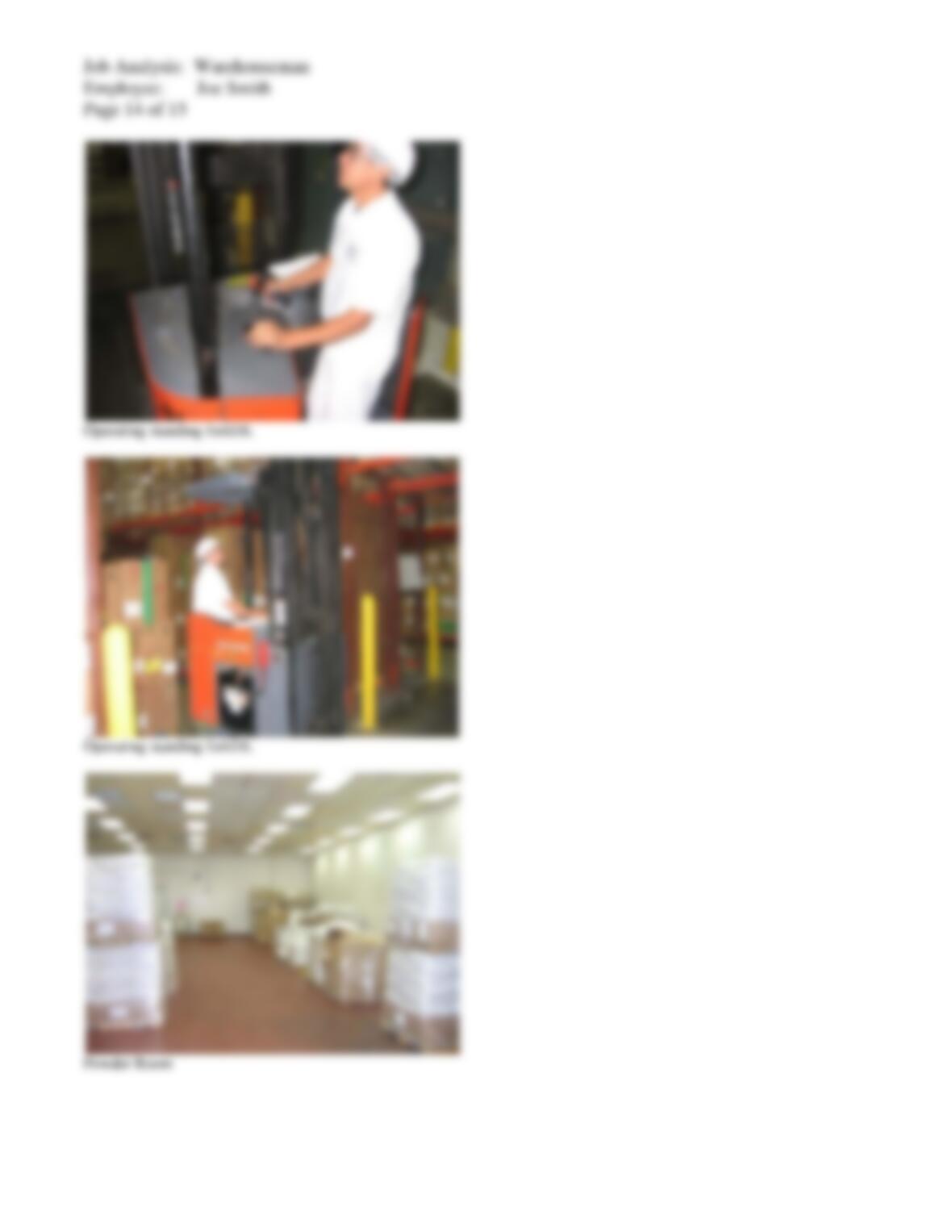
receives incoming trucks of palletized product. The worker operates a forklift to transfer pallets of
product and place them in large storage racks or on the warehouse floor as space allows. He is not
required to repalletize any fallen product or broken pallets that may have come in the truck that way,
such duties being the responsibility of the truck driver.
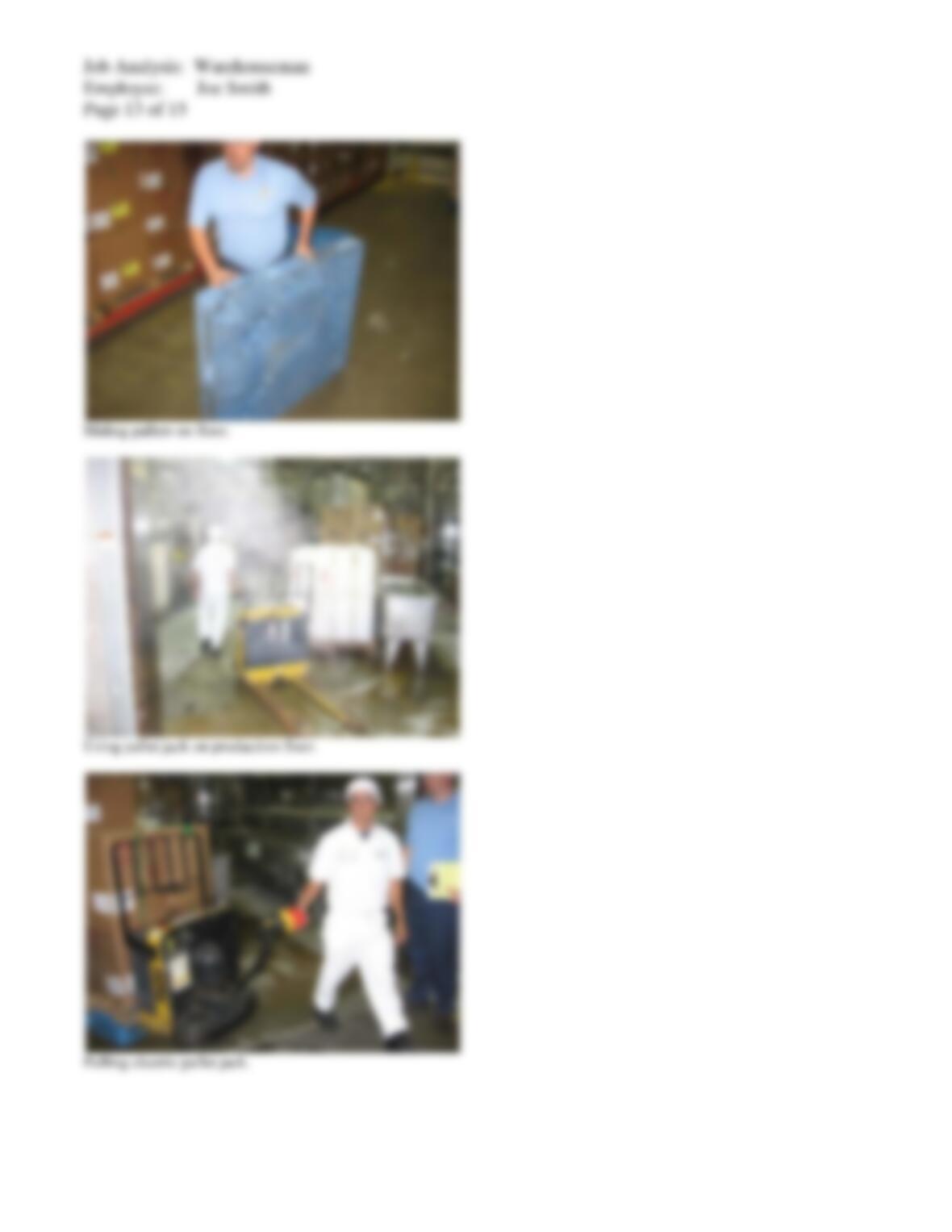
The worker is also required to take palletized product and prepare it for transport onto the production
floor. In such cases, the worker would position a plastic pallet on the floor next to the shipping pallets,
unwrap the plastic covering from the shipping pallets, and then manually move boxes from the shipping
pallets to the plastic pallets to later be moved to the production floor. In this manner, he will construct a
Job Analysis: Warehouseman
Employee: Joe Smith
Page 2 of 15
mixed pallet of various products to go onto the production floor. The parties estimate that
approximately 70% of pallets that are moved onto the production floor are mixed. The remaining 30%
are left intact as they are received and are simply dropped on a plastic skid or pallet before being moved
to the production floor using a pallet jack.
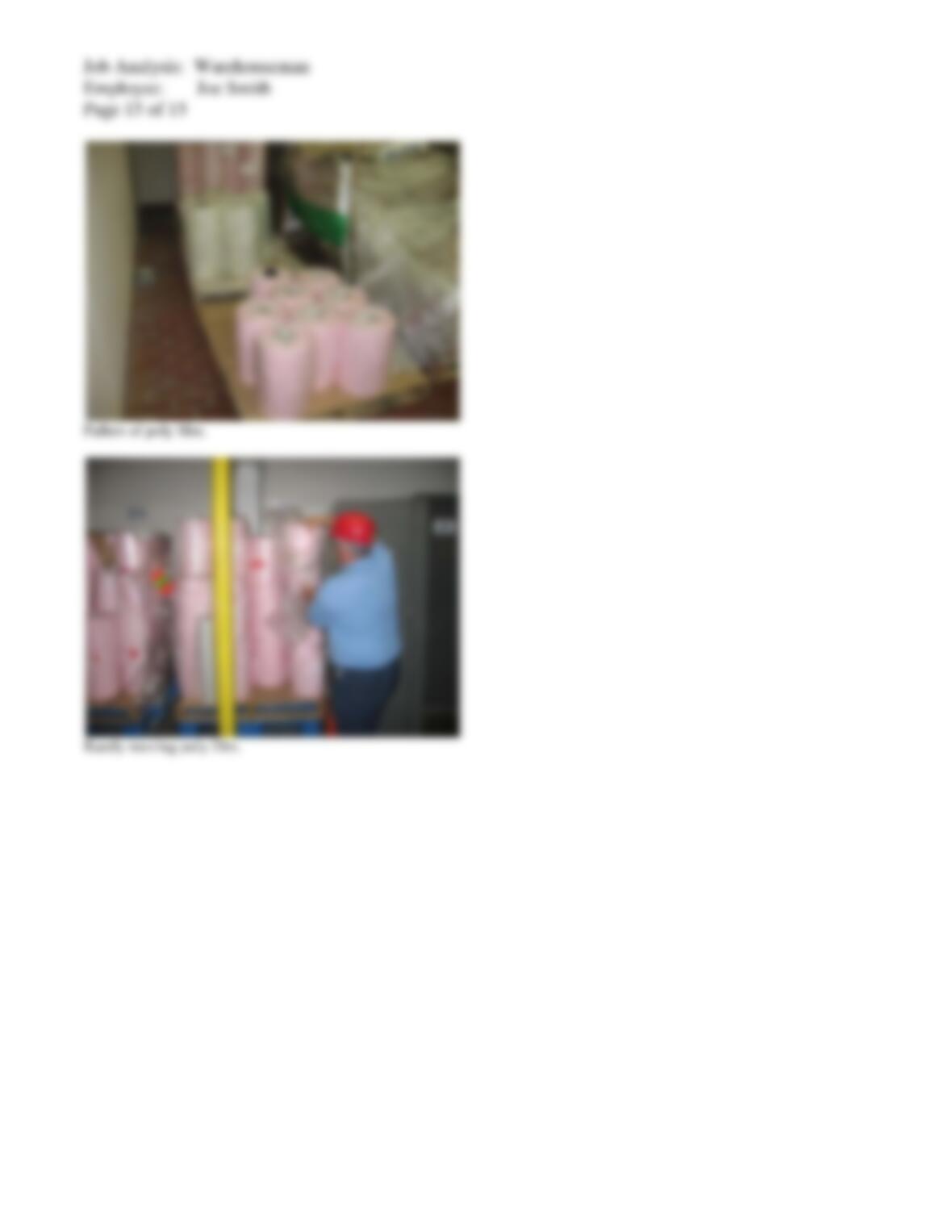
The worker also transports pallets of sacks and bags of ingredients.
Should a pallet break or the contents of a pallet fall while on the warehouse or production floor, the
worker is responsible for rebuilding the stack using an intact pallet.
The worker is also required to keep the warehouse clean and orderly. This involves sweeping as needed,
disposing of broken pallets, stacking empty pallets, etc. This was done by hand generally but could also
be done by forklift where appropriate.
The worker would also do break relief for the Slotter position on the production floor. This involves
taking palletized product from the pallet wrapping machine and transporting this by pallet jack to the
cold box area, where other works would put the pallets into storage. The worker would also manually
transport and sometimes stack empty shipping pallets.
The worker also transports pallets of cardboard to the packing area as needed and also transports stacks
of pallets by forklift.
At the end of the worker’s warehouse shift, he would also assist in other areas, where he could do Clean
In Place tasks (CIP), run packaging machines, do Slotter tasks, function as the Reverse Osmosis
operator, do Milk Receiving, and perform other positions. The typical warehouse man does not do these
other positions. Nonetheless, Mr. Lackey did these positions because he had previously done many of
them and was willing to work the extra hours. Because of the seniority system in place at the facility, if
the worker had the ability to perform a job and had less seniority than someone doing the position, the
worker might be obligated to do the position should the higher-seniority worker have completed his
eight hours and wish to go home. The worker states he volunteered on many occasions as well.
The worker performed many of these other duties on additional shifts he would opt to take. Available
shifts and assignments were posted, and the worker would pick preferred shifts and assignments. These
would be awarded based on seniority. Assignments could be anywhere in the plant in which the worker
had the requisite experience.
The following factors describe the WAREHOUSEMAN duties alone and do NOT describe the other
various occupations and assignments that worker did during voluntary or mandatory overtime.
Job Analysis: Warehouseman
Employee: Joe Smith
Page 3 of 15
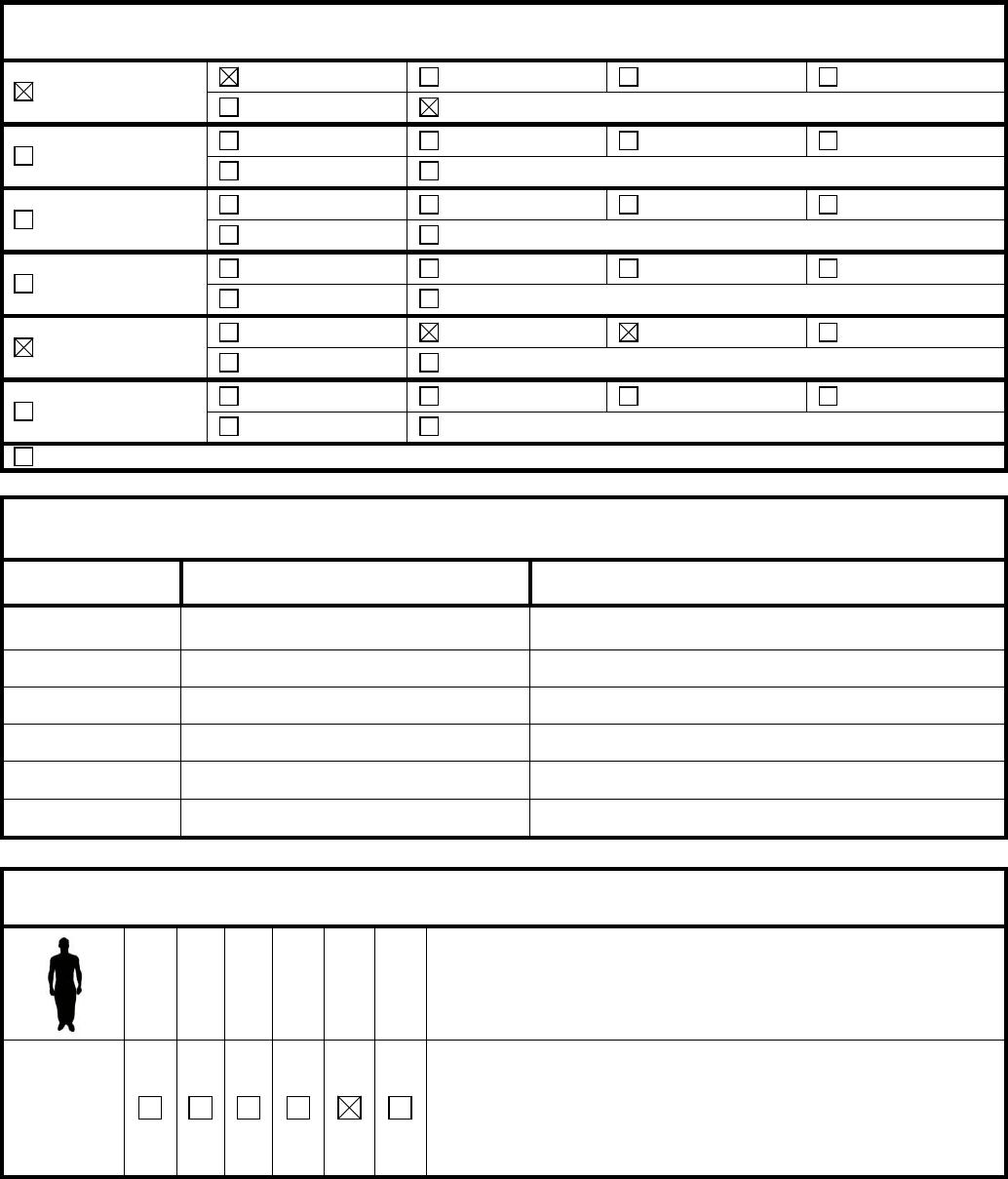
TOOLS OF THE TRADE
HAND TOOLS WRENCHES SCREWDRIVERS PLIERS HANDSAWS
KNIVES OTHER: WRITING UTENSILS
POWER TOOLS SAWS DRILLS AIR TOOLS BENCH TOOLS
JACK HAMMERS OTHER:
COMPUTER EQUIP. COMPUTER KEYBOARD MOUSE TRACKBALL
PRINTER OTHER:
OFFICE EQUIP. COPIER/FAX PHONE HANDSET PHONE HEADSET HOLE PUNCH
STAPLER OTHER:
VEHICLES/CARTS TRUCK/CAR FORKLIFT PALLET JACK HAND TRUCK
CART OTHER:
COOKING TOOLS MIXERS SLICERS OVENS STOVES
ROTISSERIE OTHER:
O
THER
:
PHYSICAL DEMAND DEFINITIONS
FREQUENCY PERCENTAGE OF DAY TIME IN 8-HOUR SHIFT
NEVER NOT PRESENT
RARE 1% OR LESS PER DAY 5 MINUTES OR LESS PER DAY
INFREQUENT 2% TO 5% OF THE DAY 6 TO 30 MINUTES PER DAY
OCCASIONAL 6% TO 33% OF THE DAY .5 TO 2.5 HOURS PER DAY
FREQUENT 34% TO 66% OF THE DAY 2.5 TO 5.25 HOURS PER DAY
CONTINUOUS 67% TO 100% OF THE DAY 5.25 TO 8 HOURS PER DAY
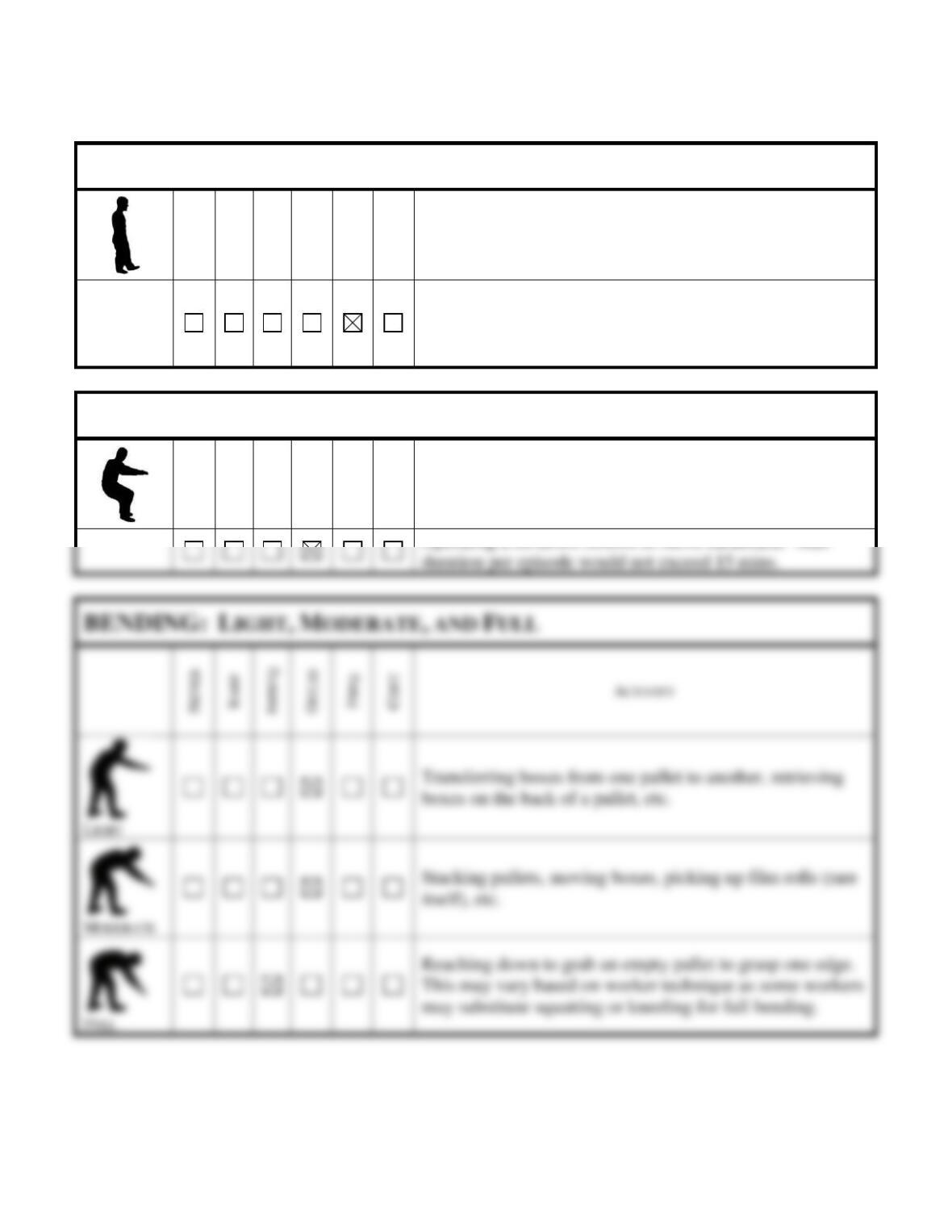
STANDING
NEVER
RARE
INFREQ
OCCAS
FREQ
CONT
SURFACE AND MAX DURATION PER OCCASION
Operating the standing forklift, manually palletizing pallets
of mixed items, looking for product, etc. Concrete
surfaces. Max duration per episode would not exceed 20
minutes according to the worker and up to 60 minutes
according to the employer.
Job Analysis: Warehouseman
Employee: Joe Smith
Page 4 of 15
WALKING
NEVER
RARE
INFREQ
OCCAS
FREQ
CONT
SURFACE AND MAX DURATION PER OCCASION
Finding pallets of product in the storage racks, moving
pallets of product using a pallet jack, moving between
various areas, etc. Concrete surfaces. Max distance per
episode would not exceed 50 yards.
SITTING
NEVER
RARE
INFREQ
OCCAS
FREQ
CONT
ACTIVITY, SURFACE, AND MAX DURATION PER OCCASION