Case Study #1
To: Anthony Racka
From: Kevin Wright
Date: 10/7/2019
Re: Virtual Reality (VR) & Augmented Reality (AR)
My marketing case study on is the new, and upcoming Virtual Reality (VR) and
Augmented Reality (AR). The target market for VR and AR seems to be the younger generation,
such as Generation Z, Millennials and Baby Boomers. Virtual reality is a computer-generated
simulation of a 3D image or environment that can be interacted with in a seemingly real, or
physical, way. The person can do this by wearing special equipment, such as a helmet or
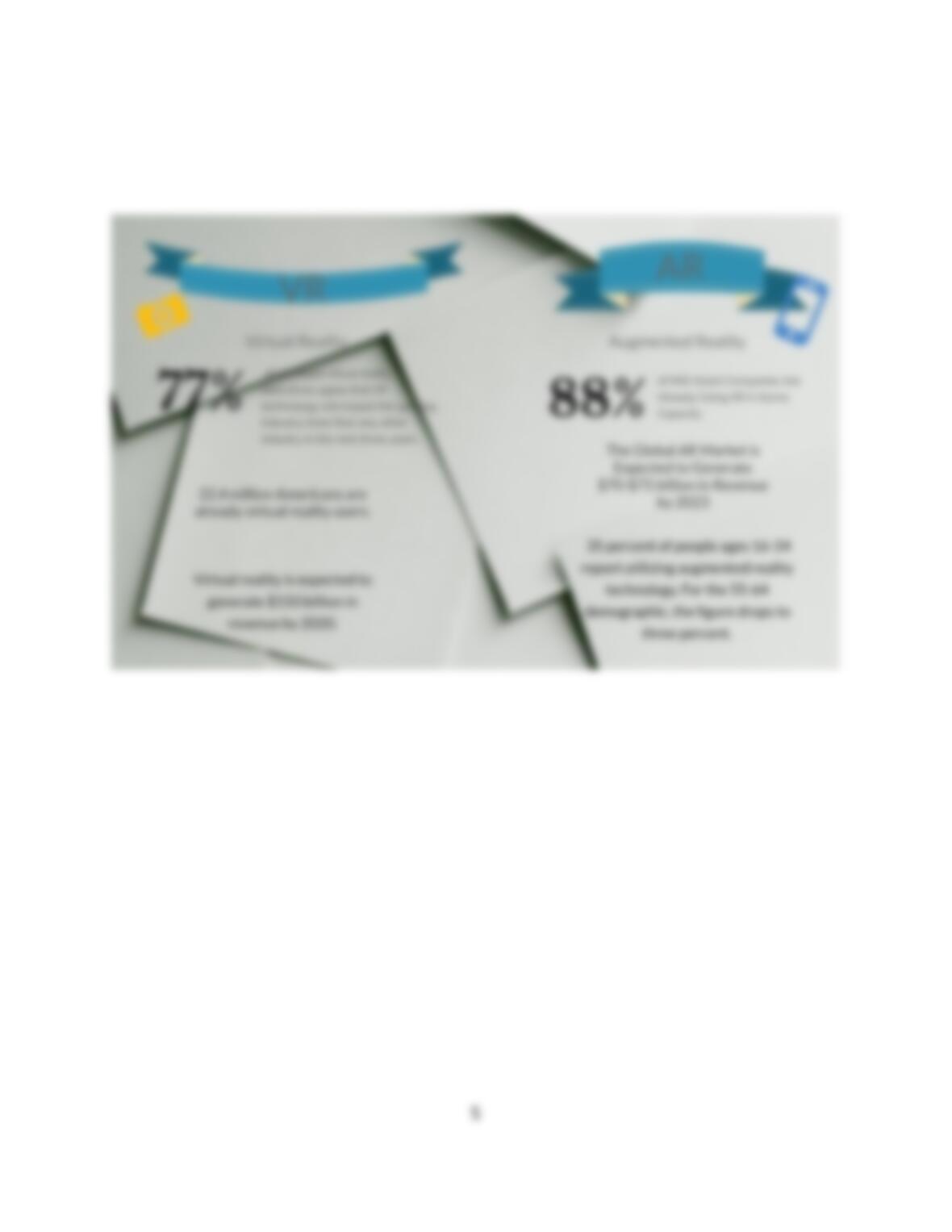
goggles, with two controllers with sensors for the user to hold onto. According to an article
written by Howie Leibach on SingularityHub, an overwhelming majority of Generation Z (79%)
feel positively towards VR, beating out Millennials (73%), Generation X (70%), and Baby
Boomers (64%). Surprisingly, people love this technology because of the experience being like
no other and 79% of users seek to try it again. Of those who try VR, 81% spread awareness to
friends or families about their experience. Sony offers VR through their PlayStation console and
starts at a price of approximately $300, depending on what model/bundle is purchased. VR
doesn’t just focus on gaming, it also includes TV, movies and video content. Different
companies, such as Oculus, offer more intense VR equipment, and pricing can range up to
$1000. Users understand that VR equipment can be expensive due to the evolved technology.
However, these same users will pay more for a better experience, such as different features or
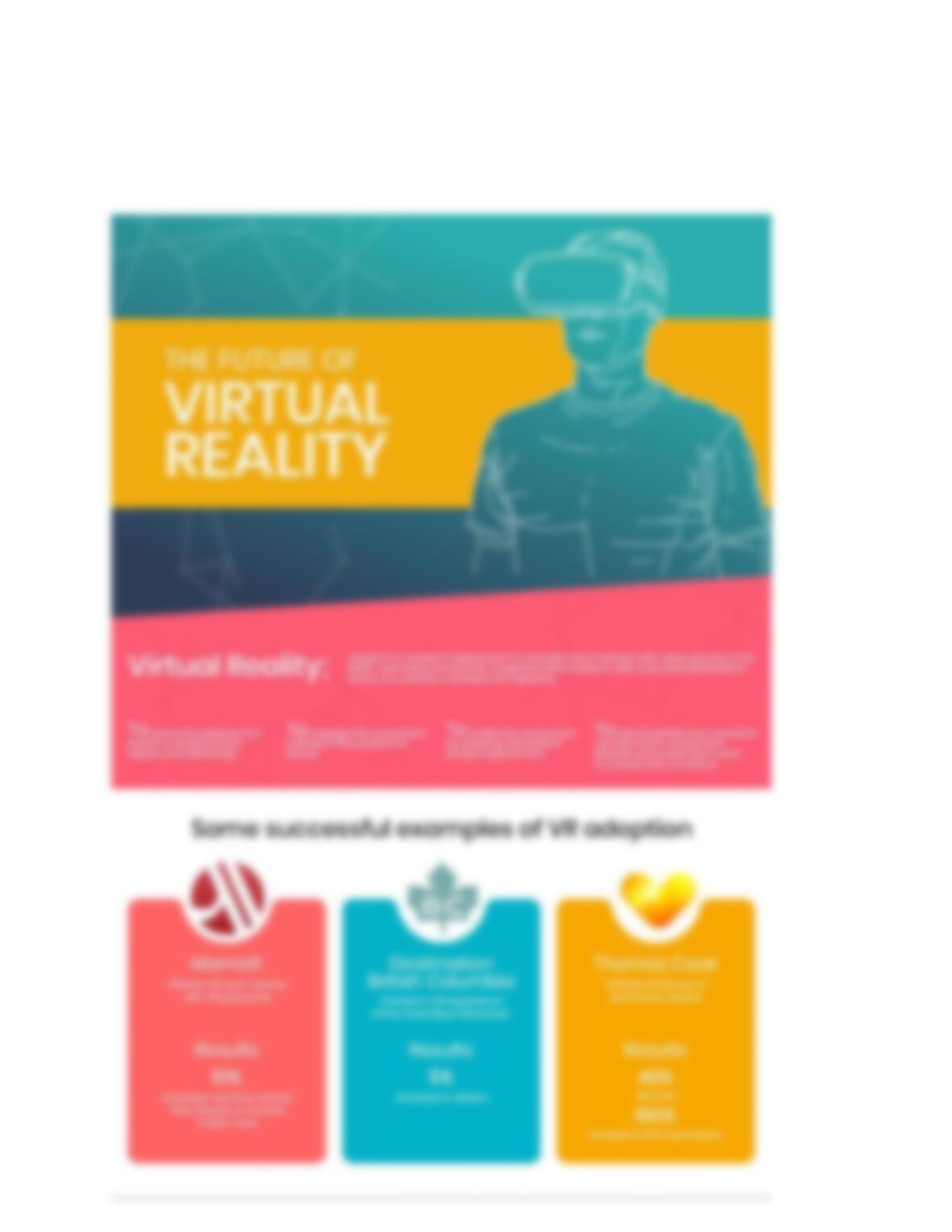
more of a variety of games/content. In addition, any company is able to promote their
product/service through VR, such as seeing what a virtual hotel room looks like or how a new
car might drive. Some companies may even take it a step further by having a special location for
VR, such as an open room or space. Users can roam freely, whether walking or in a special
vehicle, to enhance the experience. A great example is walking around a special location, such
as a forest, when in reality you are in an empty room. Advertisement, personal selling, public
relation and sales promotion are the elements of promotion mix. Virtual reality offers
advertisements through the consoles that support it, in store/online at certain technology retail
locations and through paid advertisements on social media (Facebook, Twitter and Instagram).
VR offers personal selling by creating a memorable experience to the point where they tell their
friends how fun it is or by taking it a step further and giving a “live” demo. Companies have a
huge desire for customers to promote/sell their products to their friends or family, promoting
the product and company. Public relations may change with the involvement of virtual reality.
Valerie Motis, VP of PPR Worldwide, goes in depth on an article of how VR will be a game
changer for public relations. VR can transform the way stories are told, put audiences in others
shoes and even setting up meetings through the VR headset. The customers, shareholders and
suppliers will see that the company using VR is looking towards the future with the
improvement of technology, creating positive rapport for the company. Some sales promotion
offered by certain VR products and companies are the “unique and limited edition” bundles.
Companies like to draw interest for companies by coming out with different colors of the
console or including a special edition of the game, only included in that bundle. In order to
draw more attention to VR, companies that provide console gaming could potentially provide
mobile gaming for smartphones or tablets. I feel if companies came out with a smaller, compact
version of AR and was portable, it would become extremely popular.
Augmented reality, on the other hand, is the special technology that superimposes a
computer-generated image on a user’s smart device, such as a smartphone or tablet. A great