1
Chapter 11
Alkynes
2
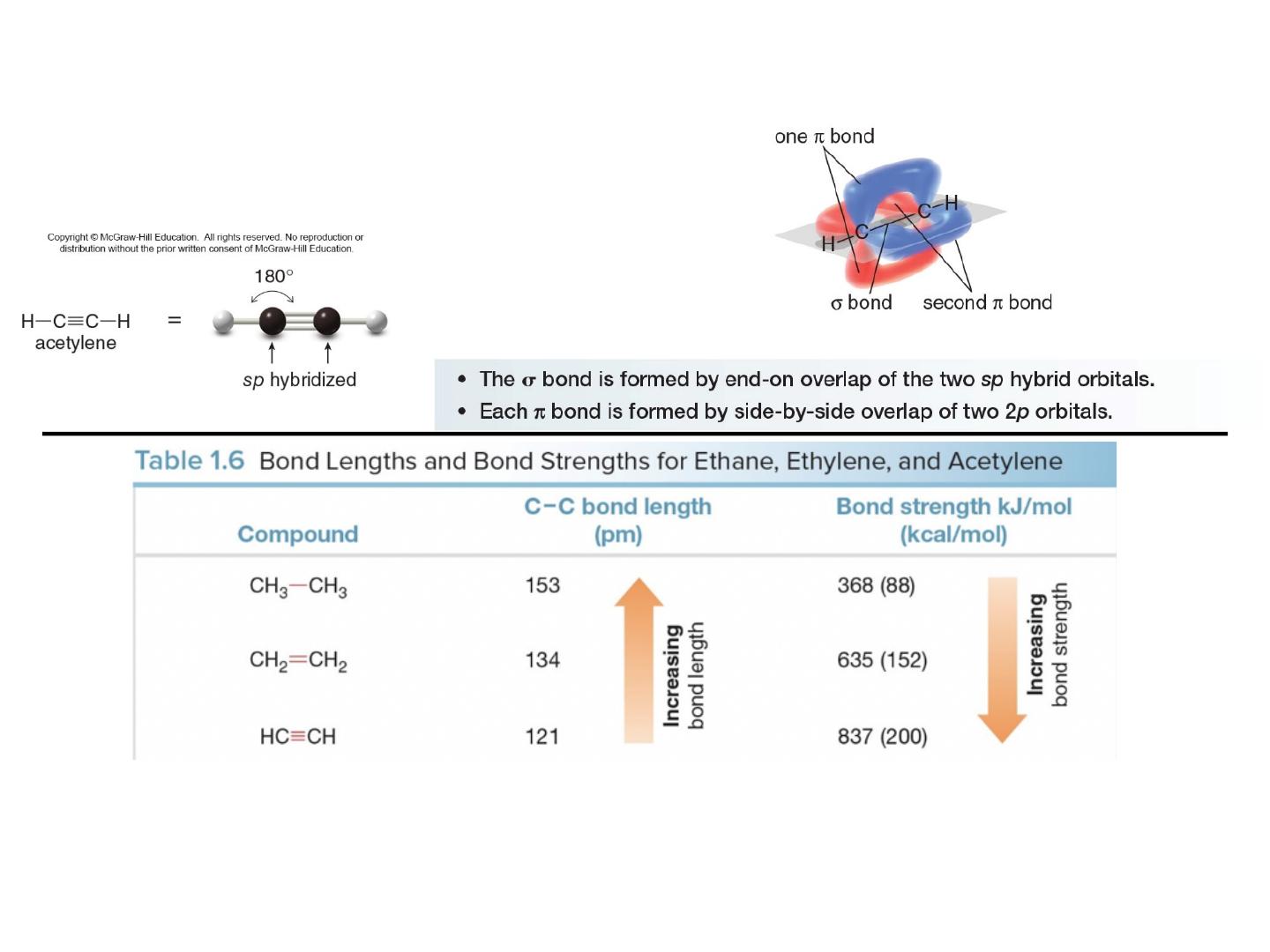
Alkynes contain acarbon–carbon triple bond (𝟐pbonds and 𝟏sbond);
general molecular formula 𝐂𝒏𝐇𝟐𝒏‘𝟐 ,sp hybridized;linear geometry;bond
angles of 𝟏𝟖𝟎𝐨.
•64 kcal/mol for 1st
p
bond and 48 kcal/mol for 2nd
p
bond
•Much weaker
p
bond
•More polarizable because electrons in
p
bond are more loosely held
3
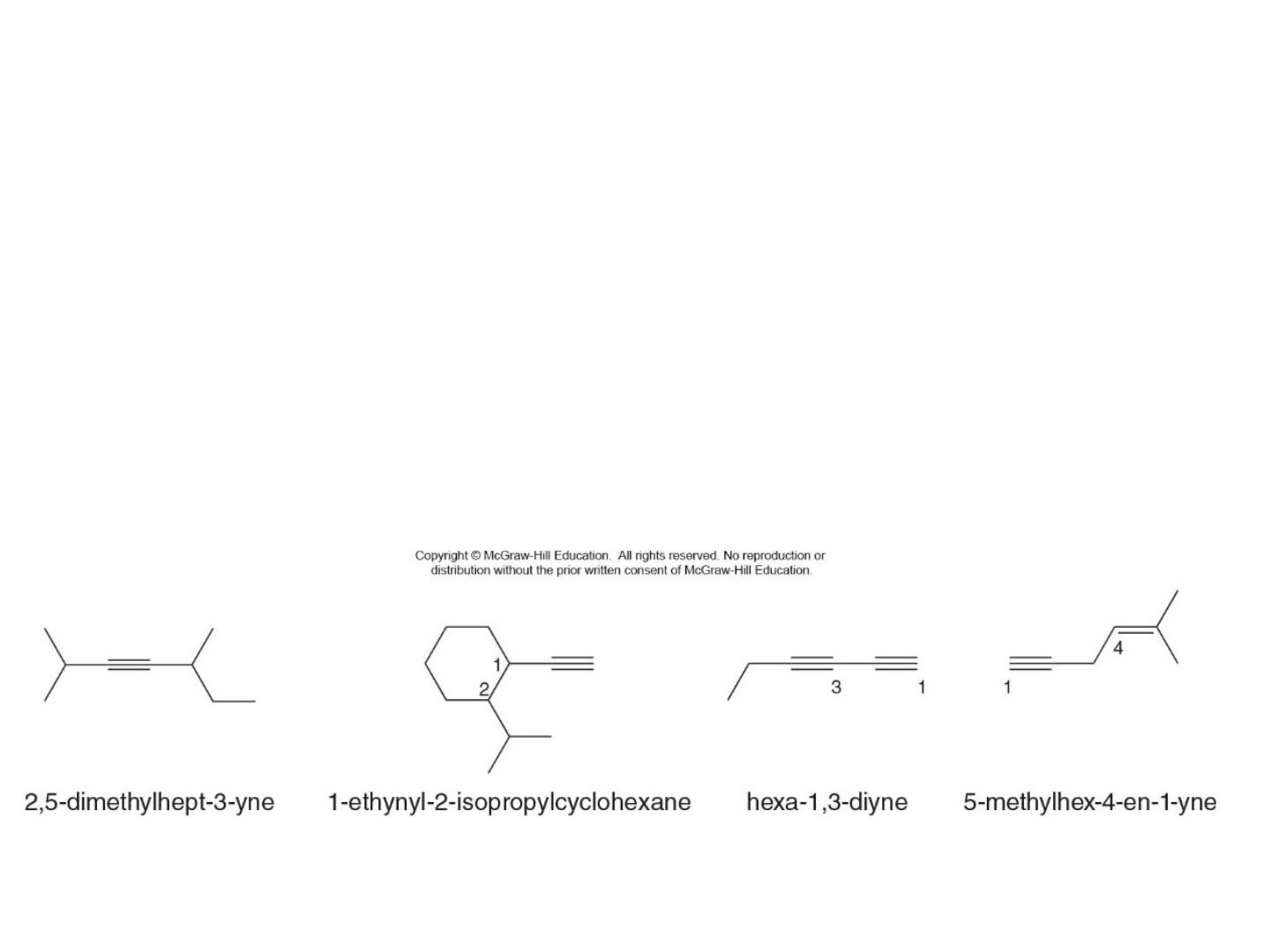
•In the IUPAC system, change the –ane ending of the parent alkane name to
the suffix –yne.
•diynes with two triple bonds; triynes with three triple bonds
•Compounds with both a double and triple bond are named as enynes.
•The simplest alkyne, 𝐇 − 𝐂º𝐂 − 𝐇, named in the IUPAC system: ethyne;
common name: acetylene
•ethynyl group: two–carbon alkyl group
Figure 11.1
Naming Alkynes
Try P. 11.2 and 11.3 for nomenclature.
4
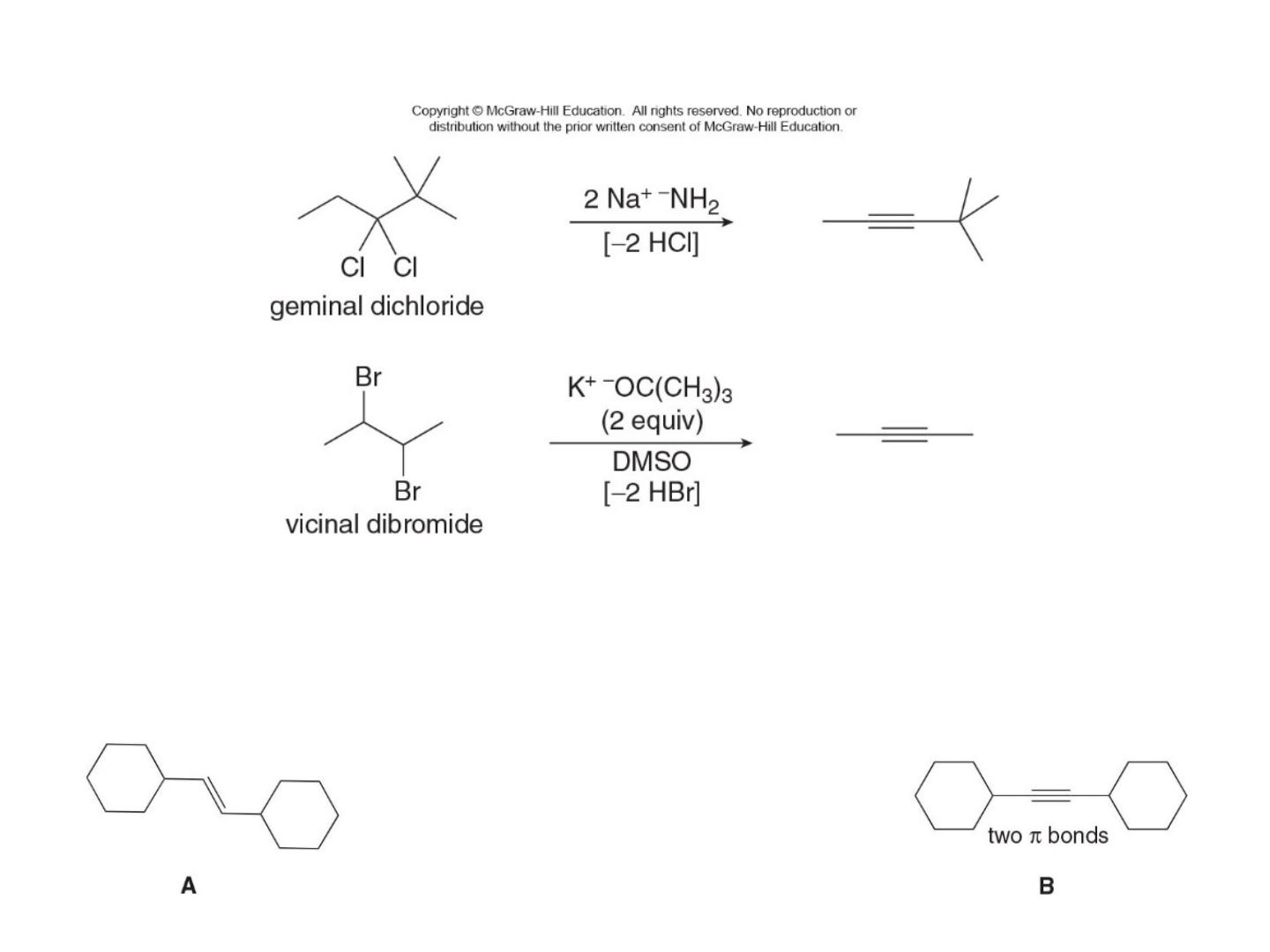
Preparation of Alkyne: by two successive E2 elimination reactions
Sample P. 11.2 Convert alkene A into alkyne B by a stepwise method.
5
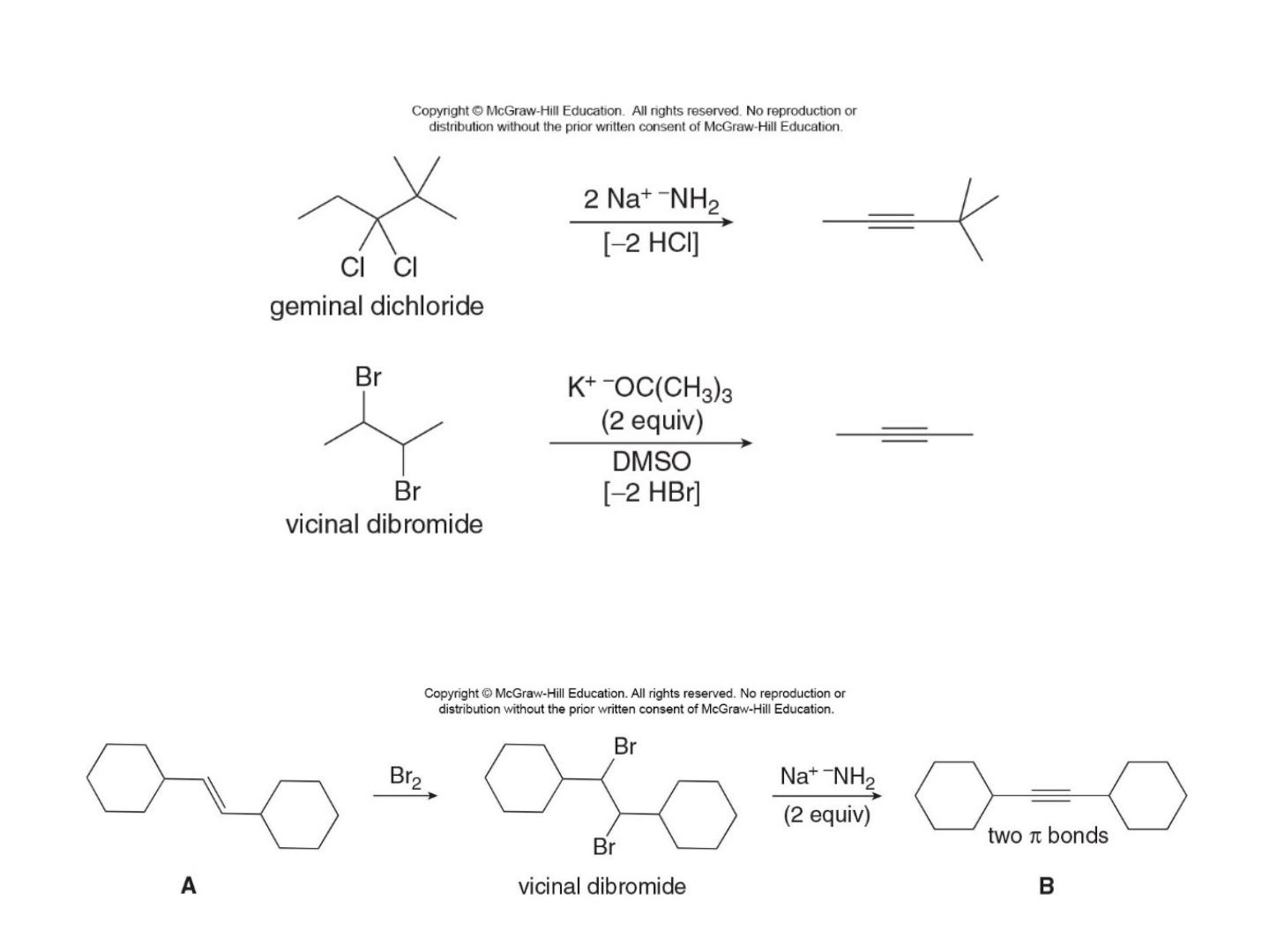
Preparation of Alkyne: by two successive E2 elimination reactions
Sample P. 11.2 Convert alkene A into alkyne B by a stepwise method.
6
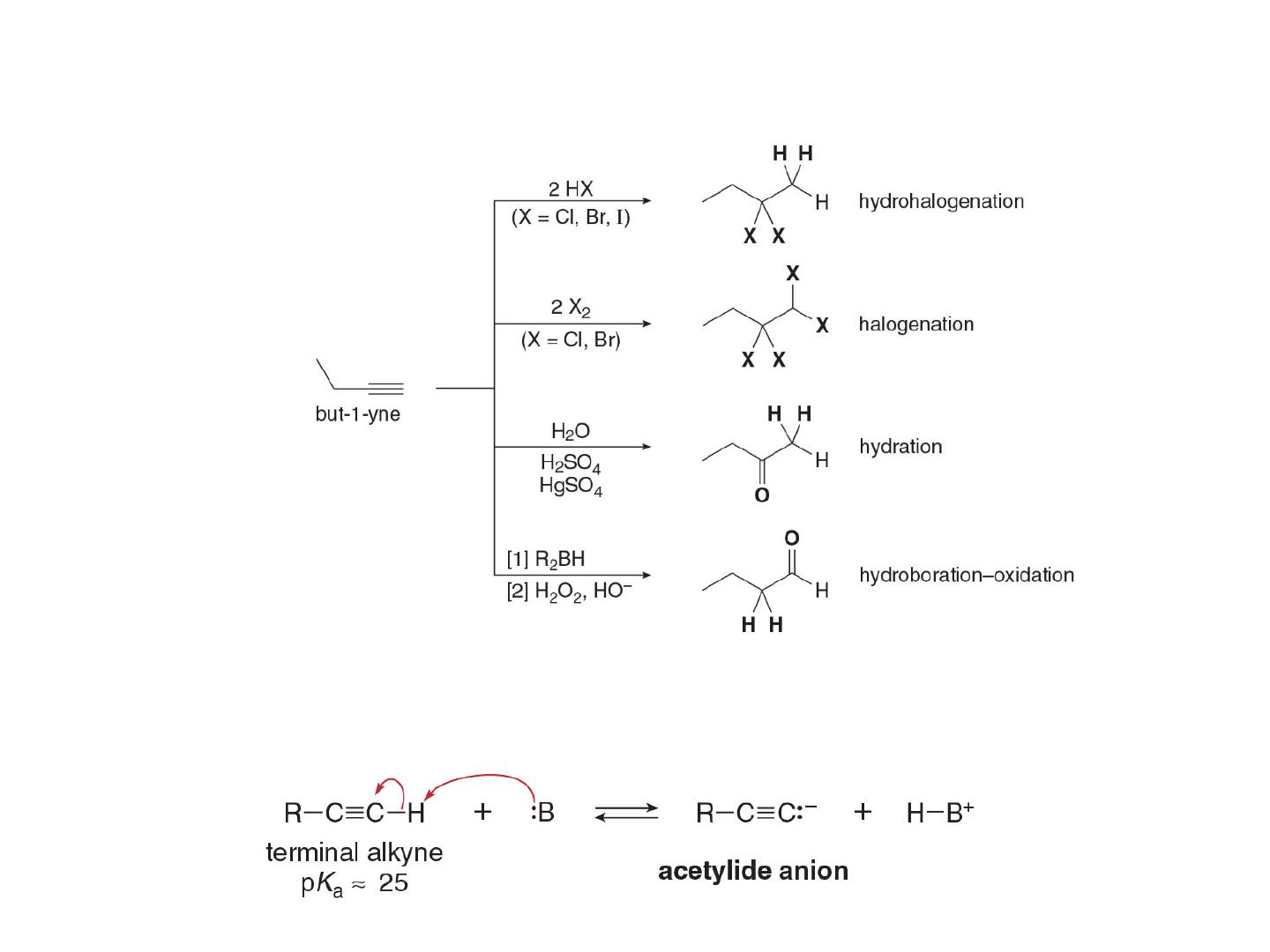
Figure 11.5
General Addition Reactions of Alkynes:
because of relatively weak pbonds
Terminal Alkyne: reactions as an Acid
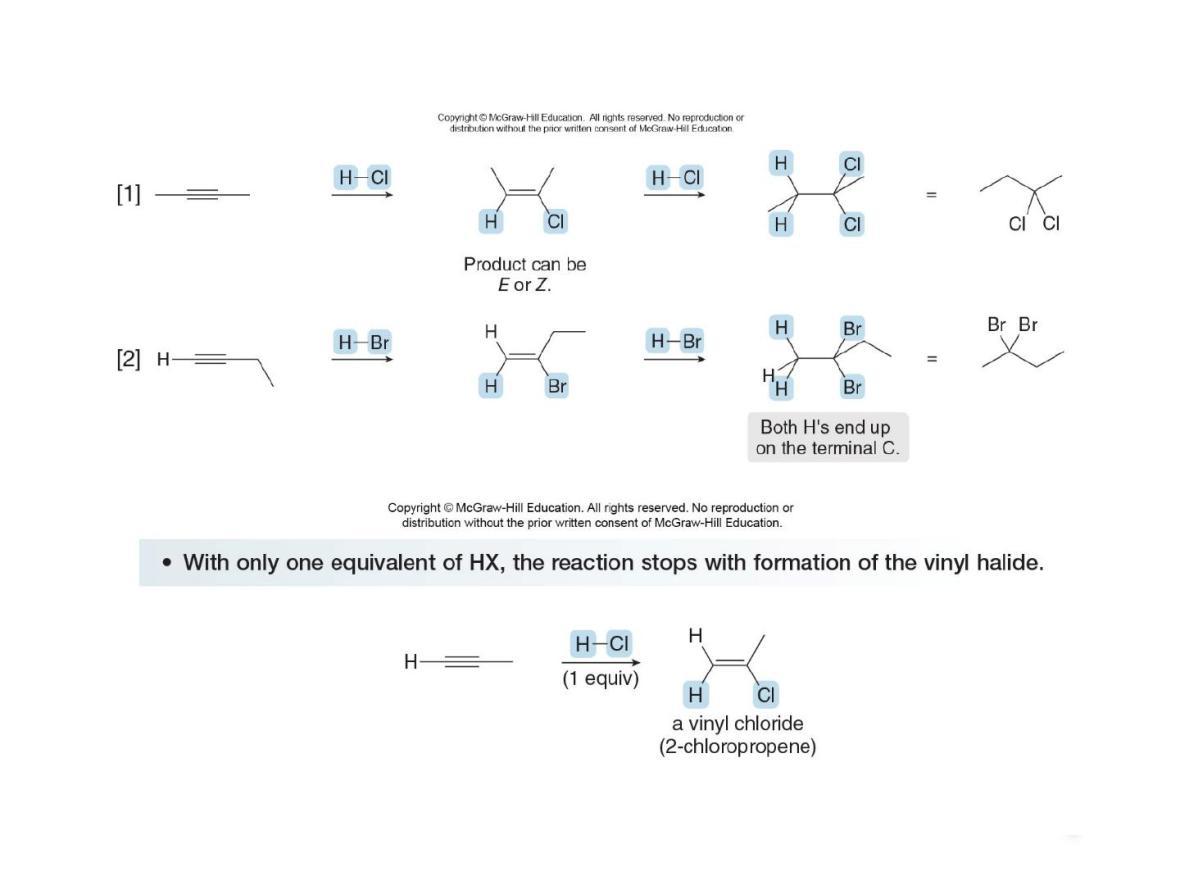
1. Hydrohalogenation: Markovnikov’s Rule