MATHEMATICAL
REASONING
Chapter 1.1
Essential Mathematics for
the Modern World

TAUTOLOGY: A compound proposition that is
always TRUE
CONTRADICTION: A compound proposition that
is always FALSE
CONTINGENCY: A compound proposition that is
neither a tautology nor a contradiction
LOGICAL EQUIVALENCE (≡): Two or more
compound propositions having identical truth
values

LOGICAL EQUIVALENCE (≡)
▪Identity Laws: 𝒑 ∧ 𝑻 ≡ 𝒑
𝒑 ∨ 𝑭 ≡ 𝒑
▪Domination Laws: 𝒑 ∨ 𝑻 ≡ 𝑻
𝒑 ∧ 𝑭 ≡ 𝑭
▪Double Negation Law: ¬(¬𝒑) ≡ 𝒑
▪Idempotent Laws: 𝒑 ∧ 𝒑 ≡ 𝒑
𝒑 ∨ 𝒑 ≡ 𝒑
▪Commutative Laws: 𝒑 ∨ 𝒒 ≡ 𝒒 ∨ 𝒑
𝒑 ∧ 𝒒 ≡ 𝒒 ∧ 𝒑

LOGICAL EQUIVALENCE (≡)
▪Associative Laws: 𝒑 ∨ 𝒒 ∨ 𝒓 ≡ 𝒑 ∨ 𝒒 ∨ 𝒓
𝒑 ∧ 𝒒 ∧ 𝒓 ≡ 𝒑 ∧ 𝒒 ∧ 𝒓
▪Distributive Laws: 𝒑 ∨ (𝒒 ∧ 𝒓) ≡ (𝒑 ∨ 𝒒) ∧ 𝒑 ∨ 𝒓
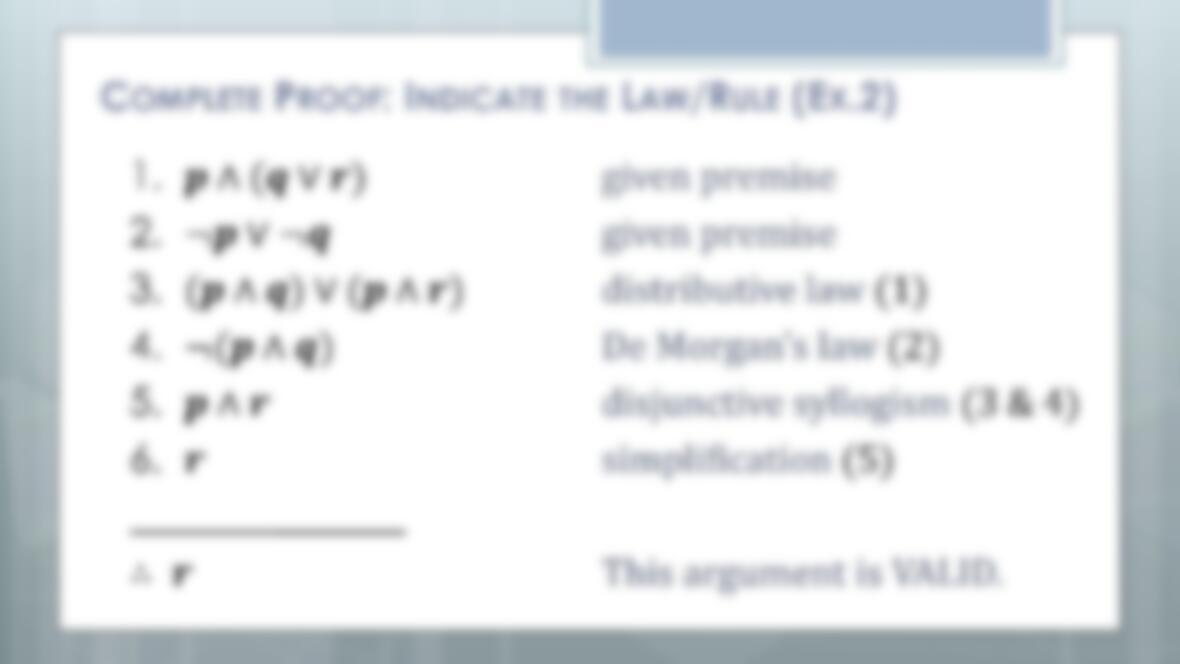
𝒑 ∧ (𝒒 ∨ 𝒓) ≡ (𝒑 ∧ 𝒒) ∨ 𝒑 ∧ 𝒓
▪De Morgan’s Laws: ¬(𝒑 ∧ 𝒒) ≡ ¬𝒑 ∨ ¬𝒒
¬(𝒑 ∨ 𝒒) ≡ ¬𝒑 ∧ ¬𝒒

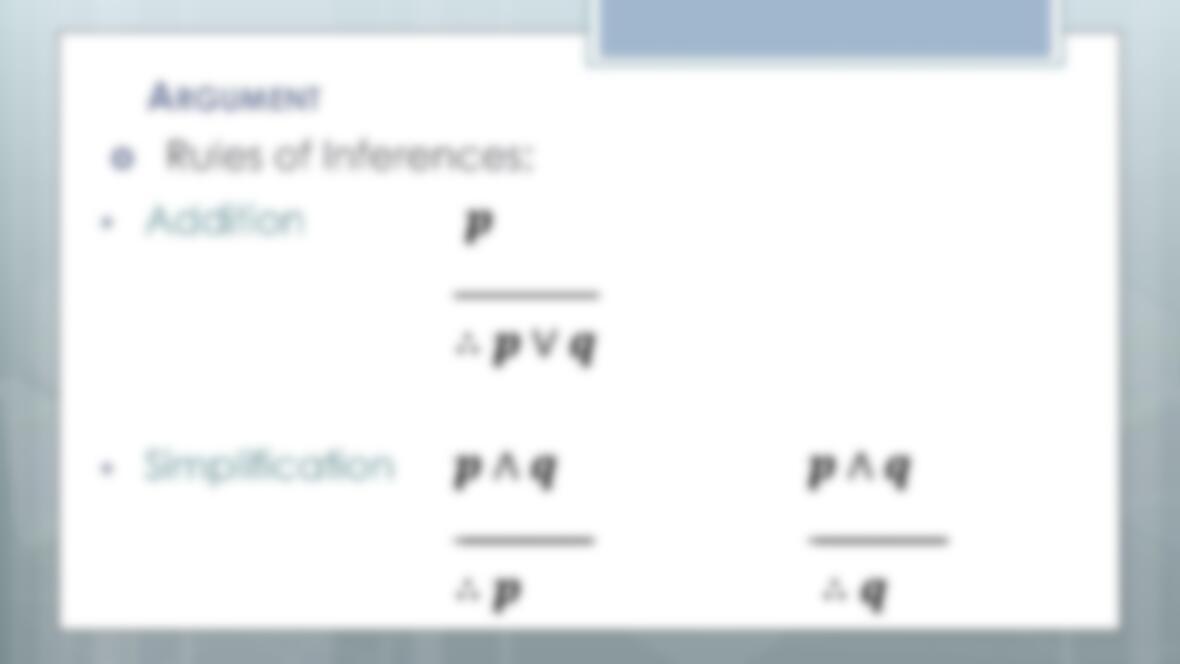
ARGUMENT
An argument is a sequence of propositions.
Arguments consist of a number of premises and
a conclusion.
Example:
If it is raining then the streets are wet.
It is raining.
∴The streets are wet.
(Premise 1)
(Premise 2)
(Conclusion)

ARGUMENT
If it is raining then the streets are wet.
It is raining.
∴The streets are wet.
Let 𝒑: It is raining .
𝒒: The streets are wet.
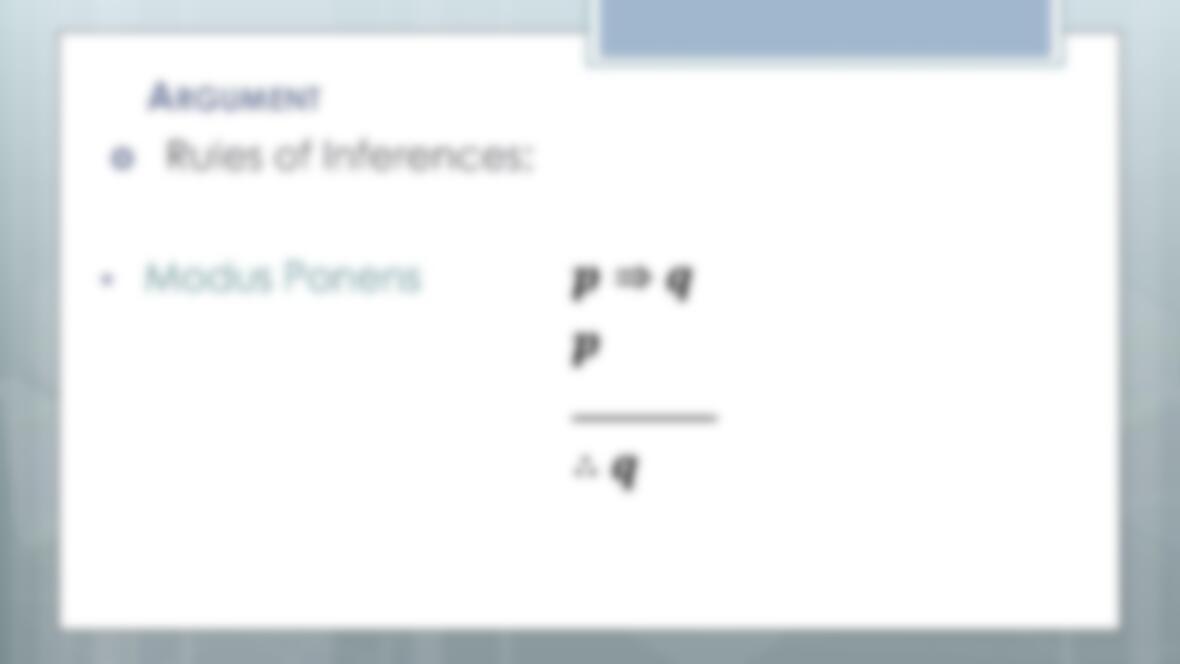
𝒑 ⇒ 𝒒
𝒑
∴ 𝒒

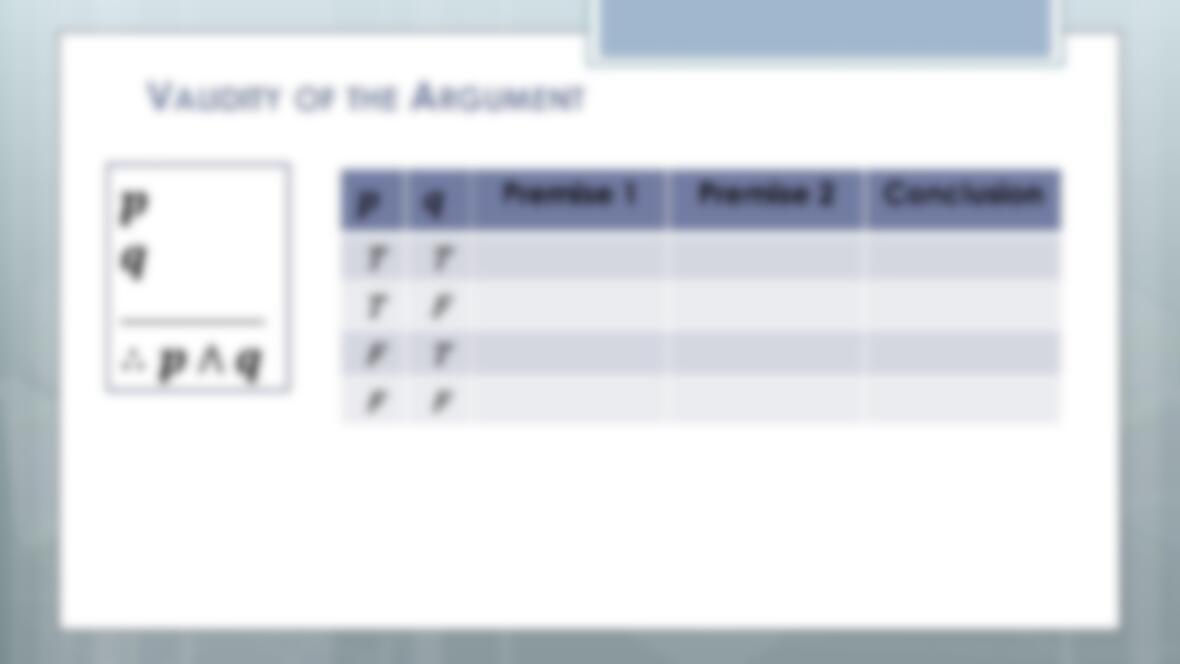
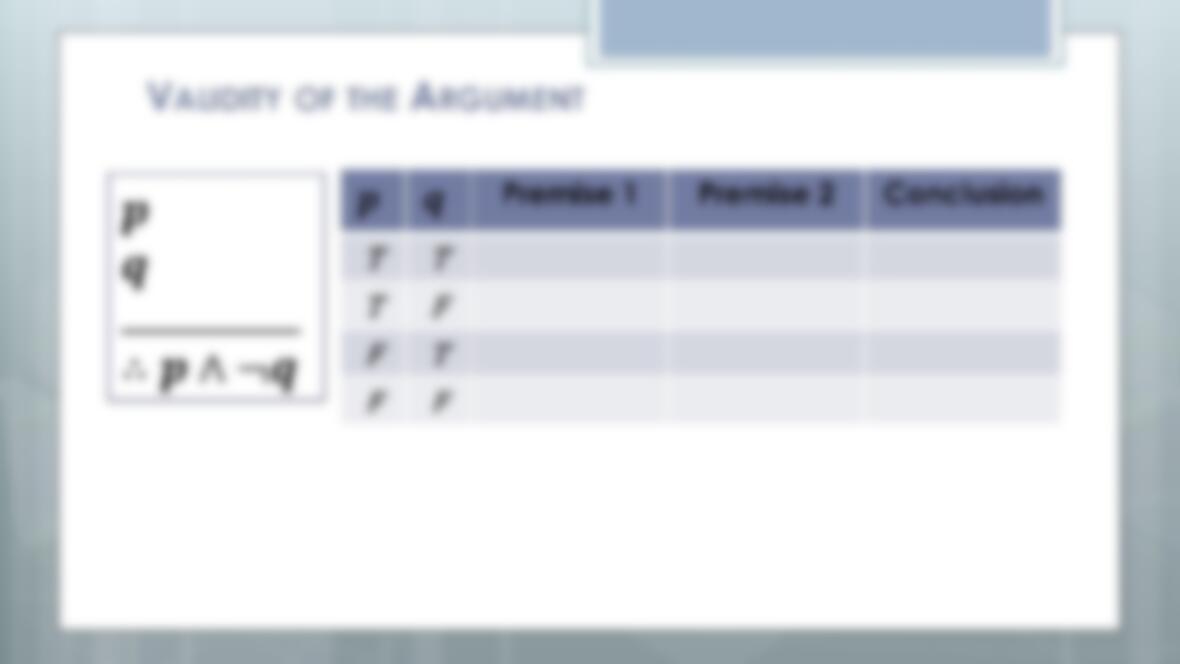
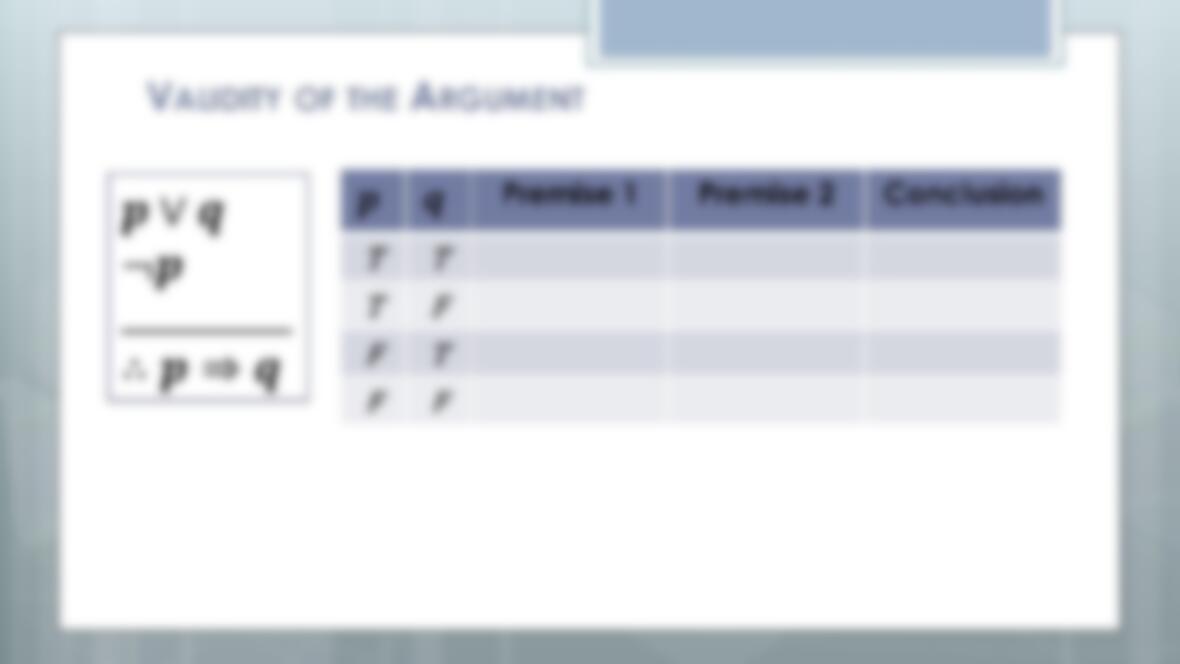
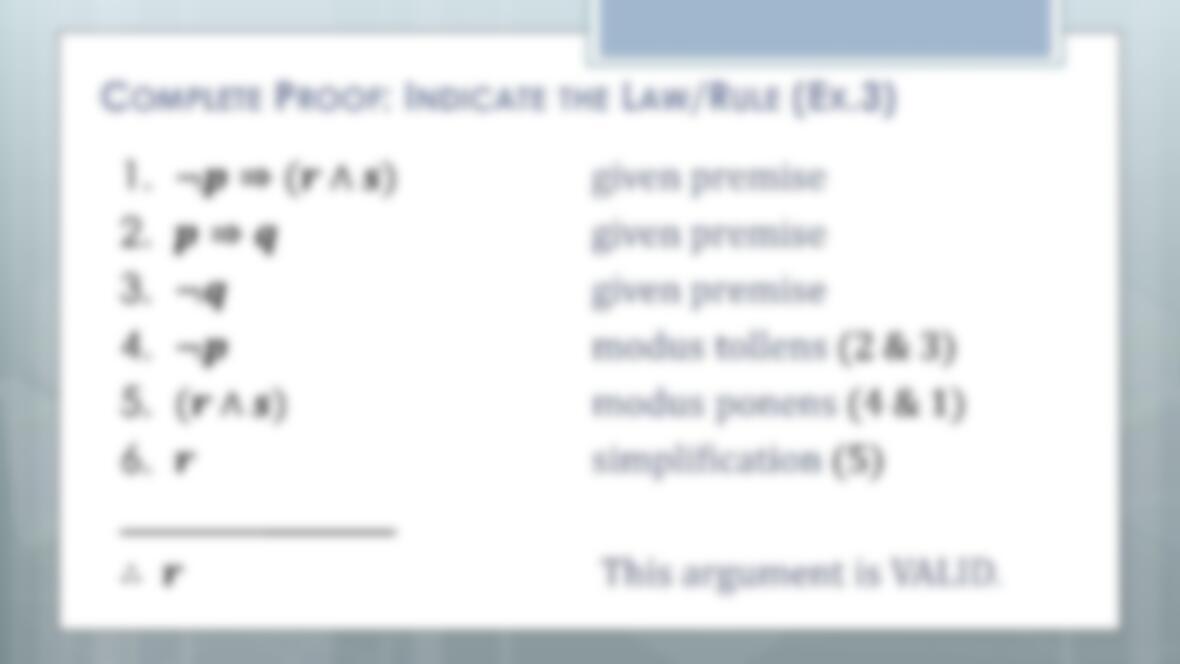
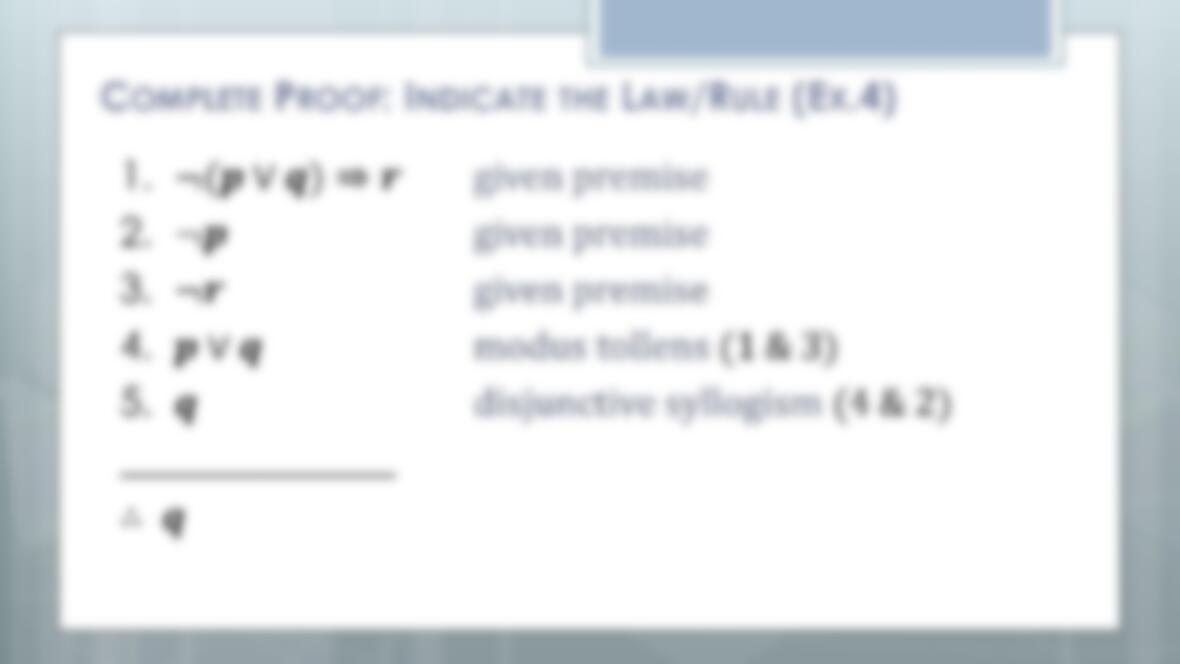
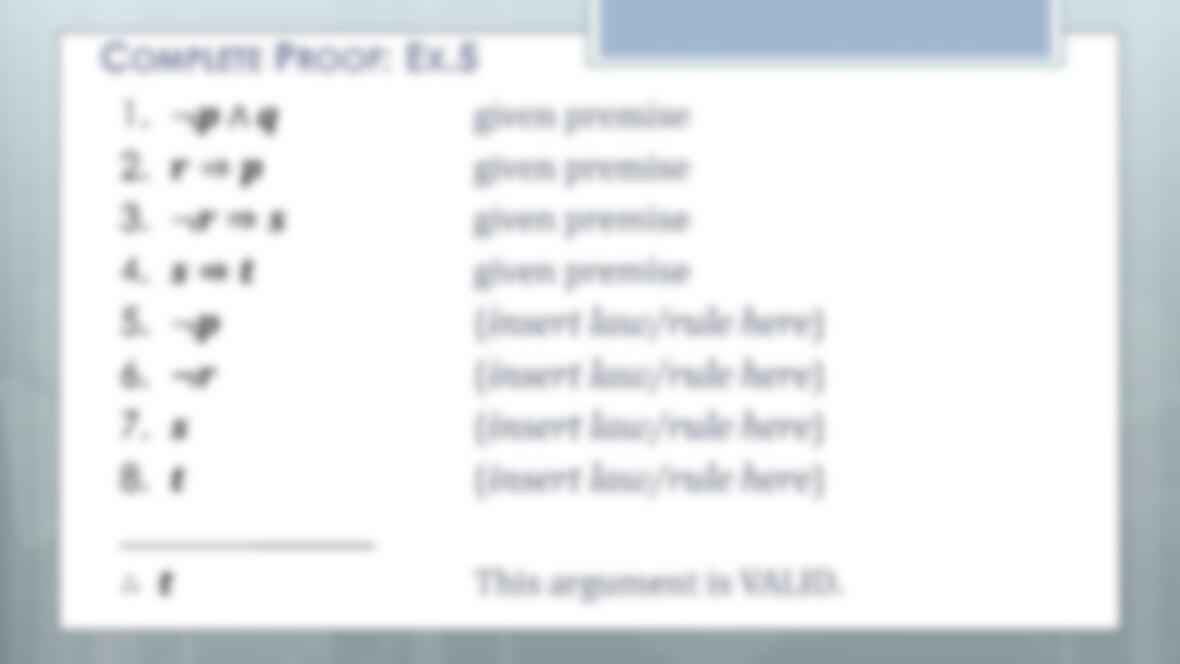
An argument is valid if there is at least one row
of the truth table in which the premises and
conclusion is a tautology.
VALIDITY OF THE ARGUMENT