9-1
©2015McGraw‐HillEducation Garrison,Noreen,Brewer,Cheng&Yuen
©2015McGraw‐HillEducation
Garrison,Noreen,Brewer,Cheng&Yuen
Master Budgeting
Chapter 10
0
1

9-2
©2015McGraw‐HillEducation Garrison,Noreen,Brewer,Cheng&Yuen
Learning Objective 1
Understand why
organizations budget and
the processes they use to
create budgets.
2
©2015McGraw‐HillEducation Garrison,Noreen,Brewer,Cheng&Yuen
The Basic Framework of Budgeting
A budget is a detailed quantitative plan for
acquiring and using financial and other resources
over a specified forthcoming time period.
1. The act of preparing a budget is called
budgeting.
2. The use of budgets to control an
organization’s activities is known
as budgetary control.
3
2
3
9-3
©2015McGraw‐HillEducation Garrison,Noreen,Brewer,Cheng&Yuen
Planning and Control
Planning –
involves developing
objectives and
preparing various
budgets to achieve
those objectives.
Control –
involves the steps taken by
management to increase
the likelihood that the
objectives set down while
planning are attained and
that all parts of the
organization are working
together toward that goal.
4
©2015McGraw‐HillEducation Garrison,Noreen,Brewer,Cheng&Yuen
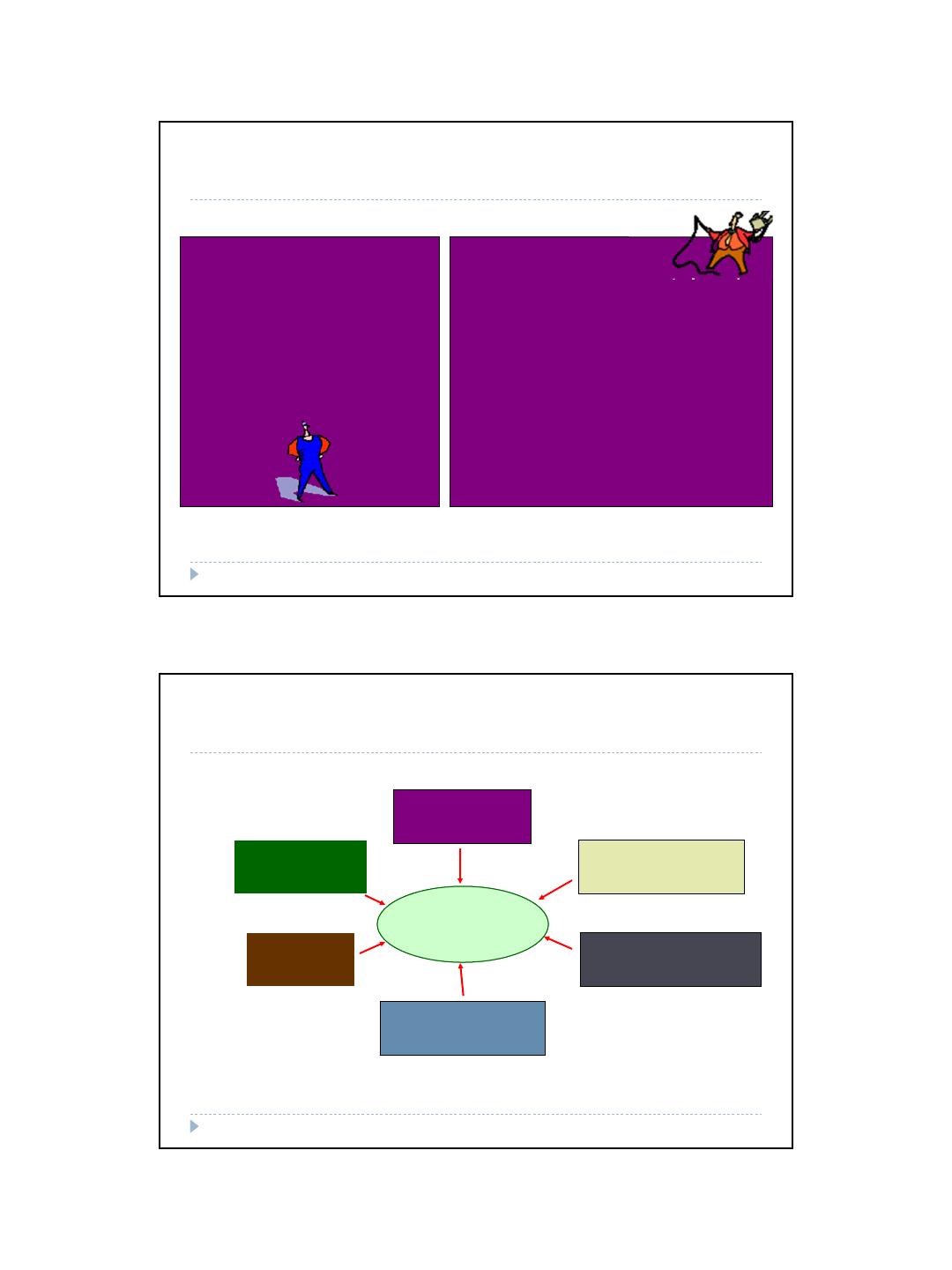
Advantages of Budgeting
Advantages
Define goals
and objectives
Uncover potential
bottlenecks
Coordinate
activities
Communicate
plans
Think about and
plan for the future
Means of allocating
resources
5
4
5
9-4
©2015McGraw‐HillEducation Garrison,Noreen,Brewer,Cheng&Yuen
Responsibility Accounting
Managers should be held
responsible for those
items – and only those
items – that they can
actually control
to a significant extent.
6
©2015McGraw‐HillEducation Garrison,Noreen,Brewer,Cheng&Yuen
Choosing the Budget Period
Operating Budget
2011 2012 2013 2014
Operating budgets ordinarily
cover a one-year period
corresponding to a company’s
fiscal year. Many companies
divide their annual budget
into four quarters.
A continuous budget is a
12-month budget that rolls
forward one month (or quarter)
as the current month (or quarter)
is completed.
7
6
7
9-5
©2015McGraw‐HillEducation Garrison,Noreen,Brewer,Cheng&Yuen
Learning Objective 2
Understand Basic
Budgeting Terms and the
Behavioral Aspects of
Budgeting.
8
©2015McGraw‐HillEducation Garrison,Noreen,Brewer,Cheng&Yuen
Bottom-up and Top-down Budgeting
Bottom‐upbudgeting
(Self-imposed budget or
Participative budget )
Top‐downbudgeting
To p
Management
Middle
Management
Lower-level
Management
To p
Management
Middle
Management
Lower-level
Management
9
8
9

9-6
©2015McGraw‐HillEducation Garrison,Noreen,Brewer,Cheng&Yuen
Advantages of the Bottom-up Budgeting
(Self-Imposed Budgets)
1. Individuals at all levels of the organization are viewed as
members of the team whose judgments are valued by top
management.
2. Budget estimates prepared by front-line managers are
often more accurate than estimates prepared by top
managers.
3. Motivation is generally higher when individuals participate
in setting their own goals than when the goals are
imposed from above.
4. A manager who is not able to meet a budget imposed
from above can claim that it was unrealistic. Self-imposed
budgets eliminate this excuse.
10
©2015McGraw‐HillEducation Garrison,Noreen,Brewer,Cheng&Yuen
How to overcome problems of self-
imposed budgets
Self-imposed budgets should be reviewed
by higher levels of management to
prevent “budgetary slack (or budget
padding).”
Most companies issue broad guidelines in
terms of overall profits or sales. Lower
level managers are directed to prepare
budgets that meet those targets.
11
10
11

9-7
©2015McGraw‐HillEducation Garrison,Noreen,Brewer,Cheng&Yuen
Advantages of the Top-down Budgeting
1. Avoid the potential budgetary slack (budget padding).
2. Provide a clearer performance goals and expectations
from the top management.
3. May provide better budget due to top management’s
access to privileged/confidential market and organization
information .
4. Provide an efficient budgetary process.
12
©2015McGraw‐HillEducation Garrison,Noreen,Brewer,Cheng&Yuen
Budget Lapsing
• A popular method among government agencies,
universities and organizations relying on allocated funds.
• Any unused funding at the end of the financial period
cannot be carried forward to the following year.
• As a result, the following year’s budget may be cut because
of the under-expenditure in the previous year.
13
12
13

9-8
©2015McGraw‐HillEducation Garrison,Noreen,Brewer,Cheng&Yuen
Budget Lapsing: Advantages
• Budget lapsing helps ensure that the appropriate level of
resources is utilized in each period. Without budget lapsing,
risk-averse managers may unnecessarily accumulate funds
and this may adversely affect the performance of the
organization.
• It helps provide an opportunity for a clean cut-off of
expenditures and to reallocate any unused resources for
other more appropriate requirements.
14
©2015McGraw‐HillEducation Garrison,Noreen,Brewer,Cheng&Yuen
Budget Lapsing: Potential Problem &
Solution
• Budget lapsing can cause undesired behavior effects. For
example, managers may wastefully spend their entire
budget before the end of the period in order to avoid budget
cuts.
• A system of reviewing the expenditures near end of the
period may uncover unnecessary expenditures and
discourage managers to wastefully spend because of budget
lapsing.
15
14
15

9-9
©2015McGraw‐HillEducation Garrison,Noreen,Brewer,Cheng&Yuen
Incremental versus Zero-based Budgets
•Incremental method of budgeting is most commonly
used by companies. Companies start off one year’s budget
by referring back to the previous year’s figures.
Adjustments are then made to the budget to account for
the expected changes such as prices for the next year.
• While incremental method of budgeting is practical and
fast, any inefficiency in the previous year’s figures may be
carried forward. For example, if all along the organization is
over staffed, then the budget will continually to be allowing
for the over staffing situation under this method.
16
©2015McGraw‐HillEducation Garrison,Noreen,Brewer,Cheng&Yuen
Incremental versus Zero-based Budgets
•Zero-Based Budgets are prepared based on the
assumption that the company has just started. Therefore,
resources required have to be justified from scratch.
• For example, when budgeting for staff cost for a restaurant,
managers using the zero-based budgeting approach will
ignore the existing staff level and expenses, rather, they
will examine factors such as opening hours, number of
tables, expected patron numbers to work out the number of
staff required at each position and level, hence the
associate costs, to produce a budget.
17
16
17

9-10
©2015McGraw‐HillEducation Garrison,Noreen,Brewer,Cheng&Yuen
Incremental versus Zero-based Budgets
• Companies using the zero-based method do not simply
ignore previous years’ figures. Figures generated by the
zero-based method are usually compared with previous
years’ figures. Any large differences are investigated.
• As zero-based budgeting is time consuming and costly,
companies tend to use this method for the relatively large
items and the incremental method for the rest.
18
©2015McGraw‐HillEducation Garrison,Noreen,Brewer,Cheng&Yuen
Top Management Attitude:
Human Factors in Budgeting
The success of a budget program depends on three
important factors:
1. Top management must be enthusiastic and
committed to the budget process.
2. Top management must not use the budget to
pressure employees or blame them when
something goes wrong.
3. Budget targets should be challenging but
achievable in order to have good motivational
effects.
19
18
19
9-11
©2015McGraw‐HillEducation Garrison,Noreen,Brewer,Cheng&Yuen
The Budget Committee
A standing committee responsible for
overall policy matters relating to the budget
coordinating the preparation of the budget
resolving disputes related to the budget
approving the final budget
20
©2015McGraw‐HillEducation Garrison,Noreen,Brewer,Cheng&Yuen
Learning Objective 3
Understand the Key
Components of Master
Budget in Manufacturing,
Merchandising and
Service Industries
21
20
21
9-12
Understand the key components of master budget in
Manufacturing, Merchandising, and Service Industries
The first step of budgeting for every business is to budget for the
revenue, whether it is a sales budget for providing goods or services or
a funding budget. Although operational budgets are adapted
according to the industries, they are very similar and typically comprise
of budgets for
• Income statement
•Cash
• Balance sheet.
The major differences of different industries include:
• Manufacturing: production budget is involved