4326
The equilibrium quantity of gasoline stays the same
C
Quiz Submissions – Homework 3 – Markets
Dawn Zimmerman (username: dawn.zimmerman15)
Attempt 1
Written: Apr 14, 2018 10:58 AM – Apr 14, 2018 11:29 AM
Submission View
Your quiz has been submitted successfully.
Question 1
1 / 1 point
Which one of the following will result in movement along the demand curve for clothing
as opposed to
a shift in the demand curve itself?
Question options:
The aging of the population implies that people will be less concerned with clothing fashions
A dramatic change in fashions causes people to want to purchase more new clothing
Warmer weather means people need fewer winter clothes
Clothing prices decline because manufacturers shift to production in countries with lower wages
Question 2
1 / 1 point
Suppose there is a decrease in the supply of lumber. What would we expect to happen to the equilibrium price and quantity of lumber?
Question options:
Price and quantity will both rise
Price and quantity will both fall
Price will rise, quantity will fall
Price will fall, quantity will rise
Price and quantity will remain the same
Question 3
1 / 1 point
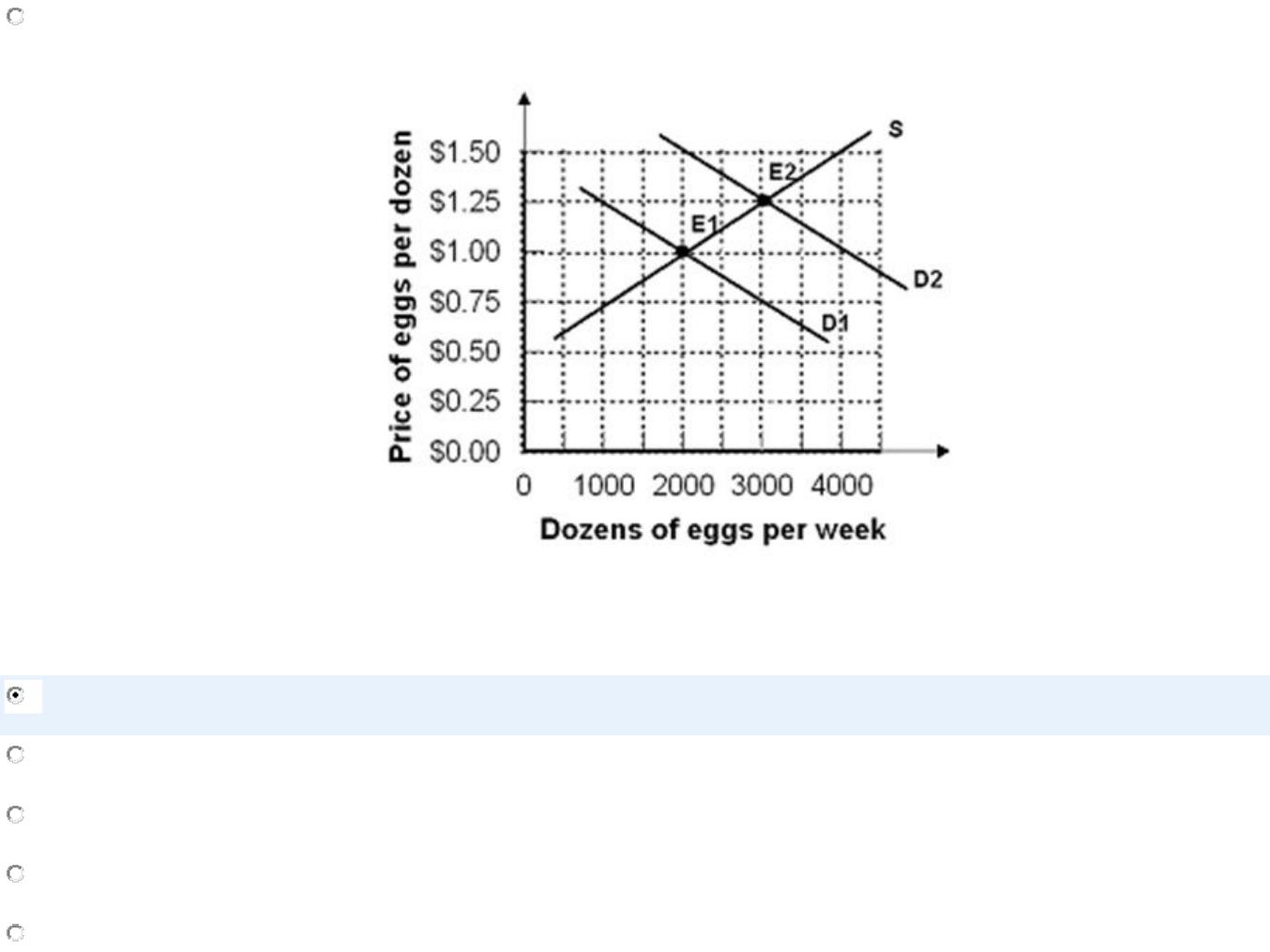
If the demand curve is given by D1, then what equilibrium price and quantity will the market tend toward?
Question options:
P = $1.00; Q = 2000
P = $1.00; Q = 3000
P = $1.25; Q = 2000
P = $1.25; Q = 1000
P = $0.50; Q = 0
Question 4
0 / 1 point

Pricing studies such as Blinder’s in 1998 suggest that…
Question options:
The emphasis of the standard market model on flexible prices adjusting rapidly to balance the free market system is empirically justified as the norm in modern capitalist economies.
Modern capitalist economies are characterized by a high degree of price competition.
Price stability, not flexibility, is the norm throughout most of the US economy
Question 5
3 / 4 points
Match (Note: not all choices in the right hand column will match)
__4__
Assuming that the way a part of a system works is the way the whole system works
__3__
Buying and selling assets with the expectation of profiting from appreciation or depreciation
in their value
____1
A situation in which the quantity (demanded or supplied) does not respond at all to a change
in price
__6__
Suggests an inverse (negative) relationship between price and quantity
1.
Perfect inelasticity
2.
Perfect elasticity
3.
Speculation
4.
Fallacy of composition
5.
Fallacy of division
6.
Law of demand
7.
Law of supply
Question 6
0 / 1
point
Suppose the demand for gasoline increases AND the supply of gasoline decreases. Which of the following is NOT a possible outcome of these changes in the market for
gasoline? (Assume neither the supply nor the demand curve is perfectly elastic or perfectly inelastic.)
Question options:
The equilibrium quantity of gasoline rises
The equilibrium price of gasoline stays the same
The equilibrium quantity of gasoline stays the same
The equilibrium price of gasoline rises
The equilibrium quantity of gasoline falls
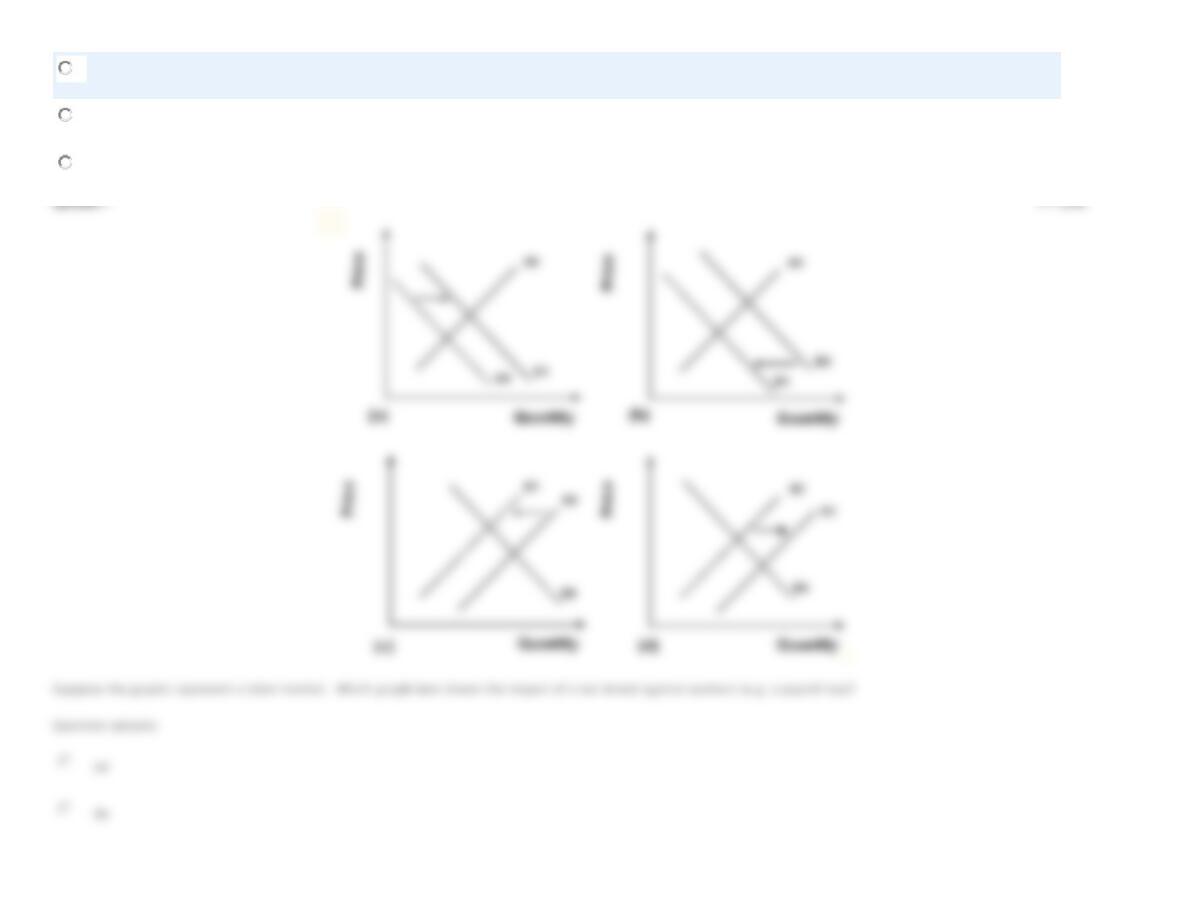
(a)
(b)