Situational Analysis & Marketing Plan For Charmin
I. History
Procter & Gamble
1837- William Procter and James Gamble started their own business of selling
candles and soaps amidst the financial crisis of the 1800’s.
1859- Procter & Gamble sales reach 1 million for the first time.
1937- P & G celebrates its 100 years in the business. Sales reach $230 Million.
1939- 5 months a/er the T.V was invented, P & G airs it first commercial on TV.
1943 – The Company creates its first division – the Drug Products Division – to sell its
growing line of toilet goods.
1957- P&G enters the consumer paper products business with the acquisition of
Charmin Paper Mills, a regional manufacturer of toilet tissue, towels and napkins.
2000’s- A/er acquiring Clairol & Wella, Procter & Gamble went on to acquire Gille8e.
With a portfolio of over 22 billion dollar of brands and over $200 billion in market
capitalization, P & G established itself as one of the ten most valuable companies in
the world.
‘Three billion times a day, P&G brands touch the lives of people around the world.
The company has one of the strongest portfolios of trusted, quality, leadership
brands, including Pampers, Tide, Ariel, Always, Whisper, Pantene, Folgers, Charmin,
Downy, Lenor, Iams, Crest, Oral-B, Actonel, Duracell, Olay, Head & Shoulders, Wella,
Gille8e, and Braun. The P&G community consists of almost 140,000 employees
working in over 80 countries worldwide.’
1928- Charmin was first manufactured in 1928 at the Hoberg Paper Company in Green Bay,
Wisconsin. The packaging reAected feminine fashions of the time. It got the name ‘Charmin’ by
an employee who described it as being very Charming.
1932- This was the year that Charmin first introduced its 4 Roll package to consumers.
1950’s- 1950 was the year the Hoberg changed its name to the Charmin Paper Company. 1953
was the first year that the baby graphic was used on the packaging that we recognize the brand
by even to this day. 1957 was the year that Procter & Gamble (P&G) acquired Charmin Toilet
Paper.
1964- The Mr Whipple (George the Grocer) character was born to promote Charmin’s
‘squeezable so/ness’. He appeared in Charmin’s print, television and radio ads for the next 20
years. This same year, Charmin also became the first one ply scented toilet paper by adding
perfume.
1978 — Mr. Whipple was named the third-best-known American — just behind former
President Nixon and Billy Graham.
“Please don’t squeeze the Charmin!” was named the most recognizable advertising slogan and
Charmin toilet paper also expanded distribution to all 50 states in the U.S.
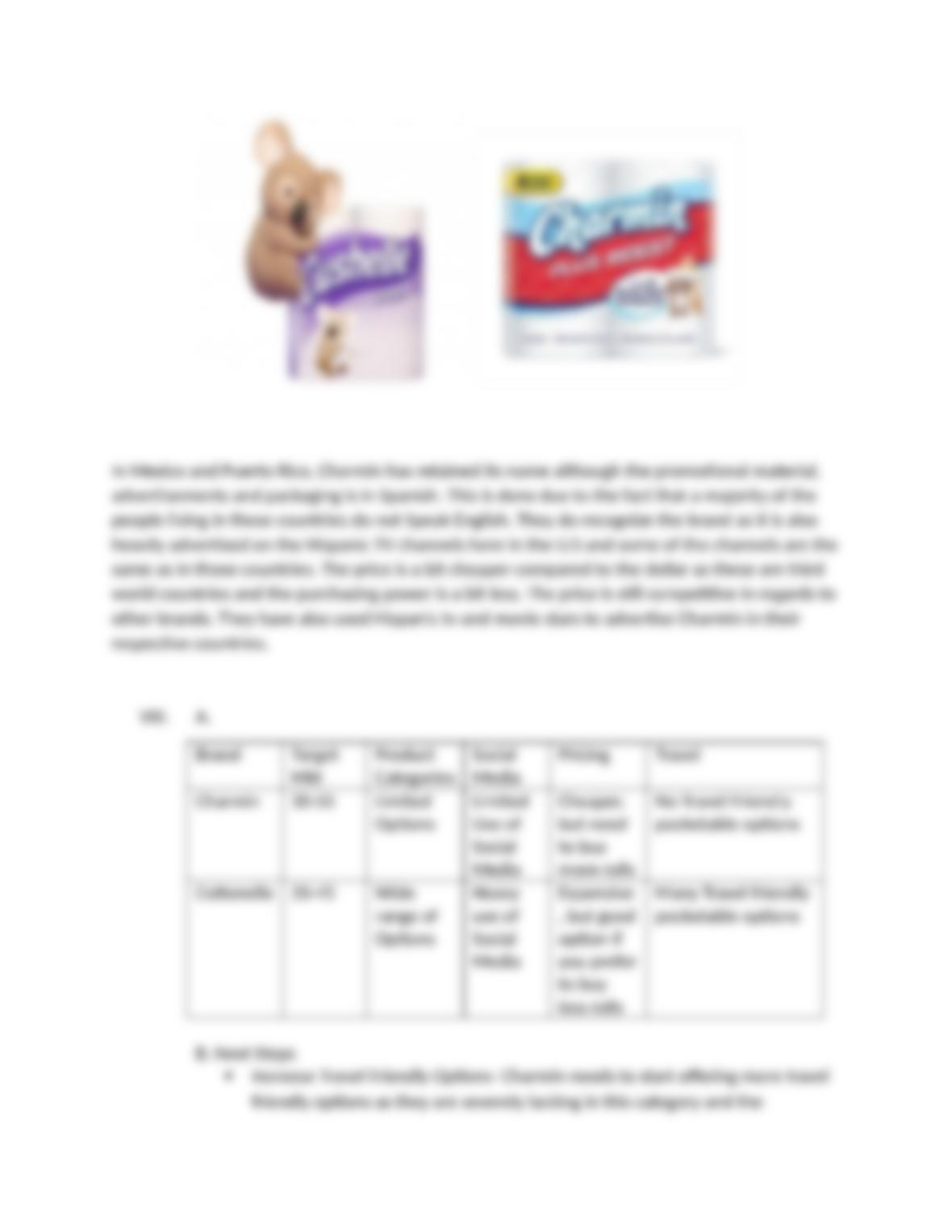
2000’s- The Charmin Bear was introduced and replaced the baby from the packaging and
commercials in 2004. It is now the mascot for Charmin Ultra So/ and Charmin Ultra Strong.
Throughout Human History, humans have had to use the bathroom even when the term
bathroom meant ‘in the bushes’. The early humans used sticks, rocks, whatever they could get
their hands on basically to clean themselves up. Romans were the cleanest of us all, using wool
and sponges a8ached to sticks dipped in salt water. Greeks used clay. Mussels were used by
those living near the coast. The Mayans made good use of corn cobs. The Chinese were the first
to use toilet paper in the 14th century. In 1888, Richard Sears started printing the Sears Catalog
and shipping it to customers and that was a popular item of choice to clean up, although it was
reserved for the rich emperor family and not everyone else.
The first commercially available toilet paper was made by Joseph C Gaye8y and it was in Aat
rolls. He was so proud of his invention that he put his name on every roll. Needless to say,
people were not pleased with this and it failed. Then came along the Sco8 brothers in 1890 and
created the Waldorf brand toilet paper in rolls and sold directly to hotels and drugstores.
Charmin entered the game in 1928 and as they say ’the rest was history’.
Sales
Charmin was always a leader in sales ahead of its competitors. In an article published in the
Caribbean business comparing sales from 2000-2009, Charmin is the obvious leader ahead of its
competitors.
Charmin is the market leader with a 39% market share. Its closest competitor is Co8onelle with
23% market share followed by Angel So/ at 11% and Sco8 at 9%.
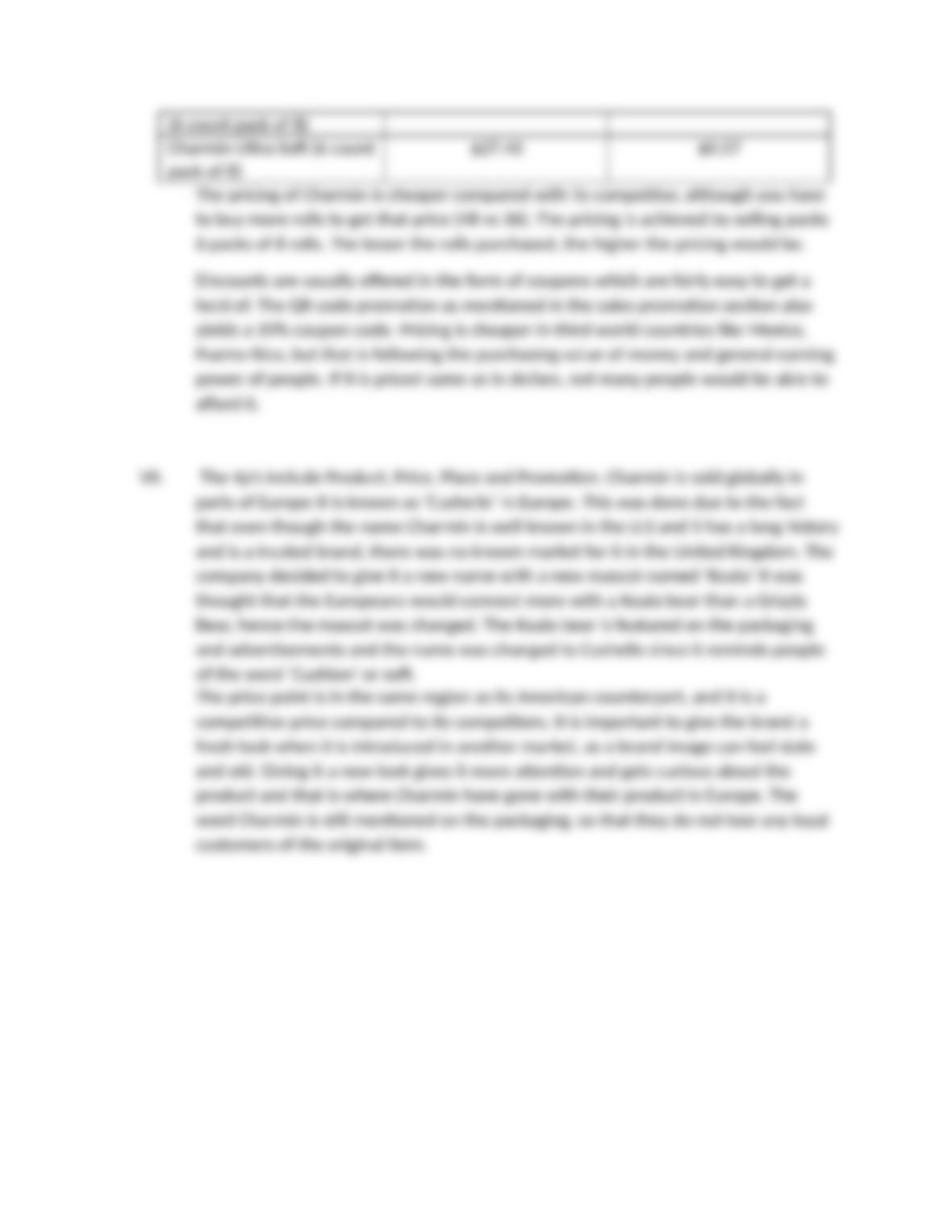
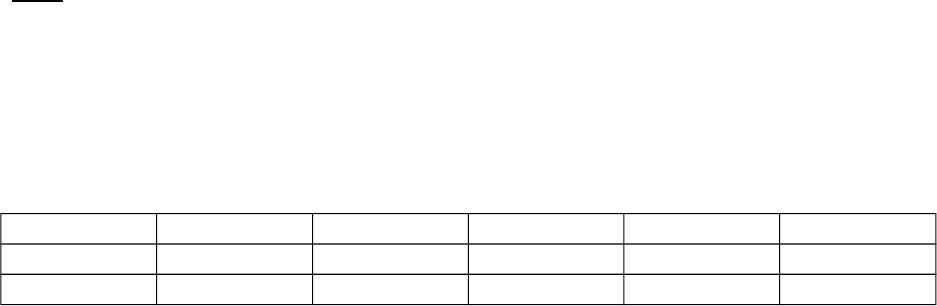
Year Charmin Sco8 Co8onelle Angel So/ Other
2000 40 2 10 20 27
2009 39 9 23 11 16
III. Compeve Analysis
A. Procter & Gamble’s main competitor companies are Kimberley Clark and Georgie pacific.
Kimberley Clark is the maker of Co8onelle and Sco8 which are the leading competitor
brands for Charmin. Georgia pacific is the maker of Angel So/ and Quilted Northern.
Angel So/ actually outsold Charmin in terms of sales (in millions of dollars) in 2015, but
the data does not entirely tell the whole picture as Charmin sales are divided between
Charmin Ultra So/ and Charmin Ultra Strong whereas Angel So/ only has one type of
paper and together the two Charmin brands completely outperform all the other
brands.
The toilet paper market is one area where not too many store brands have entered the
fray as yet. You will be hard pressed to ‘nd Rite-Aid or Walmart branded toilet paper
although there do exist many small local brands. There does exist a new market of
brands like Seventh Generation, Green Forest, Marcal etc which seem to be selling
organic and recycled toilet paper. These brands are also priced higher than the usual
pack of 8)
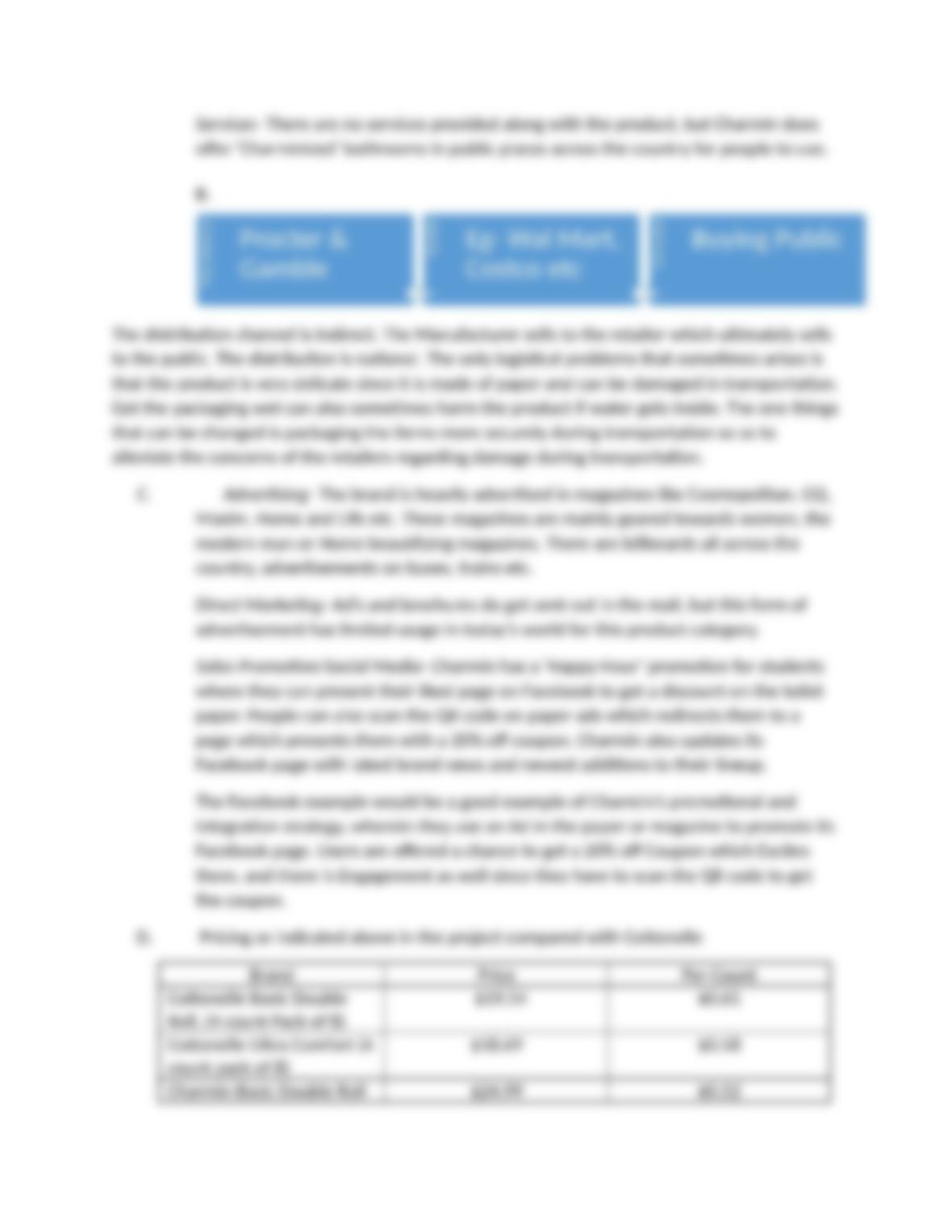
The distribution channel is Indirect. The Manufacturer sells to the retailer which ultimately sells
to the public. The distribution is national. The only logistical problems that sometimes arises is
that the product is very delicate since it is made of paper and can be damaged in transportation.
Get the packaging wet can also sometimes harm the product if water gets inside. The one things
that can be changed is packaging the items more securely during transportation so as to
alleviate the concerns of the retailers regarding damage during transportation.
C. Advertising- The brand is heavily advertised in magazines like Cosmopolitan, GQ,
Maxim, Home and Life etc. These magazines are mainly geared towards women, the
modern man or Home beautifying magazines. There are billboards all across the
country, advertisements on buses, trains etc.
Direct Marketing– Ad’s and brochures do get sent out in the mail, but this form of
advertisement has limited usage in today’s world for this product category.
Sales Promotion/Social Media- Charmin has a ‘Happy Hour’ promotion for students
where they can present their liked page on Facebook to get a discount on the toilet
paper. People can also scan the QR code on paper ads which redirects them to a
page which presents them with a 20% oS coupon. Charmin also updates its
Facebook page with latest brand news and newest additions to their lineup.
The Facebook example would be a good example of Charmin’s promotional and
integration strategy, wherein they use an Ad in the paper or magazine to promote its
Facebook page. Users are oSered a chance to get a 20% oS Coupon which Excites
them, and there is Engagement as well since they have to scan the QR code to get
the coupon.
D. Pricing as indicated above in the project compared with Co8onelle
Brand Price Per Count
Co8onelle Basic Double
Roll, (4 count Pack of 8)
$19.54 $0.61
Co8onelle Ultra Comfort (4
count pack of 8)
$18.69 $0.58
Charmin Basic Double Roll $24.99 $0.52
Manufacturer
Gamble
Retailer
Costco etc
Consumer