1. Executive Summary
Our team is developing a marketing plan for this new launched self-help service we are
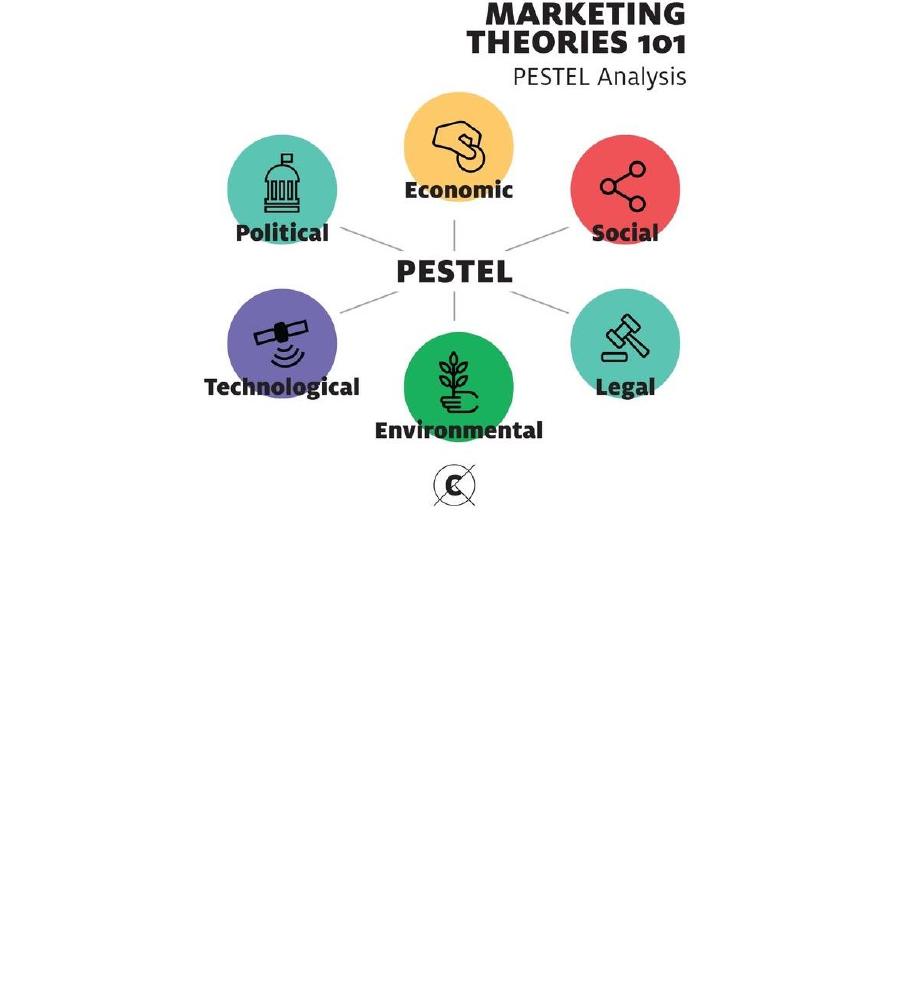
introducing in Starbucks Singapore. In this marketing plan, we will cover PESTEL analysis
under Starbucks’ business context situational analysis, which analyse the 1) political, 2)
economic, 3) social, 4) technological, 5) environmental, and 6) legality factors in Singapore’s
context and the possible results and impact on Starbucks. Under product decisions, we will
discuss Starbucks’ 1) branding, how the 2) new product will be like, 3) positioning strategy to
position the new product and service as well as 4) target market we are looking at.
For pricing strategy, we decided to set the price following the six-step procedure to set a
range of prices for the new product. We will conduct studies and surveys before distribution
of the products and products will be distributed through Starbucks’ outlets.
Under integrated marketing communications strategy, we will do 1) advertising, 2) sales
promotion, 3) events and experiences, 4) direct marketing, 5) interactive marketing, and 6)
word of mouth marketing.
2. Introduction
Starbucks Corporation is an American coffee company and coffeehouse chain founded in
1971 with 23,768 outlets worldwide as recorded in November 2016. It achieved many awards
including “No. 1 Best Coffee,” Fast Food and Quick Refreshment categories and “No. 1
Most Popular Quick Refreshment Chain” in Zagat’s Survey of National Chain Restaurants
from 2009 to 2011, one of the “World’s 50 Most Innovative Companies” (Fast Company,
2012) http://www.starbucks.com.sg/docs/default-source/about-us-pdfs/starbucks-company-
recognition.pdf
Starbucks owns and operates 124 outlets in Singapore and most are located in town areas
and within shopping malls where the crowd can easily get access to. Being a luxurious coffee
seller, Starbucks aims to provide the customers with sense of warmth and belonging, where
everyone feels welcomed. (Starbucks, 2017) http://www.starbucks.com.sg/about-us/our-
starbucks-mission-statement It has indeed done a good job as people find it a cosy and
comfortable environment to have their food and beverage alone or with others. Starbucks
Singapore offer a variety of food and drinks including light meals, deserts, caffeine drinks
and those without caffeine.
In the following essay, we will focus on Starbucks Singapore and a new DIY product that we
are planning to introduce and how it will be introduced to our target consumers.
3. The business context situational analysis
3.1 Political
➢ Sourcing of raw materials. Starbucks follows the sourcing strategies and adhere fair trade
practices when sourcing for raw materials from Latin America, Africa, and Asia-Pacific.
➢ Taxation policy. As Singapore do not produce coffee beans, high taxation imposed on
farmers in countries producing coffee beans means that Starbucks has to pay a higher price
for the coffee. Any fluctuation in taxation levels in the industry will greatly affect Starbucks
and it will struggle to bear the costs or impose on consumers.
➢ International trade regulations/tariffs. When another country’s government imposes a
tariff, it will not only result in an efficiency loss for Starbucks but large income transfers
can become inconsistent with equity. This extra charge can turn bargain into a rip-off.

3.2 Economic
➢ Rising labor costs and operational costs. In Singapore, the labor costs and the rental are
very expensive, especially that most Starbucks outlets are located at CBD areas and
within shopping malls. Thus, the price is deemed expensive when comparing with other
coffee shops.
➢ GDP per capita of 52600.60USD. (Trading economics, 2017) With a higher GDP per
capita, a cup of Starbucks coffee costing $6 is still affordable to most people in
Singapore. https://tradingeconomics.com/singapore/gdp-growth
3.3 Social
➢ Change in people lifestyle. Nowadays, people tend to go to café for coffee than going
to coffee shops in hawker centers and food courts. Changing of lifestyle means that
consumers prefer a place to relax and enjoy themselves and/or with friends in a cozy
and welcoming environment, which enabled Starbucks to open more outlets.
➢ As of 2016, Singapore has a population more than 5.75 million people with about 70%
between the ages of 15 and 65. (World Bank, 2017) The young population are the main
target consumers of Starbucks, thus the bigger population of younger generation
benefits Starbucks https://data.worldbank.org/indicator/SP.POP.TOTL?locations=SG
3.4 Technological:
➢ BoxBot coffee box is the coffee intelligent manufacturing and selling system which
connects the robot, intelligent coffee machine, container and Internet. It is a completely
new set of automatic coffee retail ecology, using the full self-reliance operation of the
robotic arm, it can quickly and accurately supply customers with a common coffee drink.
Users only need to scan code or touch screen to complete automatic field manufacturing
and retail. In 80 seconds, Boxbot can make a cup of 450ml cup of coffee.
➢ Rising mobile purchases. With the advancement in technology, now Starbucks has the
opportunity to improve its mobile apps and link services to gain more revenues through
mobile purchases.
3.5 Ecological/Environmental Factors
➢ Planning permissions may not be granted if Starbucks wish to build in an area that could
be harmful to the environment. The land may be protected
➢ Environmental disasters in countries which produce coffee beans will affect
importation of coffee beans as well as the price and hence affect Starbucks’ price.
➢ Work disposal – Starbucks need to carefully consider the methods in which they dispose