1.0 Introduction
Foreign direct investment (FDI) is a direct investment made by individuals or companies in another
country in the production or business of a country by purchasing or expanding existing business
operations. It is still the main driving force of economic growth in developing countries. Therefore,
attracting foreign investors has been the core focus of policy makers’ economic development in the
past few decades. This in turn has led to a rapid increase in foreign direct investment flows to
developing countries (January 2019). Foreign direct investment is usually made by multinational
companies (MNCs) in the form of acquiring state-owned enterprises, joint ventures, and launching
new businesses in the host country.
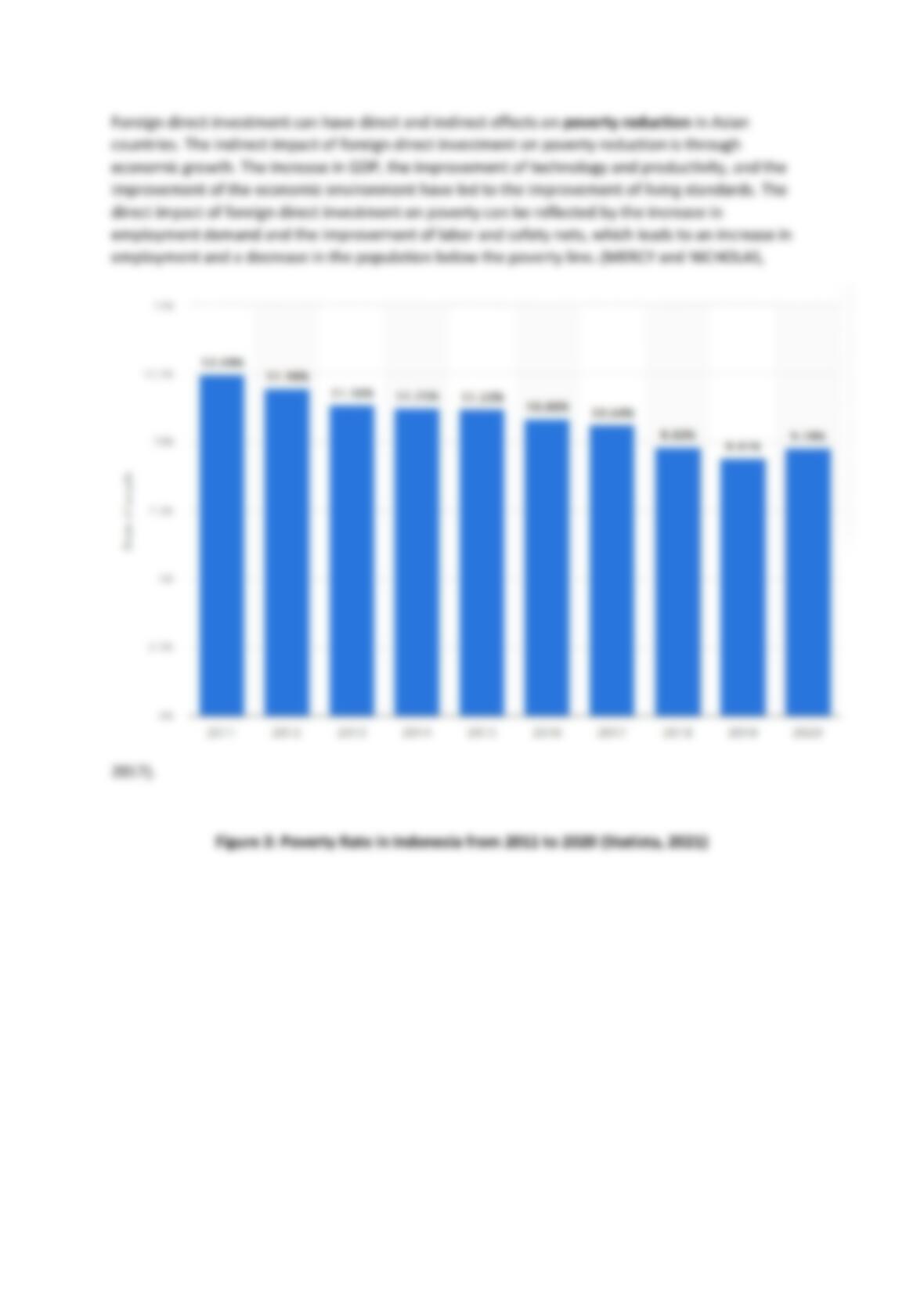
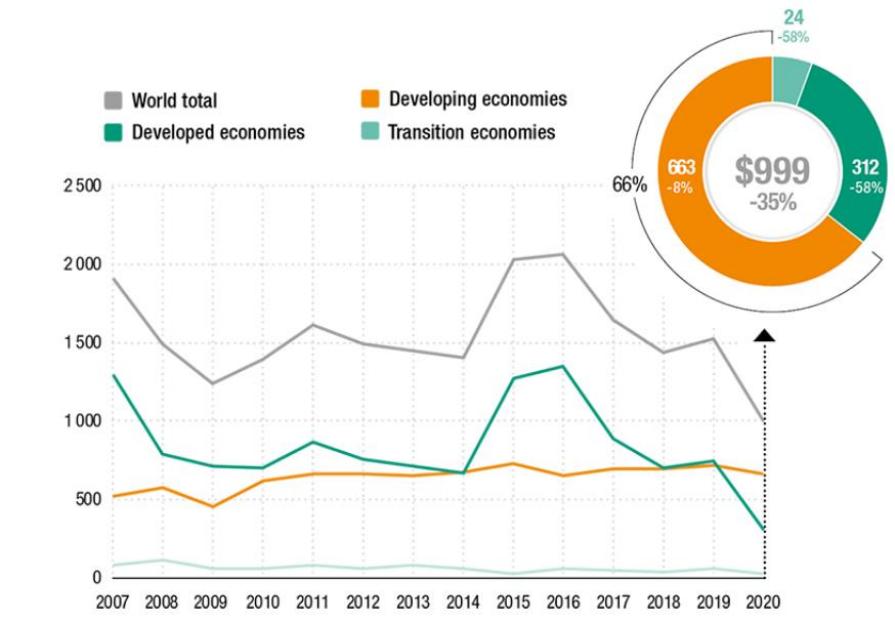
Figure 1: Foreign direct investment inflows, global and by group of economies, 2007–2020
(UNCTAD, 2021)
From the past few decades to recent years, foreign direct investment has helped promote the
economic growth of Asian countries, especially in developing countries that have gradually opened
their borders and connected with the world market. Figure 1 shows that FDI flows are expected to
fall by 30% in 2020, because sectors severely affected by the epidemic, including the primary and
manufacturing sectors, account for a larger share of FDI than developed economies (UNCTAD, 2021).
As a result, FDI has attracted the attention of Asian countries, supporting the economy during and
after the crisis through financial support to its affiliates and connections with local companies, as
well as assisting the government in responding to epidemics. (OECD, 2020).
2.0 Benefits of FDI in Asian countries.
As investors set up new companies in foreign countries, foreign direct investment has brought
employment opportunities. This may increase the income and purchasing power of locals, which in
turn will promote the overall development of the target economy (Ishida, 2012). The “export
promotion development strategy” adopted by China has proved to be an important step in
attracting more foreign direct investment into China. While promoting export policies, China has
implemented economic reforms and opening-up policies, and has worked hard to promote trade by
reaching a number of bilateral trade arrangements and taking unilateral actions. There has been
substantial progress in reducing tariff barriers. With a large amount of FDI entering China, the
number of people employed in foreign capital enterprises has increased dramatically (Sune and
Fredrik, 2007). Compared with the period from 1986 to 2011, the number of employed persons in
foreign-invested enterprises has increased by 165 times. In addition, as the proportion of foreign-
funded enterprises in the total number of employment in the country continues to increase, the