Copyright © 2010 by the McGraw-Hill Companies, Inc. All rights reserved.
McGraw-Hill/Irwin
Managerial Economics & Business
Strategy
Chapter 2
Market Forces:
Demand and Supply

2
Overview
I. Market Demand
Curve
–The Demand Function &
Equation
–Determinants of Demand
II. Market Supply
Curve
–The Supply Function &
Equation
–Determinants of supply
III. Market Equilibrium
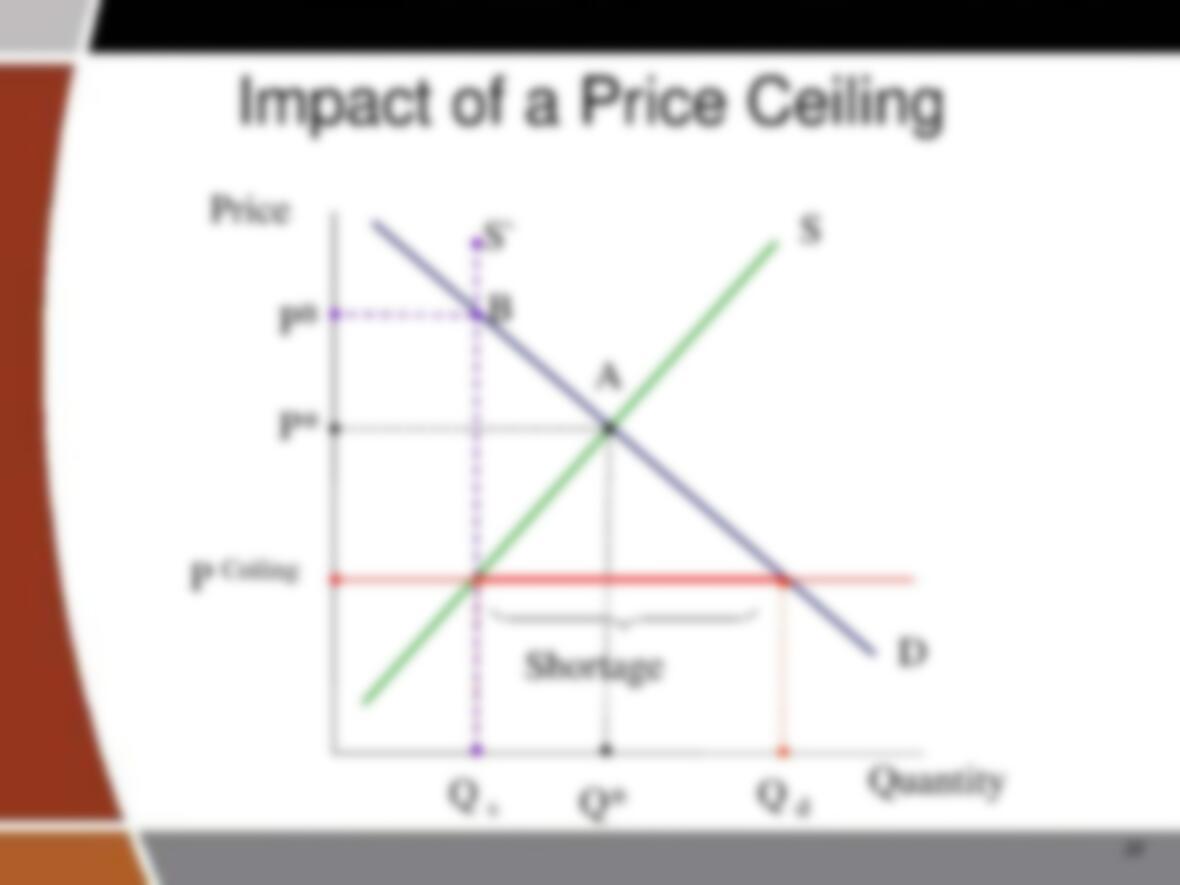
IV. Government
intervention: Price
Restrictions (price
ceiling and Price floor)
3
Market Demand Curve
Shows the amount of a good that will be
purchased at alternative prices, holding other
factors constant.
Law of Demand
–The demand curve is downward sloping.
Quantity
D
Price

4
The Demand Function
A general equation representing the demand
curve
Qxd = f(Px , PY , M, H,)
–Qxd = quantity demand of good X.
–Px = price of good X.
–PY = price of a related good Y.
•Substitute good.
•Complement good.
–M = income.
•Normal good.
•Inferior good.
–H = any other variable affecting demand.

5
Function Form
Qxd = f(Px, PY , M, H,)
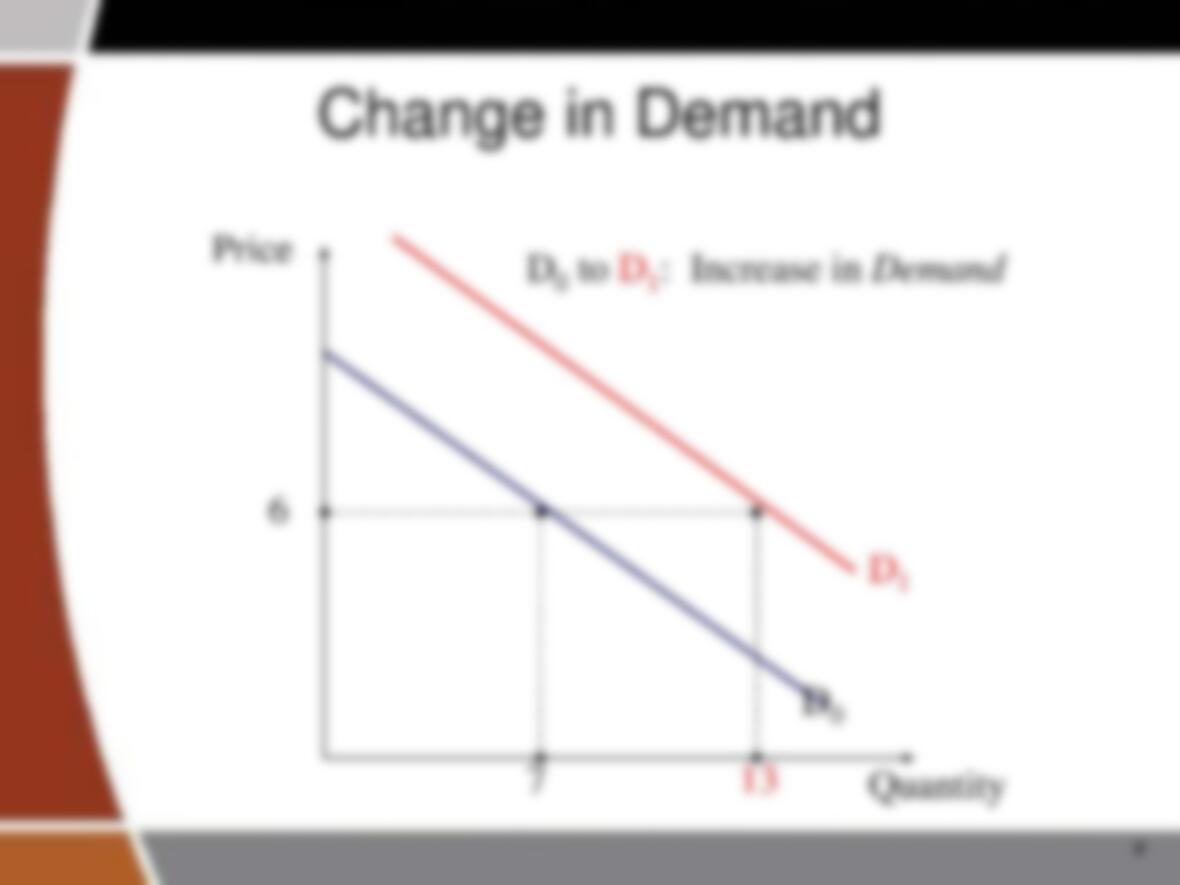
Px is a mover from point to another on the demand curve
PY is a shifter (+) in the case of Price of substitute, or (-) in the case
of Price of complementary
M is a shifter (+) in the case of Normal Good, or (-) in the case of
inferior good
H is a shifter for example price expectations
(–) (+)
(-)
(+)
(–)

6
Demand Equation
Quantity demanded depends on the price.
Example:
–Demand Function
•Qxd = 10 –2Px
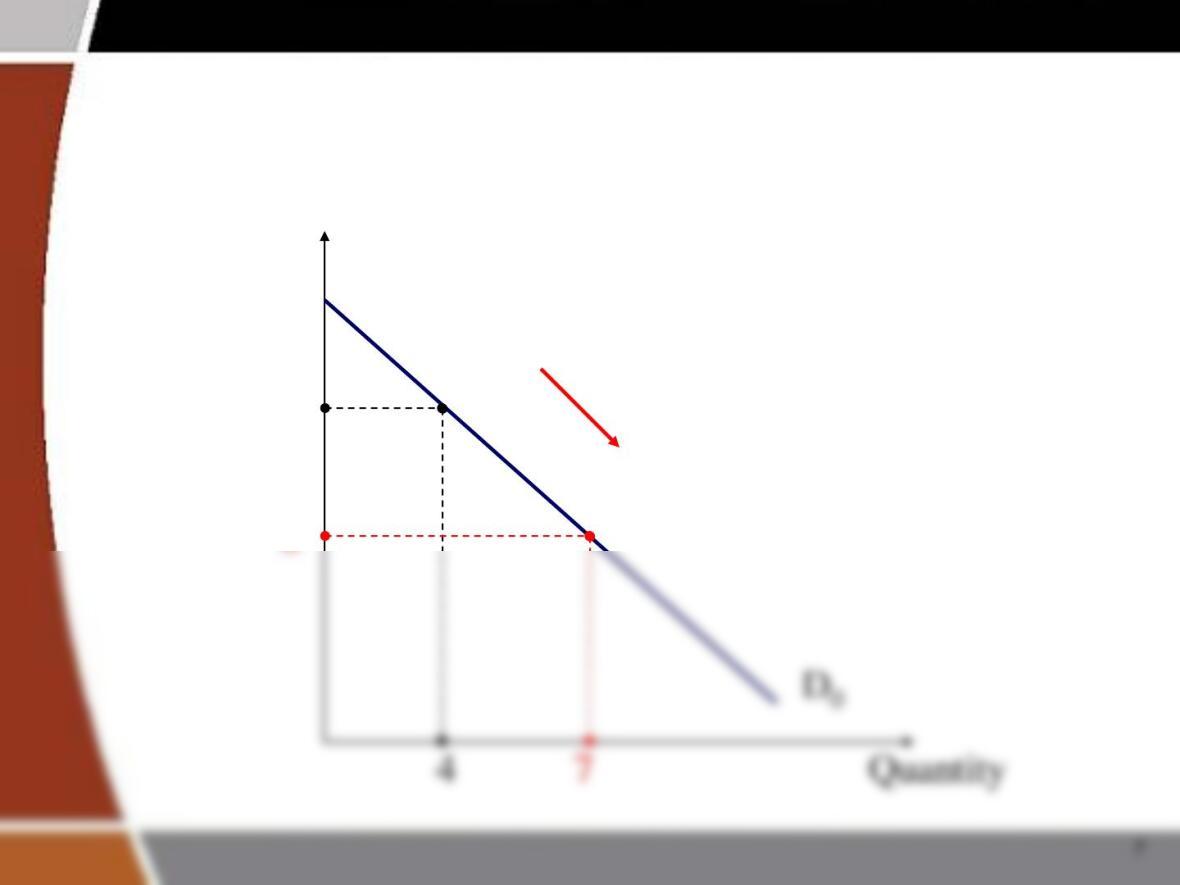
Change in Quantity Demanded
Price
Ato B: Increase in quantity demanded
B
10 A