CHAPTER 0
Contents
Preface v
Problems Solved in Student Solutions Manual vii
1 Matrices, Vectors, and Vector Calculus 1
2 Newtonian Mechanics—Single Particle 29
3 Oscillations 79
4 Nonlinear Oscillations and Chaos 127
5 Gravitation 149
6 Some Methods in The Calculus of Variations 165
7 Hamilton’s Principle—Lagrangian and Hamiltonian Dynamics 181
8 Central-Force Motion 233
9 Dynamics of a System of Particles 277
10 Motion in a Noninertial Reference Frame 333
11 Dynamics of Rigid Bodies 353
12 Coupled Oscillations 397
13 Continuous Systems; Waves 435
14 Special Theory of Relativity 461
iii
iv CONTENTS

CHAPTER 0
Pre
f
ace
This Instructor’s Manual contains the solutions to all the end-of-chapter problems (but not the
appendices) from Classical Dynamics of Particles and Systems, Fifth Edition, by Stephen T.
Thornton and Jerry B. Marion. It is intended for use only by instructors using Classical Dynamics
as a textbook, and it is not available to students in any form. A Student Solutions Manual
containing solutions to about 25% of the end-of-chapter problems is available for sale to
students. The problem numbers of those solutions in the Student Solutions Manual are listed on
the next page.
As a result of surveys received from users, I continue to add more worked out examples in
the text and add additional problems. There are now 509 problems, a significant number over
the 4th edition.
The instructor will find a large array of problems ranging in difficulty from the simple
“plug and chug” to the type worthy of the Ph.D. qualifying examinations in classical mechanics.
A few of the problems are quite challenging. Many of them require numerical methods. Having
this solutions manual should provide a greater appreciation of what the authors intended to
accomplish by the statement of the problem in those cases where the problem statement is not
completely clear. Please inform me when either the problem statement or solutions can be
improved. Specific help is encouraged. The instructor will also be able to pick and choose
different levels of difficulty when assigning homework problems. And since students may
occasionally need hints to work some problems, this manual will allow the instructor to take a
quick peek to see how the students can be helped.
It is absolutely forbidden for the students to have access to this manual. Please do not
give students solutions from this manual. Posting these solutions on the Internet will result in
widespread distribution of the solutions and will ultimately result in the decrease of the
usefulness of the text.
The author would like to acknowledge the assistance of Tran ngoc Khanh (5th edition),
Warren Griffith (4th edition), and Brian Giambattista (3rd edition), who checked the solutions of
previous versions, went over user comments, and worked out solutions for new problems.
Without their help, this manual would not be possible. The author would appreciate receiving
reports of suggested improvements and suspected errors. Comments can be sent by email to
stt@virginia.edu, the more detailed the better.
Stephen T. Thornton
Charlottesville, Virginia
v
vi PREFACE
CHAPTER 1
Matrices, Vectors,
and Vector Calculus
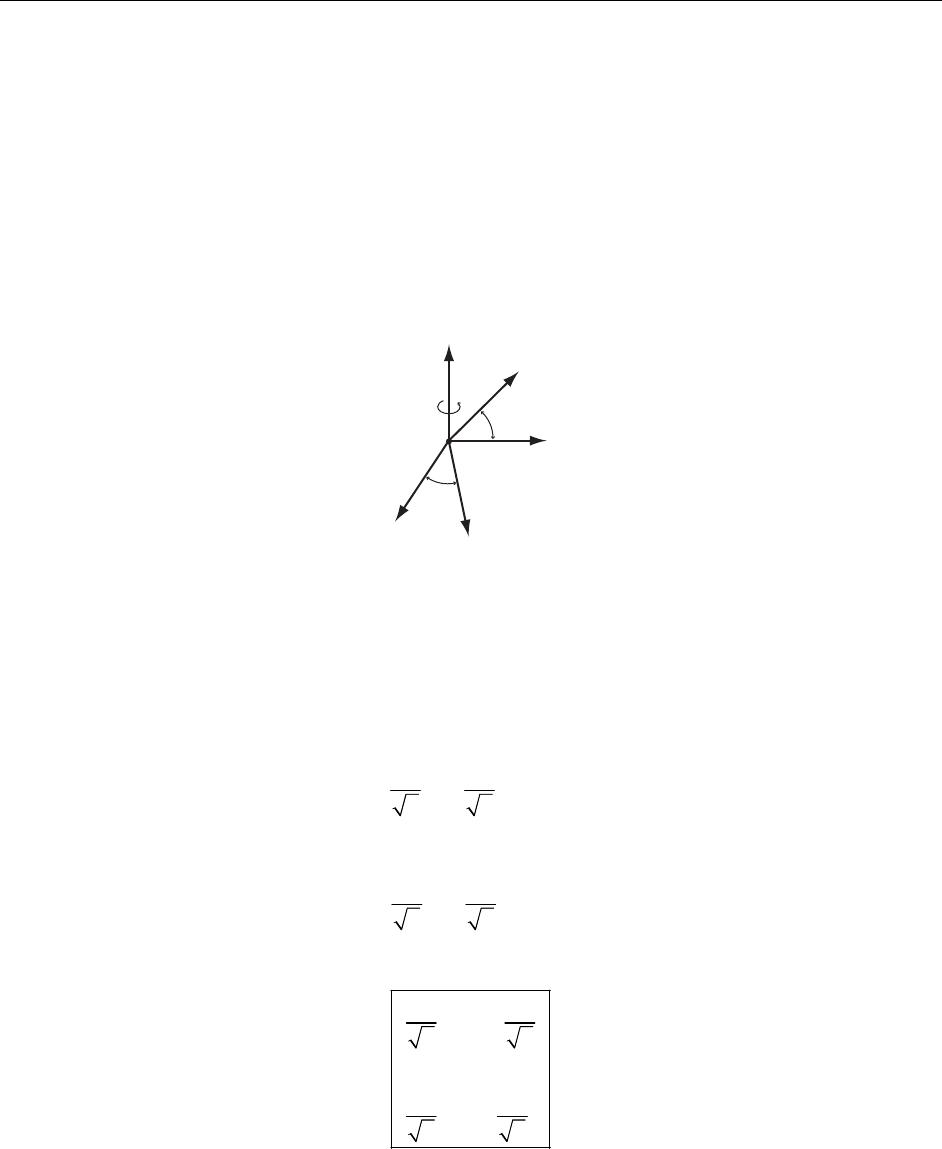
1-1.
x
2
= x
2
′
x
1
′
45˚
x
1
x
3
′
x
3
45˚
Axes and lie in the plane.
1
x′3
x′13
xx
The transformation equations are:
11 3
cos 45 cos 45xx x
=
°− °
′
22
xx
=
′
33 1
cos 45 cos 45xx x
=
°+ °
′
11
11
22
xx=−
′3
x
22
xx
=
′
31
11
22
xx=−
′3
x
So the transformation matrix is:
11
0
22
01 0
11
0
22
−
1
2 CHAPTER 1
1-2.
a)
x
1
A
B
C
D
α
β
γ
O
E
x
2
x
3
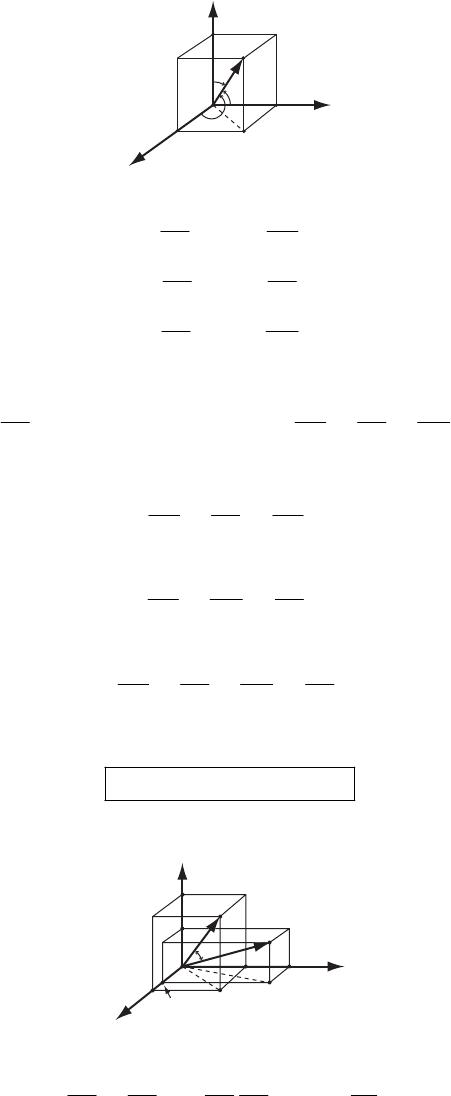
From this diagram, we have
cosOE OA
α
=
cosOE OB
β
= (1)
cosOE OD
γ
=
Taking the square of each equation in (1) and adding, we find
2
222
cos cos cos OA OB OD
αβγ
++ =++
222
OE
(2)
But
22
OA OB OC+=
2
(3)
and
22
OC OD OE+=
2
(4)
Therefore,
22 2
OA OB OD OE++ =
2
(5)
Thus,
222
cos cos cos 1
αβγ
+
+= (6)
b)
x
3
AA′
x
1
x
2
O
E
D
C
B
θ
C′
B′
E′
D′
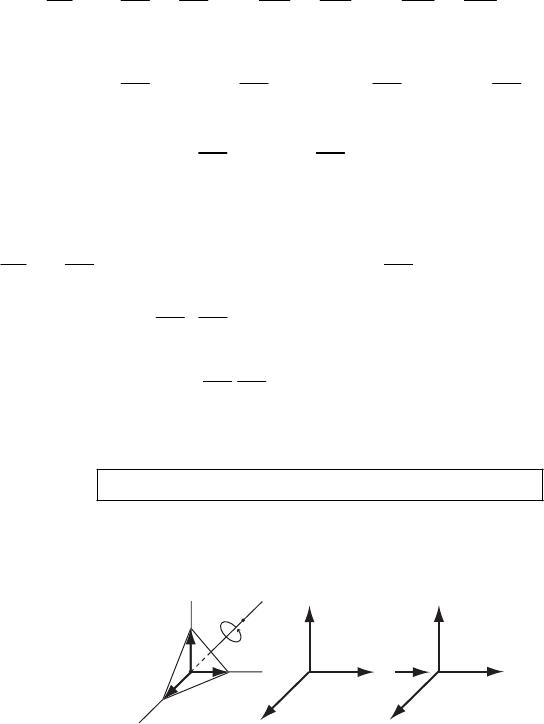
First, we have the following trigonometric relation:
22
2cosOE OE OE OE EE
θ
2
′
′
+− =
′
(7)
MATRICES, VECTORS, AND VECTOR CALCULUS 3
But,
22 2
2
22
2
cos cos cos cos
cos cos
EE OB OB OA OA OD OD
OE OE OE OE
OE OE
β
βα
γγ
′′ ′ ′
=−+− + −
′′
=−+−
′′
′
+−
′
α
(8)
or,
22 2
222 222
22
cos cos cos cos cos cos
2 cos cos cos cos cos cos
2 cos cos cos cos cos cos
EE OE OE
OE OE
OE OE OE OE
α
βγ αβ
αα ββ γγ
γ
α
αββγ
′′
=+++++
′′′
′
−++
′′′
′
=+− + +
′′′
γ
′
(9)
Comparing (9) with (7), we find
cos cos cos cos cos cos cos
θ
αα ββ γγ
=++
′
′′
(10)
1-3.
x
1
e
3
′
x
2
x
3
O
e
1
e
2
e
3
A
e
2
′
e
1
′
e
2
e
1
e
3
Denote the original axes by , , , and the corresponding unit vectors by e,, . Denote
the new axes by , , and the corresponding unit vectors by
1
x2
x3
x1 2
e3
e
1
x′2
x′3
x′1
′
e, 2
′
e, e. The effect of the
rotation is ee, , e. Therefore, the transformation matrix is written as:
3
′
13
′
→21
′
ee→3
→2
′
e
(
)
(
)
(
)
()()()
()()()
11 12 13
21 22 23
31 32 33
cos , cos , cos , 010
cos , cos , cos , 0 0 1
100
cos , cos , cos ,
′′′
λ
′′′
==
′′′
ee ee ee
ee ee ee
ee ee ee
1-4.
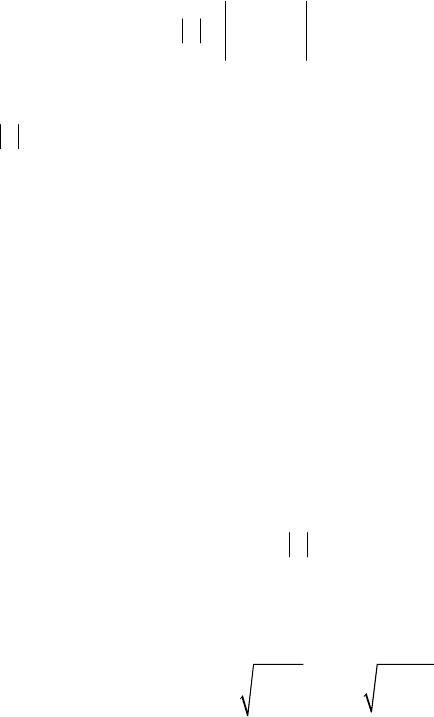
a) Let C = AB where A, B, and C are matrices. Then,
i
j
ik k
j
k
CA=B
∑
(1)
(
)
t
j
i
j
kki ki
j
k
ij kk
CC AB BA== =
∑
∑
4 CHAPTER 1
Identifying
(
)
t
ki ik
B=B and
(
)
t
jk k
j
AA=,
(
)
(
)
(
)
tt
i
t
j
ik k
j
k
CBA=
∑
(2)
or,
(
)
t
t
CABBA==
tt
(3)
b) To show that
(
)
111
A
BBA
−−−
=,
(
)
(
)
11 11
A
BB A I B A AB
−− −−
== (4)
That is,
(
)
11 1 1
A
BB A AIA AA I
−− − −
=
== (5)
(
)
(
)
11 1 1
BA AB BIB BB I
−− − −
=
== (6)
1-5. Take
λ
to be a two-dimensional matrix:
11 12
11 22 12 21
21 22
λλ
λ
λλ λλ
λλ
==− (1)
Then,
(
)
(
)
()()()
()()
()
222 22 22 22 22 22
11 22 11 22 12 21 12 21 11 21 12 22 11 21 12 22
22 2 22 2 22 22
22 11 12 21 11 12 11 21 11 22 12 21 12 22
2
2222
11 12 22 21 11 21 12 22
2
2
λ
λλ λλλλ λλ λλ λλ λλ λλ
λ λ λ λ λ λ λλ λλλλ λλ
λλλλ λλλλ
=− ++ + − +
=+++−+ +
=+ +− + (2)
But since
λ
is an orthogonal transformation matrix, i
j
k
j
ik
j
λ
λδ
=
∑
.
Thus,
22 22
11 12 21 22
11 21 12 22
1
0
λλλλ
λλ λλ
+
=+=
+= (3)
Therefore, (2) becomes
21
λ
=
(4)
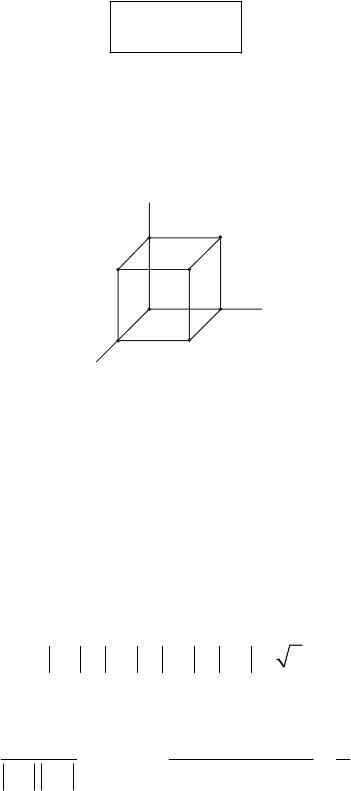
1-6. The lengths of line segments in the
j
x and
j
x
′
systems are
2
j
j
Lx=
∑
; 2
i
i
L=x
′
′
∑
(1)
MATRICES, VECTORS, AND VECTOR CALCULUS 5
If , then LL=′
22
j
i
ji
xx=
′
∑
∑ (2)
The transformation is
ii
jj
j
x
λ
=
′x
∑
(3)
Then,
(4)
2
,
jikk
jik
kiki
ki
xx
xx
λλ
λλ
=
=
∑∑∑ ∑
∑∑
AA
A
AA
A
i
x
But this can be true only if
ik i k
i
λ
λδ
=
∑AA
(5)
which is the desired result.
1-7.
x
1
(1,0,1)
x
3
x
2
(1,0,0) (1,1,0)
(0,1,0)
(1,1,1)
(0,0,1) (0,1,1)
(0,0,0)
There are 4 diagonals:
1
D, from (0,0,0) to (1,1,1), so (1,1,1) – (0,0,0) = (1,1,1) = D;
1
2
D, from (1,0,0) to (0,1,1), so (0,1,1) – (1,0,0) = (–1,1,1) = ;
2
D
3
D, from (0,0,1) to (1,1,0), so (1,1,0) – (0,0,1) = (1,1,–1) = ; and
3
D
4
D, from (0,1,0) to (1,0,1), so (1,0,1) – (0,1,0) = (1,–1,1) = D.
4
The magnitudes of the diagonal vectors are
1234
3====DDDD
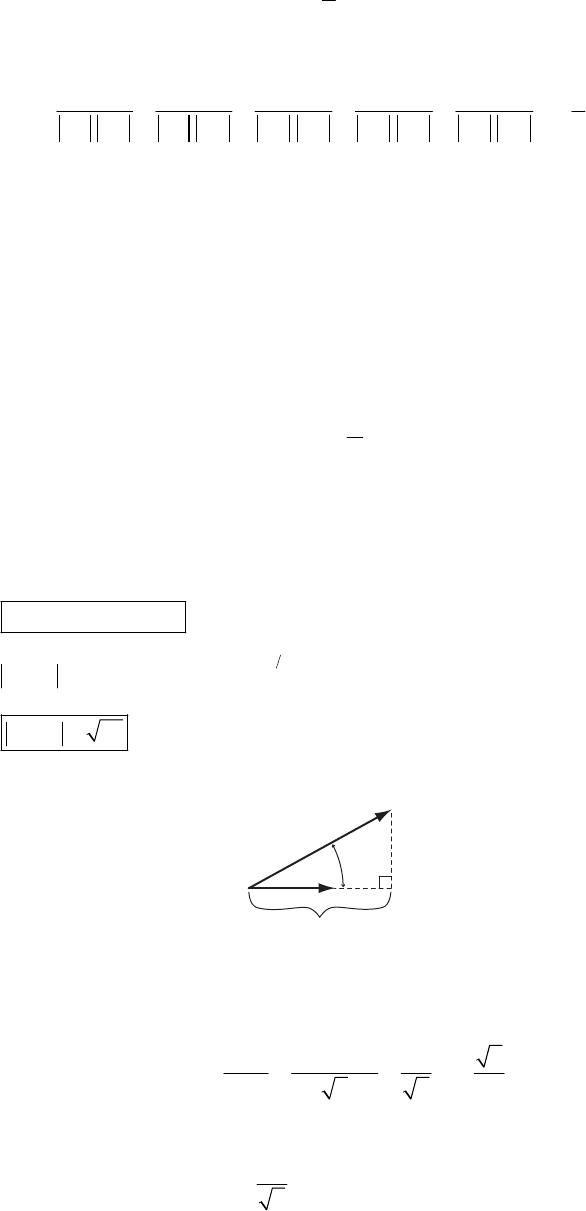
The angle between any two of these diagonal vectors is, for example,
(
)
(
)
12
12
1,1,1 1,1,1 1
cos 33
θ
⋅−
⋅
=
==
DD
DD
6 CHAPTER 1
so that
11
cos 70.5
3
θ
−
=
=°
Similarly,
13 23 34
14 24
13 14 23 24 34
1
3
⋅⋅⋅
⋅⋅
=====
DD DD DD
DD DD
DD DD DD DD DD ±
1-8. Let
θ
be the angle between A and r. Then, 2
A
⋅
=Ar can be written as
2
cos
A
rA
θ
=
or,
cos
rA
θ
=
(1)
This implies
2
QPO
π
=
(2)
Therefore, the end point of r must be on a plane perpendicular to A and passing through P.
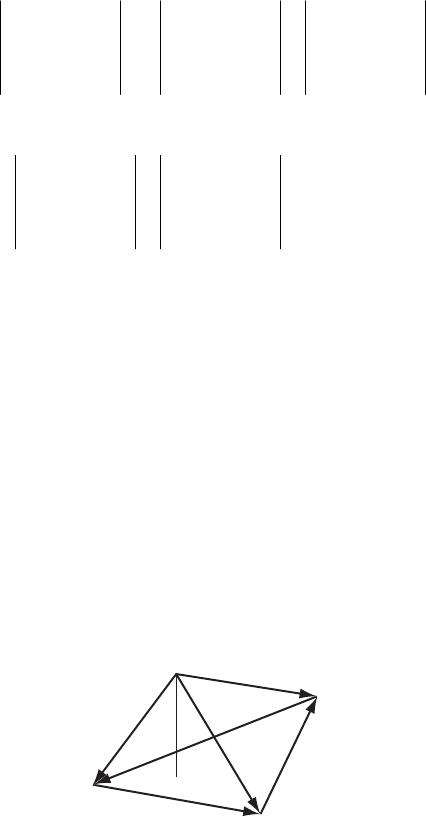
1-9. 2=+ −Ai jk 23=− + +Bijk
a) 32−= −−AB ij k
() ( )
12
222
31(2)
−= +− +−
AB
14−=AB
b)
component of B along A
B
A
θ
The length of the component of B along A is B cos
θ
.
cos
A
B
θ
⋅
=AB
261 3 6
cos or 2
66
A
θ
⋅−+−
== =
AB
B
The direction is, of course, along A. A unit vector in the A direction is
()
12
6
+
−ijk
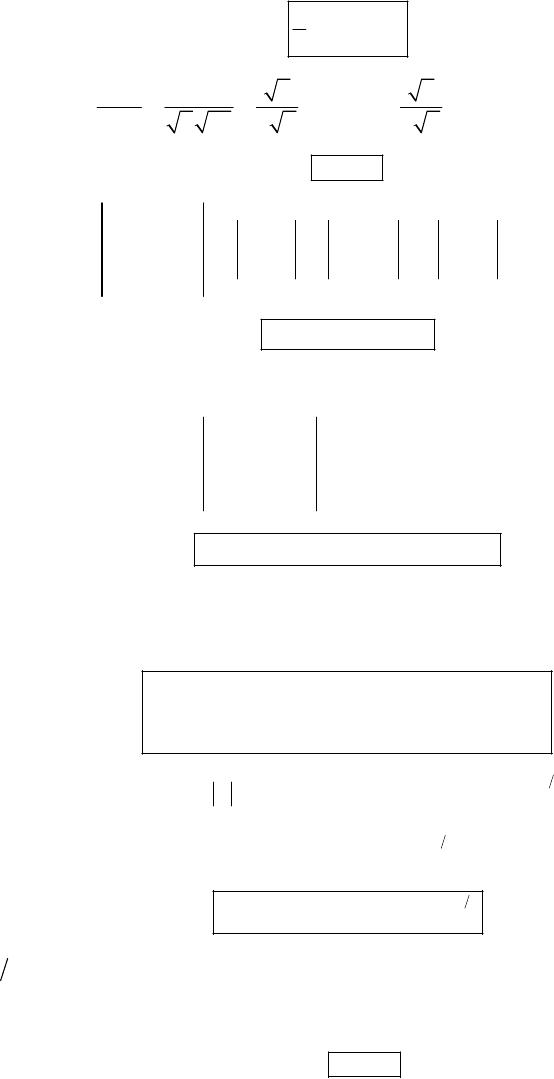
MATRICES, VECTORS, AND VECTOR CALCULUS 7
So the component of B along A is
()
12
2+−ijk
c) 33
cos 614 27
AB
θ
⋅
== =
AB ; 13
cos 27
θ
−
=
71
θ
°
d) 21 1 1 12
12 1 31 21 23
23 1
−−
×= −= − +
−−
−
ijk
AB i j k
57×= ++AB ij k
e) 32−= −−AB ij k 5
+
=− +AB i j
()()
31
15 0
−×+= −−
−
ijk
AB AB 2
()()
10 2 14−× += ++AB AB i j k
1-10. 2sin cosbtb t
ω
ω
=+rij
a) 22
2cos sin
2sin cos
btbt
btbt
ωω ωω
2
ω
ωωω ω
== −
==− − =−
vr i j
av i j r
12
22 2 22 2
12
22
speed 4 cos sin
4cos sin
btb
btt
ωωωω
ωωω
t
== +
=+
v
12
2
speed 3 cos 1bt
ωω
=+
b) At 2t
π
ω
=, sin 1t
ω
=, cos 0t
ω
=
So, at this time, b
ω
=−vj,
2
2b
ω
=−ai
So,
90
θ
°
8 CHAPTER 1
1-11.
a) Since
(
)
i
j
k
j
k
i
jk
A
B
ε
×=
∑
AB , we have
()()
()
()
,
123 32 213 31 312 21
123 123 123
123 123 123
123 123 123
() ijk j k i
ijk
ABC
CAB AB CAB AB CAB AB
CCC AAA AAA
AAA CCC B B B
BBB BBB CCC
ε
×⋅=
=−−−+−
==−==⋅
∑∑
ABC
ABC
×
(1)
We can also write
(
123 123
123 123
123 123
()
CCC BBB
BBB CCC
AAA AAA
×⋅=− = =⋅×ABC BCA
)
(2)
We notice from this result that an even number of permutations leaves the determinant
unchanged.
b) Consider vectors A and B in the plane defined by e, . Since the figure defined by A, B,
C is a parallelepiped, area of the base, but
1
3
2
e
3
×= ×ABe
⋅
=eC altitude of the parallelepiped.
Then,
(
)
(
)
3area of the base
= altitude area of the base
= volume of the parallelepiped
⋅×=⋅×
×
CAB Ce
1-12.
O
A
B
C
h
a
b
c
a – c
c – b
b – a
The distance h from the origin O to the plane defined by A, B, C is
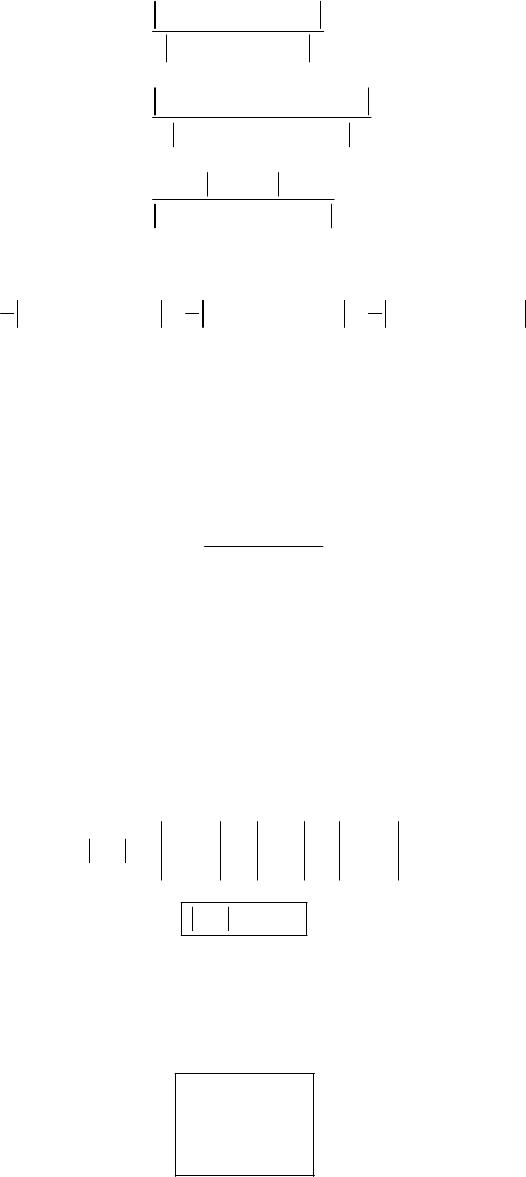
MATRICES, VECTORS, AND VECTOR CALCULUS 9
(
)
(
)
()()
()
h⋅−×−
=−×−
⋅×−×+×
=×−×+×
⋅×
=×+×+×
aba cb
ba cb
abcacab
bcacab
ab c
abbcca (1)
The area of the triangle ABC is:
()()()( )()()
111
222
×−=−×−=−×−ba cb ac ba cb acA=− (2)
1-13. Using the Eq. (1.82) in the text, we have
(
)
(
)
(
)
2
A
φ
×= × × = ⋅ − ⋅ = −A AX XAA AAX A XAB
from which
(
)
2
A
×+
=BA A
X
φ
1-14.
a)
12 12 1 0 1 21
03 1 0 12 1 29
201 113 533
−−
=−=
AB
−
Expand by the first row.
29 19 1 2
121
33 53 53
−
−
=++
AB
104=−AB
b)
12 121 9 7
03 1 43 139
20 1 10 5 2
−
==
AC
97
13 9
52
=
AC
10 CHAPTER 1
c)
()
12 1 8 5
03 1 2 3
20 1 9 4
−
== −−
ABC A BC
55
35
25 14
−−
=−
ABC
d) ?
tt
−
=AB B A
121
129 (from part )
533
201 102 1 15
111230 223
023 111 1 93
tt
−
=−
=− =−−
−
AB a
BA
034
30 6
460
tt
−−
−=
−
AB B A
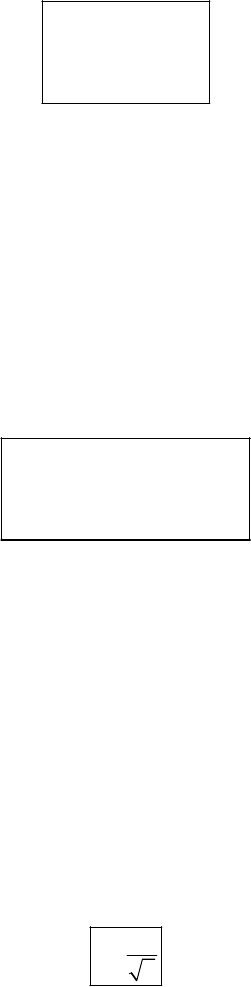
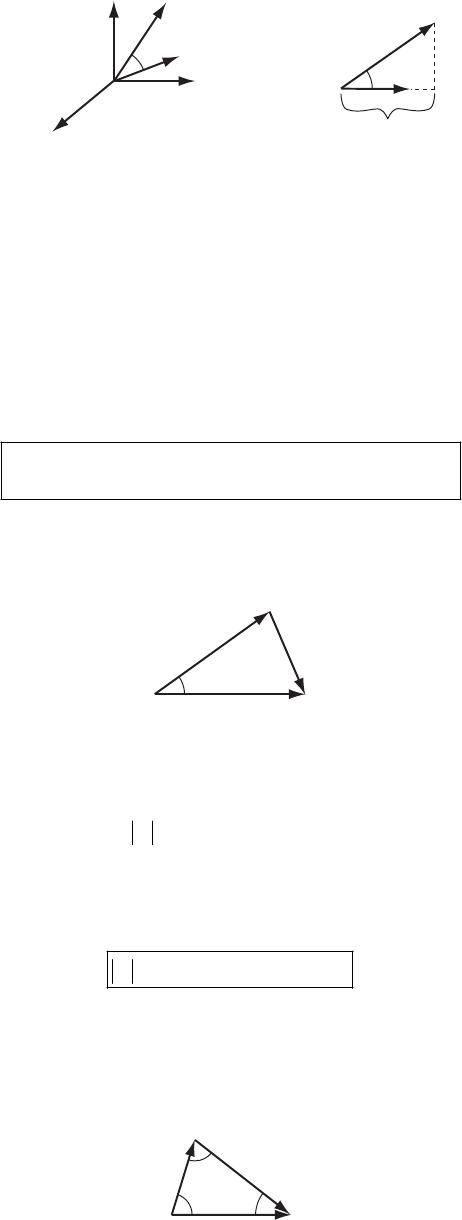
1-15. If A is an orthogonal matrix, then
2
2
1
100100 100
00 01
00 00
10 0 100
02 0 010
002 001
t
aa a a
aa a a
a
a
=
−=
−
0
1
=
AA
1
2
a=
MATRICES, VECTORS, AND VECTOR CALCULUS 11
1-16.
x
3
P
r
θ
x
2
x
1
a
r
θa
r cos θ
constant
⋅
=ra
cos constantra
θ
=
It is given that a is constant, so we know that
cos constantr
θ
=
But cosr
θ
is the magnitude of the component of r along a.
The set of vectors that satisfy all have the same component along a; however, the
component perpendicular to a is arbitrary.
constant⋅=
ra
Th
is
us the surface represented by constant
a plane perpendicular to .
⋅=ra
a
1-17.
a
A
θb
B
c
C
Consider the triangle a, b, c which is formed by the vectors A, B, C. Since
()(
2
22
2
)
A
B
=
−
=
−⋅ −
=
−⋅+
CAB
CABAB
AB
(1)
or,
222
2cosAB AB
θ
=+−C (2)
which is the cosine law of plane trigonometry.
1-18. Consider the triangle a, b, c which is formed by the vectors A, B, C.
A
αC
Bγβb
c
a
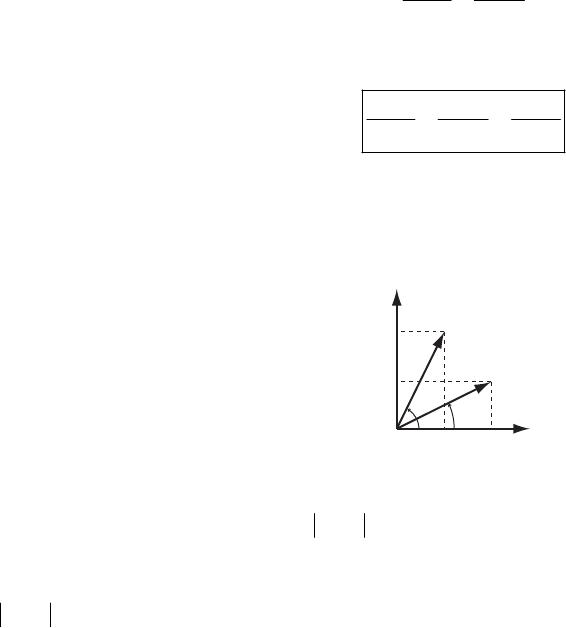
12 CHAPTER 1
=
−CAB (1)
so that
(
)
×
=−×CB AB B (2)
but the left-hand side and the right-hand side of (2) are written as:
3
sinBC
α
×
=CB e (3)
and
(
)
3
sinAB
γ
− ×=×−×=×=AB BABBBAB e (4)
where e is the unit vector perpendicular to the triangle abc. Therefore,
3
sin sinBC AB
α
γ
=
(5)
or,
sin sin
CA
γ
α
=
Similarly,
sin sin sin
CAB
γ
αβ
== (6)
which is the sine law of plane trigonometry.
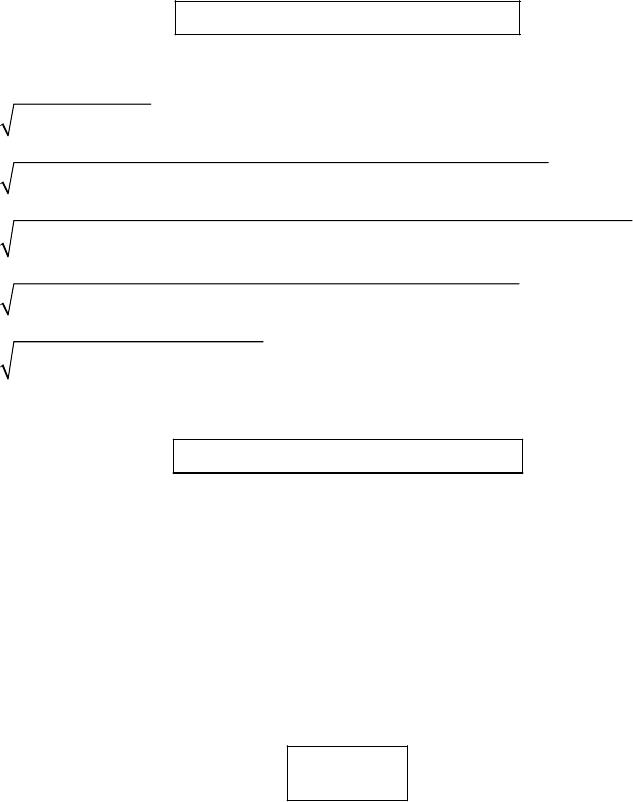
1-19.
x
2
a
α
x
1
a
2
b
2
a
1
b
1
b
β
a) We begin by noting that
(
)
222
2cosab ab
α
β
−=+− −ab (1)
We can also write that
(
)
(
)
()()
()()
()
()
22
2
11 22
22
22 2 22 2
22
cos cos sin sin
sin cos sin cos 2 cos cos sin sin
2coscos sinsin
ab ab
ab ab
ab ab
ab ab
αβ αβ
α
αββαβα
αβ αβ
−=− +−
=− +−
=+++− +
=+− +
ab
β
(2)
MATRICES, VECTORS, AND VECTOR CALCULUS 13
Thus, comparing (1) and (2), we conclude that
()
cos cos cos sin sin
α
βαβα
−= +
β
(3)
b) Using (3), we can find
(
)
sin
α
β
−:
() ()
()()
()
2
22 22
222 2
22 22
2
sin 1 cos
1 cos cos sin sin 2cos sin cos sin
1 cos 1 sin sin 1 cos 2cos sin cos sin
sin cos 2sin sin cos cos cos sin
sin cos cos sin
αβ αβ
αβ αβ ααββ
α
βα β ααβ
αβ αβαβ αβ
αβ αβ
−=− −
=− − −
=− − − − −
=− +
=−
β
(4)
so that
()
sin sin cos cos sin
α
βαβα
−= −
β
j
(5)
1-20.
a) Consider the following two cases:
When i≠0
ij
δ
= but 0
ijk
ε
≠.
When i=j0
ij
δ
≠ but 0
ijk
ε
=.
Therefore,
0
ijk ij
ij
εδ
=
∑ (1)
b) We proceed in the following way:
When j = k, 0
ijk ijj
ε
ε
==
.
Terms such as 11 11 0
j
ε
ε
=
A. Then,
12 12 13 13 21 21 31 31 32 32 23 23ijkjkiiiiii
jk
ε
εεεεεεεεεεεεε
=+++++
∑AAAAAA A
=
Now, suppose i, then, 1==A
123 123 132 132 112
jk
εε εε
=+=+
∑

14 CHAPTER 1
for , . For
2
i==A213 213 231 231 112
jk
εε εε
=+=+
∑=3i
=
=A, 312 312 321 321 2
jk
εε εε
=
+=
∑
. But i = 1,
gives . Likewise for i = 2,
2
=A0
jk
=
∑1
=
A; i = 1, 3
=
A; i = 3, 1
=
A; i = 2, A; i = 3, .
Therefore,
3=2=A
,
2
i
j
k
j
ki
jk
ε
εδ
=
∑AA
(2)
c)
()()()()()()()()
123 123 312 312 321 321 132 132 213 213 231 231
1111 11 11 1111
ijk ijk
ijk
ε
εεεεεεεεεεεεε
=+++++
= ⋅ + ⋅ +− ⋅− +− ⋅− +− ⋅− + ⋅
∑
or,
6
ijk ijk
ijk
εε
=
∑ (3)
1-21.
(
)
i
j
k
j
k
i
jk
A
B
ε
×=
∑
AB (1)
(
)
i
j
k
j
ki
ijk
A
BC
ε
×⋅=
∑∑
ABC (2)
By an even permutation, we find
i
j
ki
j
k
ijk
A
BC
ε
=∑
ABC (3)
1-22. To evaluate i
j
kmk
k
ε
ε
∑A we consider the following cases:
a)
: 0 for all , ,
ijk mk iik mk
kk
ij i m
εε εε
===
∑∑
AA A
b)
:1 for
0 for
ijk mk ijk imk
kk
ij
jm
εε εε
====
=≠
∑∑
A
A and,mkij≠
ij
i
c) :0 for
1 for and ,
ijk mk ijk ik
kk
im j
jk
εε εε
===≠
=− = ≠
∑∑
AA A
A
d) :0 for
1 for and ,
ijk mk ijk jmk
kk
jm
mi kij
εε εε
===≠
=− = ≠
∑∑
A
A
MATRICES, VECTORS, AND VECTOR CALCULUS 15
e) :0 for
1 for and ,
ijk mk ijk jk
kk
jm i
ik
εε εε
===≠
== ≠
∑∑
AA A
Aij
jk
m
f)
: 0 for all , ,
ijk mk ijk k
kk
mi
εε εε
===
∑∑
AAA
A
g) : This implies that i = k or i = j or m = k. or i≠A
Then, for all
0
ijk mk
k
εε
=
∑A, , ,ij mA
h) for all
or : 0
ijk mk
k
jm
εε
≠=
∑A
A, , ,ij mA
Now, consider i
j
mim
j
δ
δδδ
−
AA
and examine it under the same conditions. If this quantity
behaves in the same way as the sum above, we have verified the equation
i
j
kmk i
j
mim
j
k
ε
εδδδδ
=−
∑AA A
a) : 0 for all , ,
iim imi
ij i m
δ
δδδ
=−=
AA A
b) : 1 if , ,
0 if
ii jm im ji
ij
jm
mijm
δ
δδδ
=−==≠
=≠
A
c) : 1 if , ,
0 if
iji iij
im j ij
j
δ
δδδ
=−=−=
=≠
AA AA
A
≠
mi
d) : 1 if ,
0 if
im im
ji
im
δ
δδδ
=−=−=
=≠
AA AA
AA≠
e) : 1 if ,
0 if
imm imm
jm i m
i
δ
δδδ
=−==
=≠
AA
AA
A
≠
all,,j
f) :0 for
ij ilj
mi
δ
δδδ
=−=
AA A
AA
g) , : 0 for all , , ,
ijm imj
im ijm
δ
δδδ
≠−=
AA
AA
h) ,: 0 for all ,,,
ijm imi
jm ijm
δ
δδδ
≠−=
AA
AA
Therefore,
i
j
kmk i
j
mim
j
k
ε
εδδδδ
=−
∑AA A
(1)
Using this result we can prove that
(
)
(
)
(
)
××=⋅ −⋅ABC ACBABC

16 CHAPTER 1
First
(
)
i
j
k
j
k
i
jk
BC
ε
×=
∑
BC . Then,
(
)
[
]
(
)
()
()()
mn m mn m njk j k
n
mn mn jk
mn njk m j k mn jkn m j k
jkmn jkmn
lmn jkn m j k
jkm n
jl km k jm m j k
jkm
mm mm mm mm
mm m m
ABC A BC
ABC ABC
ABC
ABC
A
BC A B C B A C C A B
BC
εεε
εε εε
εε
δδ δ δ
×× = × =
==
=
=−
=−= −
=⋅ −⋅
∑∑∑
∑∑
∑∑
∑
∑∑ ∑ ∑
ABC
AC AB
AA
A
AA
A
AAAA
AA
Therefore,
()()()
××= ⋅ −⋅ABC ACBABC (2)
1-23. Write
(
)
j
mm
j
m
A
B
ε
×=
∑
AB AA
A
(
)
krs r s
k
rs
CD
ε
×=
∑
CD
Then,

MATRICES, VECTORS, AND VECTOR CALCULUS 17
()()
[]
()
()
ijk j m m krs r s
ijk m rs
ijk j m krs m r s
jk mrs
j m ijk rsk m r s
jmrs k
j m ir js is jr m r s
jmrs
jm m i j m i j
jm
jm j m i jm
jm j
AB CD
AB CD
AB CD
AB CD
AB CD AB DC
DAB C
εε ε
εε ε
εεε
εδδδδ
ε
εε
××× =
=
=
=−
=−
=−
∑∑ ∑
∑
∑∑
∑
∑
∑
AB CD AA
A
AA
A
AA
A
AA
A
AA A
A
AA A
A
()()
j
mi
m
ii
CAB D
CD
=−
∑
ABD ABC
A
A
Therefore,
[
()()
]
()()××× = −AB CD ABDC ABCD
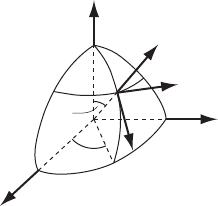
1-24. Expanding the triple vector product, we have
(
)
(
)
(
)
×
×= ⋅− ⋅eAeAeeeAe (1)
But,
(
)
⋅
=Aee A (2)
Thus,
() ( )
=
⋅+× ×AeAeeAe (3)
e(A · e) is the component of A in the e direction, while e × (A × e) is the component of A
perpendicular to e.
18 CHAPTER 1
1-25.
e
r
e
φ
e
θ
θ
φ
The unit vectors in spherical coordinates are expressed in terms of rectangular coordinates by
(
)
()
()
cos cos , cos sin , sin
sin , cos , 0
sin cos , sin sin , cos
r
θ
φ
θ
φθφ θ
φφ
θφθφ θ
=−
=−
=
e
e
e
(1)
Thus,
(
)
cos sin sin cos , cos cos sin sin , cos
θ
φ
θφθθφφθφθθφθθ
=− − − −e
cos
r
φ
θ
φθ
+e
=− (2) e
Similarly,
(
)
cos , sin , 0
φ
φφφφ
=− −e
cos sin r
θ
φ
θφθ
−e
=− (3) e
sin
r
φ
θ
φ
θθ
=+ee
e (4)
Now, let any position vector be x. Then,
r
r
=
xe (5)
(
)
sin
sin
rr
r
rrr r
rrr
φθ
φθ
φθ θ
φθ θ
=+= + +
=++
xe e e e e
eee
r
(6)
(
)
(
)
()()
()
22 2
2
sin cos sin sin
2 sin 2 cos sin sin
2sincos
rr
r
rr r r rrrr
rrr rr r
rrr
φφ θθ
φ
θ
φθθφθφθ φθ θθ θ
φθ θφθφθ φ θθ
θθφ θ θ
=+ + + +++++
=+ + +−−
++−
xeee
ee
e
r
eee
(7)
or,
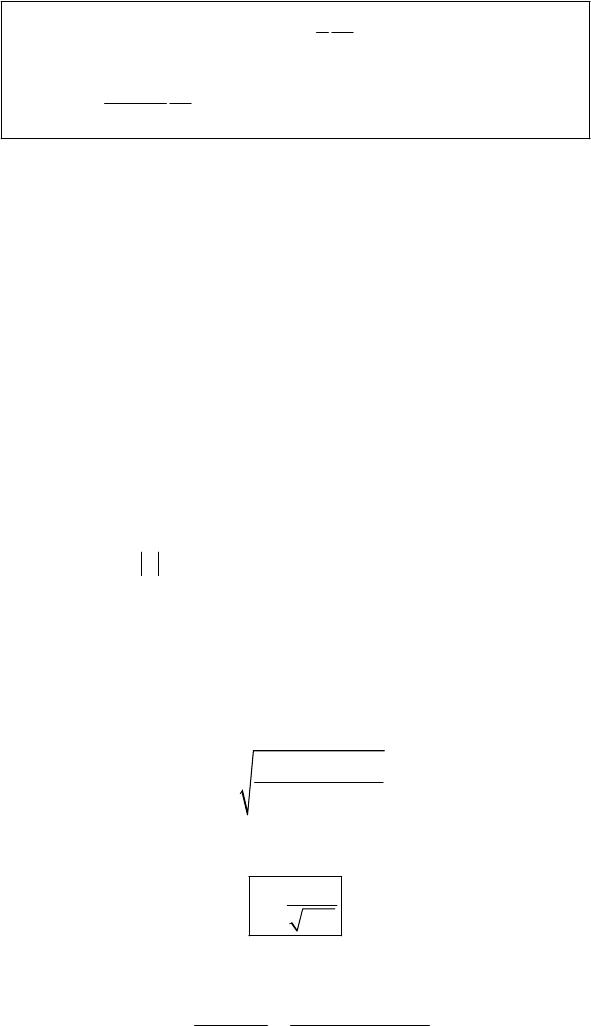
MATRICES, VECTORS, AND VECTOR CALCULUS 19
()
()
222 2 2
22
1
sin sin cos
1sin
sin
r
d
rr r r r
rdt
dr
rdt
θ
φ
θφ θ θφ θθ
φθ
θ
== − − + −
+
xa e e
e
(8)
1-26. When a particle moves along the curve
(
)
1cosrk
θ
=+ (1)
we have
2
sin
cos sin
rk
rk
θθ
θ
θθ θ
=−
=− +
(2)
Now, the velocity vector in polar coordinates is [see Eq. (1.97)]
r
rr
θ
θ
=+ve e
(3)
so that
()
2
2222
22 2 2 2 2
22
sin 1 2 cos cos
22cos
vrr
kk
k
θ
θ
θθ
θθ
==+
=+++
=+
v
θθ
)
(4)
and is, by hypothesis, constant. Therefore,
2
v
(
2
2
21cos
v
k
θ
θ
=+
(5)
Using (1), we find
2
v
kr
θ
=
(6)
Differentiating (5) and using the expression for r, we obtain
()
22
2
22
sin sin
441cos
vv
rk
θθ
θ
θ
==
+
(7)
The acceleration vector is [see Eq. (1.98)]
(
)
(
)
22
r
rr r r
θ
θθθ
=− + +ae
e
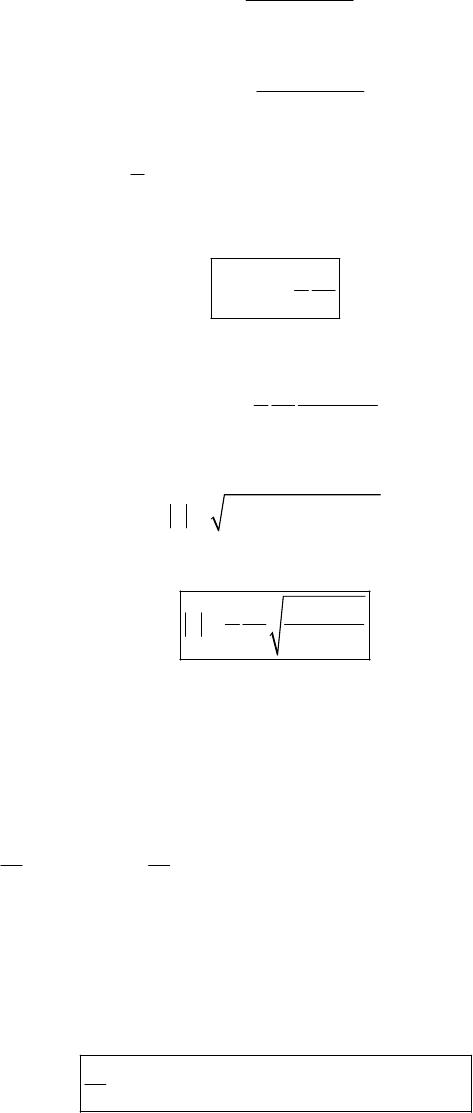
(8)
so that
20 CHAPTER 1
()
()
()
()
()
()
2
22
22
22
2
2
2
cos sin 1 cos
sin
cos 1 cos
21 cos
1cos
2cos 1
21 cos
31cos
2
rrr
kk
k
k
k
θ
θθθθ θθ
θθ
θ
θθ
θ
θ
θθ θ
θθ
⋅=−
=− + − +
=− + + +
+
−
=− + +
+
+
ae
θ
=− (9)
or,
2
3
4
r
v
k
⋅=−
ae (10)
In a similar way, we find
2sin
3
41cos
v
k
θ
θ
θ
⋅=− +
ae (11)
From (10) and (11), we have
()
()
2
2
r
θ
=⋅+⋅aae ae (12)
or,
2
32
41cos
v
k
θ
=+
a (13)
1-27. Since
(
)
(
)
(
)
×
×=⋅ −⋅rvr rrvrvr
we have
()
[]
() ( )
[]
() ()()( )()
()
()
22
2
dd
dt dt
rv
×× = ⋅ −⋅
=⋅ + ⋅ −⋅ − ⋅ −⋅
=+⋅ − +⋅
rvr rrvrvr
rra rvv rvv vvr rar
arvvr ra (1)
Thus,
()
[]
()
()
2
r
dt ×× = +⋅ − ⋅+
rvr arvvrrav
2
d (2)

MATRICES, VECTORS, AND VECTOR CALCULUS 21
1-28.
() ()
ln ln i
ii
x
∂
=∂
∑
grad r r e (1)
where
2
i
i
x=
∑
r (2)
Therefore,
()
2
2
1
ln i
ii
i
i
x
xx
x
∂
=
∂
=
∑
rr
r (3)
so that
()
2
1
ln ii
i
x
=
∑
grad r e
r
(4)
or,
()
2
ln r
=r
grad r (5)
1-29. Let describe the surface S and
29r=1
21xyz
+
+= describe the surface S. The angle
θ
between and at the point (2,–2,1) is the angle between the normals to these surfaces at the
point. The normal to is
2
1
S2
S
1
S
(
)
(
)
(
)
()
222
1
1232,2,1
123
99
222
442
xyz
Sr xyz
xyz
===
=−=++
=++
=−+
grad grad grad
eee
eee
2
−
(1)
In , the normal is:
2
S
(
)
(
)
()
2
2
12 3 2,2,
12 3
1
2
2
x1
y
z
Sxyz
z
=
=− =
=++−
=++
=++
grad grad
ee e
ee e
(2)
Therefore,
22 CHAPTER 1
(
)
(
)
() ()
()()
12
12
123123
cos
442 2
66
SS
SS
θ
⋅
=
−+ ⋅++
=
grad grad
grad grad
eeeeee
(3)
or,
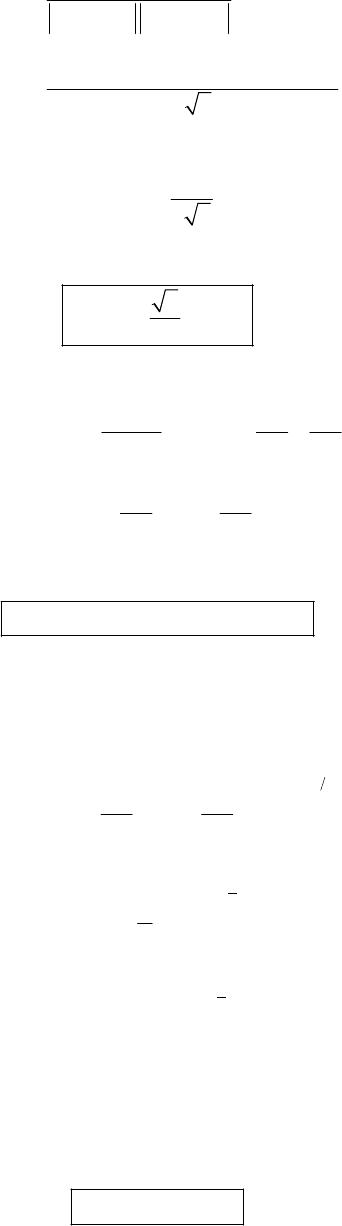
4
cos 66
θ
= (4)
from which
16
cos 74.2
9
θ
−
=
=° (5)
1-30.
()
(
)
3
1
ii
ii
ii
ii
ii
ii
xx
xx
φψ ψφ
i
x
φ
ψφ
ψφ
φψ
=
ψ
∂∂∂
==+
∂∂∂
∂∂
=+
∂∂
∑∑
∑∑
grad e e
ee
Thus,
(
)
φ
ψφ ψψ φ
=+grad grad grad
1-31.
a)
()
12
3
2
1
1
2
2
1
2
2
2
22
n
nn
ii j
ij
ii
n
ii j
ij
n
ii j
ij
n
ii
i
r
rx
xx
n
xx
xn x
xnr
=
−
−
−
∂∂
==
∂∂
=
=
=
∑∑∑
∑∑
∑∑
∑
grad e e
e
e
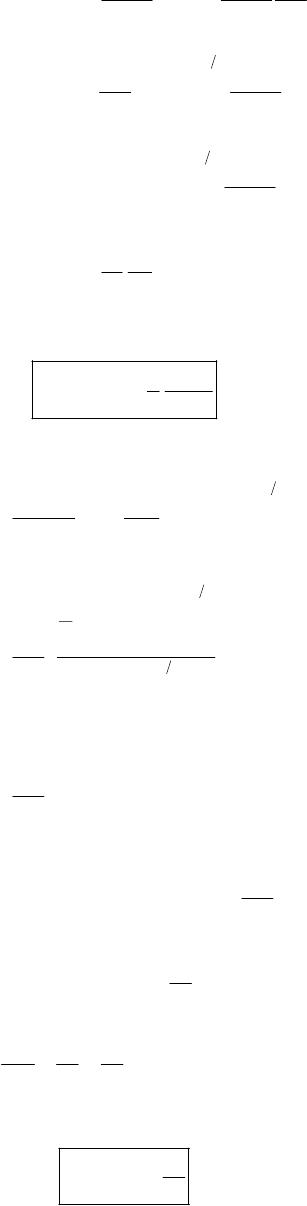
e (1)
Therefore,
()
2
n
n
rnr
−
=grad r (2)
MATRICES, VECTORS, AND VECTOR CALCULUS 23
b)
()
(
)
(
)
()
()
33
11
12
2
12
2
ii
ii
ii
ij
ij
i
ii j
ij
i
i
i
fr fr r
fr xr
fr
x
xr
fr
xx r
f
x
rdr
==
−
∂∂
x
∂
==
∂
∂∂
∂
∂
=
∂∂
∂
=∂
∂
=
∑∑
∑∑
∑∑
∑
grad e e
e
e
e (3)
Therefore,
()
()
f
r
fr rr
∂
=
∂
r
grad (4)
c)
()
()()
()
()
12
22
22
22
12
2
12
2
1
2
21
22
2
22
2
ln
ln ln
12
2
2
1
23
j
ij
ii
ij
j
ii
j
j
ij
ij
i
i
ii j j
ijij
i
j
i
r
rx
xx
xx
x
x
xx
x
x
xx x x
x
xr r
−
−
−
−
−
∂∂
==
∂∂
⋅
∂
=
∂
∂
=
∂
∂
=− +
∂
=− +
∑∑∑
∑
∑
∑
∑∑
∑∑∑∑
∑
∇
2
422
231r
rrr
=− + = (5)
or,
()
2
2
1
ln rr
=∇ (6)
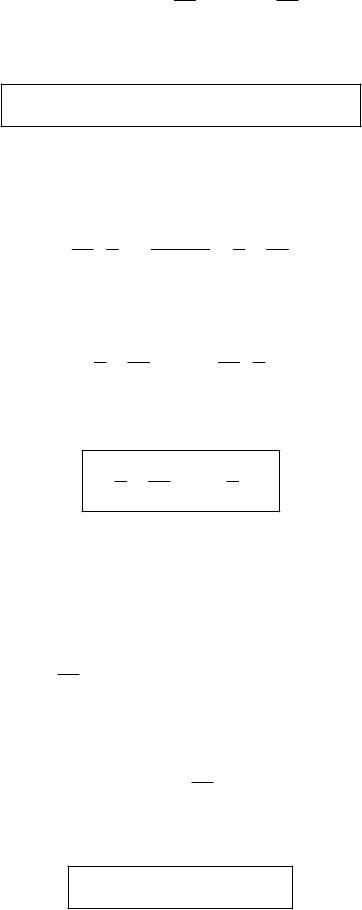
24 CHAPTER 1
1-32. Note that the integrand is a perfect differential:
() (
22 dd
aba b
dt dt
⋅+ ⋅= ⋅ + ⋅rr rr rr rr
)
(1)
Clearly,
()
22
22 conabdtarbr⋅+ ⋅ = + +
∫rr rr
st. (2)
1-33. Since
2
drr
dtrrr
2
r
r
−
==−
rrrrr
(1)
we have
2
rd
dt dt
rr dtr
−=
∫∫
rr r
(2)
from which
2
rdt
rr r
−
=+
∫rr rC
(3)
where C is the integration constant (a vector).
1-34. First, we note that
()
d
dt
×
=×+×AA AAAA
(1)
But the first term on the right-hand side vanishes. Thus,
()()
d
dt dt
dt
×= ×
∫∫
AA AA
(2)
so that
(
)
dt
×
=×+
∫AA AAC
(3)
where C is a constant vector.
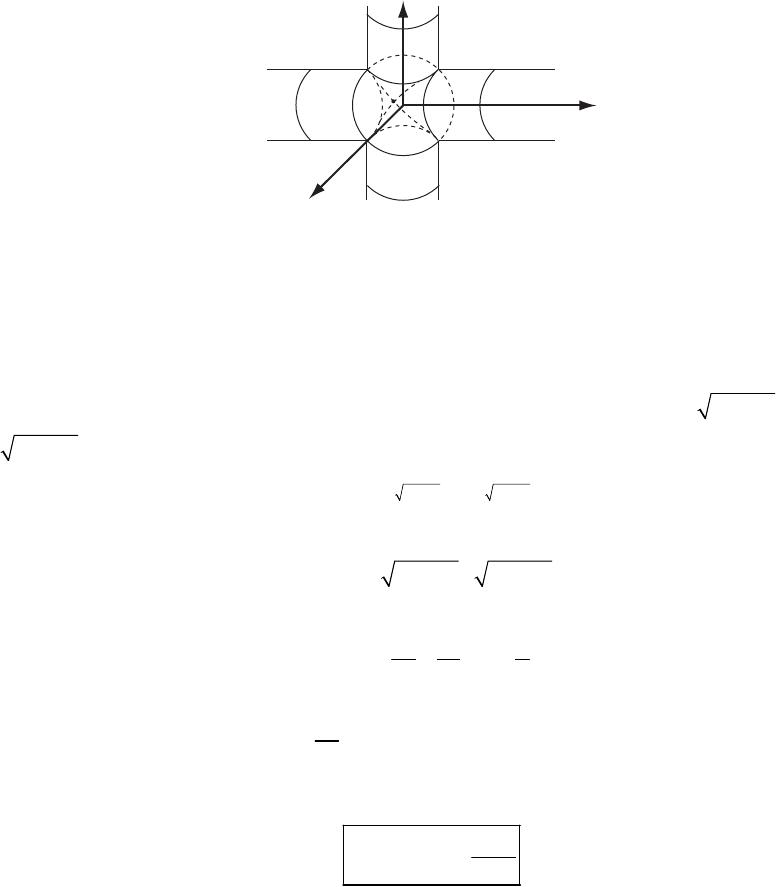
MATRICES, VECTORS, AND VECTOR CALCULUS 25
1-35.
x
z
y
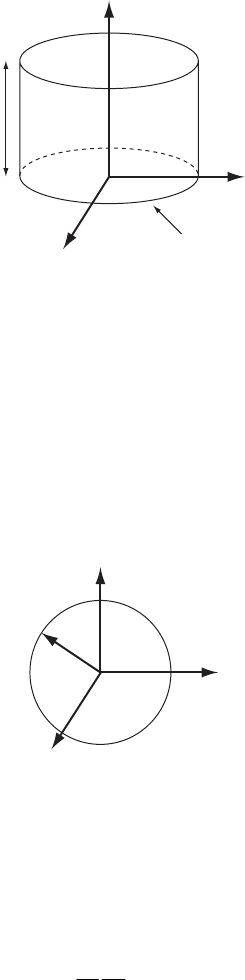
We compute the volume of the intersection of the two cylinders by dividing the intersection
volume into two parts. Part of the common volume is that of one of the cylinders, for example,
the one along the y axis, between y = –a and y = a:
(
)
2
122Vaa
3
a
π
π
== (1)
The rest of the common volume is formed by 8 equal parts from the other cylinder (the one
along the x-axis). One of these parts extends from x = 0 to x = a, y = 0 to 2
yax=−
2
, z = a to
22
z
ax=−. The complementary volume is then
22 22
200
22 22
0
33
21
0
33
8
8
8sin
32
16 2
3
aax ax
a
a
a
Vdxdydz
dxax axa
xa x
ax a
aa
π
−−
−
=
=−−−
=−−
=−
∫∫ ∫
∫
(2)
Then, from (1) and (2):
3
12
16
3
a
VV V
=+= (3)
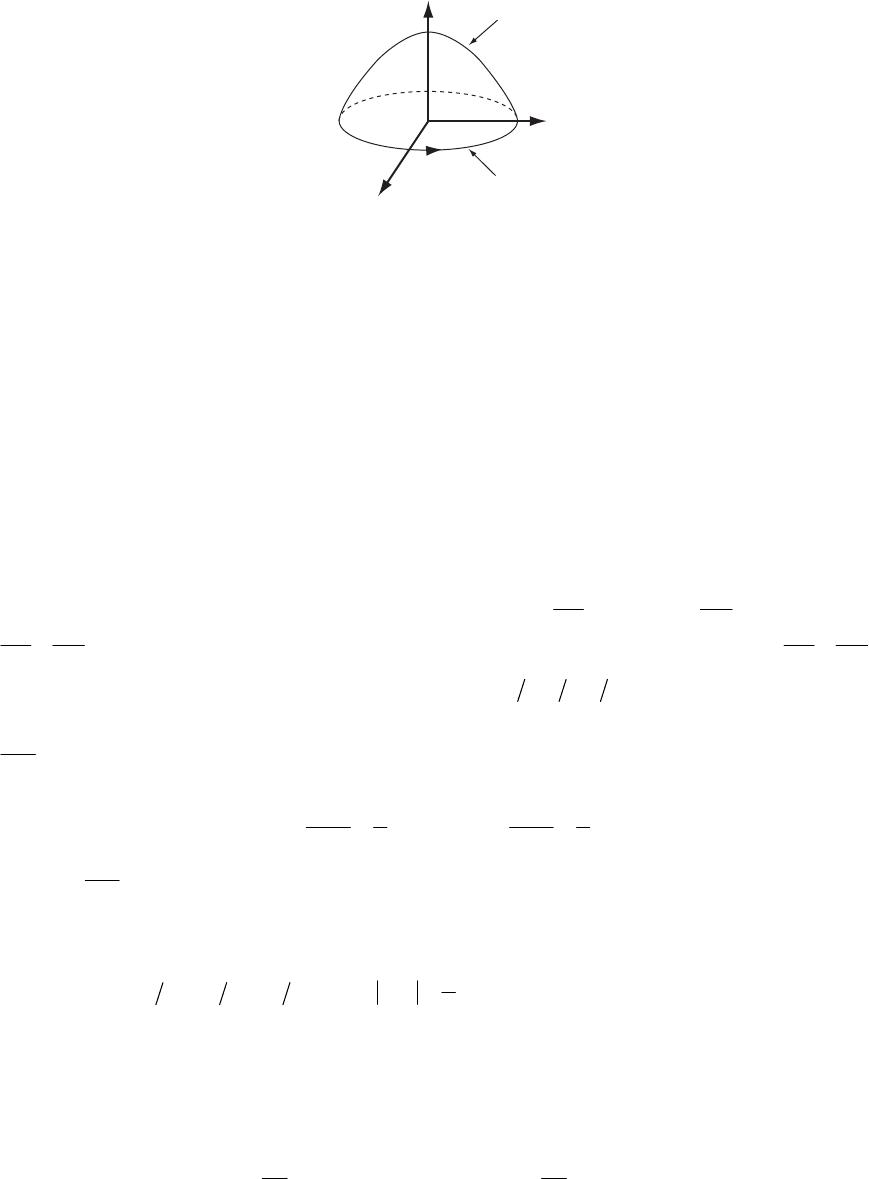
26 CHAPTER 1
1-36.
d
z
x
y
c2 = x2 + y2
The form of the integral suggests the use of the divergence theorem.
(1)
SV
d⋅=∇⋅
∫∫
Aa Adv
Since ∇⋅ , we only need to evaluate the total volume. Our cylinder has radius c and height
d, and so the answer is
1=A
(2)
2
Vdv c d
π
=
∫
1-37.
z
y
x
R
To do the integral directly, note that A, on the surface, and that .
3
r
R=e
5
r
dda=ae
332
44
SS
dRdaR R R
π
π
⋅= = × =
∫∫
Aa (1)
To use the divergence theorem, we need to calculate
∇
⋅A. This is best done in spherical
coordinates, where A. Using Appendix F, we see that
3
r
r=e
()
2
2
15
r
r
rr
2
r
∂
∇⋅ = =
∂
AA (2)
Therefore,
(
)
222
000
sin 5 4
R
Vdv d d r r dr R
ππ
5
θ
θφ π
∇⋅ = =
∫∫
A
∫∫ (3)
Alternatively, one may simply set dv in this case.
2
4r dr
π
=
MATRICES, VECTORS, AND VECTOR CALCULUS 27
1-38.
x
z
y
C
x
2
+ y
2
= 1
z = 1 – x
2
– y
2
By Stoke’s theorem, we have
()
S
d
C
d
∇
×⋅= ⋅
∫∫
Aa As (1)
The curve C that encloses our surface S is the unit circle that lies in the xy plane. Since the
element of area on the surface da is chosen to be outward from the origin, the curve is directed
counterclockwise, as required by the right-hand rule. Now change to polar coordinates, so that
we have dd
θ
θ
=se and sin cos
θ
θ
=+Aik on the curve. Since sin
θ
θ
⋅
=−ei and 0
θ
⋅=ek , we
have
(
)
22
0sin
Cd
π
d
θ
θπ
⋅
=− =−
∫∫
As (2)
1-39.
a) Let’s denote A = (1,0,0); B = (0,2,0); C = (0,0,3). Then (1,2,0)=−AB ; (1,0,3)=−AC ; and
(6,3,2)×=AB AC . Any vector perpendicular to plane (ABC) must be parallel to ×AB AC , so
the unit vector perpendicular to plane (ABC) is (6 7,3 7,2 7)
=
n
b) Let’s denote D = (1,1,1) and H = (x,y,z) be the point on plane (ABC) closest to H. Then
(1, 1,1xyz=− − −DH ) is parallel to n given in a); this means
162
13
x
y
−
=
=
− and 163
12
x
z
−
=
=
−
Further, (1,,xy=− )zAH is perpendicular to n so one has 6( 1) 3 2 0xyz
−
++=.
Solving these 3 equations one finds
H ( , , ) (19 49,34 49, 39 49)xyz== and 5
7
DH
=
1-40.
a) At the top of the hill, z is maximum;
02 and
6
zyx
x
∂
==−−
∂18 028
zxy
y28
∂
=
=−+
∂
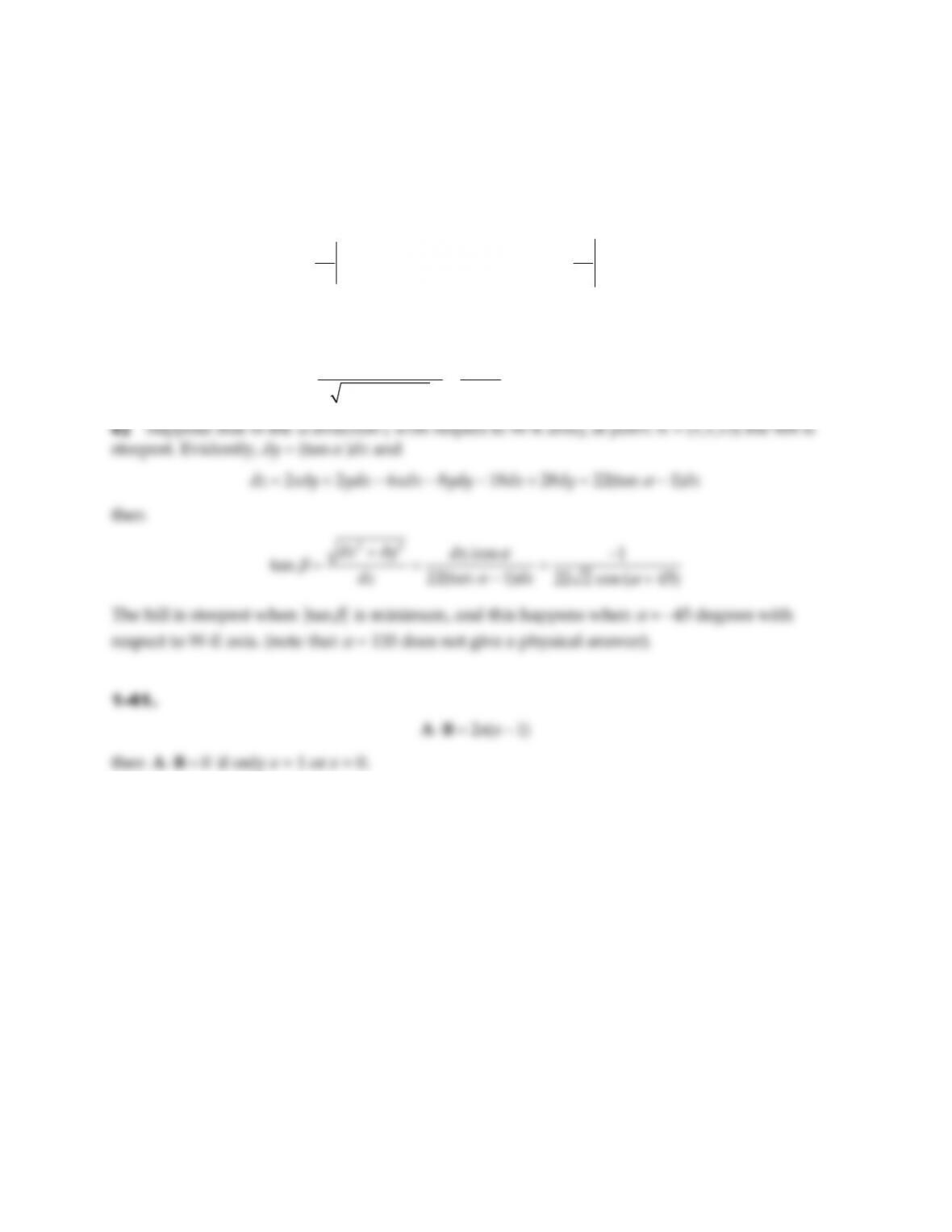
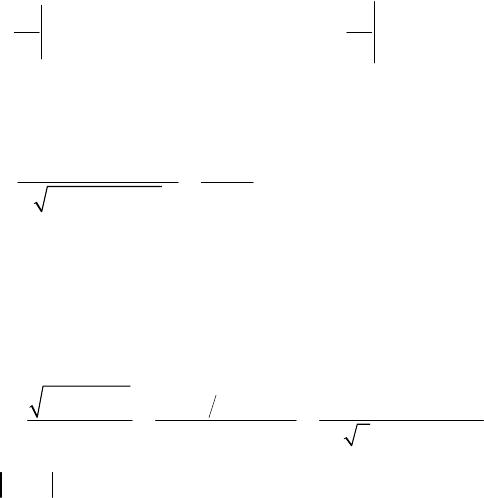
28 CHAPTER 1
so x = –2 ; y = 3, and the hill’s height is max[z]= 72 m. Actually, this is the max value of z,
because the given equation of z implies that, for each given value of x (or y), z describes an
upside down parabola in term of y ( or x) variable.
b) At point A: x = y = 1, z = 13. At this point, two of the tangent vectors to the surface of the
hill are
1
(1,1)
(1, 0, ) (1, 0, 8)
z
x
∂=
∂
t= and −
2
(1,1)
(0,1, ) (0,1,22)
z
y
∂
==
∂
t
Evidently tt is perpendicular to the hill surface, and the angle
12
(8, 22,1)×= −
θ
between this
and Oz axis is
222
(0,0,1) (8, 22,1) 1
s23.43
8221
⋅−
++
co
θ
= so
θ
= 87.55 degrees.
=
α
α
β


φ

cos
β
sin
k
θ
−

c
c
B
ω

mg
β
−
−
+
m
β
n
n
x/a
y
y
∂

f
k
p
n