Managing Receivables
Chapter 8
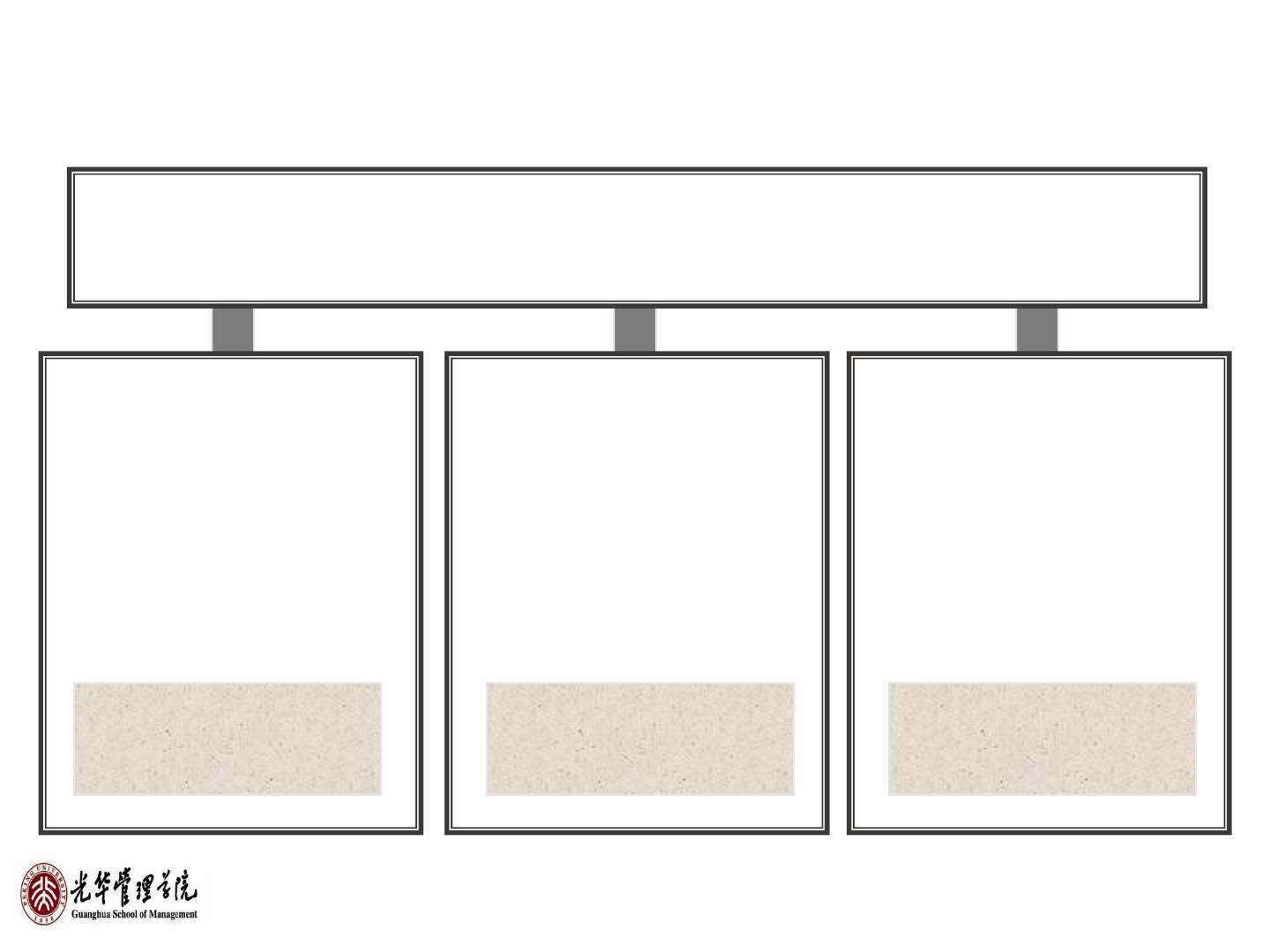
Amounts due from individuals and other companies that are
expected to be collected in cash.
Amounts owed by
customers that
result from the sale
of goods and
services.
Accounts
Receivable
Claims for which
formal instruments
of credit are issued
as proof of debt.
“Nontrade”
(interest, loans to
officers, advances
to employees, and
income taxes
refundable).
Notes
Receivable
Other
Receivables
Types of Receivables

Recognizing Accounts Receivable
•A receivable is recognized at the point of sale of
merchandise or when a service is performed
Journal Entry:
Accounts Receivable 1000
Sales Revenue 1000

Recognizing Accounts Receivable
(continued)
•Sales Returns reduce the Accounts Receivable
balance, since the company will no longer be
receiving payment
Journal Entry:
Sales returns and Allowances 100
Accounts Receivable 100
•Creating a Sales Returns and Allowances line,
rather than reducing revenue, increases
transparency and usefulness for users

Recognizing Accounts Receivable
(continued)
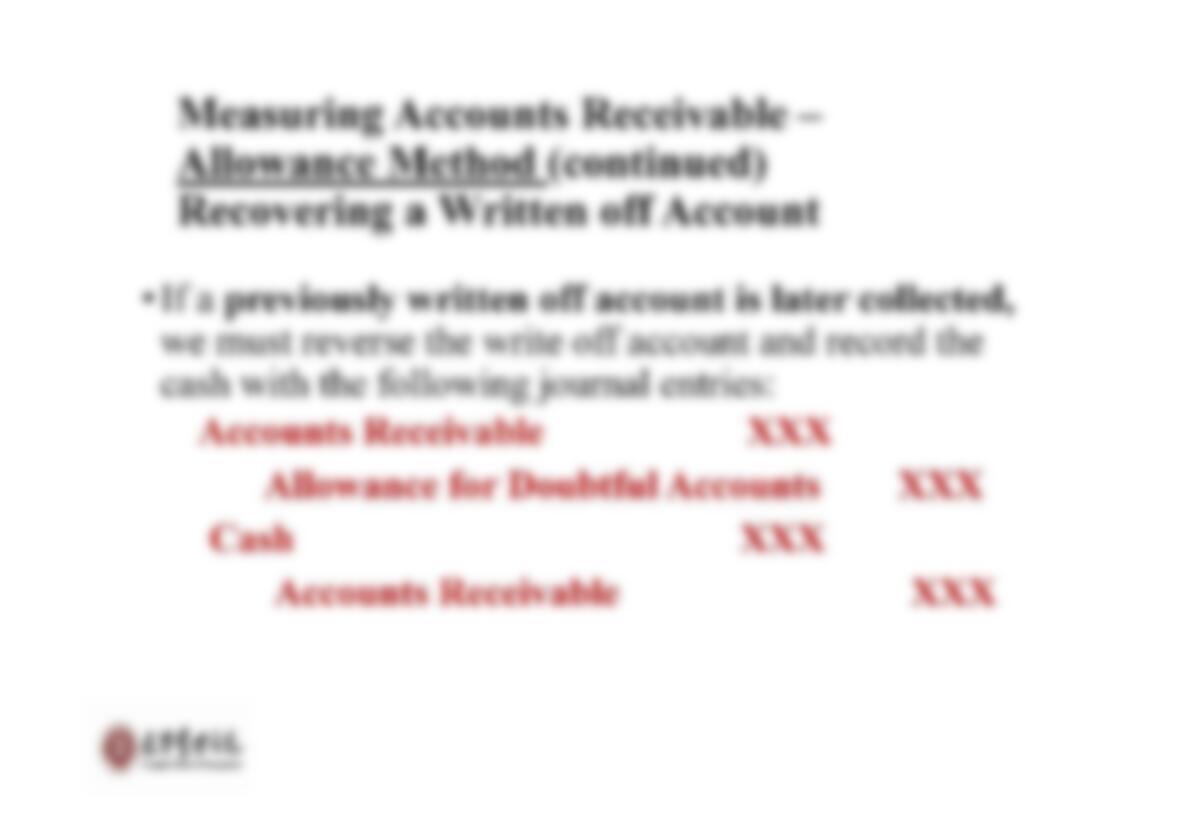
•A discount taken on payment does not affect the value of
Accounts Receivable since a Sales Discount account is
created. The full amount of the receivable was recognized
This provides a clear explanation of why less cash was
received.
Journal Entry:
Cash 900
Sales Discount 100
Accounts Receivable 1000

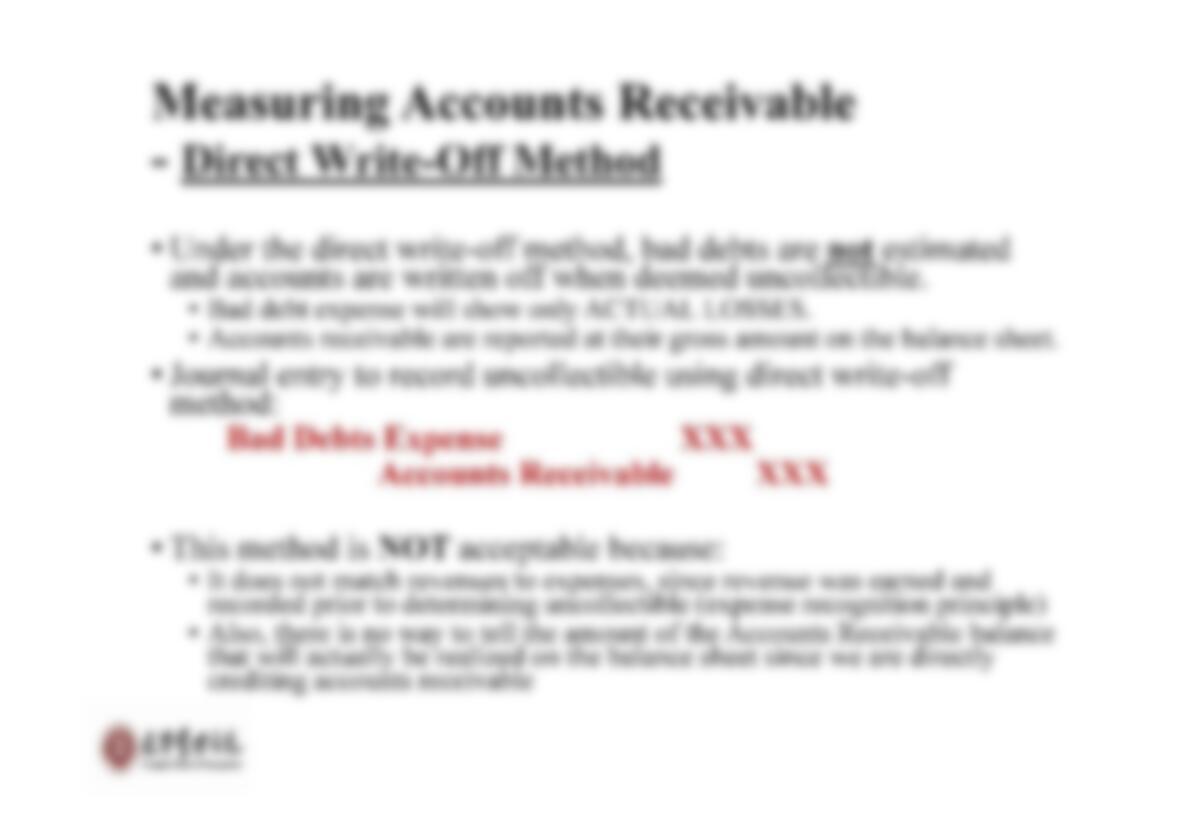
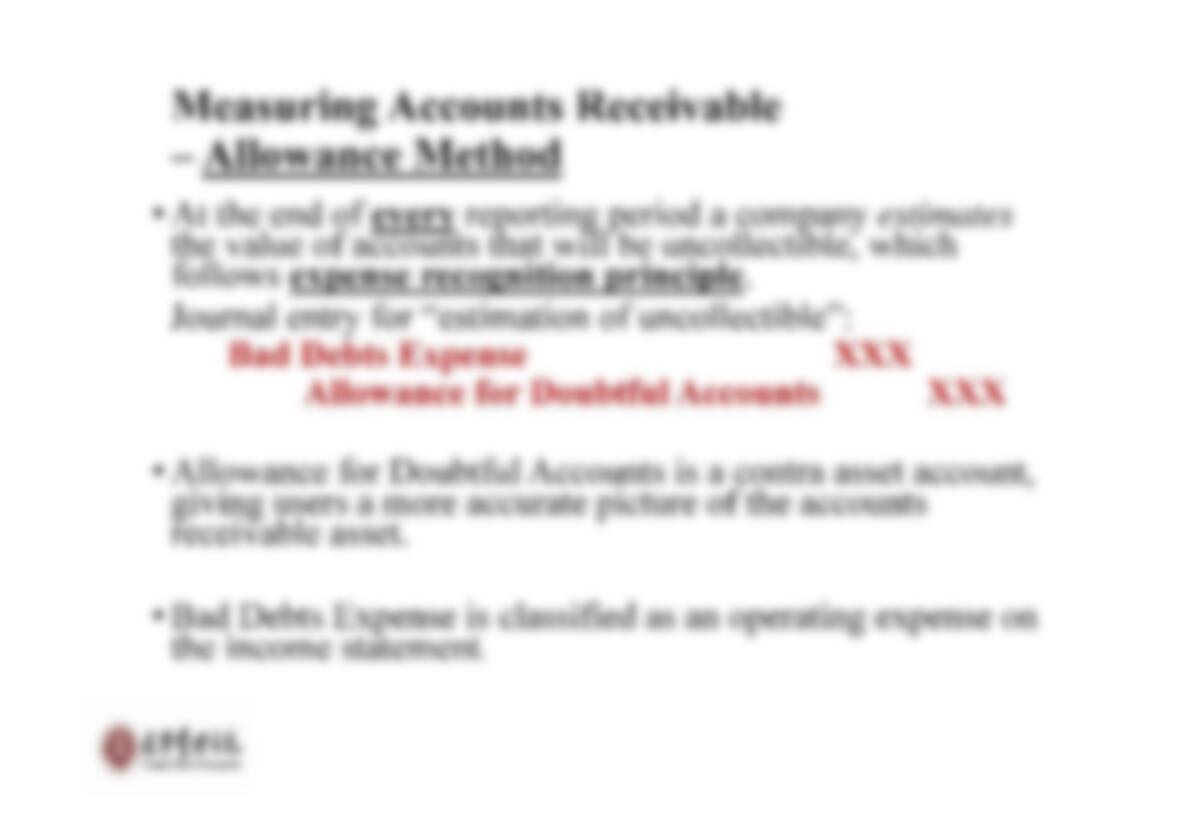
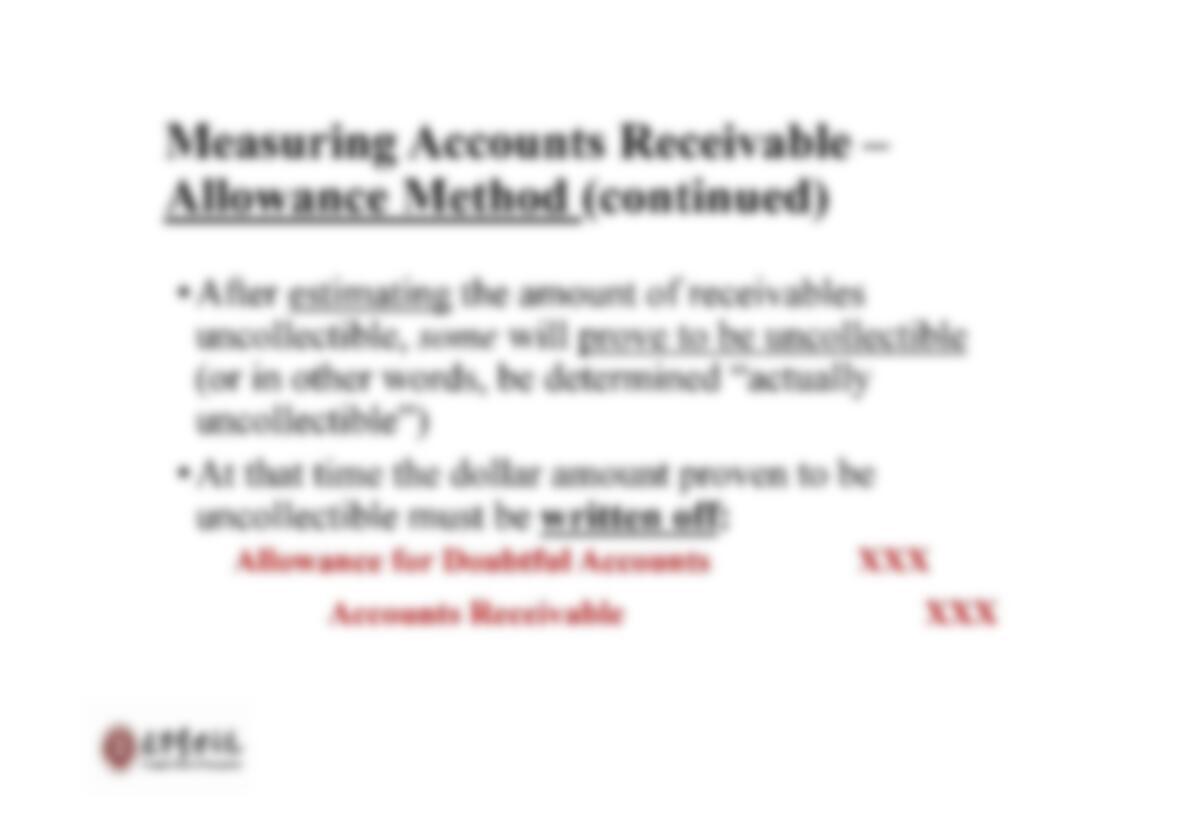
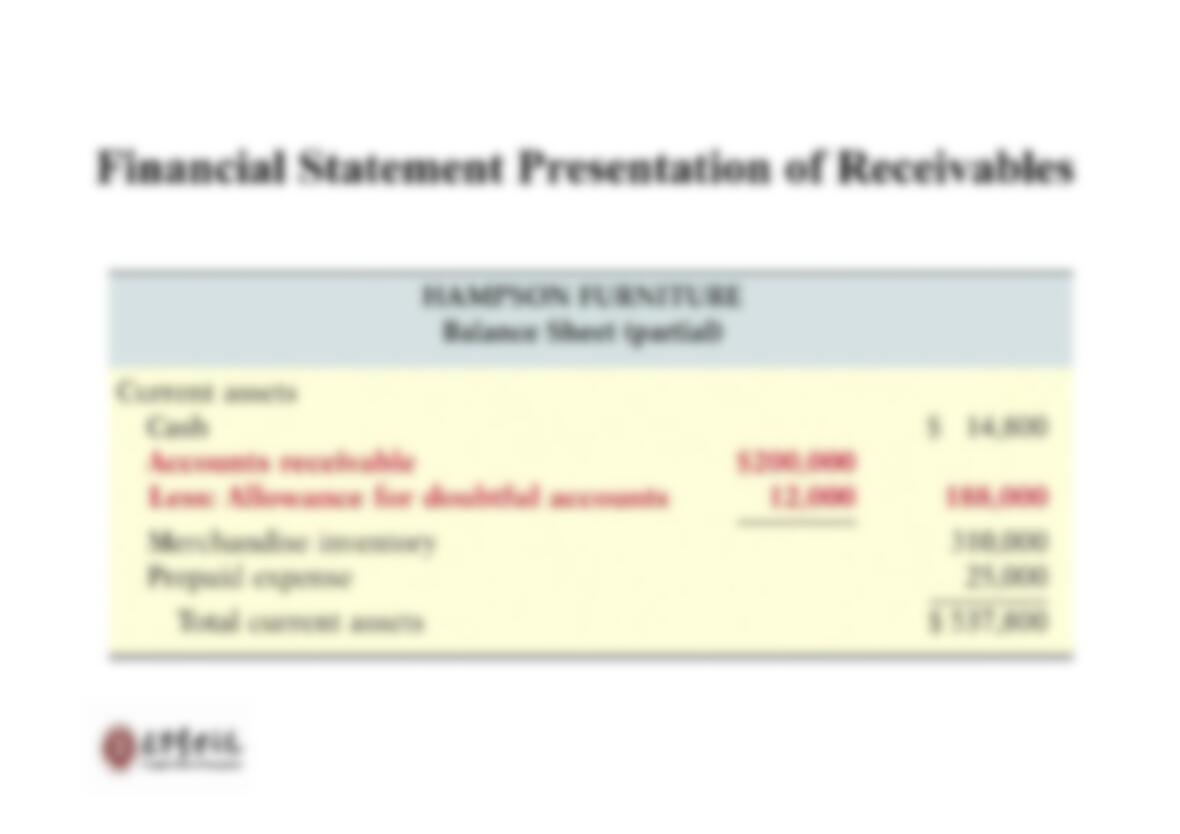
Measuring Accounts Receivable
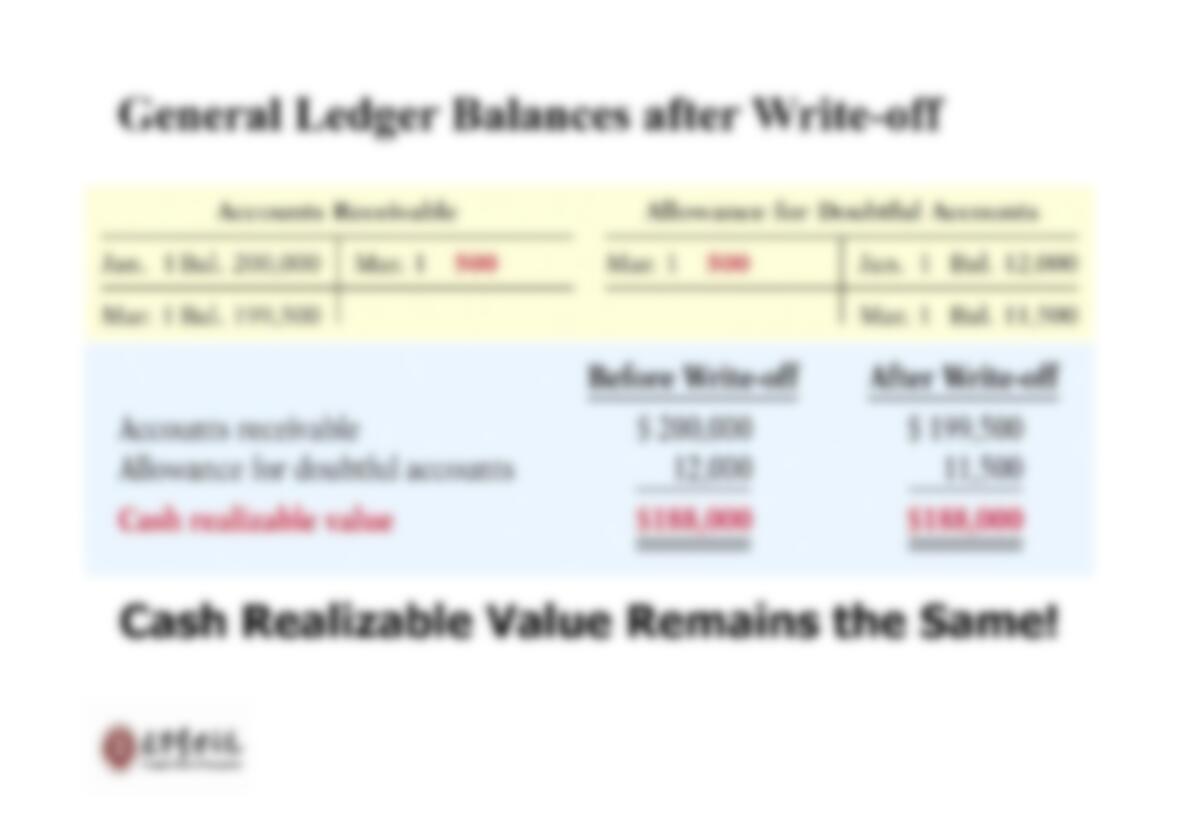
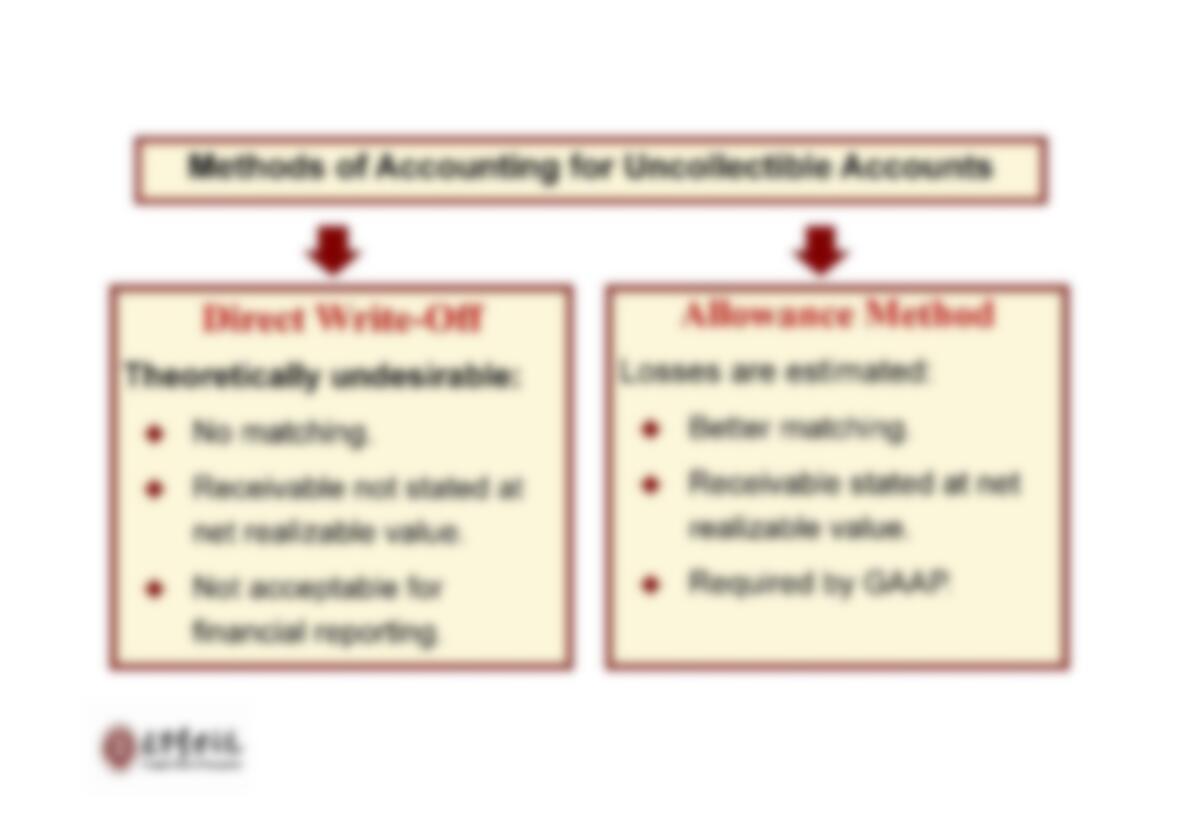
Some accounts receivable may never be collected, so the
Accounts Receivable balance must be reduced for this
amount.
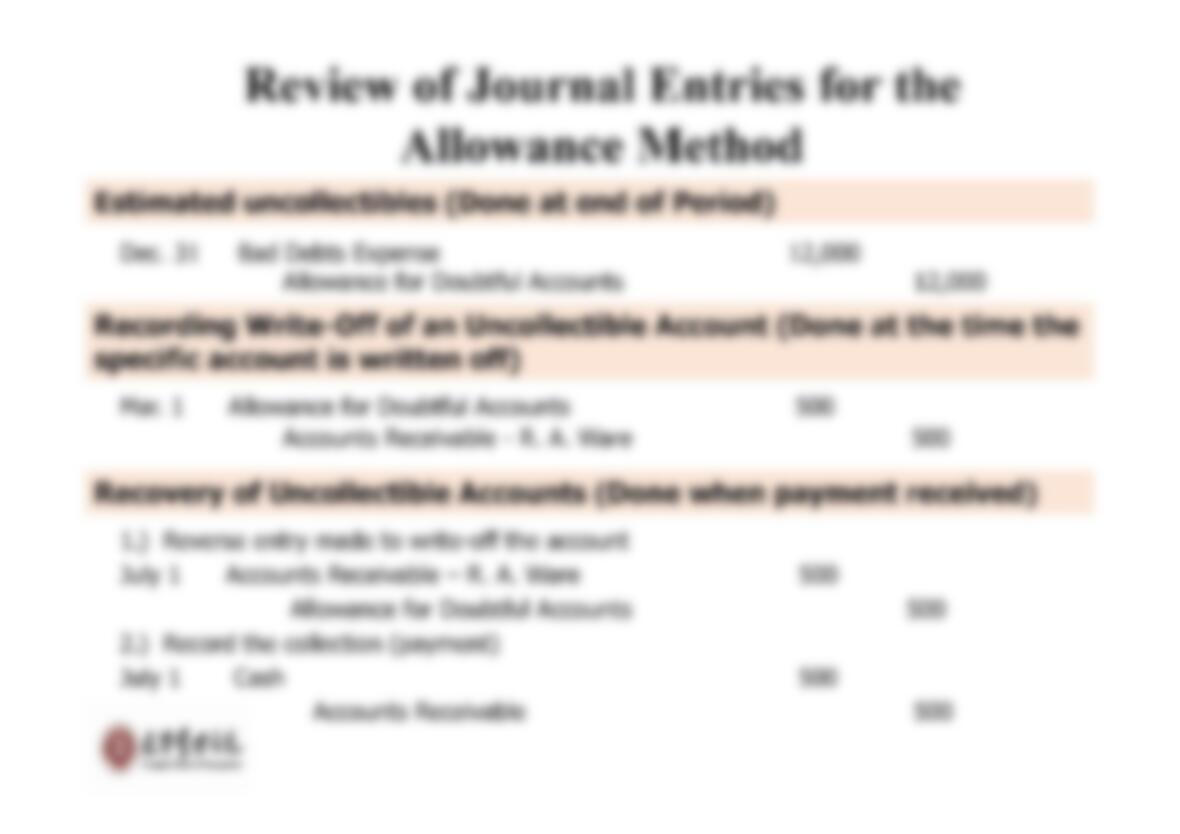
Bad Debt Expense
•An expense to record the losses due to uncollectible
receivables
•Considered a normal and necessary risk of doing
business
•Keeps expenses from being understated on the income
statement and accounts receivables from being
overstated on the balance sheet
Measuring Accounts Receivable
The question now becomes should this amount be “estimated”
uncollectible or should it be the “actual” amount deemed
uncollectible?
•Estimation of uncollectible accounts allows us to recognize
a decrease in accounts receivables before it actually
becomes uncollectible.